London’s dining scene has long been recognized for culinary excellence, but increasingly it has also become a global reference point for hospitality interior design. In a city where heritage architecture meets contemporary creativity, restaurants are conceived not merely as places to eat but as immersive environments. For architects, designers, and developers seeking London restaurants design inspiration, the British capital offers a remarkable portfolio of spaces where atmosphere, materials, lighting, and spatial narrative are crafted with the same precision as the menu.
The most compelling London restaurants today demonstrate how interior design can elevate dining into a complete sensory experience. From maximalist glamour to quiet minimalism, these interiors reveal how design language shapes identity and memory within hospitality spaces. For professionals exploring the best restaurant interiors London has to offer, the following establishments stand out as laboratories of spatial storytelling and design innovation.
Below is a curated selection of ten restaurants whose interiors deserve close attention—not simply for their beauty, but for their thoughtful contribution to contemporary hospitality interior design.
1. Sketch – Theatrical Design as Cultural Landmark
Few London restaurants demonstrate the power of immersive design as vividly as Sketch in Mayfair. Conceived as a multi-room dining destination, the interiors have evolved over time through collaborations with renowned artists and designers.
The Gallery dining room, once known for its iconic pink velvet seating, is now reimagined in golden tones with sculptural lighting and contemporary artworks. Each element contributes to a theatrical environment that blurs the boundaries between restaurant, gallery, and cultural venue.
- Design highlight: sculptural seating and immersive color palettes
- Spatial concept: dining rooms as curated artistic environments
- Inspiration takeaway: narrative-driven interiors enhance brand identity

2. The Dover – New York Energy Meets London Sophistication
The Dover captures the energy of a classic Manhattan dining room while maintaining the refined restraint associated with the best restaurant interiors London offers. Designed by Martin Brudnizki, the space combines polished wood, mirrored surfaces, and plush banquettes to evoke timeless glamour.
For designers studying London restaurants design inspiration, the project demonstrates how lighting and texture create intimacy in dense urban dining environments.
3. Sessions Arts Club – Raw Architectural Poetry
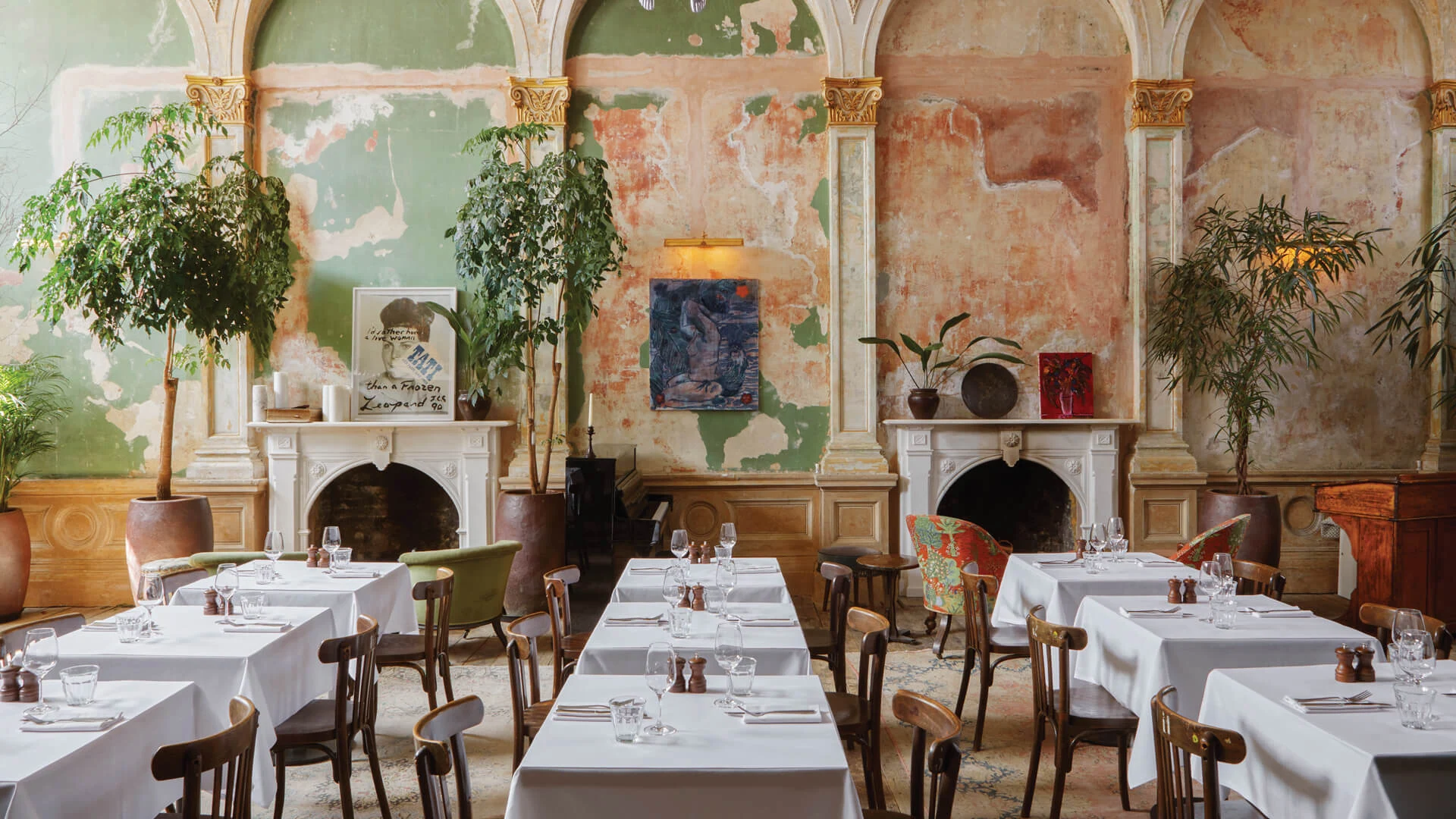
Located within the historic Old Sessions House in Clerkenwell, Sessions Arts Club is a masterclass in atmospheric minimalism. The interior retains much of the building’s worn patina—cracked plaster, faded paint, and exposed surfaces—allowing history to remain visible.
This restrained approach highlights a broader trend in hospitality interior design: celebrating imperfection and authenticity rather than concealing it.
- Historic architectural shell preserved
- Minimal intervention strategy
- Natural light used as a primary design element
4. Bacchanalia – Maximalist Mythology
Bacchanalia in Mayfair offers a radically different aesthetic approach. Inspired by ancient mythology and classical art, the restaurant’s interior features monumental sculptures, dramatic murals, and ornate finishes.
Within the spectrum of London restaurants, Bacchanalia exemplifies contemporary maximalism—where theatrical scale and decorative richness are deployed to create spectacle.
For hospitality designers, the project illustrates how bold storytelling can transform a restaurant into a destination.
5. Mountain – Contemporary Craft and Materiality
Mountain, located in Soho, emphasizes craftsmanship and natural materials. Designed to reflect the rustic culinary philosophy of chef Tomos Parry, the space features warm woods, stone textures, and open-fire cooking elements.
This project represents a subtle yet sophisticated form of hospitality interior design where material authenticity reinforces culinary identity.
- Open kitchen integration
- Textural material palette
- Warm, ambient lighting
6. Kol – Modern Mexican Identity in London
Kol stands out among London restaurants for its thoughtful interpretation of Mexican culture through contemporary British design language. The interior blends earthy tones, handcrafted elements, and sculptural furniture.
The result is a calm yet expressive environment that demonstrates how cultural narratives can be translated through spatial design.
Professionals exploring London restaurants design inspiration will note how subtle details—ceramic surfaces, woven textures, and natural materials—shape the experience without overwhelming it.

7. Ikoyi – Precision and Minimalism
Ikoyi’s interior reflects the same meticulous precision that defines its cuisine. The design balances dark wood, polished metals, and sculptural lighting to create a focused and refined dining atmosphere.
Within discussions of the best restaurant interiors London presents today, Ikoyi represents an approach rooted in restraint and clarity.
- Refined minimalism
- Controlled lighting strategy
- Elegant material contrasts
8. Brat – Basque Simplicity with London Character
Brat in Shoreditch offers a compelling example of how simplicity can create memorable hospitality environments. The dining room features exposed brick, wooden beams, and open grilling stations.
This straightforward design approach aligns perfectly with contemporary trends in hospitality interior design, where authenticity and craftsmanship often replace overt luxury.
The space is particularly instructive for designers interested in balancing casual atmosphere with thoughtful architectural detailing.
9. Gymkhana – Colonial Elegance Reimagined
Gymkhana remains one of the most influential London restaurants for designers studying layered cultural references. Inspired by colonial Indian clubs of the early 20th century, the interior features dark woods, patterned textiles, brass lighting, and vintage photographs.
The restaurant’s carefully orchestrated atmosphere demonstrates how narrative-driven interiors can elevate the guest experience.
For further insight into global hospitality design trends, professionals often consult resources such as
Dezeen’s hospitality interiors archive, which documents many influential restaurant projects worldwide.
10. Hide – Architectural Fluidity and Light
Hide, located near Green Park, is celebrated for its sculptural central staircase and light-filled interiors. Designed by These White Walls, the restaurant uses pale timber, curved forms, and generous glazing to create a sense of movement and openness.
Among the best restaurant interiors London offers, Hide stands out for its architectural clarity and spatial choreography.
- Signature sculptural staircase
- Natural daylight integration
- Elegant Scandinavian-inspired palette
Design Lessons from London’s Most Inspiring Restaurants
Examining these remarkable London restaurants reveals several broader insights shaping contemporary hospitality interior design. While each project expresses a distinct identity, common design principles emerge across the city’s most successful dining environments.

1. Narrative Creates Memorability
The strongest restaurants communicate a clear story—whether rooted in culture, art, or history. This narrative framework guides material choices, lighting strategies, and spatial composition.
2. Material Authenticity Matters
Across many of the best restaurant interiors London presents today, designers emphasize tactile materials such as stone, wood, ceramics, and textiles. Authentic textures create warmth and emotional resonance.
3. Lighting Defines Atmosphere
Lighting remains one of the most powerful tools in hospitality interior design. Layered illumination—combining ambient, accent, and decorative lighting—shapes intimacy and spatial hierarchy.
4. Architecture and Cuisine Must Align
The most compelling projects ensure that spatial design reflects culinary philosophy. Rustic kitchens inspire earthy interiors, while avant-garde cuisine often pairs with minimal architectural expression.

Why London Remains a Global Design Laboratory
London’s restaurant landscape continues to evolve at remarkable speed. The city’s diversity, historic architecture, and global cultural influences create fertile ground for experimentation.
For architects, interior designers, developers, and hospitality brands seeking London restaurants design inspiration, the capital offers an unparalleled mix of innovation and tradition. From theatrical maximalism to quiet architectural restraint, the best restaurant interiors London showcases today reflect the broader evolution of global hospitality interior design.
Ultimately, these spaces demonstrate that restaurants are no longer simply dining venues. They are immersive environments where architecture, design, and gastronomy converge—transforming every meal into a carefully composed spatial experience.