
For decades, the Alpine second home was defined by a familiar ritual: arrive for the ski season, gather around the fireplace, spend the days outdoors and return to the city when the snow begins to melt. Today, that picture no longer captures the full appeal of owning property in the mountains. Buyers are increasingly considering how a residence might serve them across different seasons, stages of life and ways of working, rather than functioning exclusively as a winter retreat.
The shift is taking place against a strong property market. According to UBS’s Alpine Property Focus 2026, prices for holiday homes across the European Alpine destinations analysed rose by almost 4% in 2025. In Switzerland, second-home prices increased by 4.1% year on year in the first quarter of 2026, while the number of overnight stays in hotels, holiday apartments and collective accommodation across Swiss tourist regions reached approximately 28 million in 2025.
Yet the significance of the Alpine second home extends beyond market performance. It reflects a changing relationship with place, leisure and ownership. For some buyers, the attraction lies in having a familiar base for spontaneous mountain escapes. For others, it is the possibility of spending longer periods away from urban life, working remotely, preparing for retirement or eventually converting a holiday residence into a permanent home. The challenge for architects, developers and buyers is to understand what makes such a property valuable beyond its address and its view.
Beyond the Ski Season: A Different Idea of Ownership
The traditional Alpine property was often associated with a specific pattern of use: winter holidays, school breaks and weekends organised around skiing. Contemporary demand is more varied. Some owners continue to prioritise winter sports, while others are attracted by summer hiking, cycling, wellness, gastronomy and the broader experience of mountain living.
UBS’s 2026 research identifies the flexibility of personal use as one of the factors supporting demand for Alpine holiday homes. Its analysis also points to growing interest among younger professionals who value mountain living and among older buyers considering the possibility of retiring in the Alps. These are distinct motivations, but they share an emphasis on the property’s usefulness beyond a single annual holiday.
This does not mean that every buyer wants a permanent mountain residence. A second home can remain a place of temporary escape while becoming more relevant to everyday life. Owners may visit for several weeks in summer, return during winter and use the property for shorter stays throughout the year.
The new Alpine second home is defined less by a particular season than by the range of experiences it can accommodate. Its value lies in the ability to support different rhythms of occupation without losing the qualities that make a mountain property distinctive.
Why the Alpine Property Market Remains Resilient
The continued demand for Alpine second homes is supported by a combination of limited supply, established tourism infrastructure, international appeal and the financial capacity of prospective buyers. These factors vary by destination, but they help explain why prime mountain markets remain expensive even as the conditions underpinning Alpine tourism evolve.
UBS’s June 2026 European market report found that holiday-home prices increased by almost 4% across the leading Alpine destinations it analysed in 2025. Switzerland and Italy recorded particularly strong growth, with prices rising by almost 6% in their top destinations, while Austria experienced growth of just over 3%. In France, the increase was approximately 1%.
The Swiss market illustrates the strength of demand particularly clearly. In its, UBS reported that second-home prices across the 35 destinations it analysed were approximately 40% higher than at the end of 2019.
The report placed Gstaad at the top of the Swiss market, with upper-segment holiday homes costing around CHF 25,000 per square metre. Engadin and St. Moritz followed at approximately CHF 24,000, with Verbier, Andermatt and Zermatt also among the country’s most expensive destinations.
These figures describe particular market segments rather than every property in each resort. They also do not guarantee future appreciation. Nevertheless, they demonstrate how strongly demand is concentrated in established destinations with recognised identities, limited available stock and high-quality tourism infrastructure.
Location Still Matters, but Its Meaning Is Changing
In luxury real estate, location has always been central to value. In the Alps, however, the concept extends beyond proximity to a ski lift or the prestige of a resort name. Accessibility, local services, tourism activity, the surrounding environment and the possibility of using a property throughout the year can all influence its appeal.
UBS assesses Swiss holiday-home destinations using several indicators, including market size, accessibility, tourist facilities, occupancy rates, rental prospects, population growth and supply constraints. This approach highlights an important distinction: a desirable second home is not simply a beautiful building in a dramatic setting. It also needs to function within the realities of its location.
A well-connected destination may be more practical for owners who plan to arrive frequently or combine mountain stays with remote work. A resort with an established summer programme may appeal to buyers who want to use their property outside the ski season. Meanwhile, a quieter village may offer the privacy and atmosphere that some purchasers value more highly than immediate access to a busy resort centre.
There is no universally superior choice. The right location depends on how the owner expects to use the property, how often they will visit and which aspects of mountain life matter most to them.
The strongest purchase decisions begin with the intended experience of ownership, not simply the prestige of the postcode.
Architecture for a Property That Will Be Used Differently
As the purpose of the Alpine second home becomes more varied, the architectural brief becomes more demanding. A property used only for occasional winter holidays may prioritise equipment storage, efficient arrival routines and spaces for gathering after a day outdoors. A residence intended for longer stays must respond to a broader range of needs.
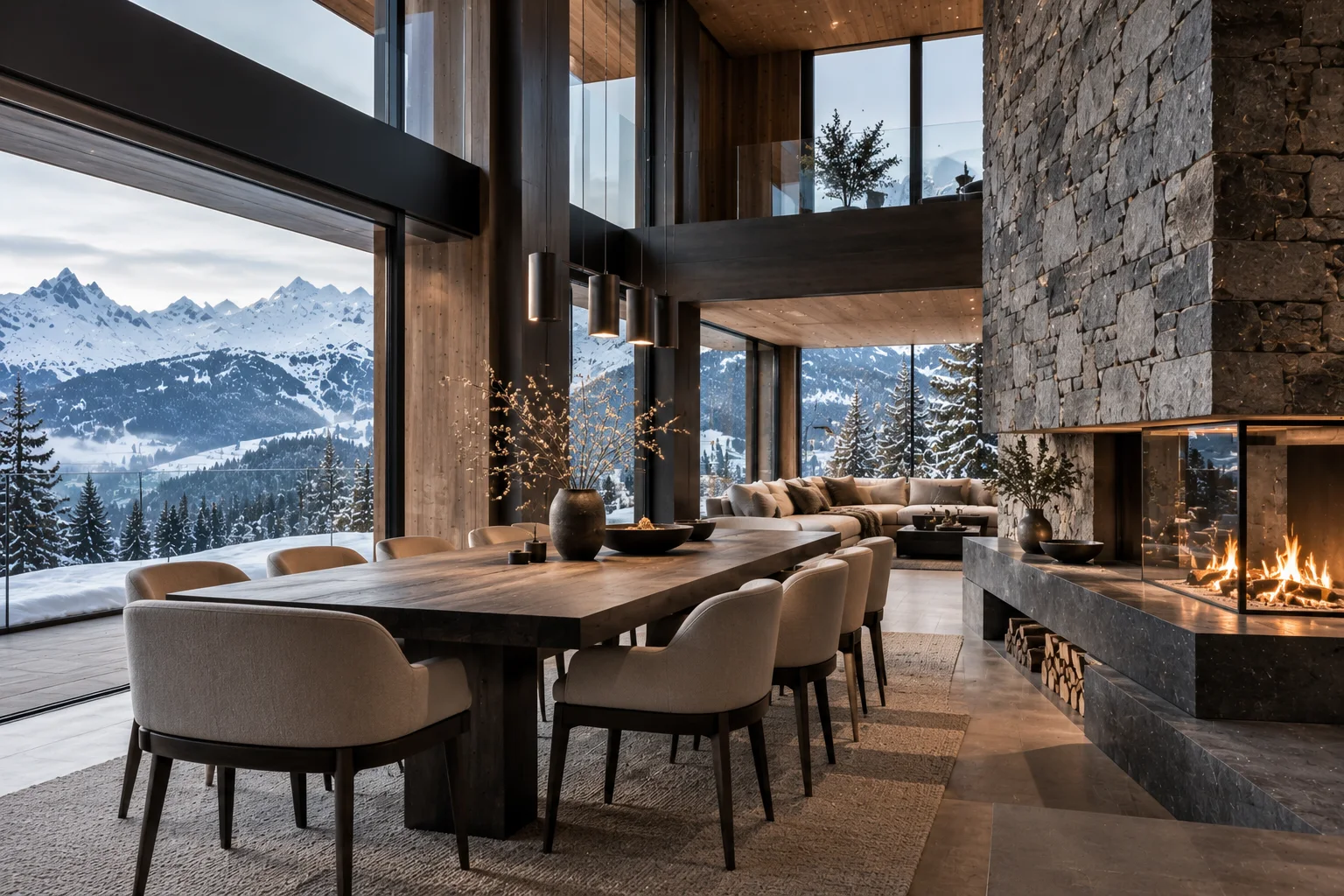
That can influence the relationship between private and shared spaces, the organisation of bedrooms, the quality of daylight and the connection between the interior and outdoor areas. A dedicated workspace may be important for one owner, while another may prefer a larger dining room, a more generous kitchen or spaces that can accommodate several generations of a family.
These decisions should follow the expected patterns of occupation rather than a generic definition of luxury. A larger property is not necessarily a more useful one. The quality of the layout, the ease of maintaining the building and the ability to adapt rooms to different circumstances can matter more than the number of amenities.
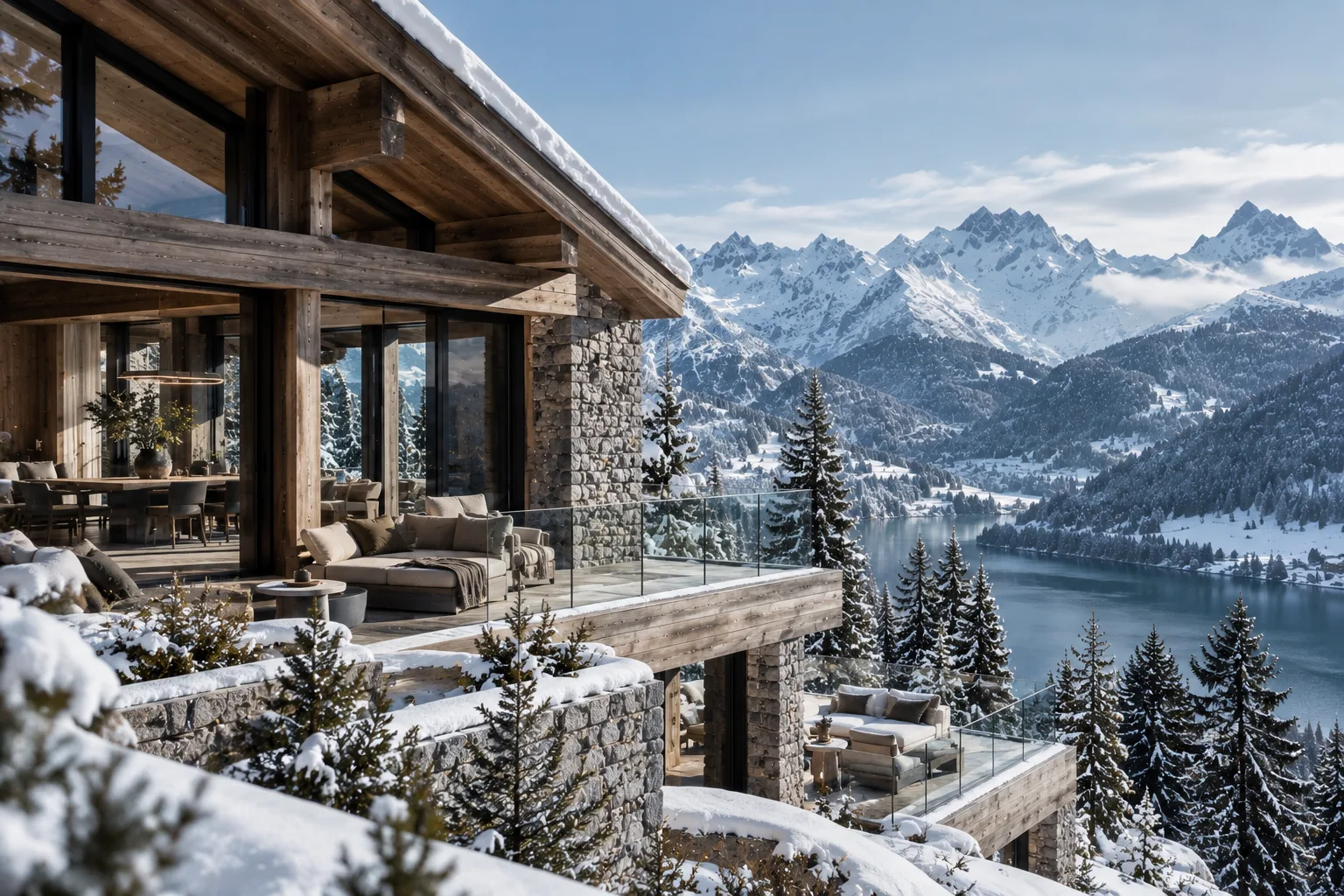
The same principle applies to outdoor space. Terraces and balconies can support summer living, while covered transitions between interior and exterior can remain useful in changing mountain weather. Views, daylight and privacy need to be considered together, especially where properties occupy relatively close plots within established resorts.
For architects and developers, the opportunity is to design homes that remain unmistakably Alpine while accommodating more flexible ways of living. Adaptability becomes a form of long-term value when it responds to real patterns of use.
Summer Is Becoming Part of the Property Proposition
The appeal of the Alps is no longer confined to snow-based activities. Hiking, cycling, lake swimming, cultural events, gastronomy and wellness contribute to the summer offer of many mountain destinations. For owners, these activities can make a second home relevant during periods that once received less attention in the traditional ski calendar.
Switzerland’s tourism industry has also experienced strong demand beyond winter. UBS reported a record total of approximately 28 million overnight stays in hotels, holiday apartments and collective accommodation across Swiss tourist regions in 2025. The figure does not measure second-home ownership directly, but it illustrates the broader strength of tourism in the country’s mountain destinations.
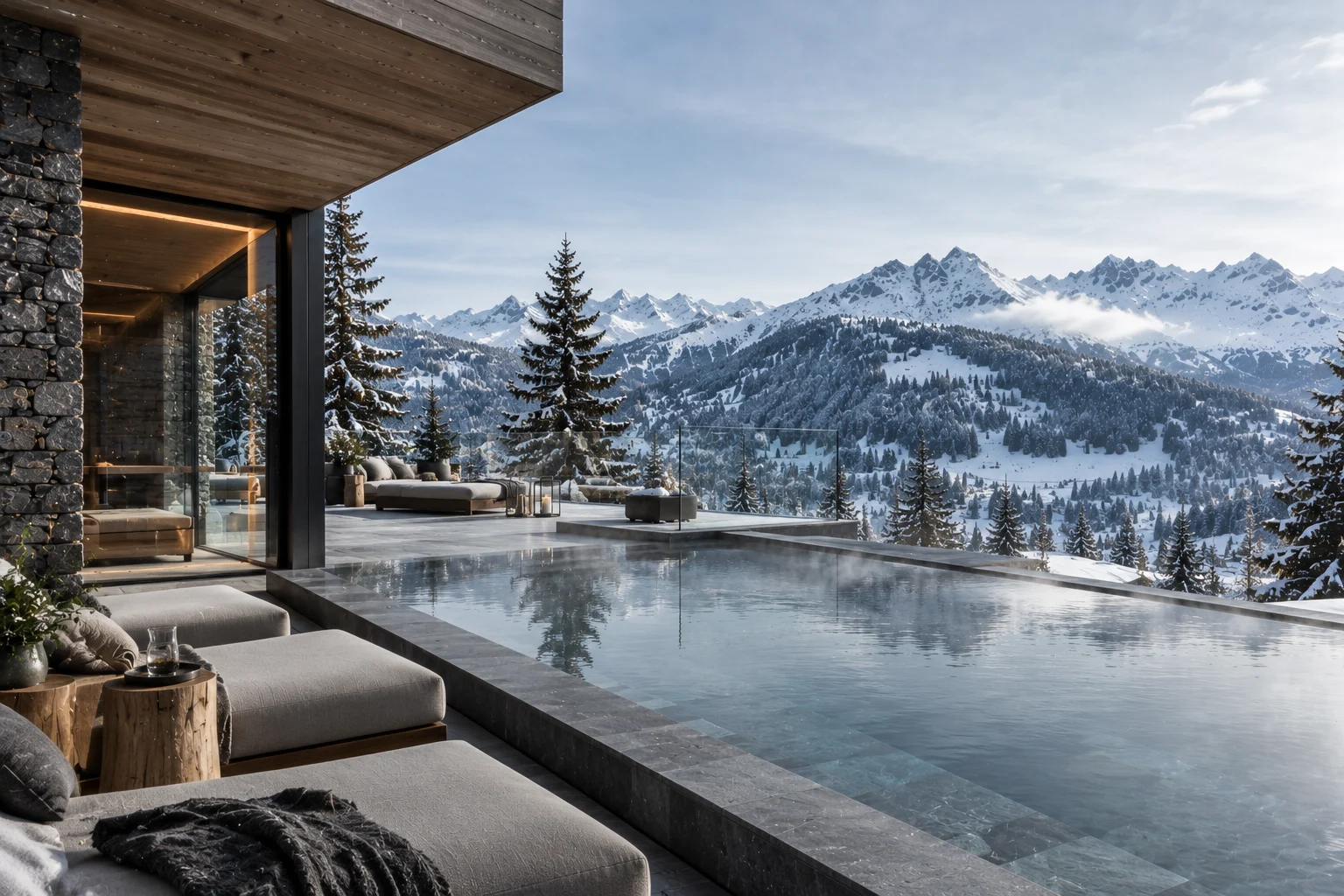
This seasonal diversification has implications for both buyers and developers. A property in a destination with an established summer offer may provide more opportunities for personal use. Outdoor dining areas, comfortable terraces, storage for cycling equipment and interiors suited to longer stays may become relevant alongside traditional winter amenities.
However, summer appeal should not be assumed simply because a property is located in the mountains. Local transport, access to services, the range of activities available and the character of the destination all matter. Buyers should investigate the actual year-round offer rather than relying on the broad idea of Alpine living.
Climate change adds another dimension. Warmer temperatures can increase the attractiveness of some mountain destinations during summer, while declining snow reliability presents challenges for winter tourism in certain locations. These effects differ across the Alps and should not be treated as uniform. For property buyers, the prudent approach is to consider both the opportunities associated with seasonal diversification and the environmental risks facing individual destinations.
The Second Home as a Flexible Life Choice
One of the more significant developments in the Alpine property market is the range of life stages that a second home can serve. A property may begin as a holiday residence, become a place for longer stays during a flexible working arrangement and eventually be considered as a retirement home.
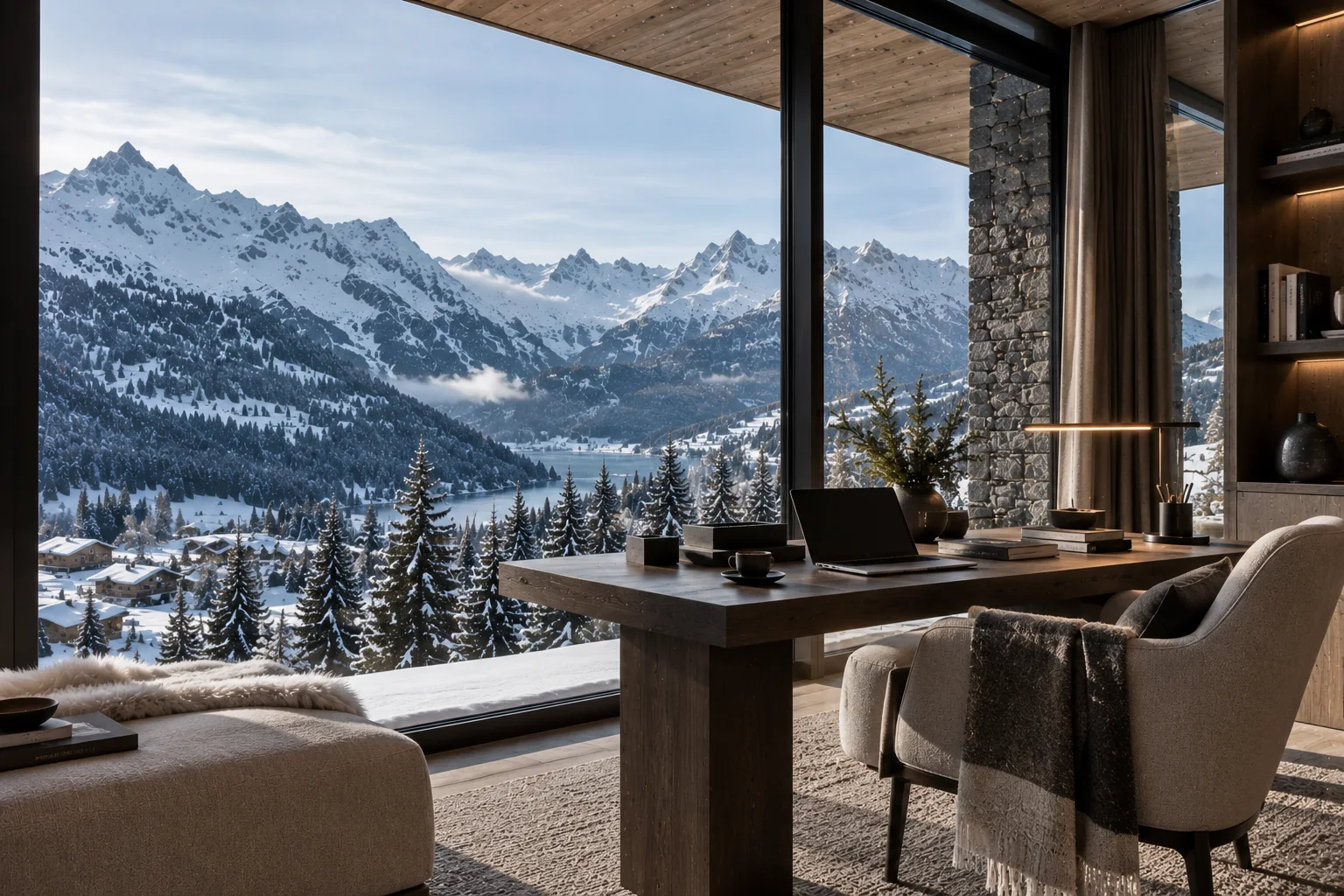
UBS’s 2026 Swiss report identifies the possibility of changing a holiday home into a primary residence later in life as one of the factors supporting demand. It also notes growing interest among buyers approaching retirement, particularly those living outside the Alpine cantons.
Yet the possibility of a future change in use should be examined carefully. A holiday property is not automatically suitable for permanent residence. Local services, healthcare access, transport, winter accessibility, maintenance requirements and the size of the home can all affect its practicality. UBS also notes that the data do not show a general movement of Switzerland’s population towards the mountains, despite interest in retirement living.
For buyers who anticipate a long ownership horizon, flexibility should therefore be evaluated realistically. A property that can accommodate extended stays may be valuable without necessarily becoming a permanent home.
The second home is increasingly a way to preserve future options, but those options depend on the property’s location, design and legal status.
Ownership, Rental Income and the Investment Question
For some purchasers, the Alpine second home is primarily a personal retreat. For others, it forms part of a wider property portfolio. In practice, many buyers consider both uses, weighing the benefits of personal occupation against the costs of ownership and the possibility of rental income.
UBS’s research shows why this calculation requires care. In Switzerland, higher hotel rates and limited accommodation availability have increased the relative appeal of owning a holiday property. At the same time, acquisition costs, maintenance, taxes, financing and the opportunity cost of invested capital remain significant.
Rental income is not guaranteed, and the potential return depends on the destination, occupancy, operating expenses, management arrangements and restrictions on letting. A property that is ideal for personal use may not be the most efficient rental investment, while a managed tourist apartment may offer rental services at the expense of flexibility for the owner.
UBS’s 2026 report distinguishes managed tourist apartments from traditional holiday homes. These properties may be more affordable than comparable conventional holiday apartments, but owners generally face restrictions on personal use and must account for management fees, maintenance reserves and operating costs. The report cautions that gross rental yields can be modest and that returns may fall significantly after expenses.
Buyers should also investigate local regulations before making assumptions about renting or future resale. Rules differ between countries and destinations, and legal restrictions can affect both foreign ownership and the permitted use of a property.
An Alpine second home should be assessed first as a property with real ownership costs, not as an investment whose returns are assumed in advance.
Regulation Is Part of the Buying Decision
In the Swiss Alps, legal restrictions are particularly important. The country’s framework governing second homes limits the creation of certain new holiday properties in municipalities where second homes account for more than 20% of the housing stock. Separate rules also regulate the acquisition of Swiss property by certain foreign non-residents under the Lex Koller legislation.
In April 2026, the Swiss Federal Council announced proposals to tighten Lex Koller, including measures affecting permits for foreign non-resident buyers. These were proposals reported in the UBS Swiss Alpine Property Focus 2026, not a reason to assume that every proposed measure was already in force. Prospective purchasers should verify the current legal position and the rules applying to their individual circumstances before proceeding.
Other countries have their own property, planning, taxation and rental frameworks. A buyer considering Switzerland, France, Italy or Austria should not assume that the same purchase conditions or ownership rights apply across borders.
Legal advice is particularly important when a property is intended for rental, future conversion to a primary residence or purchase through a company or other ownership structure. The relevant rules can influence not only whether a transaction is possible but also how the property may be used later.
What Buyers Should Consider Before Choosing a Property
The most effective way to evaluate an Alpine second home is to look beyond the initial appeal of the property and examine how it will function over time. A disciplined assessment can help distinguish a residence that suits the owner’s life from one that merely performs well in a viewing.
- Patterns of use: Decide whether the property is intended for winter holidays, summer stays, frequent weekends, remote work or possible retirement.
- Year-round accessibility: Examine transport connections, local services and how practical the destination is outside the main tourist season.
- Architecture and maintenance: Consider the layout, energy performance, building condition, access, upkeep and long-term renovation requirements.
- Running costs: Account for taxes, insurance, maintenance, utilities, financing and any shared-building or resort fees.
- Rental assumptions: Verify local letting rules, likely operating costs, management fees and the limitations on personal use before including rental income in the financial calculation.
- Legal eligibility: Confirm ownership restrictions, second-home rules and the conditions applying to foreign purchasers in the relevant jurisdiction.
- Resale considerations: Evaluate the destination’s supply, accessibility, tourism offer and buyer demand without assuming that historical price growth will continue.
These considerations are not intended to reduce the emotional appeal of buying a mountain home. They help ensure that the decision remains sound after the initial excitement of the view, the architecture and the setting has passed.
The New Meaning of the Alpine Second Home
The Alpine second home is evolving from a place associated primarily with winter holidays into a more flexible form of ownership. Strong tourism demand, high property prices in established resorts, changing working patterns and interest in longer mountain stays are contributing to that evolution. The extent to which these factors influence individual purchases varies, but together they help explain the continued appeal of Alpine property.
For architects and developers, the shift creates an opportunity to design homes around genuine patterns of occupation rather than a fixed seasonal image. For buyers, it encourages a more considered approach to location, layout, running costs and future use.
For the market as a whole, however, strong demand brings challenges as well as opportunities. Rising prices can make housing less accessible to local residents, while planning restrictions and environmental pressures complicate the creation of new supply. The long-term appeal of Alpine destinations depends not only on the quality of their properties but also on the vitality of the communities and landscapes that make them desirable.
The most successful second home will not necessarily be the largest, the most expensive or the one with the most dramatic panorama. It will be the property that fits its owner’s needs, responds intelligently to its location and remains useful as those needs change.
The new Alpine second home is more than a winter escape. It is a considered relationship with the mountains, one shaped by personal freedom, architectural quality and the possibility of returning throughout the year.