The modern chalet is no longer simply a winter retreat. As Alpine destinations evolve into year-round places to live, work, relax and reconnect, the interiors of these mountain homes are undergoing a quieter transformation. The familiar language of timber, stone and fireplaces remains, but the furniture inside is becoming more considered, more architectural and far less tied to the traditional image of a ski lodge.
This shift places indoor luxury furniture at the centre of the contemporary chalet. Rather than treating furniture as decoration added after the architecture is complete, today’s designers increasingly use sofas, armchairs, dining tables, consoles and occasional pieces to establish proportion, comfort and atmosphere from the beginning. The result is an Alpine interior that feels rooted in its setting without becoming trapped by it.
The change reflects a broader evolution in Alpine living. Knight Frank’s Alpine property research identifies the growing appeal of mountain destinations for year-round living, while current properties in destinations such as Villars and Chamonix are explicitly positioned around life beyond the traditional ski season.
From Ski Retreat to Contemporary Alpine Home
For much of its history, the chalet had a straightforward purpose: provide warmth and shelter after a day in the mountains. Interiors were naturally shaped around winter, with enclosed rooms, substantial timber, fireplaces and generously upholstered seating creating a sense of refuge.
That identity has not disappeared. It has simply become more sophisticated.
Alpine properties are increasingly expected to work across seasons and lifestyles. Savills has previously documented the movement from chalets used primarily as winter escapes towards properties occupied for longer periods throughout the year, a change that has influenced both architecture and interior design.
Contemporary projects demonstrate how far that evolution has progressed. A chalet currently being transformed in Verbier, for example, is being re-engineered with expansive glazing, refined joinery and a new layout designed around modern living, while retaining its Alpine foundations.
In this context, indoor luxury furniture has to perform differently. It must create warmth without visual heaviness, support social life without sacrificing intimacy, and complement architecture without competing with the mountain landscape outside.
The New Language of Alpine Furniture
The most interesting contemporary chalets are not abandoning Alpine character. They are editing it.
Instead of reproducing every familiar mountain reference, designers are selecting a smaller number of elements and giving them greater visual importance. Timber may remain prominent, but it can be paired with refined upholstery, sculptural seating, stone surfaces and carefully controlled lighting. Traditional references become part of a broader composition rather than a decorative theme.
This approach is visible in recent chalet projects across the Alps. A contemporary Gstaad residence by Hruby Studio, for instance, uses differentiated treatments of fir and larch across architecture and furniture while deliberately distancing the interior from conventional Alpine chalet aesthetics. Craftsmanship, integrated detailing and the visible character of materials become part of the design language.
The distinction is subtle but important: the modern chalet does not need to look rustic to feel Alpine.
Indoor Luxury Furniture as an Architectural Element
In highly considered mountain interiors, furniture is increasingly treated as part of the architecture rather than a collection of independent objects.
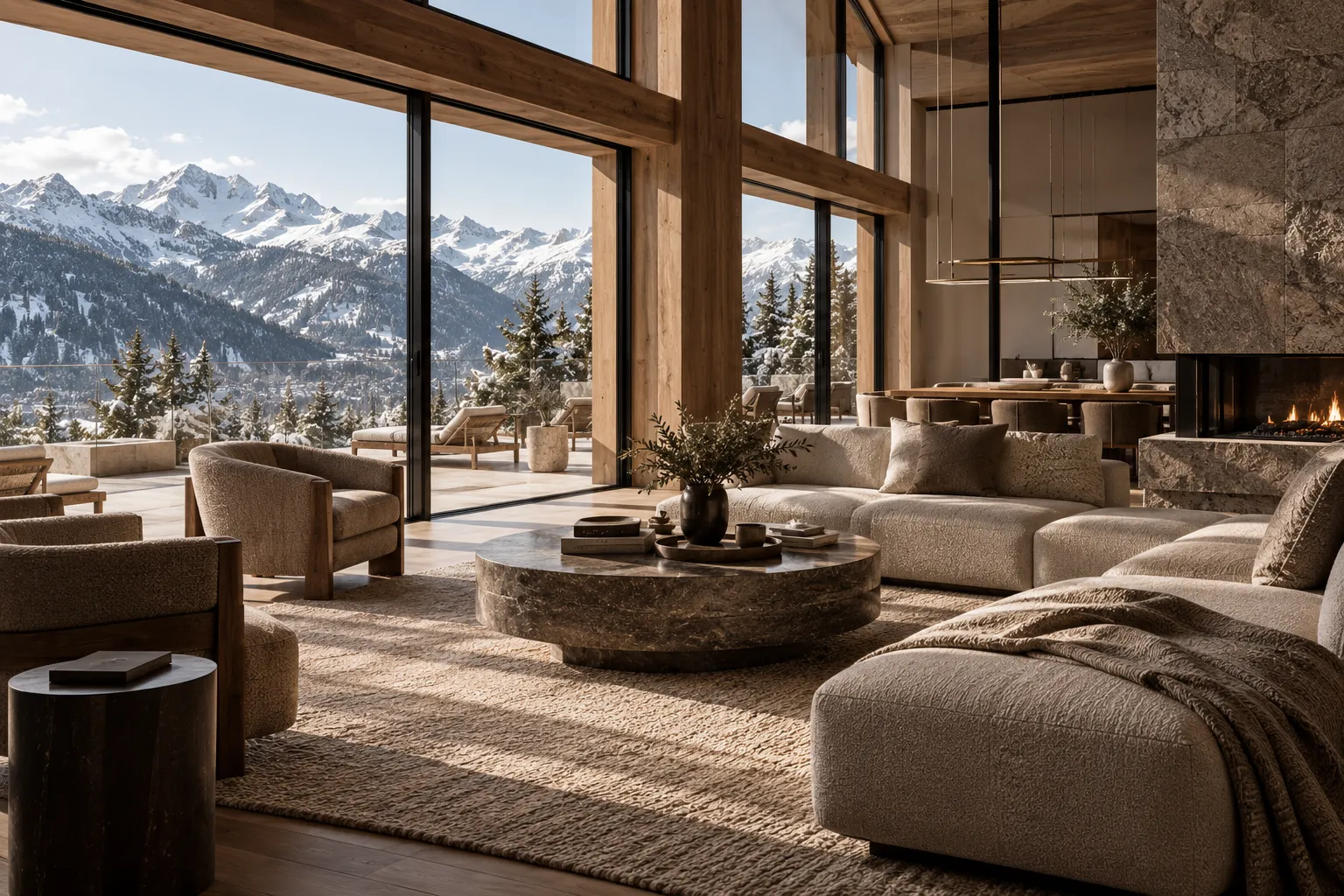
A large sectional can establish the geometry of a living room. A dining table can anchor an open-plan space beneath a vaulted ceiling. An armchair can create a quiet reading position beside a window. A console can organise circulation through an entrance without interrupting the visual continuity of the architecture.
This makes scale particularly important.
Chalets often contain generous volumes, double-height spaces and expansive glazing. Furniture that is too small can disappear within them, while oversized pieces can make the interior feel congested. The strongest schemes use proportion as a design tool, allowing each piece to occupy its space with enough presence to feel intentional.
Recent chalet projects illustrate this principle particularly well. A large-scale Val d’Isère residence completed in 2025 combines a double-height living area with a fireplace, bar, professional kitchen and intimate dining space, while extensive glazing connects the interiors to the surrounding mountains.
In such spaces, indoor luxury furniture is not merely filling square metres. It defines how those square metres are experienced.
Comfort Without Visual Weight
Comfort has always been fundamental to chalet design, but contemporary interiors are finding more restrained ways to achieve it.
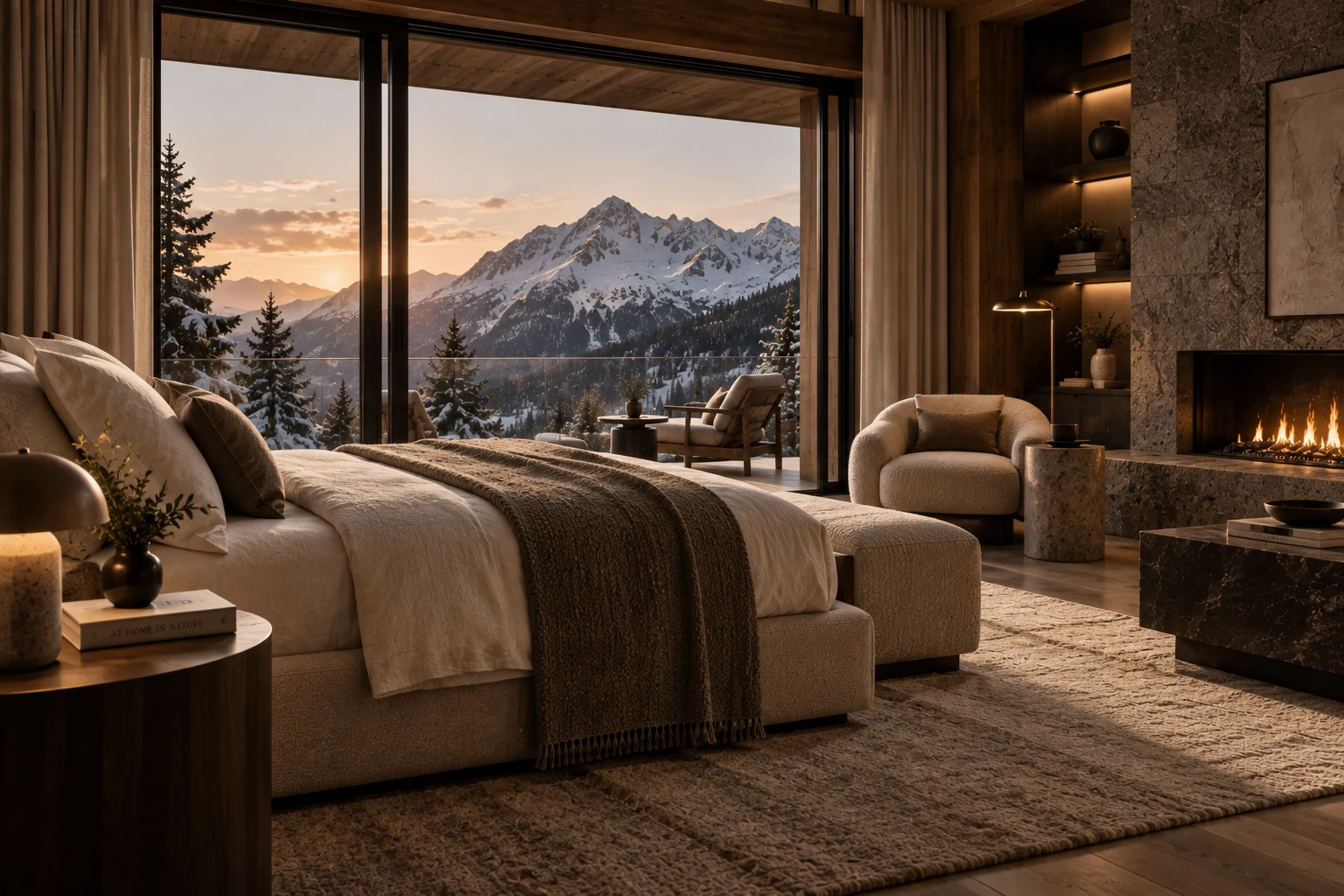
Deep sofas, generous armchairs, upholstered benches and soft textiles remain essential, particularly in spaces intended for long evenings and relaxed gatherings. Yet their silhouettes are becoming cleaner and more sculptural. Low profiles, rounded edges and disciplined proportions can create softness without producing the heavy, enclosed feeling associated with some traditional mountain interiors.
This balance is particularly valuable in properties designed for different seasons. In winter, substantial upholstery and tactile textiles reinforce warmth. During summer, lighter fabrics, open layouts and visual connections to the landscape allow the same interior to feel fresh rather than overly cocooned.
The objective is not to make a chalet feel softer; it is to make softness architectural.
This is where indoor luxury furniture can have an unusually strong influence. The tactile quality of a chair, the depth of a sofa or the finish of a wooden table can change the emotional temperature of an entire room without requiring additional decoration.
Dining Rooms Designed for Alpine Living
Few pieces reveal the changing role of furniture more clearly than the dining table.
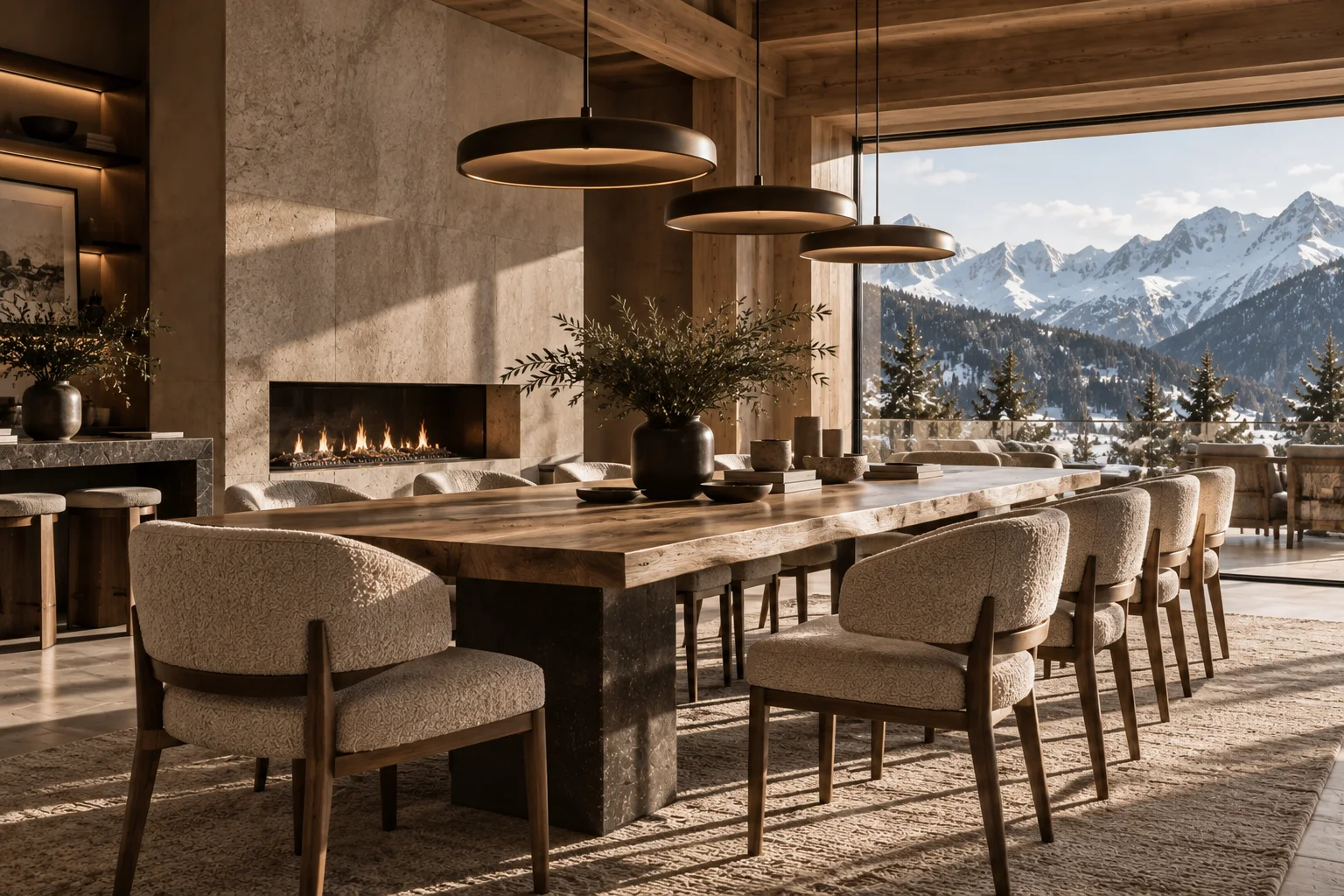
In a luxury chalet, dining is rarely just a functional activity. It can become the centre of the evening, the place where family and friends gather after skiing, hiking or simply spending a day outdoors. The table therefore needs to accommodate generous numbers while remaining proportionate to the architecture around it.
A recent luxury chalet project in Méribel provides an instructive example. Designed partly for rental use, the Harmony chalet features a contemporary furniture scheme and a bespoke solid oak dining table measuring 5.60 metres by 1.10 metres, seating up to 16 guests. The table was designed specifically for the project and produced by local workshops.
That kind of scale is not about spectacle for its own sake. It responds directly to how the house is intended to be used.
For architects and interior designers, this is an important distinction. Luxury furniture becomes most convincing when its scale and function emerge from the lifestyle of the space.
Material Contrast: The Secret to a More Contemporary Chalet
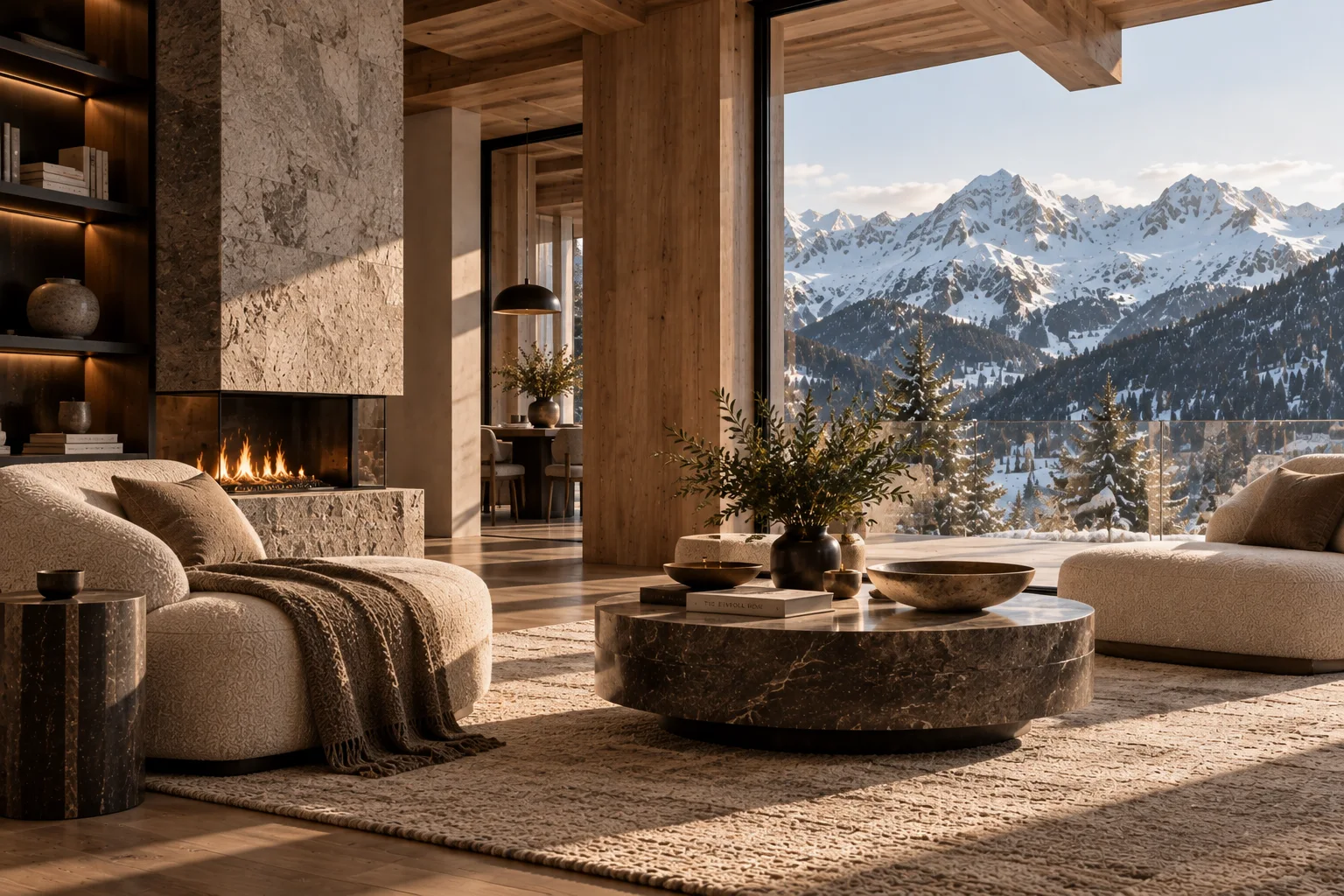
Wood remains inseparable from Alpine architecture, but contemporary interiors are using it with greater restraint. Rather than covering every surface in the same timber, designers are creating contrast between warm wood, stone, metal, glass and upholstery.
This allows the furniture to become part of a layered material composition.
- Wood introduces warmth, grain and a connection to Alpine architecture.
- Stone brings visual weight and a sense of permanence.
- Upholstery softens architectural surfaces and introduces comfort.
- Metal can add precision and subtle contrast.
- Glass preserves visual continuity with the surrounding landscape.
- Natural textiles contribute tactile depth without overwhelming the room.
The result is not necessarily minimalist. It is edited.
A contemporary chalet can be richly layered while remaining visually calm. The secret lies in allowing each material to have a purpose rather than allowing every surface to compete for attention.
Furniture That Frames the Mountain
One of the greatest assets of an Alpine property is already outside the window. The mountains provide a constantly changing composition of snow, forest, rock, sky and light. The interior therefore has an unusual responsibility: it must support the view without attempting to outperform it.
This is where furniture placement becomes almost architectural.
A low sofa positioned perpendicular to a panoramic window can preserve the horizon. A pair of armchairs can create a private viewpoint without obstructing the room. A dining table aligned with the landscape can turn an everyday meal into an experience of place.
Recent Alpine projects increasingly use expansive glazing to bring the landscape into the interior. The contemporary chalet in Courchevel by Studio Norki, for example, places refined living spaces directly against mountain views, using carefully conceived furniture, textiles and custom details to establish the atmosphere.
The most successful interiors understand that the furniture should frame the mountain rather than compete with it.
From Fireplace-Centred Rooms to Flexible Living
The fireplace remains one of the most recognisable elements of a chalet interior, but it is no longer necessarily the only focal point.
Modern layouts increasingly allow several experiences to coexist within the same space: reading beside a window, dining with a mountain view, relaxing around a fireplace or retreating into a quieter seating arrangement. Furniture creates these zones without requiring walls.
This is particularly important in open-plan chalets, where the architecture may connect kitchen, dining and living areas beneath a single roof volume. Rather than fragmenting the room, carefully selected furniture can establish distinct identities while maintaining visual continuity.
A contemporary chalet in the French Alps designed by Woulfe, for example, combines an open living environment with curved seating, bouclé upholstery, layered textiles and a contemporary stone fireplace, creating separate moments of comfort within one coherent space.
Here, indoor luxury furniture becomes a form of spatial planning.
Why Bespoke Furniture Matters in the Modern Chalet
Mountain architecture rarely follows standard proportions. Sloping roofs, structural timber, irregular footprints, panoramic windows and dramatic changes in ceiling height can make conventional furniture difficult to integrate perfectly.
Bespoke furniture offers another possibility: allowing the object to respond to the architecture instead of forcing the architecture to accommodate a standard product.
This can mean adjusting the length of a dining table, altering the depth of a sofa, adapting upholstery to a specific environment or creating a side table around an existing architectural detail. The result is a more coherent relationship between furniture and space.
That approach is already evident in contemporary chalet work. NORKI’s Studio Chalet, for example, integrates interior design, bespoke furniture, upholstery and soft furnishings as a single design process, treating furniture as part of the overall identity of the mountain home.
Bespoke design is therefore not simply about exclusivity. In a chalet, it can be a practical architectural response.
A New Standard for Indoor Alpine Luxury
The contemporary chalet is becoming less interested in recreating an idea of mountain living and more interested in interpreting it.
That distinction explains why indoor luxury furniture has become so important. The strongest interiors do not abandon timber, stone, fireplaces or traditional craftsmanship. They place those elements within a more contemporary framework shaped by proportion, comfort, flexibility and individual character.
As Alpine properties continue to evolve beyond seasonal retreats, their interiors will need to support a broader rhythm of life. A chalet must feel inviting after a day on the slopes, but equally convincing during a summer morning, a long lunch with friends or a quiet afternoon overlooking the valley.
The future of Alpine design may therefore belong to interiors that feel less like ski lodges and more like exceptional homes, spaces where indoor luxury furniture is not an accessory to the chalet experience, but one of the elements that defines it.
Ultimately, the modern chalet does not need more decoration to feel luxurious. It needs furniture with purpose, materials with character and spaces that understand how people actually want to live in the mountains.
That is perhaps the most refined expression of Alpine luxury: not recreating the past, but giving its most enduring qualities a contemporary place to live.