Luxury has never stood still. What once communicated distinction through scale, ornament and visible abundance is increasingly being replaced by something more difficult to quantify: a sense of place, thoughtful design, privacy, craftsmanship and experiences that feel genuinely personal. In the most sophisticated residences, luxury is becoming less about how much a property contains and more about what makes it impossible to replicate.
This shift is particularly visible across the high-end residential market. A recent 2026 report from Knight Frank describes a move from specification towards “depth”, arguing that amenities once considered exceptional, such as private gyms, spas, cinemas, lounges and wellness facilities, are becoming increasingly standard at the upper end of the market. The attributes gaining importance are those that cannot simply be added to a specification sheet: exceptional locations, historic architecture, mature landscapes, cultural connection, human expertise and a strong sense of identity.
When Luxury Becomes More Difficult to Define
For decades, luxury real estate relied on recognisable signals. Larger rooms, rarer materials, expansive terraces, private amenities and increasingly elaborate services provided a clear visual vocabulary of exclusivity. These elements remain relevant, but their ability to distinguish one property from another is changing.
At the highest levels of the market, a spa is no longer remarkable simply because it exists. Neither is a private cinema, a concierge, a wine cellar or a wellness suite. When enough properties offer the same features, they cease to function as meaningful markers of distinction. The result is a subtle but important transformation: luxury is moving away from accumulation and towards differentiation through depth.
Depth is difficult to manufacture because it depends on context. A historic building has a story that cannot be reproduced in a new development. A mature garden cannot be instantly created. A particular coastline, mountain view or neighbourhood carries a geographical identity that belongs exclusively to its setting. Likewise, a piece of furniture made by skilled craftspeople can possess a character that is fundamentally different from an interchangeable mass produced object.
This is where contemporary luxury living becomes less about display and more about discernment.
From Specification to Sense of Place
One of the clearest developments in luxury real estate is the growing importance of sense of place. According to Knight Frank’s 2026 research, exceptional locations and lifestyle destinations are increasingly competing with established global cities, with markets such as Marbella and Comporta demonstrating the strength of demand for high quality environments beyond traditional urban wealth centres.
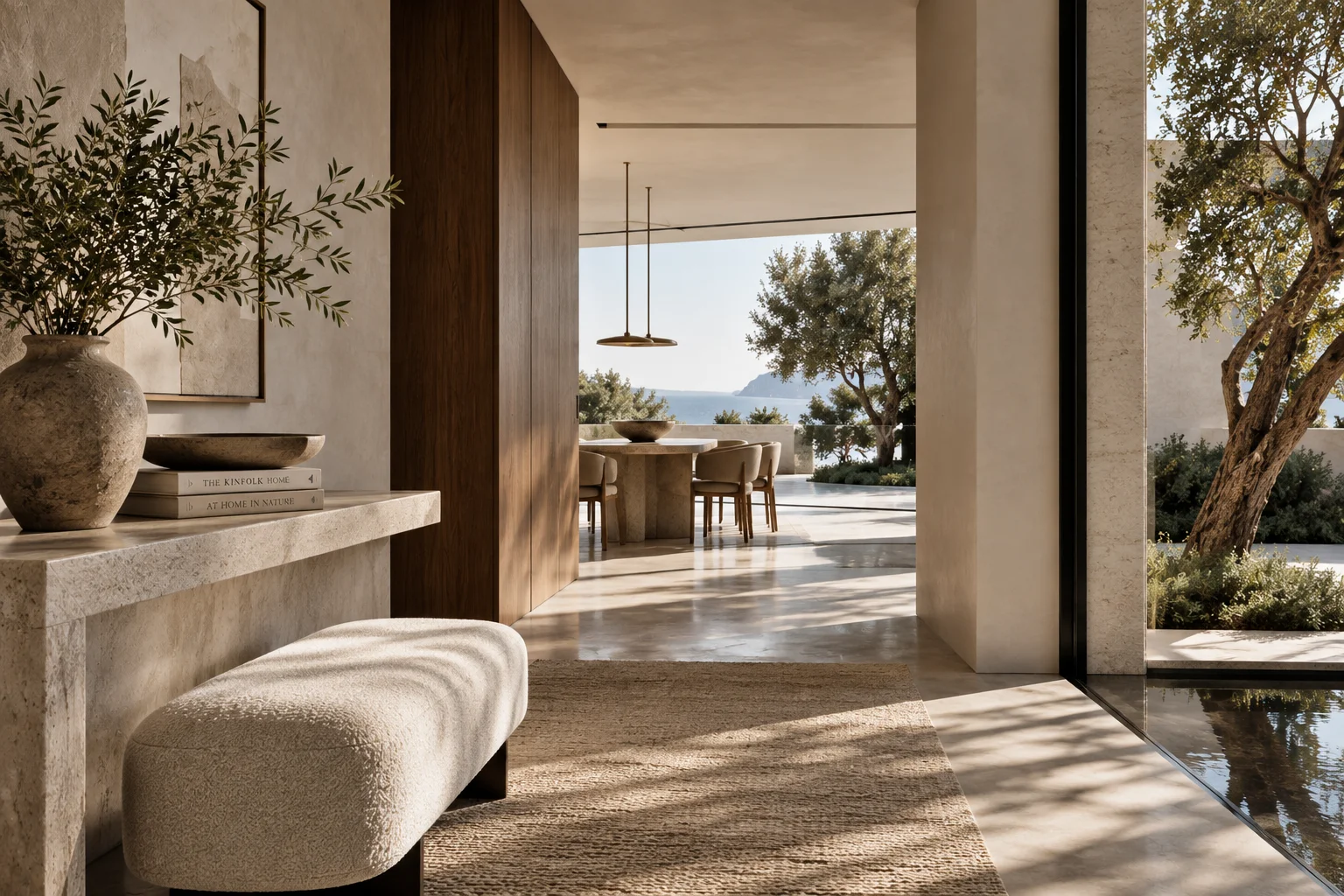
The implication for architects and designers is significant. A successful luxury residence cannot be considered independently from its surroundings. Its architecture, materials, landscaping and interiors should respond to the climate, culture and visual character of the location rather than imposing an entirely interchangeable aesthetic.
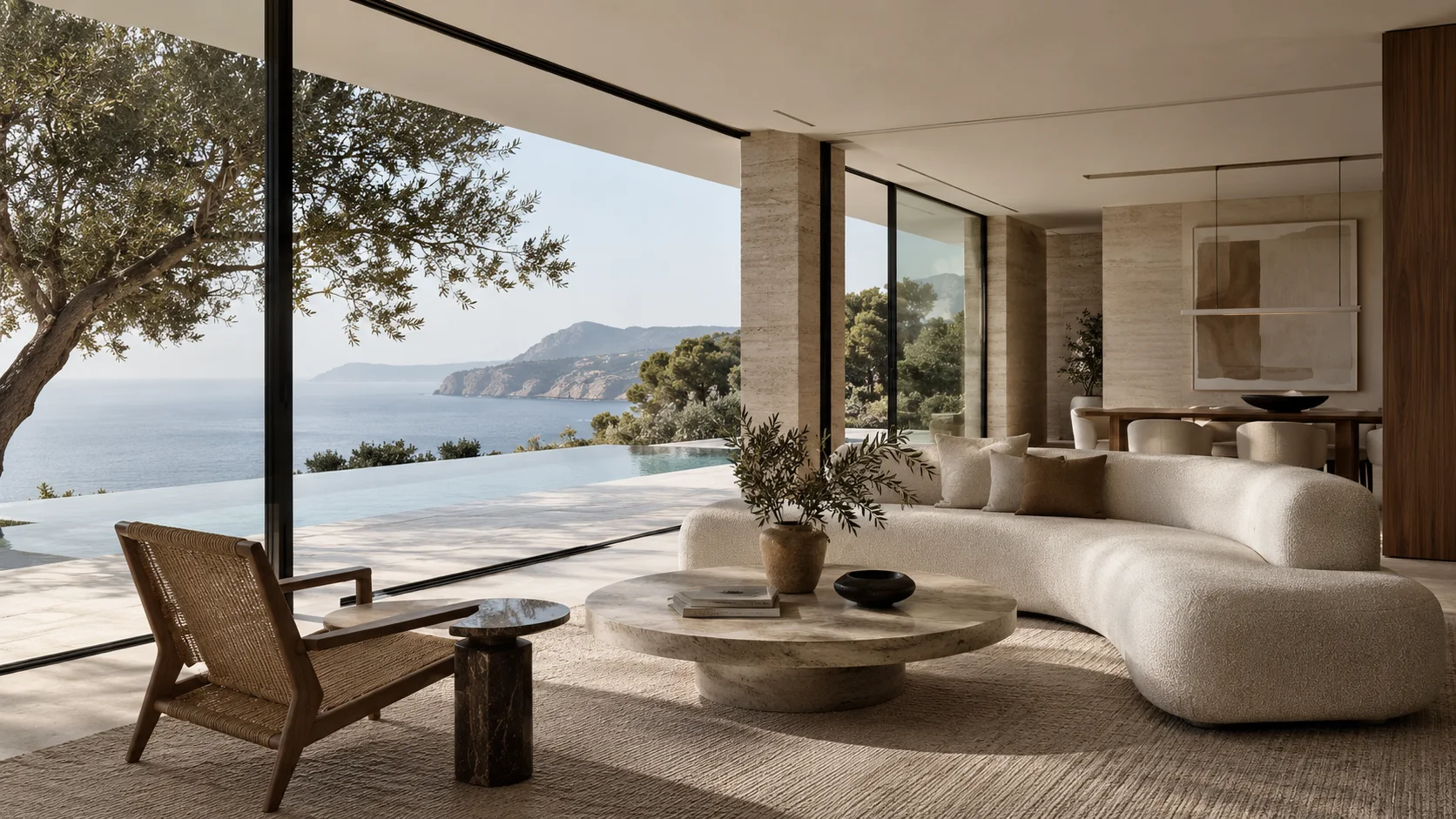
In a Mediterranean setting, this might mean embracing natural light, shaded terraces, tactile stone, timber and a fluid relationship between interior and exterior spaces. In an urban residence, the response may instead involve framing a city view, preserving historic architectural details or creating a sense of privacy within a dense environment.
The principle remains the same: the strongest luxury interiors feel as though they belong precisely where they are.
The End of the Amenity Arms Race
The proliferation of amenities has created an interesting paradox within luxury residential design. Developers have increasingly competed through the number and sophistication of facilities offered to residents, from private dining rooms and cinemas to spas, gyms, pools and recovery spaces.
Yet when these features become expected, adding another amenity does not necessarily create a more luxurious experience. Instead, the question becomes whether the amenity contributes meaningfully to the way residents actually live.
This distinction is already influencing how luxury developments are conceived. Knight Frank’s latest research suggests that wellness, for example, is increasingly being considered as something embedded within the building itself rather than simply presented as a collection of facilities.
That could mean better natural light, acoustic comfort, access to nature, considered spatial planning, air quality and environments designed to reduce friction throughout the day. Luxury becomes less visible, but arguably more consequential.
A beautiful wellness suite may be impressive. A home that makes everyday life calmer, easier and more restorative is something else entirely.
Why Personalisation Has Become a Mark of Luxury
As standardised luxury becomes easier to reproduce, personalisation acquires greater value. The contemporary high-end residence is increasingly expected to reflect the people who inhabit it rather than simply conform to a predetermined image of luxury.
This creates a natural role for bespoke interior architecture and furniture. A custom dining table can be designed around the proportions of a room. A sofa can respond to a particular architectural configuration. Materials can be selected according to the atmosphere a designer wants to create. Details can reference local craftsmanship, personal collections or the history of the property.
Bespoke design transforms the interior from a collection of luxury products into a coherent expression of identity.
This is particularly relevant to international homeowners, who may have lived across several countries or maintain multiple residences. Their homes can become a meeting point between different cultural influences, travel experiences and personal histories. In this context, a carefully selected piece of furniture may carry more meaning than an entire room of expensive objects.
The Value of Things That Cannot Be Replicated
The most interesting aspect of the current evolution in luxury is that many of its most valuable qualities are not products at all.
- Time cannot be manufactured through greater spending.
- Privacy depends on architecture, location and thoughtful planning.
- Provenance comes from history, craftsmanship and authenticity.
- Trust is built through relationships and consistent service.
- Sense of place depends on geography and cultural context.
- Human judgement cannot be reduced to a catalogue of specifications.
- Memory develops through lived experience rather than acquisition.
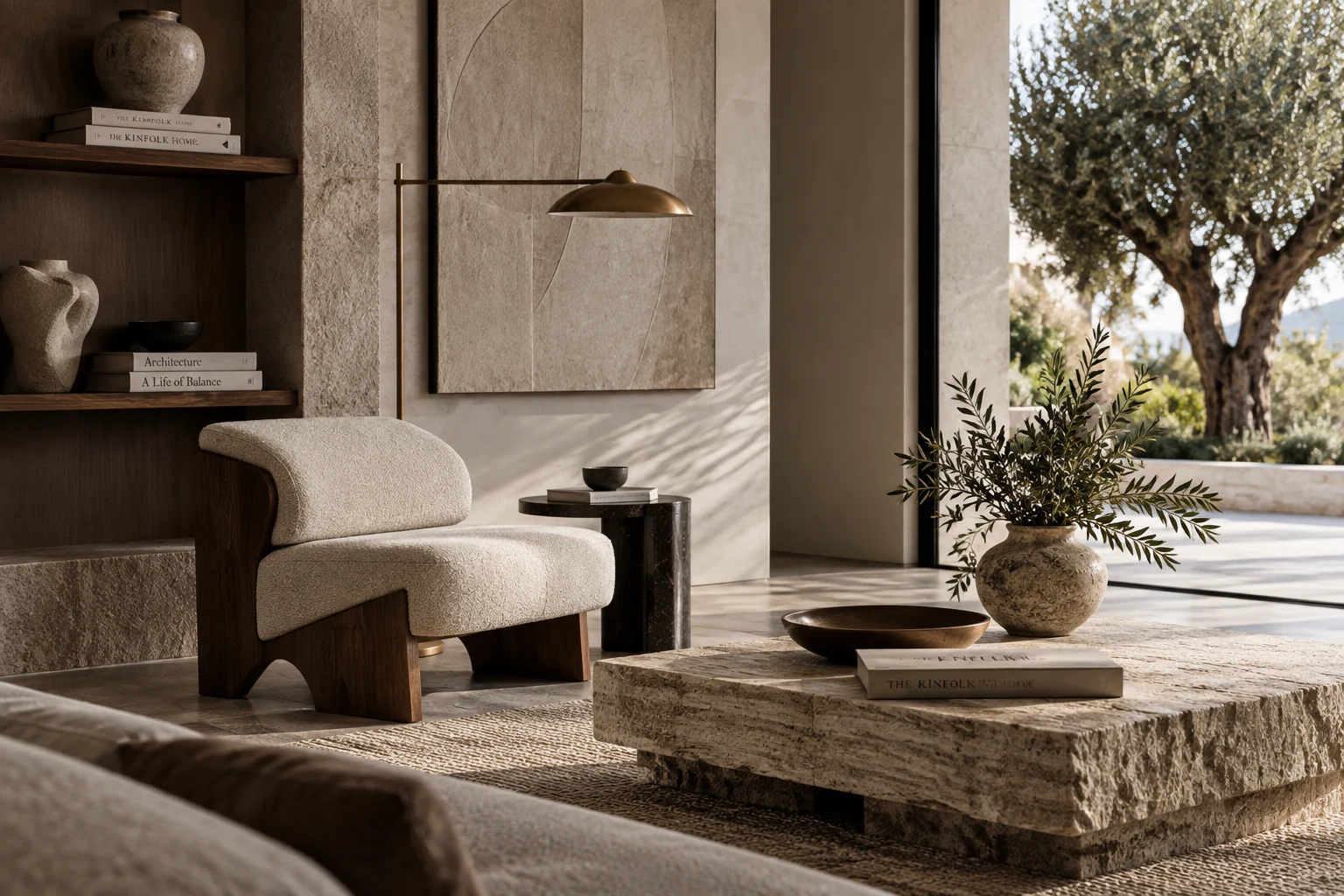
These qualities explain why the new language of luxury can appear deceptively restrained. A room does not necessarily need more objects to feel more sophisticated. It may need better proportion, stronger material relationships, carefully considered lighting or a single piece with genuine character.
The result is a form of luxury that is quieter but not necessarily minimalist. It is more interested in meaning, longevity and emotional resonance than in visual abundance.
Craftsmanship in an Age of Standardisation
Craftsmanship occupies an increasingly important position within this shift because it provides precisely the qualities that standardisation struggles to reproduce.
A hand-finished surface, carefully selected timber or individually crafted piece of furniture carries evidence of human involvement. Small variations become part of its identity rather than imperfections to be eliminated. The material has a story, the process has a history and the final object can develop a relationship with its surroundings over time.
This does not mean contemporary luxury must reject technology or innovation. On the contrary, the most compelling interiors often combine advanced manufacturing with traditional techniques, precision with human judgement and contemporary forms with established craft practices.
The distinction lies in intention. Technology can make production more precise; craftsmanship can make the result more meaningful.
Luxury Living and the Importance of Human Expertise
There is another form of scarcity becoming increasingly relevant: expertise.
As digital tools make information, imagery and design references more accessible, knowing what to choose becomes more valuable. Architects, interior designers, craftspeople and curators bring something that an endless catalogue cannot provide: judgement.
Knight Frank’s 2026 research identifies human expertise and personalised service as important differentiators within luxury hospitality and residential environments. As technology becomes more capable of handling routine tasks, the value of people who understand individual preferences, context and expectations can increase rather than diminish.
This creates a useful distinction between personalisation and customisation. Customisation changes a product. Personalisation understands a person.
The latter requires observation, conversation and experience. It is slower, more nuanced and considerably harder to scale, which may be precisely why it carries such value at the upper end of the market.
From Owning More to Living Better
The evolution of luxury living does not mean that affluent consumers have stopped valuing exceptional objects or prestigious properties. Rather, the context surrounding those possessions is changing.
Knight Frank’s research notes that rising wealth continues to support demand for exceptional travel, villas, clubs and other high-value experiences. At the same time, its analysis suggests that status is increasingly communicated through how people live rather than simply what they own.
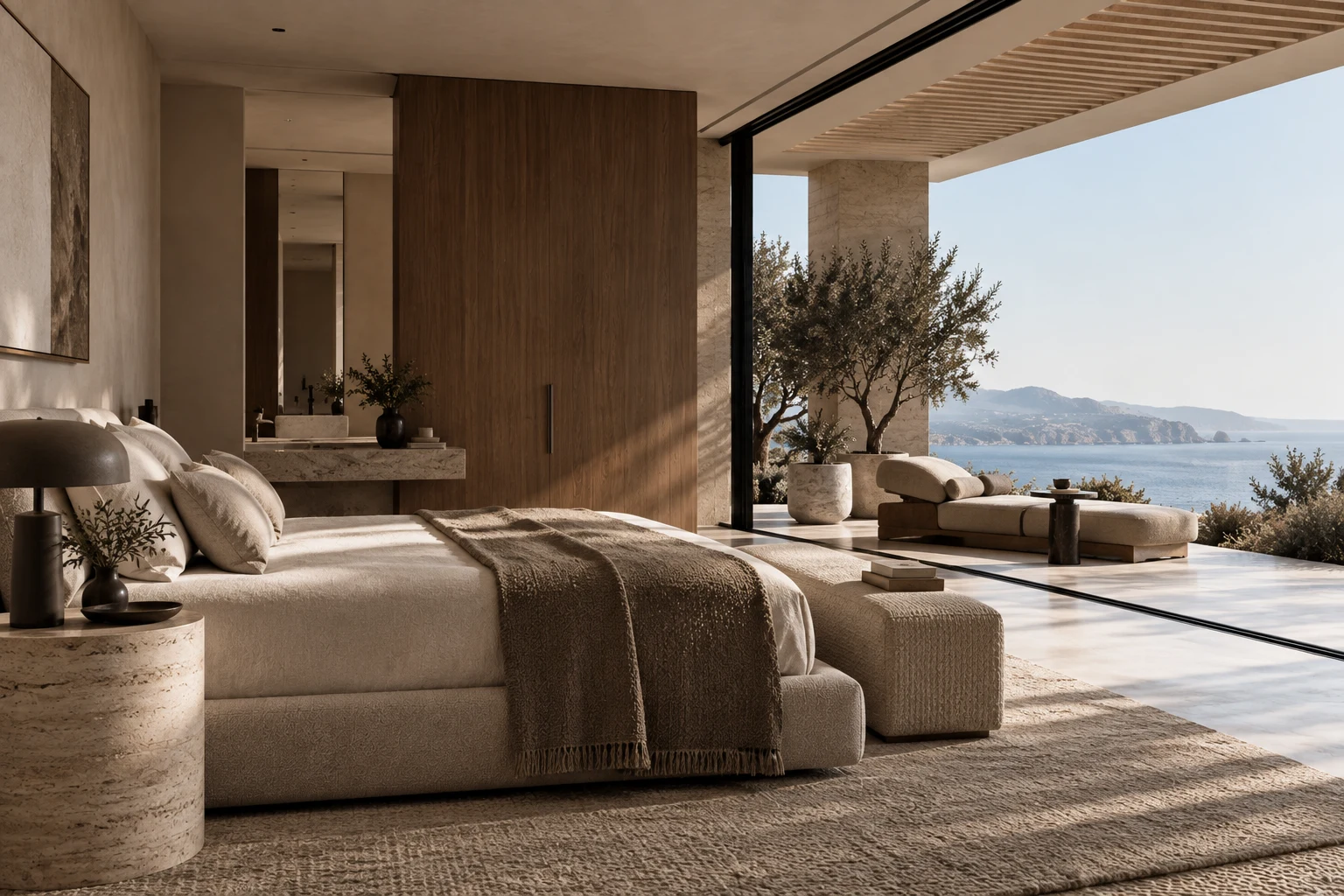
This helps explain the growing importance of wellness, nature, privacy, cultural access and meaningful experiences within high-end residential design. A property can be luxurious because it provides extraordinary access to a landscape, because its architecture preserves an important piece of history or because its interiors create an exceptional environment for everyday life.
In other words, the home itself becomes part of a broader lifestyle rather than a standalone status object.
What This Means for the Future of Luxury Interiors
For architects, designers and developers, this transformation presents a challenge. The easiest response to a changing market is often to add more: another amenity, another finish, another technological feature, another branded service.
The more sophisticated response may be to ask what should be removed, refined or made more specific to the place and its inhabitants.
Future luxury residences are likely to be judged not only by what they offer, but by how convincingly all their elements belong together. Architecture, furniture, landscape, lighting, materials and service should contribute to a single experience rather than compete for attention.
This also changes the role of furniture within luxury interiors. A dining table is not merely a surface for dining. A lounge chair is not simply a seat. The right pieces establish scale, encourage interaction, frame views and influence how a room is experienced. Furniture becomes part of the architectural narrative.
That is particularly important in spaces designed for longevity. Trends may create immediate appeal, but proportion, material quality and thoughtful craftsmanship can allow an interior to remain relevant long after a particular aesthetic has faded.
The New Luxury Is What Cannot Be Copied
The future of luxury living may therefore be less about creating increasingly spectacular environments and more about creating increasingly specific ones.
A residence with an extraordinary view cannot be replicated elsewhere. Neither can a historic building, a mature landscape or a genuine connection to a particular culture. A bespoke interior shaped around its owner’s life cannot simply be reproduced from a catalogue. A piece of furniture carrying the marks of its maker possesses a character that becomes richer through use.
These qualities point towards a more nuanced understanding of luxury, one based not on excess, but on rarity, relevance and depth.
For the next generation of luxury residences, the question may no longer be how much can be included within a property. It may be something considerably more demanding: what can be created here that could exist nowhere else?
That is where luxury becomes more than appearance. It becomes a relationship between place, people, design and time, and ultimately, an environment with a character of its own.