Among global design capitals, Paris remains unmatched in its ability to merge heritage, craftsmanship, and contemporary elegance. The luxury hotels in Paris are not only destinations for hospitality but also benchmarks for interior design excellence. For architects and interior designers, these spaces offer a rich source of inspiration, where historical architecture is reinterpreted through refined materials and modern spatial strategies. From grand palaces to intimate boutique settings, Parisian hotels demonstrate how design can create immersive environments that balance tradition and innovation.
The Design Language of Parisian Luxury Hotels
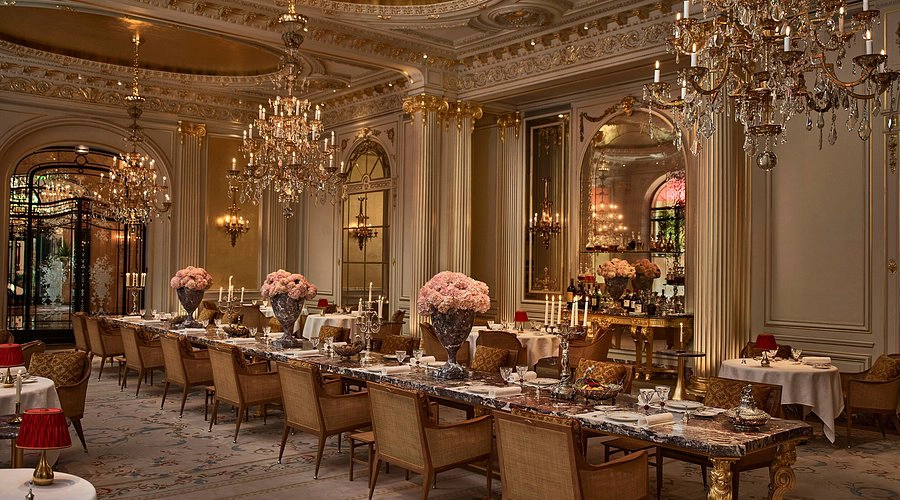
Parisian luxury hotels are defined by a unique design language that blends classical architecture with contemporary refinement. Rather than erasing history, designers work to preserve and elevate it.
Ornate moldings, high ceilings, and original detailing are often paired with modern furnishings and curated art collections. This layered approach creates interiors that feel both timeless and current. Moreover, the emphasis on craftsmanship and material quality reinforces the sense of luxury. For designers, these hotels highlight the importance of respecting architectural context while introducing new design narratives.
Key Characteristics of Luxury Hotels in Paris
Across the city, luxury hotels in Paris share several defining interior design principles:
- Preservation of historic architectural elements
- Use of rich materials such as marble, velvet, and wood
- Integration of contemporary art and design pieces
- Emphasis on symmetry and proportion
- Creation of intimate yet grand spatial experiences
These characteristics contribute to interiors that are both visually striking and deeply rooted in Parisian identity.
Hôtel de Crillon
A Masterpiece of Historic Restoration
Located on Place de la Concorde, Hôtel de Crillon represents one of the most refined examples of heritage restoration in Paris. Originally an 18th-century palace, the hotel has been meticulously redesigned to preserve its historic grandeur while introducing contemporary luxury.
Interiors feature custom furnishings, marble finishes, and carefully restored decorative elements. The design balances opulence with restraint, creating spaces that feel both majestic and livable. For designers, Hôtel de Crillon demonstrates how historical architecture can be adapted to modern standards without losing its original character.
Le Meurice
Classical Elegance with Artistic Influence
Le Meurice is renowned for its strong connection to art and culture, reflected in its richly detailed interiors. The design draws inspiration from 18th-century French palaces, with elaborate moldings, gilded accents, and symmetrical layouts.
- Lavish salons with ornate detailing
- Use of gold leaf and marble surfaces
- Custom furniture inspired by classical design
- Strong visual symmetry throughout spaces
- Integration of artistic references and heritage
These elements create an immersive environment that celebrates Parisian history while maintaining a sense of contemporary luxury.
Cheval Blanc Paris
Contemporary Luxury on the Seine
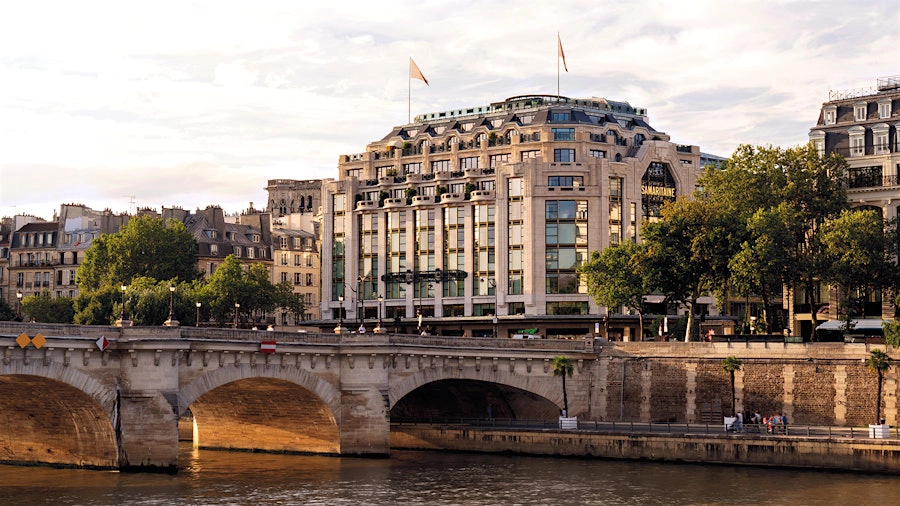
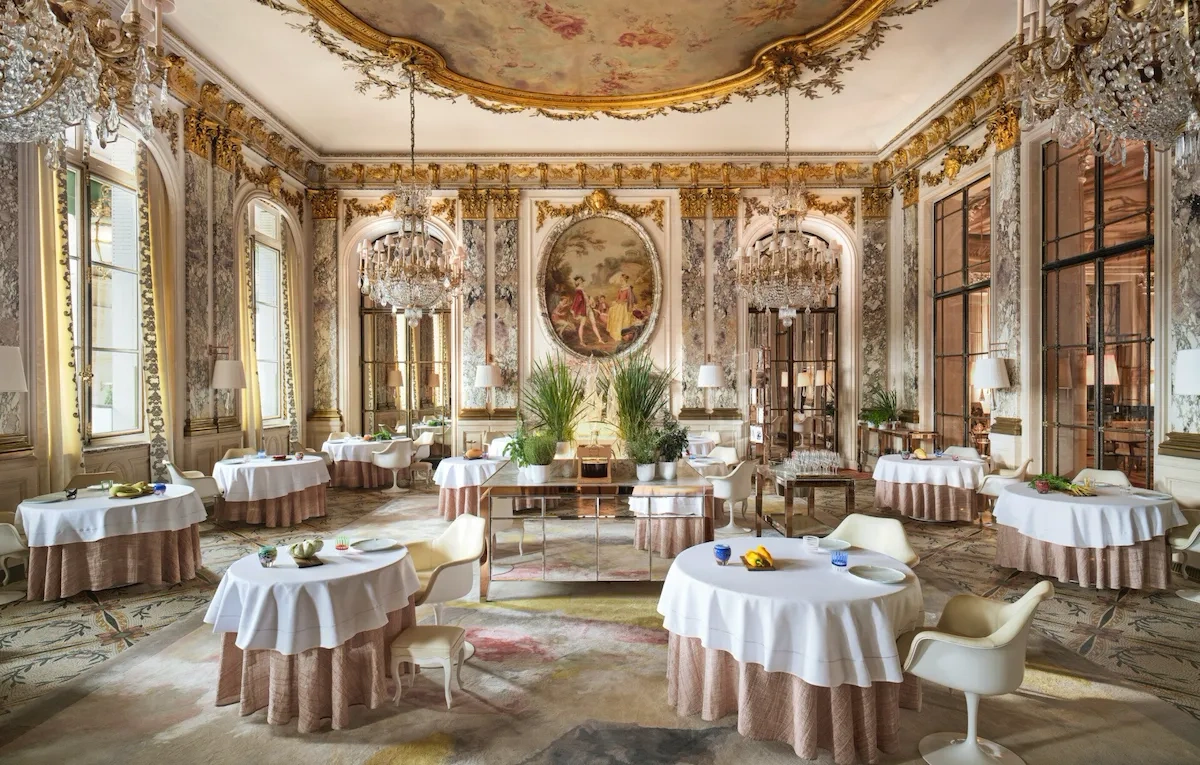
Cheval Blanc Paris offers a modern interpretation of Parisian luxury, emphasizing clean lines and refined materials. Located along the Seine, the hotel combines architectural clarity with sophisticated interior design.
Spaces are defined by a neutral palette, bespoke furnishings, and exceptional craftsmanship. Large windows frame views of the city, enhancing the connection between interior and exterior. This project illustrates how contemporary design can coexist with Paris’s historic context, creating a fresh yet timeless aesthetic.
Hôtel Plaza Athénée
Iconic Parisian Glamour
Hôtel Plaza Athénée is synonymous with Parisian elegance, known for its luxurious interiors and strong design identity. The hotel blends classic French style with modern updates, creating spaces that feel both iconic and current.
- Rich fabrics such as silk and velvet
- Warm color palettes with bold accents
- Detailed woodwork and decorative elements
- Elegant suites with layered textures
- Courtyard spaces that enhance spatial variety
This combination of elements results in interiors that are both dramatic and inviting, offering a clear example of how to maintain a strong design identity over time.
Saint James Paris
Eclectic Design in a Private Mansion
Saint James Paris stands apart for its eclectic and highly curated interior design. Set within a private mansion, the hotel combines classical architecture with bold, contemporary interventions.
The interiors feature a mix of patterns, textures, and colors, creating a dynamic and visually engaging environment. Despite its eclectic nature, the design remains cohesive, guided by a strong narrative. For designers, Saint James Paris demonstrates how creativity and individuality can coexist with luxury, resulting in spaces that feel both unique and sophisticated.
Materiality and Craftsmanship in Parisian Hotels
Material selection is a defining aspect of luxury hotels in Paris, shaping both the visual and tactile experience. Designers often work with:
- Marble for floors, bathrooms, and surfaces
- Velvet and silk for upholstery and drapery
- Wood for paneling and furniture
- Metal accents for contrast and detail
- Handcrafted finishes that emphasize quality
This focus on materiality ensures that interiors feel rich and layered, reinforcing the sense of luxury while maintaining authenticity.
Spatial Experience and Interior Composition
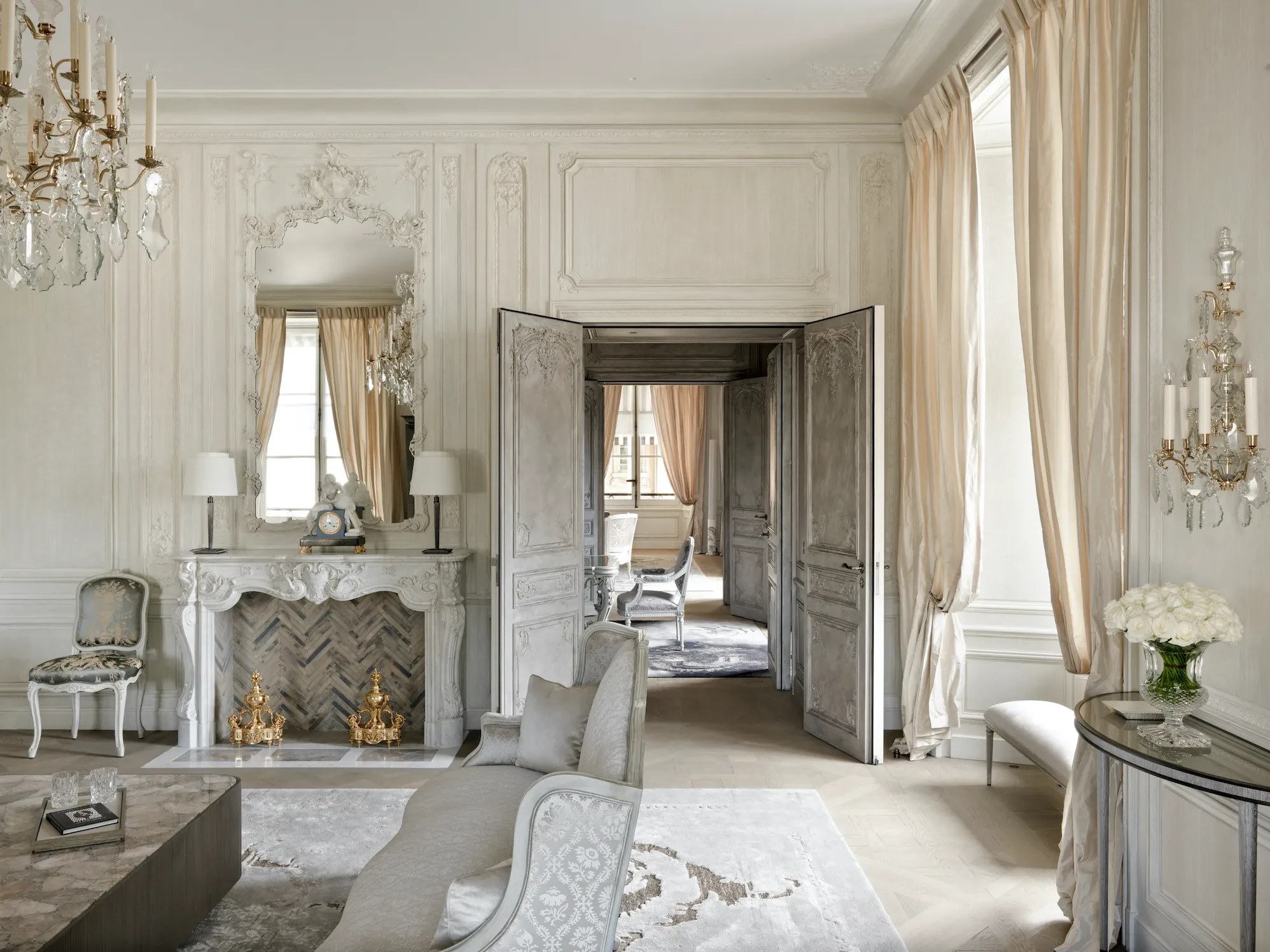
Spatial composition in Parisian hotels is carefully orchestrated to balance grandeur and intimacy. Large public spaces are complemented by more private areas, creating a varied and engaging experience.
Designers use symmetry, proportion, and alignment to guide movement and enhance visual clarity. At the same time, intimate seating areas and smaller rooms provide a sense of comfort and exclusivity. This balance is essential in creating interiors that feel both impressive and welcoming, offering valuable lessons for high-end residential design.
Lessons for Interior Designers and Architects
Luxury hotels in Paris provide a wealth of inspiration for design professionals:
- Respect and enhance existing architectural elements
- Use materials to create depth and richness
- Balance historical references with contemporary design
- Focus on proportion and spatial hierarchy
- Create cohesive narratives through interior design
These principles can be applied across a range of projects, from hospitality to residential design, ensuring a refined and thoughtful approach.
The Future of Luxury Hotel Design in Paris
As design continues to evolve, luxury hotels in Paris are likely to further explore the balance between heritage and innovation. New projects will continue to reinterpret historic buildings while integrating modern technologies and sustainable practices.
At the same time, the emphasis on craftsmanship and material quality will remain central. Paris will continue to serve as a reference point for designers seeking to create interiors that are both timeless and forward-thinking.
Conclusion
The most beautiful luxury hotels in Paris offer more than just exceptional hospitality. They represent a masterclass in interior design, where architecture, materials, and spatial composition come together to create immersive experiences.
For interior designers, architects, and luxury design studios, these hotels provide invaluable inspiration. By studying their approach to design, professionals can gain insights into how to create spaces that are not only visually stunning but also deeply meaningful and enduring.