The Most Beautiful Designer Apartments Available as Luxury Stays in NYC

New York City has always been a laboratory for interior innovation, but a growing category is redefining how design is experienced: Designer Apartments available as short-term luxury stays. These spaces go far beyond hospitality—they operate as immersive environments where architecture, furniture, and curated objects converge.
For interior designers, architects, and luxury design studios, these apartments offer something unique: real, livable case studies of high-end design in action. From sculptural lofts in SoHo to skyline-facing residences in Midtown, NYC’s designer apartments reveal how spatial storytelling translates into experiential luxury.
The Rise of Designer Apartments as Experiential Luxury
The demand for designer apartments in New York reflects a broader shift in the luxury market. Clients no longer seek only five-star hotels—they want spaces that feel personal, curated, and architecturally expressive.
Unlike traditional hospitality, these apartments emphasize:
- Bespoke interiors rather than standardized layouts
- Collectible furniture and design-led styling
- Authentic neighborhood integration
- Architectural identity tied to NYC’s history
This trend aligns with the evolution of high-end residential design, where individuality and narrative carry as much weight as materials and finishes.
Iconic Architectural Contexts Shaping Designer Apartments
Many of NYC’s most desirable designer apartments exist within historically and architecturally significant buildings. These structures provide a rich framework that designers reinterpret for contemporary living.
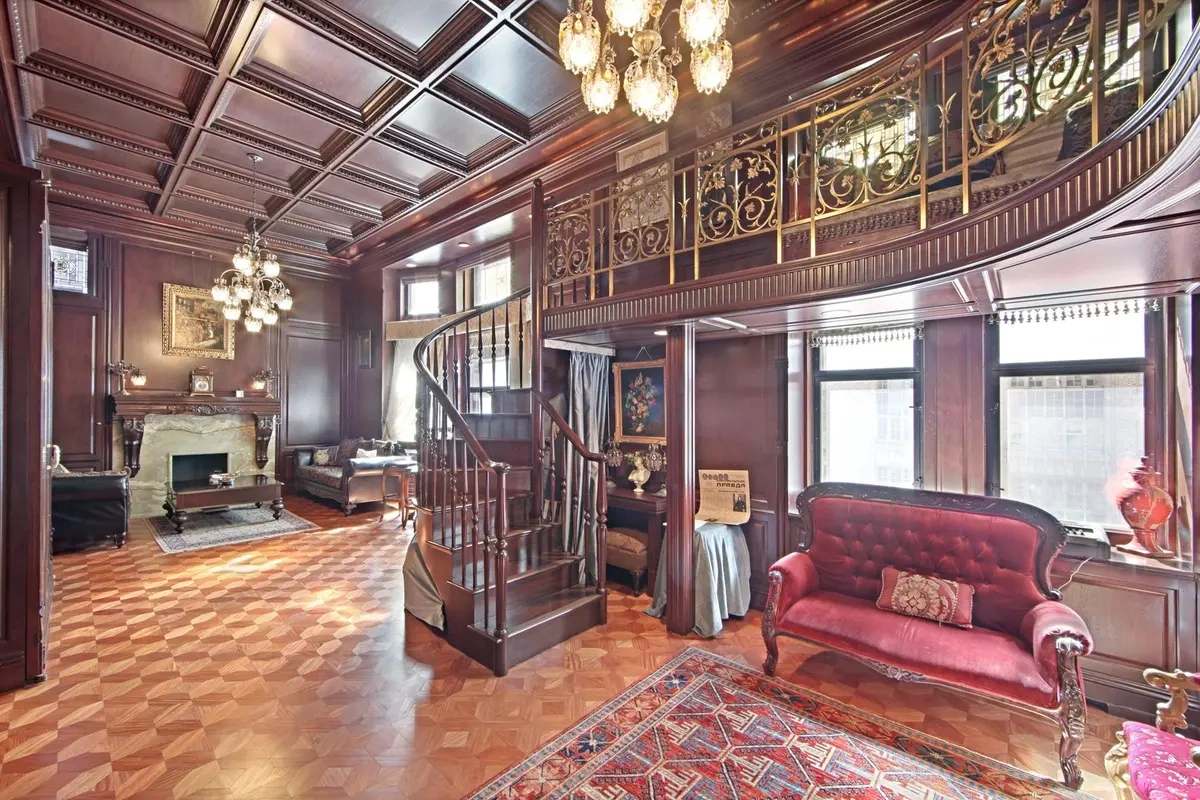
For example, The Osborne stands as one of the city’s earliest luxury apartment buildings, known for its grand interiors and duplex layouts dating back to the 1880s.
Similarly, Alwyn Court offers elaborate decorative façades and a dramatic interior courtyard, creating a distinctive spatial experience that continues to influence high-end apartment design today.
On the Upper East Side, 834 Fifth Avenue, designed by Rosario Candela, exemplifies pre-war luxury with grand proportions and refined detailing—qualities that contemporary designers reinterpret in modern stays.
These architectural legacies elevate designer apartments by embedding them within a narrative of craftsmanship and urban history.
Contemporary Designer Apartments Available for Luxury Stays
Sculptural Downtown Loft Living
One of the most compelling examples is a designer loft in Lower Manhattan, where industrial heritage meets curated minimalism.
The Unique Designer Loft in the Heart of Downtown offers a refined 800-square-foot layout with high ceilings, gallery-like openness, and carefully selected furnishings.
The design emphasizes spatial flow: a large living area transitions seamlessly into dining and workspace zones, while material choices highlight authenticity. Exposed architectural elements contrast with modern finishes, creating a balance that many luxury residential projects aim to achieve.
For architects, this type of apartment demonstrates how compact urban footprints can still deliver spatial richness.
Skyline-Focused Mid-Century Elegance
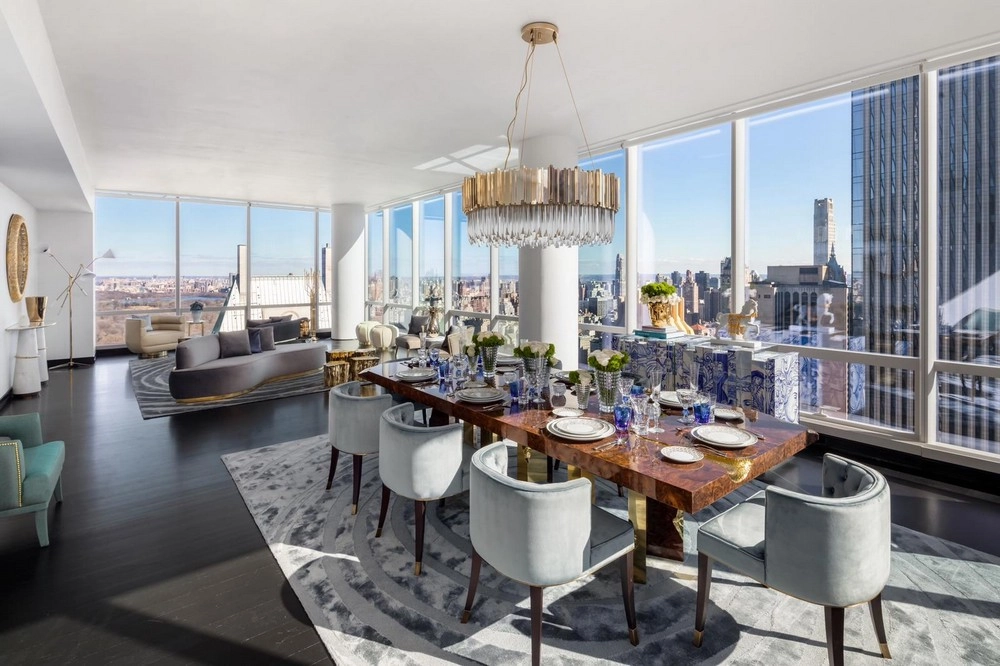
In Midtown, panoramic views become a core design element rather than a backdrop.
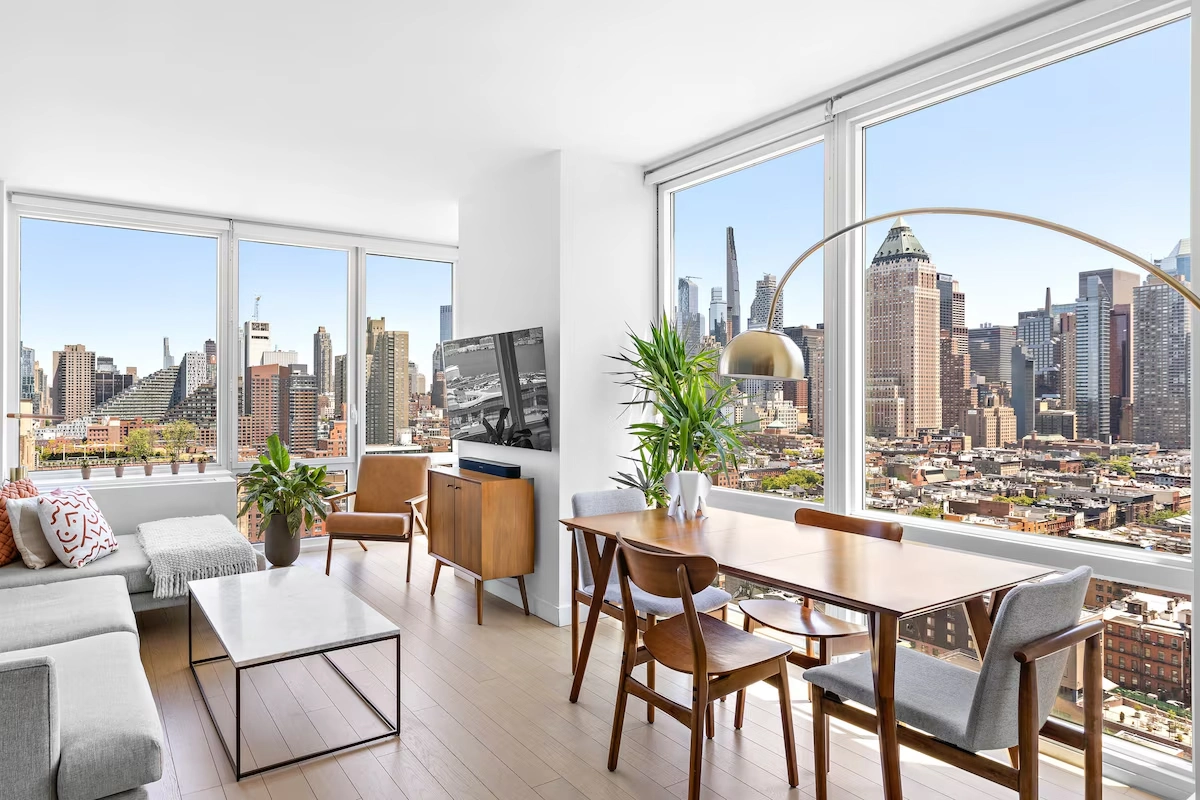
The STUNNING NYC VIEWS in 1-bedroom luxury apartment showcases floor-to-ceiling glazing paired with mid-century-inspired furnishings.
The interior composition revolves around visual alignment with the skyline. Materials such as marble, wood, and leather reinforce a refined palette, while furniture placement maximizes sightlines.
This approach highlights a key principle in high-end interiors: architecture and view must work as a unified composition.
Large-Scale Designer Apartments for Group Living
Luxury stays increasingly cater to group experiences without compromising design integrity.
The Designer Seaport Apartment – Sleeps 14 demonstrates how high-capacity layouts can still maintain a cohesive aesthetic.
Despite accommodating multiple guests, the apartment integrates:
- Consistent material palettes
- Clean-lined furniture
- Functional zoning for privacy and social interaction
For furniture brands and design studios, this model illustrates how scalability can coexist with strong design identity.
Fully Curated Luxury Residences with Designer Finishes
Another standout category includes fully serviced apartments with hotel-level amenities and curated interiors.
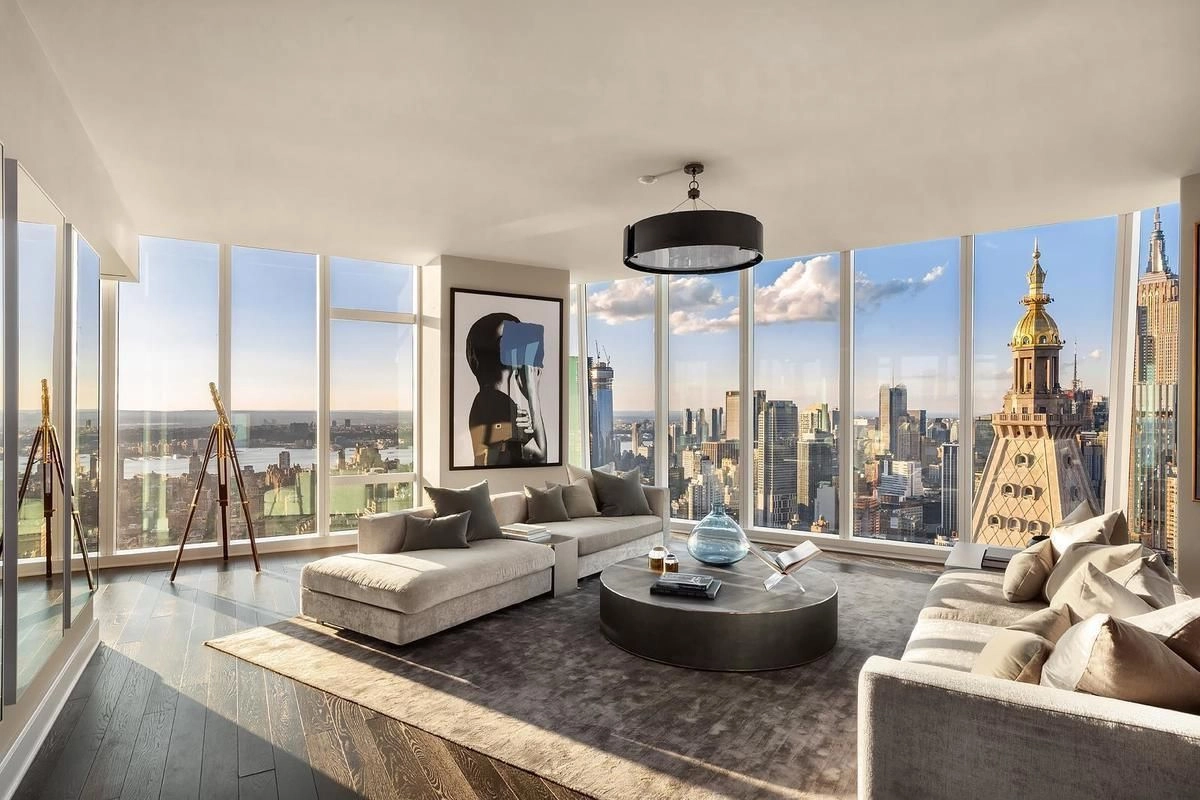
The Luxury 2 Bed 2 Bath Apt | Designer Decor & Views exemplifies this approach with its corner layout, expansive glazing, and layered lighting strategy.
Here, the design focuses on livability:
- Open-plan kitchens integrated with social spaces
- Soft, neutral palettes enhanced by texture
- Strategic lighting to define zones
These apartments reflect the growing convergence between residential and hospitality design.
Minimalist Luxury in Central Locations
For shorter stays, compact yet refined apartments deliver high-impact design within smaller footprints.
The Premier Host | Luxury in the Heart of NYC features an open layout with abundant natural light and carefully curated furnishings.
The emphasis here lies in restraint—clean lines, uncluttered compositions, and a focus on material quality. This minimalist approach appeals strongly to contemporary luxury clients.
Interior Design Characteristics Defining NYC Designer Apartments
Across these examples, several defining characteristics emerge:
1. Curated Furniture as Identity
Designer apartments rely heavily on furniture selection to define their character. Mid-century pieces, custom joinery, and sculptural seating often act as focal points.
2. Material Layering and Contrast
Stone, wood, metal, and textiles are layered to create depth. The interplay between polished and raw finishes adds complexity without overwhelming the space.
3. Spatial Fluidity
Open-plan layouts dominate, but designers use subtle transitions—lighting, rugs, and furniture placement—to define zones.
4. Integration of Views and Light
In NYC, views are a design material. Floor-to-ceiling windows, reflective surfaces, and strategic layouts maximize natural light and skyline visibility.
5. Hospitality-Level Detailing
From integrated storage to high-performance kitchens, these apartments blend residential comfort with hotel-grade functionality.
Why Designer Apartments Matter for Design Professionals
For interior designers and architects, NYC’s designer apartments offer more than inspiration—they provide real-world benchmarks. These spaces demonstrate how:
- Design concepts translate into lived experiences
- Furniture interacts with architecture at a human scale
- Materials perform under daily use
- Spatial narratives influence perception and comfort
They also highlight the growing importance of flexibility, where spaces must accommodate both short-term stays and long-term livability.
The Future of Designer Apartments in NYC
The evolution of designer apartments in New York suggests a future where boundaries between residential, hospitality, and gallery spaces continue to blur. As demand grows, expect to see:
- More collaborations between architects and hospitality brands
- Increased focus on collectible and bespoke furniture
- Greater integration of smart technologies with design
- A stronger emphasis on sustainability and local sourcing