In the world of high-end interiors, dining spaces have evolved far beyond their traditional role. Today, they serve as curated environments where architecture, furniture, and atmosphere converge to create memorable experiences. At the center of this transformation lies Luxury Table Design, a discipline that blends material excellence, spatial awareness, and refined aesthetics to elevate both private and hospitality settings.
For interior designers, architects, and luxury furniture brands, understanding how to shape these environments is essential. The dining table is no longer just a functional object. It acts as a focal point that defines the tone of the entire space, influencing how people gather, interact, and experience design.
Defining Luxury Table Design in Contemporary Interiors
Luxury Table Design is rooted in precision, craftsmanship, and intentionality. It involves more than selecting a premium material or an elegant silhouette. Designers must consider proportion, context, and how the table interacts with its surroundings.
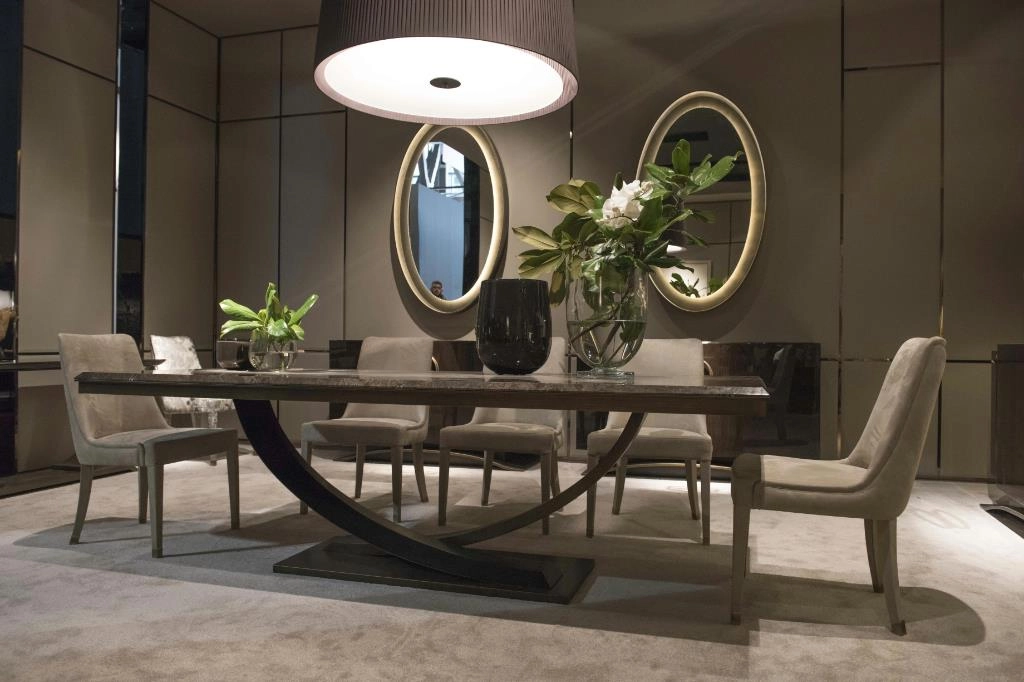
In contemporary projects, tables often reflect architectural principles. Clean geometries, sculptural bases, and balanced proportions dominate high-end collections. Materials such as marble, solid wood, glass, and metal remain central, but designers now explore finishes that enhance tactile and visual depth.
A well-designed luxury table integrates seamlessly into the space while still commanding attention. It should feel grounded within the architecture yet distinct enough to anchor the room.
Materials That Define High-End Dining Tables
Material selection plays a critical role in Luxury Table Design. Each surface contributes to the overall experience, both visually and physically.
Natural Stone and Marble
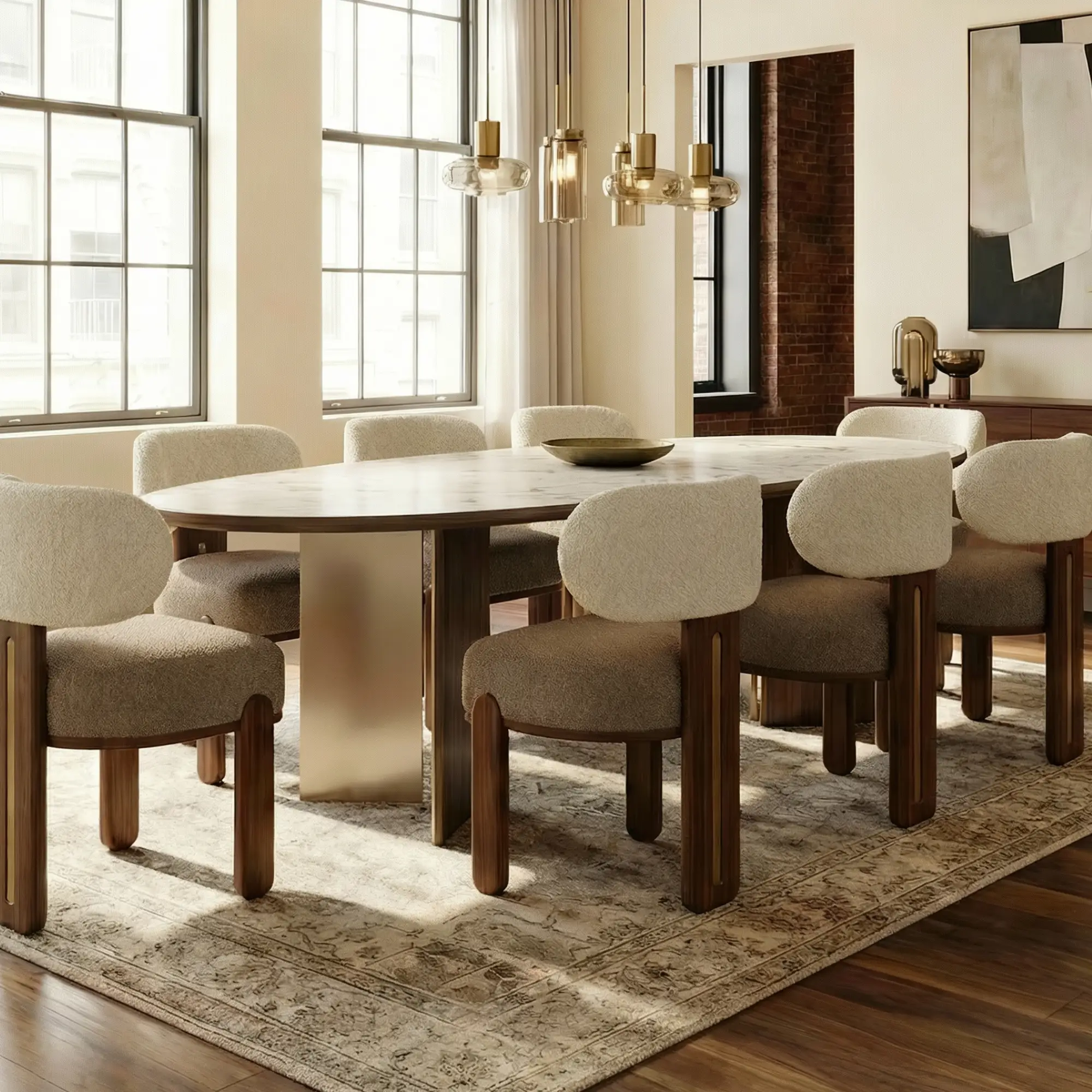
Marble continues to lead luxury dining aesthetics. Its veining patterns introduce uniqueness into every piece, ensuring that no two tables are identical. Designers often pair marble tops with minimalist bases to emphasize the material’s natural beauty.
Solid Wood
High-quality woods such as walnut, oak, and ash provide warmth and authenticity. In luxury settings, designers favor refined finishes that highlight the grain without overpowering the space. Wood tables work particularly well in residences that aim to balance sophistication with comfort.
Glass and Metal
Glass surfaces create a sense of openness, making them ideal for contemporary or compact environments. Metal bases, often crafted in brass or brushed steel, add a layer of refinement and structural clarity.
Mixed Materials
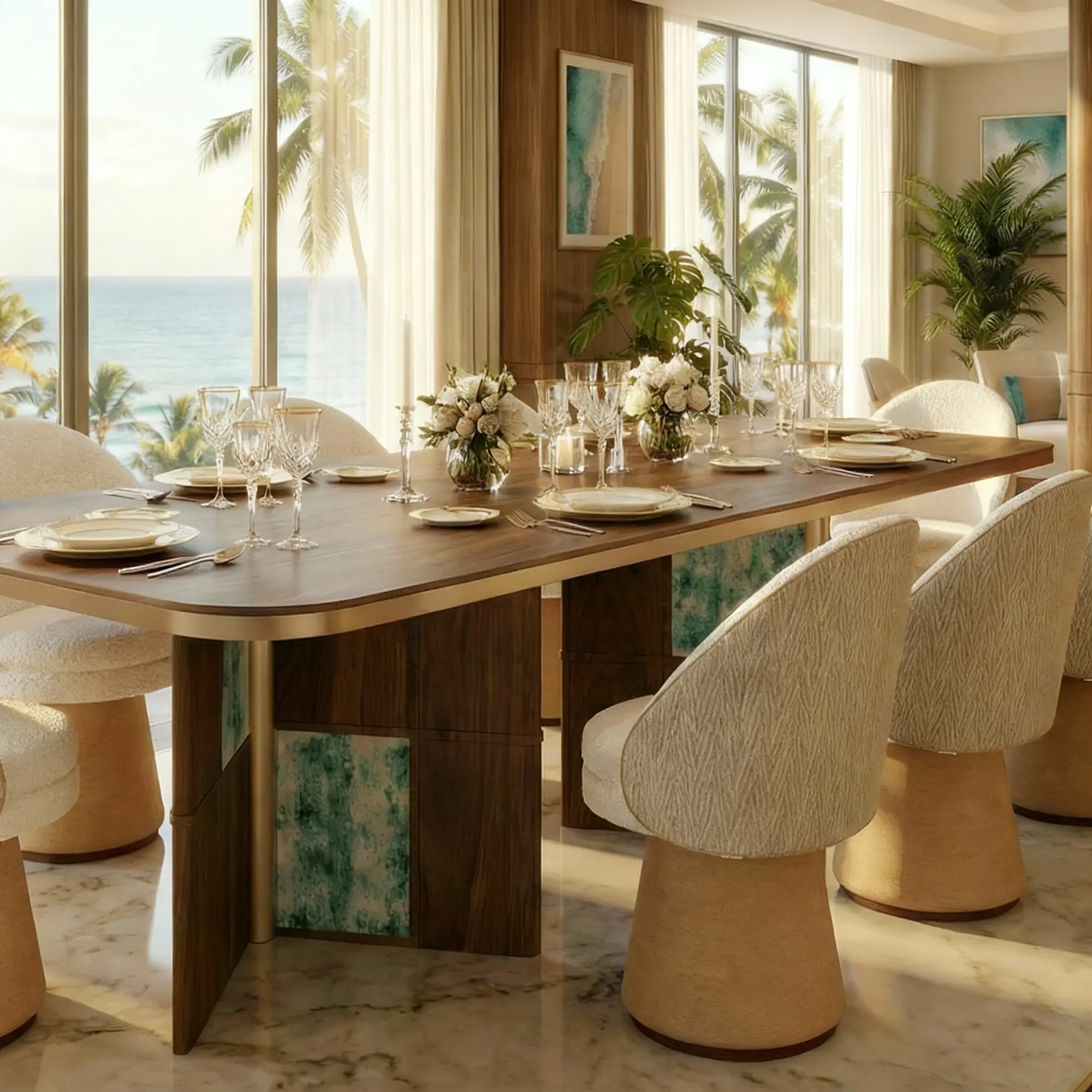
Many high-end tables combine materials to achieve contrast and depth. A marble top with a sculptural metal base or a wooden surface with stone inlays creates a dynamic visual language that aligns with modern luxury interiors.
Spatial Composition and Dining Room Architecture
Luxury Table Design cannot exist in isolation. The surrounding architecture plays an equally important role in defining the dining experience.
Designers often position the table as the central axis of the room. Lighting, circulation, and sightlines revolve around it. In open-plan layouts, the dining area acts as a transition zone between kitchen and living spaces, requiring careful spatial planning.
Ceiling height, window placement, and natural light all influence how the table interacts with the environment. Large windows enhance the presence of natural materials, while controlled lighting creates a more intimate atmosphere for evening entertaining.
Scale is critical. A table that feels too small diminishes the impact of the room, while an oversized piece can disrupt flow. Designers must align table dimensions with both the room size and the intended use.
The Role of Lighting in Luxury Table Design
Lighting transforms a dining table from a static object into a dynamic focal point. In high-end interiors, designers use lighting to highlight textures, enhance materials, and create ambiance.
Pendant lights and chandeliers remain the most popular choices. They draw attention to the table while establishing a visual hierarchy within the room. Designers often select fixtures that echo the table’s geometry or contrast it for added interest.
Layered lighting strategies further elevate the space. Wall sconces, recessed lighting, and subtle floor illumination contribute to a balanced environment. The goal is to create a setting that adapts from daytime functionality to evening sophistication.
High-End Entertaining Spaces: Beyond the Dining Room
Luxury Table Design extends beyond traditional dining rooms. Today’s high-end projects incorporate multiple entertaining zones, each centered around a distinct table concept.
Outdoor Dining Areas
Outdoor spaces have become essential in luxury residences. Designers create seamless transitions between indoor and outdoor dining areas, often using weather-resistant materials that maintain a refined aesthetic. Stone, treated wood, and advanced composites allow tables to withstand environmental conditions while preserving elegance.
Open-Concept Living Spaces
In modern homes, dining tables often sit within open layouts. These spaces require a cohesive design language that connects kitchen, dining, and living areas. The table acts as a visual anchor, tying together different functional zones.
Hospitality and Commercial Settings
Luxury hotels and restaurants rely heavily on table design to define their identity. Custom tables, tailored to the brand’s concept, enhance the guest experience and reinforce the overall narrative of the space.
Detailing and Styling in Luxury Table Design
The success of a luxury dining space often lies in the details. Designers use accessories and styling elements to complement the table without overwhelming it.
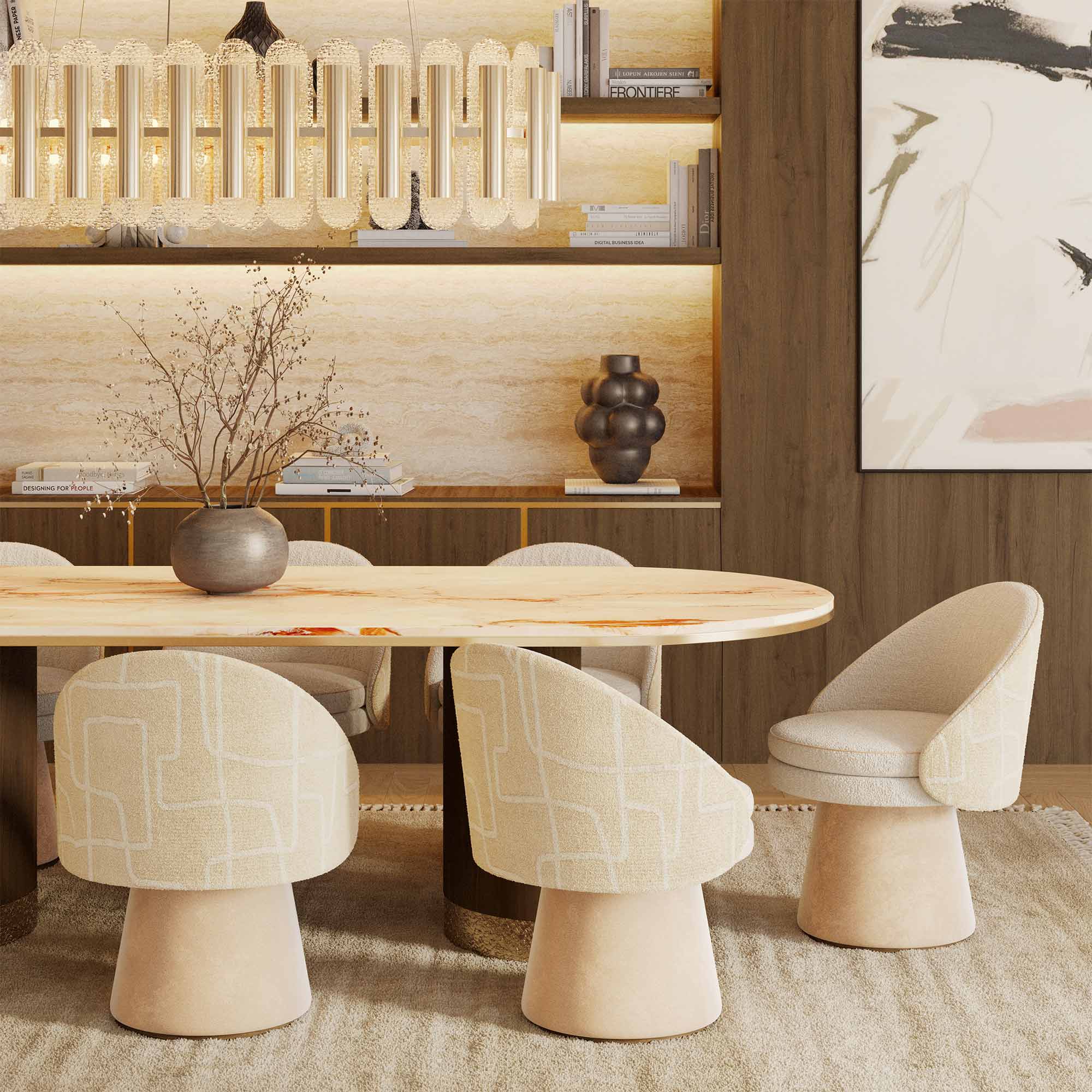
Tableware, linens, and centerpieces should align with the overall aesthetic. Neutral palettes with subtle contrasts work well in high-end environments. Materials such as linen, ceramic, and glass add layers of texture and sophistication.
Seating also plays a crucial role. Chairs must complement the table in both scale and design language. Upholstered seating introduces comfort, while sculptural chairs enhance visual impact.
Consistency is key. Every element around the table should contribute to a cohesive composition that reflects the intended atmosphere.
Customization and Bespoke Design
Customization has become a defining aspect of Luxury Table Design. High-end clients increasingly seek unique pieces that reflect their personal style or brand identity.
Designers collaborate with artisans and manufacturers to create bespoke tables tailored to specific spaces. This process allows for greater flexibility in dimensions, materials, and finishes.
Bespoke design also enables integration with architectural elements. Tables can align with flooring patterns, wall treatments, or structural features, creating a unified design language throughout the space.
The Future of Luxury Table Design
Luxury Table Design continues to evolve as designers explore new materials, technologies, and spatial concepts. Sustainability is gaining importance, with a growing emphasis on responsibly sourced materials and long-lasting craftsmanship.
Technology also plays a role. Integrated lighting, modular components, and adaptable surfaces are becoming more common in high-end collections. These innovations enhance functionality while maintaining a refined aesthetic.
Despite these advancements, the essence of luxury dining remains rooted in experience. A well-designed table brings people together, creating moments that extend beyond design itself.
Final Thoughts
Luxury Table Design defines the heart of high-end entertaining spaces. It combines material excellence, architectural awareness, and meticulous detailing to create environments that feel both functional and extraordinary.
For interior designers, architects, and luxury brands, the dining table represents an opportunity to shape how people connect within a space. When executed with precision and intention, it becomes more than a piece of furniture. It transforms into a central element of contemporary living, where design and experience meet seamlessly.