
In contemporary residential design, luxury open kitchens have evolved into central social hubs that redefine how people interact within the home. No longer confined to purely functional roles, these spaces now integrate cooking, dining, and gathering into a unified experience. For interior designers and architects, this shift represents a fundamental change in spatial planning, where the kitchen becomes both a visual anchor and a social catalyst. As a result, luxury open kitchens are now designed with the same level of attention as living areas, blending aesthetics, performance, and hospitality-driven functionality.
The Evolution of the Kitchen as a Social Space
Historically, kitchens were separated from main living areas, emphasizing utility over experience. However, modern lifestyles have transformed this dynamic. Today, luxury open kitchens are designed to encourage interaction, allowing hosts and guests to share the same environment.
This evolution reflects a broader cultural shift toward informal yet refined living. Open layouts remove physical barriers, creating a sense of continuity between cooking and socializing. Consequently, the kitchen becomes a space where design and lifestyle intersect, supporting both daily routines and entertaining. This transformation has positioned luxury open kitchens at the heart of contemporary high-end residential design.
Key Characteristics of Luxury Open Kitchens
Luxury open kitchens share several defining features that enhance their role as social centers:
- Seamless integration with living and dining areas
- High-quality materials that elevate the visual experience
- Central islands that function as gathering points
- Minimalist detailing that maintains visual clarity
- Advanced appliances integrated discreetly into the design
These elements ensure that the kitchen operates as both a functional workspace and a refined social environment.
Spatial Integration and Flow
One of the most important aspects of luxury open kitchens is their integration within the overall spatial layout. Designers focus on creating a fluid transition between different zones, ensuring that the kitchen feels connected yet distinct.
This is often achieved through subtle architectural cues, such as variations in ceiling height, flooring, or lighting. These elements define the kitchen area without disrupting the openness of the space. Moreover, the positioning of the kitchen within the floor plan is carefully considered to maximize both accessibility and visual impact. This approach enhances the overall flow of the home, reinforcing the kitchen’s role as a central gathering space.
Materiality and Visual Cohesion
Material selection plays a crucial role in shaping the identity of luxury open kitchens. Designers typically prioritize:
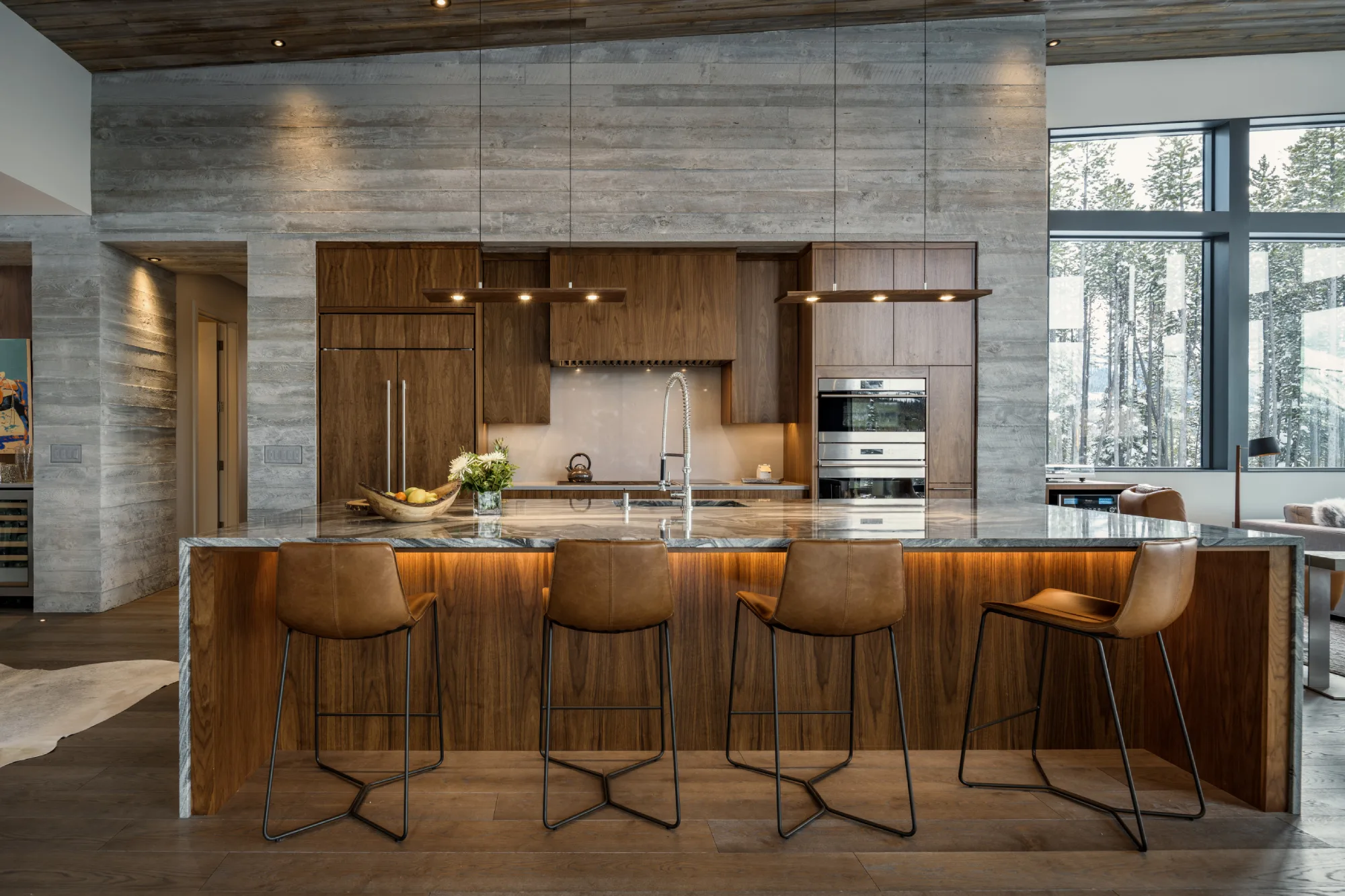
- Natural stone surfaces that add depth and durability
- Wood cabinetry that introduces warmth and texture
- Metal accents that provide contrast and refinement
- Glass elements that enhance light and openness
- High-performance finishes that ensure longevity
By coordinating these materials with adjacent living spaces, designers create a cohesive environment where the kitchen feels like a natural extension of the interior rather than a separate entity.
The Kitchen Island as a Social Anchor
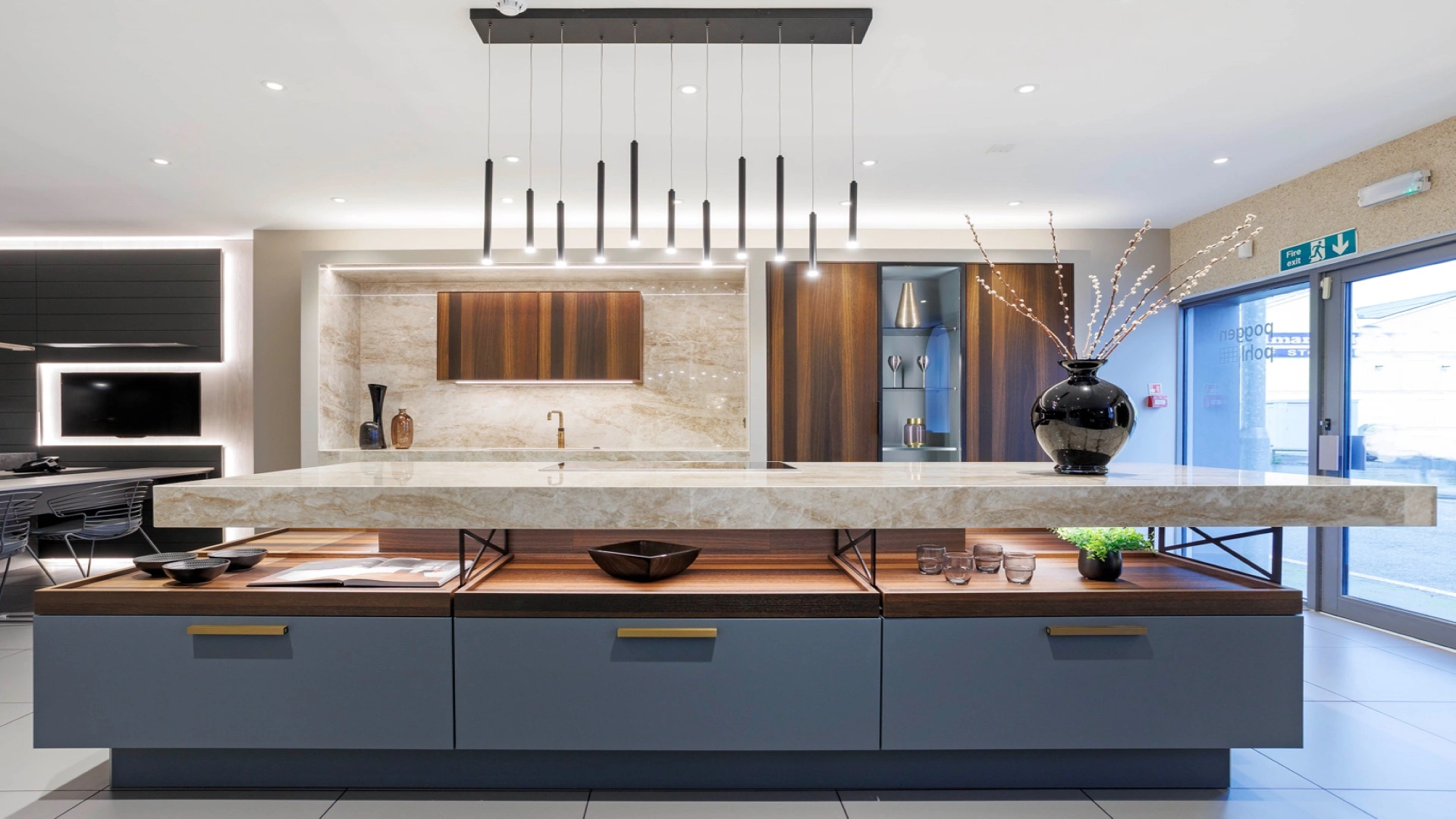
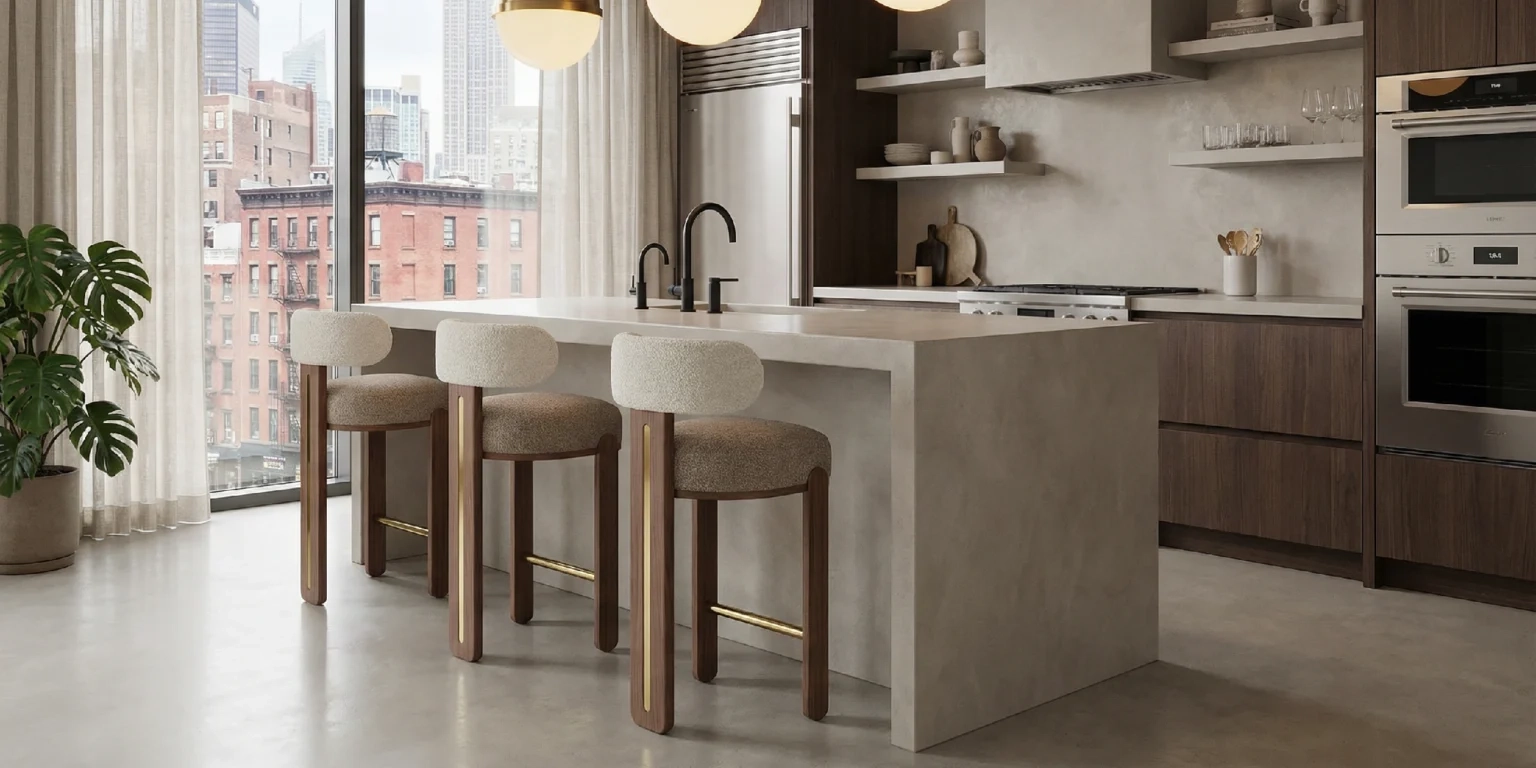
The kitchen island has become a defining feature of luxury open kitchens, serving as both a functional workspace and a social focal point. Its design must balance practicality with aesthetics, ensuring that it supports a variety of activities.
Islands are often proportioned to accommodate seating, food preparation, and casual dining. Their placement within the space encourages interaction, allowing guests to gather without disrupting the workflow. Additionally, the island’s materiality and detailing often set the tone for the entire kitchen, making it a key element in the overall design composition.
Lighting Strategies in Open Kitchens
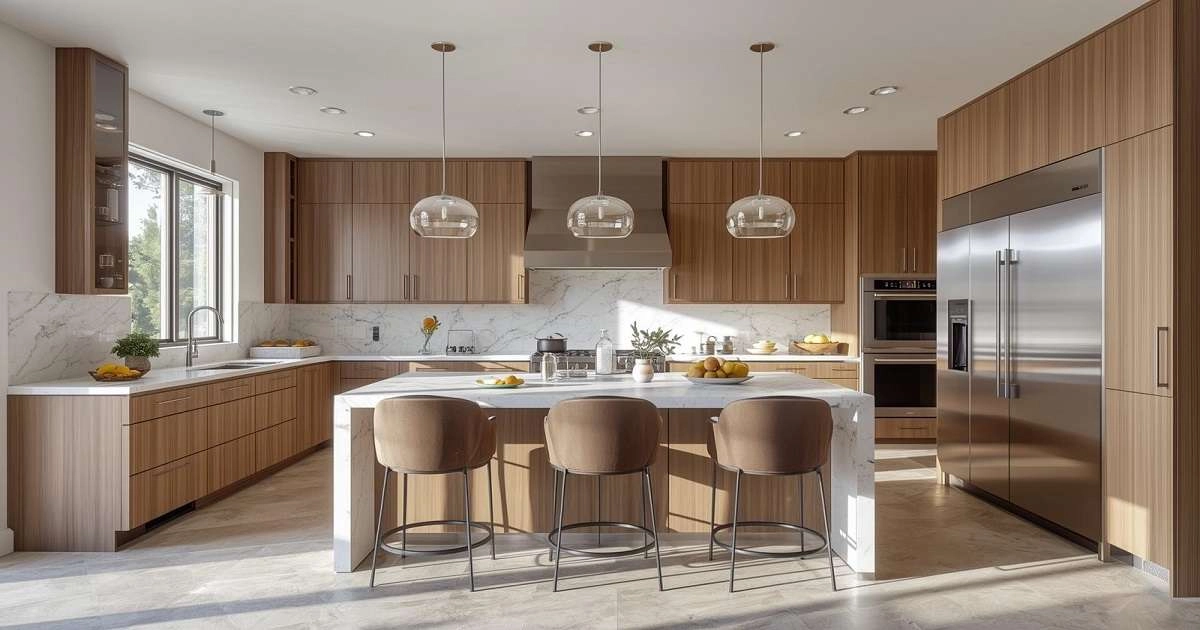
Lighting is essential in enhancing both the functionality and atmosphere of luxury open kitchens. Designers typically employ a layered approach:
- Ambient lighting to provide overall illumination
- Task lighting for food preparation areas
- Accent lighting to highlight architectural features
- Pendant fixtures that define the island
- Natural light to enhance spatial quality
This combination ensures that the kitchen remains adaptable to different uses, from cooking to entertaining, while maintaining a refined and inviting ambiance.
Furniture and Seating Integration
Seating plays a vital role in transforming luxury open kitchens into social spaces:
- Bar stools that encourage casual interaction
- Integrated banquettes for informal dining
- Lounge seating that connects the kitchen to living areas
- Flexible arrangements that adapt to different occasions
- Materials that align with the overall interior palette
Through thoughtful integration of seating, designers create environments that support both social engagement and comfort, reinforcing the kitchen’s central role in the home.
Technology and Performance
Modern luxury open kitchens must seamlessly integrate advanced technology while maintaining a clean and elegant aesthetic. Key considerations include:
- Built-in appliances that blend with cabinetry
- Smart systems for lighting and climate control
- Ventilation solutions that minimize visual impact
- Integrated storage for efficiency and organization
- Touchless features that enhance usability
These innovations ensure that the kitchen performs at a high level without compromising its visual appeal, aligning with the expectations of contemporary luxury living.
Balancing Openness and Functionality
While openness is a defining feature of luxury open kitchens, maintaining functionality is equally important. Designers must carefully manage sightlines, storage, and organization to ensure that the space remains visually refined.
This often involves concealing clutter through integrated cabinetry and designing layouts that separate preparation areas from social zones. By balancing openness with practicality, designers create kitchens that are both beautiful and efficient, supporting the demands of everyday living as well as entertaining.
The Future of Luxury Open Kitchens
As residential design continues to evolve, luxury open kitchens will remain central to the concept of modern living. Future trends are likely to focus on sustainability, innovative materials, and enhanced connectivity.
Designers will continue to explore new ways to integrate kitchens into broader living environments, creating spaces that are increasingly flexible and responsive. At the same time, the emphasis on craftsmanship and material quality will remain essential, ensuring that these spaces retain their sense of luxury and refinement.
Conclusion
Luxury open kitchens have redefined the role of the kitchen within the home, transforming it into a dynamic social center that combines functionality with elegance. Through thoughtful design, material selection, and spatial integration, these spaces support both daily living and meaningful interaction.
For interior designers and architects, luxury open kitchens offer a powerful opportunity to shape the way people experience their homes. As the demand for connected and sophisticated living environments continues to grow, the kitchen will remain at the forefront of high-end residential design, setting the standard for both innovation and lifestyle.