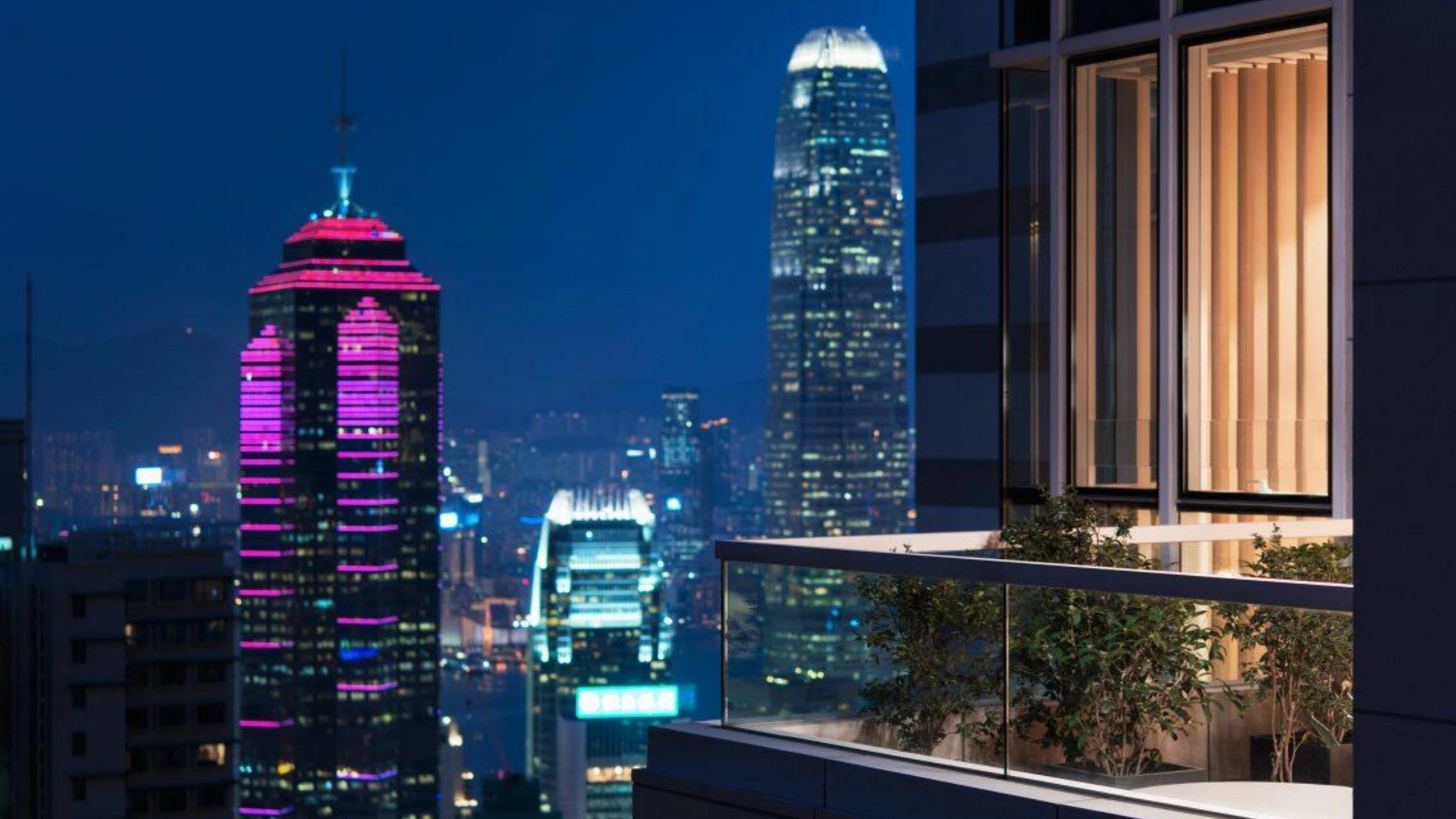

Few cities in the world express vertical living as dramatically as Hong Kong. Towering residential buildings rise above Victoria Harbour, framing some of the most spectacular urban panoramas on earth. Within these remarkable structures, Hong Kong high-rise apartments have become icons of contemporary metropolitan life—where architecture, luxury, and skyline spectacle converge in refined living environments.
In particular, the living room has evolved into the centerpiece of these homes. More than a place for relaxation, it becomes a viewing gallery suspended above the city. Floor-to-ceiling glass, minimalist compositions, and carefully curated materials transform the interior into a seamless extension of the skyline beyond. For architects, interior designers, and global real estate investors, skyline view apartments Hong Kong represent a fascinating case study in sophisticated urban interiors shaped by density, design ingenuity, and breathtaking vistas.
This article explores how the living rooms of Hong Kong high-rise apartments are designed to frame the skyline, maximize spatial efficiency, and create a uniquely cosmopolitan domestic atmosphere.
The Vertical City: Why Hong Kong Defines High-Rise Living
Hong Kong’s mountainous terrain and limited land supply have pushed architecture upward for decades. The result is one of the most concentrated skylines on the planet, where residential towers often rise alongside financial headquarters and luxury hotels. For residents of Hong Kong high-rise apartments, elevation is not merely a practical solution—it is a defining element of lifestyle.
High above the bustling streets, living rooms are positioned to capture sweeping views of Victoria Harbour, Kowloon, and the mountainous backdrop of the New Territories. This vertical perspective influences every aspect of interior design, from furniture placement to material selection.
Designers working in skyline view apartments Hong Kong often treat the window wall as the primary architectural feature. Rather than competing with the panorama, interiors are composed to highlight it. The skyline becomes artwork in constant motion—changing with weather, time of day, and the rhythm of city lights after sunset.
The Influence of Urban Density on Interior Design
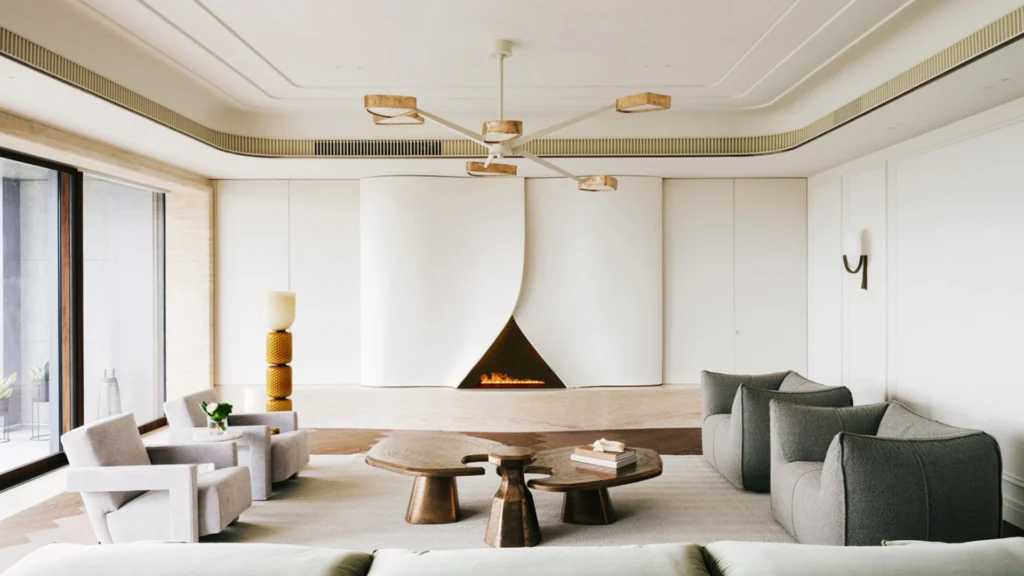
The density of the city has also inspired a new language of urban interiors that balances efficiency with elegance. Space is precious in Hong Kong, and the most successful living rooms demonstrate how thoughtful design can transform compact footprints into environments of remarkable sophistication.
- Open layouts that visually expand the living area.
- Custom-built furniture tailored to precise spatial dimensions.
- Neutral palettes that emphasize natural light and skyline views.
- Integrated storage to maintain a sense of calm minimalism.
These strategies ensure that the living room remains both visually expansive and deeply comfortable, even within the spatial constraints typical of many Hong Kong high-rise apartments.
Framing the Skyline: Architecture as a Viewing Device
Perhaps the defining characteristic of skyline view apartments Hong Kong is the way architecture is designed to frame the city itself. Windows become panoramic lenses through which residents experience the metropolis.
Floor-to-Ceiling Glass Walls
Expansive glazing is a hallmark of contemporary residential towers in the city. Floor-to-ceiling windows maximize daylight while dissolving the boundary between interior and exterior space. In many Hong Kong high-rise apartments, these glass façades allow the skyline to become a central design element within the living room.
The approach echoes broader trends in global luxury architecture, where transparency and light are essential to modern residential design. As noted by the Architectural Digest, panoramic glazing has become a defining feature of contemporary urban luxury apartments worldwide.
Strategic Furniture Placement
Furniture in skyline view apartments Hong Kong is typically oriented toward the windows rather than the walls. Sofas, lounge chairs, and coffee tables are arranged to create a viewing axis directed outward.
The result is a living room that functions almost like a private observatory—where the skyline is experienced as a dynamic backdrop to daily life.
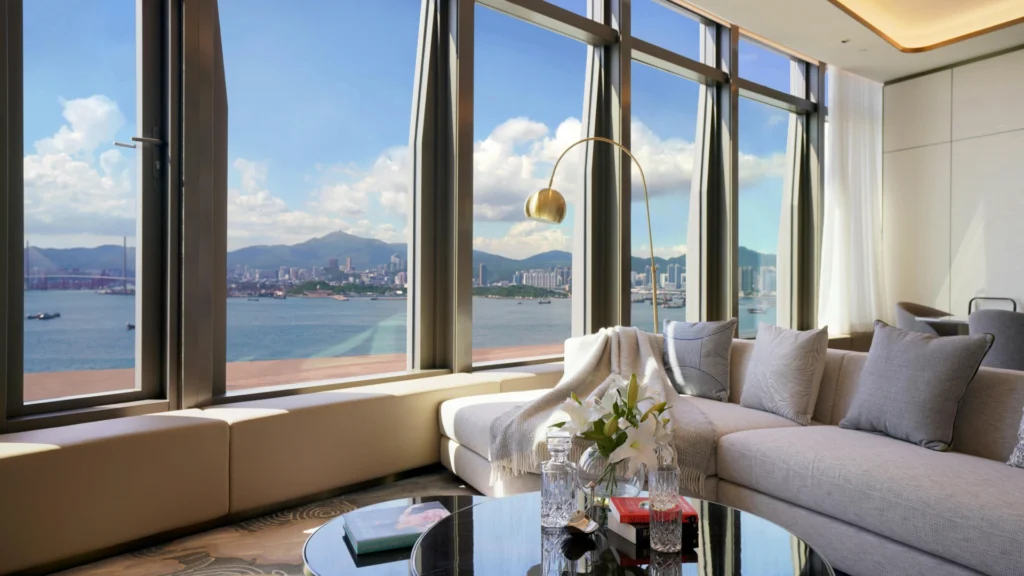
Low-Profile Furniture
Designers frequently favor low-profile furnishings that preserve sightlines across the room. This ensures that the panoramic vista remains uninterrupted.
- Low sofas and modular seating systems
- Slim coffee tables in stone or glass
- Minimalist media consoles
- Floating shelving systems
Such pieces contribute to the refined aesthetic typical of urban interiors in high-rise residences.
Material Palettes Inspired by the City
Material selection plays a crucial role in shaping the atmosphere of living rooms in Hong Kong high-rise apartments. Designers frequently draw inspiration from the city’s contrasting elements—glass towers, harbor reflections, and mountainous landscapes.
Stone and Marble
Natural stone surfaces introduce tactile richness and visual depth to urban interiors. Marble coffee tables, travertine accent walls, and limestone flooring reflect the refined tastes of global luxury real estate buyers.
Warm Woods
To balance the coolness of glass and steel, many skyline view apartments Hong Kong incorporate warm wood finishes such as walnut, oak, or teak. These materials introduce an element of calm and grounding that softens the intensity of the urban environment.
Reflective Surfaces
Metal accents and mirrored finishes echo the shimmering skyline visible through the windows. Polished brass, brushed bronze, and stainless steel details subtly reinforce the relationship between interior and cityscape.
The Role of Lighting in Skyline Living Rooms
Lighting design is particularly important in Hong Kong high-rise apartments, where the living room must transition seamlessly from daylight brilliance to the dramatic glow of the city at night.
Layered Lighting Strategies
Interior designers often employ a layered lighting approach to create flexibility and ambiance in urban interiors.
- Ambient lighting through recessed ceiling fixtures.
- Accent lighting highlighting artwork or architectural features.
- Decorative lighting such as sculptural pendant lamps.
- Task lighting for reading corners or conversation areas.
When evening arrives, the skyline outside becomes a luminous composition of thousands of lights. Interior lighting must therefore complement—not overpower—the view.
Designing for Lifestyle: Social Living in the Sky
Living rooms in skyline view apartments Hong Kong are designed not only for aesthetic appreciation but also for social interaction. These spaces often host intimate gatherings, business meetings, or quiet moments of reflection above the city.
Designers therefore prioritize flexibility and comfort within urban interiors, ensuring that the living room adapts easily to different uses.
- Modular seating for adaptable layouts
- Hidden storage for a clutter-free environment
- Integrated technology for entertainment and automation
- Art installations that complement the skyline backdrop
This balance of functionality and visual refinement defines the most successful living rooms in Hong Kong high-rise apartments.
Art, Culture, and Global Influence
Hong Kong’s status as an international cultural hub has also influenced the aesthetic character of skyline view apartments Hong Kong. Residents often curate interiors that reflect both global design trends and Asian artistic heritage.
Contemporary Art Collections
Large-scale contemporary artworks are frequently displayed within living rooms, where neutral palettes allow the pieces to stand out against the dramatic skyline beyond.
Asian Craftsmanship
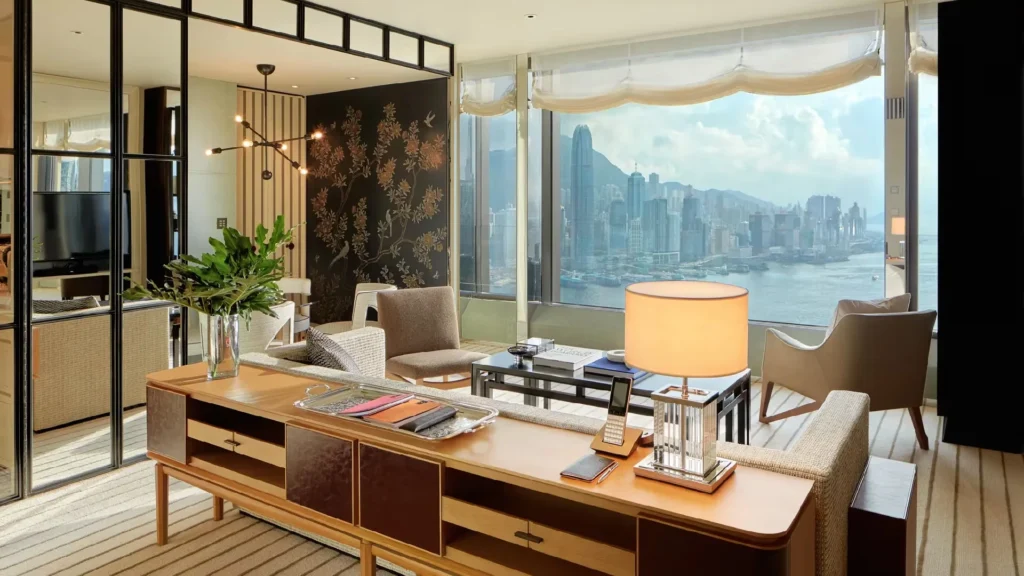
Many urban interiors incorporate traditional materials and craftsmanship, including lacquered surfaces, silk textiles, and hand-carved wood elements. These details introduce cultural depth while maintaining the modern elegance expected in luxury high-rise living.
The Psychology of Elevated Living
Beyond aesthetics, the appeal of Hong Kong high-rise apartments is also psychological. Living high above the city provides a sense of serenity that contrasts with the vibrant intensity of the streets below.
Residents of skyline view apartments Hong Kong often describe a unique emotional experience: the feeling of being connected to the city’s energy while remaining in a peaceful sanctuary above it.
The living room becomes the space where this balance is most visible. Here, the skyline serves as a constant reminder of Hong Kong’s dynamism—yet the interior remains calm, refined, and deeply personal.
The Future of Urban Interiors in Hong Kong
As residential towers continue to redefine the skyline, the design of Hong Kong high-rise apartments will evolve alongside new architectural technologies and lifestyle expectations.
Emerging trends already shaping skyline view apartments Hong Kong include:
- Smart glass systems that adjust transparency and solar gain
- Biophilic design integrating natural elements into urban interiors
- Sustainable materials and energy-efficient technologies
- Flexible layouts that adapt to hybrid work lifestyles
These innovations will ensure that Hong Kong remains at the forefront of vertical residential design.
Living Rooms Above the Skyline
Few residential environments capture the spirit of a global metropolis as vividly as the living rooms of Hong Kong high-rise apartments. Suspended above the city’s dense urban fabric, these interiors offer a rare combination of architectural sophistication, panoramic beauty, and refined lifestyle.
In skyline view apartments Hong Kong, the living room becomes far more than a domestic space—it becomes a stage for the city itself. Carefully composed urban interiors frame the skyline as living art, transforming everyday life into a continuously unfolding visual experience.
For architects, interior designers, and discerning residents alike, these elevated living spaces demonstrate how thoughtful design can turn density into beauty, and height into a profound expression of contemporary urban living.