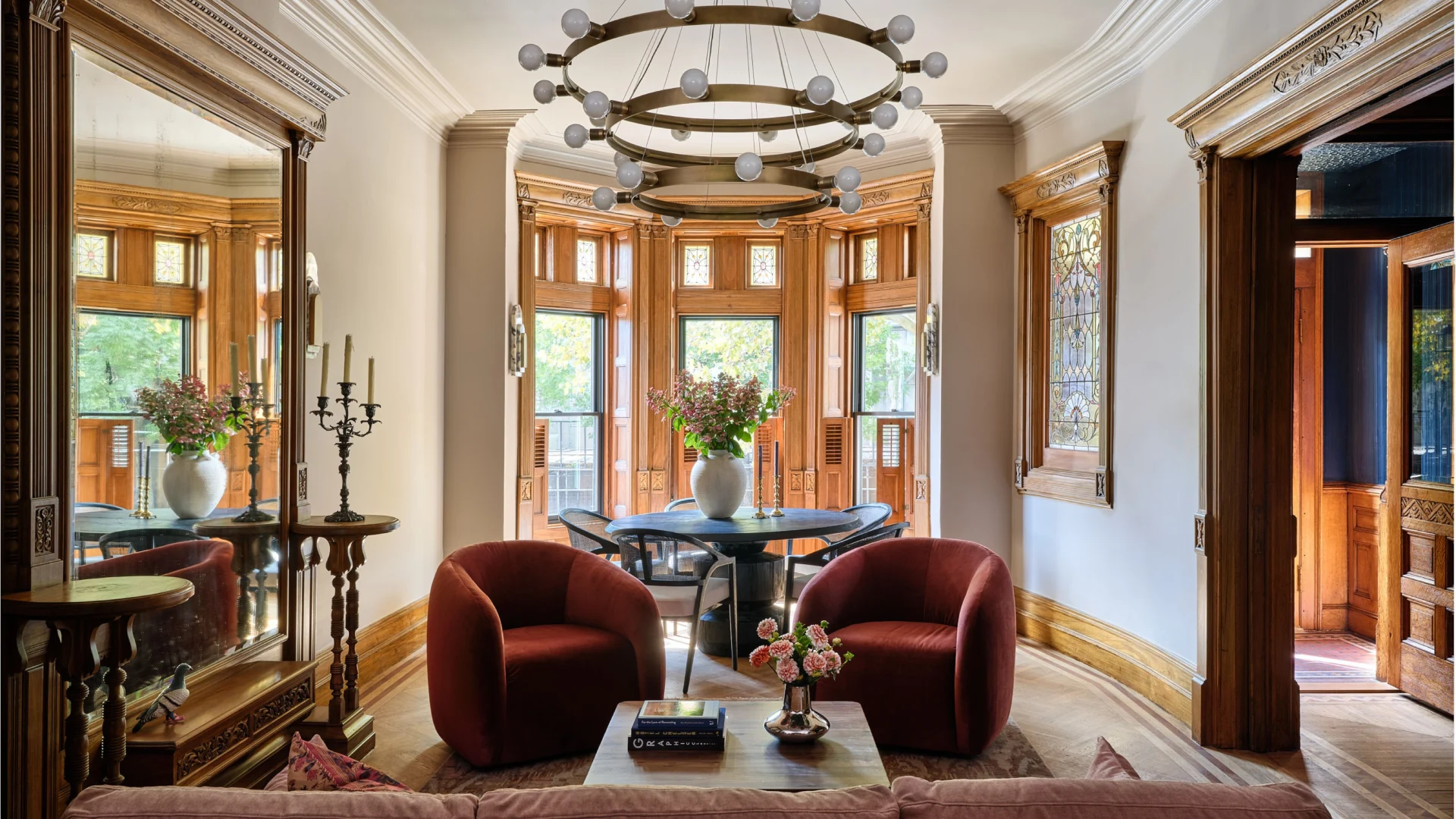

In the storied streets of Chelsea, the parlor floor remains one of the most coveted architectural canvases in New York. Defined by soaring ceilings, marble mantels, intricate plasterwork, and elongated sash windows, these rooms are luminous, ceremonial, and deeply rooted in 19th-century urban life. Yet for today’s homeowners and design professionals, a pressing question emerges: How do we furnish a parlor floor living room layout without compromising the integrity of historic windows?
For architects, interior designers, and discerning homeowners, mastering Chelsea townhouse interiors requires both reverence and precision. The challenge lies not in filling space, but in orchestrating furniture in a way that preserves daylight, sightlines, and architectural rhythm. Thoughtful historic home furniture placement is the difference between a room that feels museum-like and one that feels both cultivated and contemporary.
This editorial explores spatial strategies, material considerations, and layout philosophies that honor heritage while delivering a refined, modern sensibility.
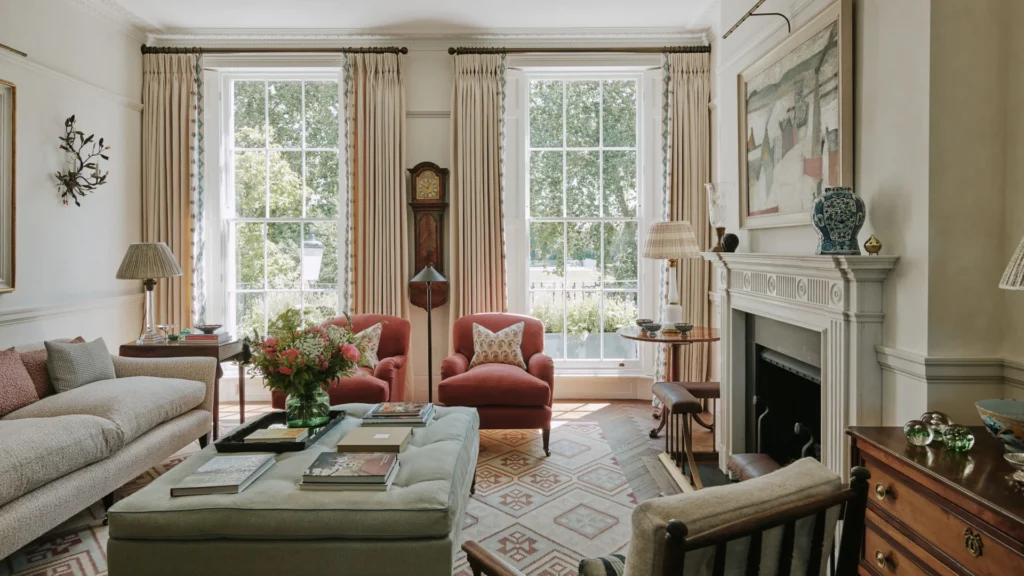
The Architectural Significance of the Chelsea Parlor Floor
The classic Chelsea townhouse—many built between 1840 and 1890—was designed with hierarchy in mind. The parlor floor, elevated above street level, served as the principal entertaining space. Tall, vertically proportioned windows were not decorative afterthoughts; they were compositional anchors that balanced façade symmetry and flooded interiors with light.
According to the National Park Service’s Historic Preservation guidelines, maintaining original window openings is essential to safeguarding architectural authenticity. In Chelsea, where landmark regulations often apply, obstructing or visually diminishing these windows disrupts not only aesthetics but heritage value.
For this reason, successful Chelsea townhouse interiors begin with a simple principle: furniture must defer to architecture, not compete with it.
Understanding the Window as a Spatial Axis
Historic parlor floors typically feature:
- Floor-to-ceiling windows with deep interior reveals
- Paired or triple window groupings
- Original shutters or decorative moldings
- High baseboards and wainscoting
These elements create a vertical rhythm that defines the room. A considered parlor floor living room layout treats the window wall as a source of light and perspective—not a surface to conceal with oversized sofas or cabinetry.
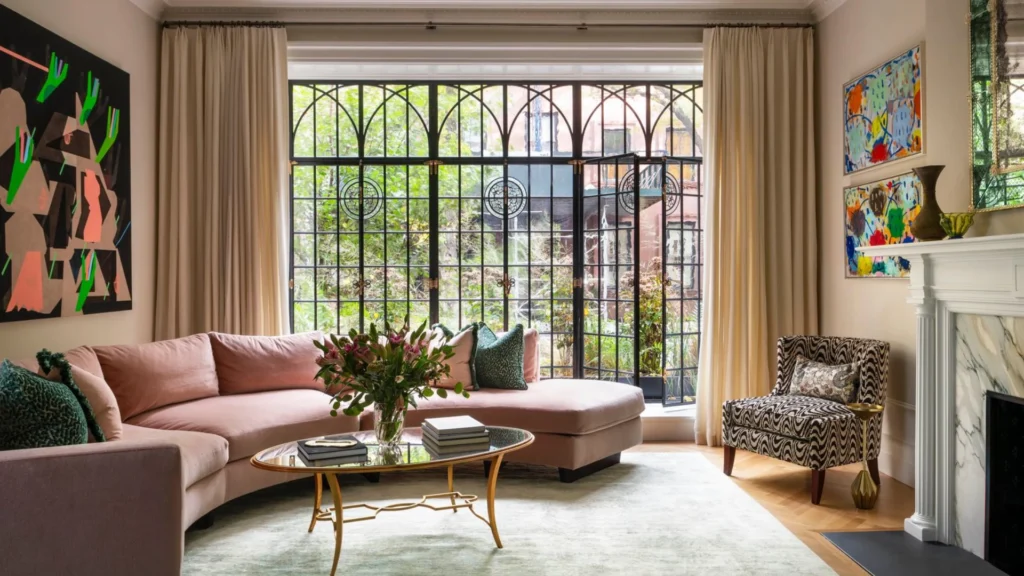
Principles for Furnishing Without Blocking Historic Windows
1. Float, Don’t Push
One of the most common missteps in historic home furniture placement is lining heavy seating directly against window walls. While intuitive, this approach compresses circulation and obscures architectural detail.
Instead:
- Float sofas toward the center of the room.
- Maintain a minimum clearance of 12–18 inches from window casings.
- Allow drapery to fall freely without interference from furniture backs.
This strategy transforms the parlor floor living room layout into a salon-like arrangement, encouraging conversation while preserving light.
2. Respect Sightlines from Entry to Garden
Many Chelsea townhouses follow a linear progression from front parlor to rear dining room, often separated by pocket doors. When open, this enfilade creates a dramatic visual corridor.
In refined Chelsea townhouse interiors, furniture height is carefully calibrated:
- Low-profile seating preserves longitudinal views.
- Open-base tables maintain visual permeability.
- Sculptural accent chairs define zones without forming barriers.
The goal is continuity. A thoughtfully composed parlor floor living room layout should feel airy, not obstructed.
3. Scale with Verticality in Mind
Parlor ceilings often exceed 11 or 12 feet. The instinct to “fill” the volume with tall shelving near windows can unintentionally dwarf the architecture.
Instead, designers working on Chelsea townhouse interiors often:
- Anchor seating with substantial, but not bulky, sofas.
- Introduce vertical elements (art, mirrors) between windows rather than in front of them.
- Use layered lighting—floor lamps and picture lights—to enhance height without blocking daylight.
This nuanced approach to historic home furniture placement enhances proportion rather than competing with it.
Window-Centric Layout Strategies
Conversation Islands
A central conversation island remains one of the most effective solutions for a parlor floor. Two sofas facing each other, flanked by slender armchairs, create intimacy while leaving window perimeters open.
This layout works particularly well in generous Chelsea townhouse interiors where depth allows furniture to float comfortably. A large area rug visually anchors the grouping, preventing the arrangement from feeling adrift.
Diagonal Orientation
In narrower townhouses, a diagonal configuration can soften rigidity. Angling a sofa or pair of lounge chairs subtly redirects focus inward, minimizing the impulse to push pieces against the window wall.
Within a refined parlor floor living room layout, diagonal placement introduces movement while maintaining clear access to historic shutters and moldings.
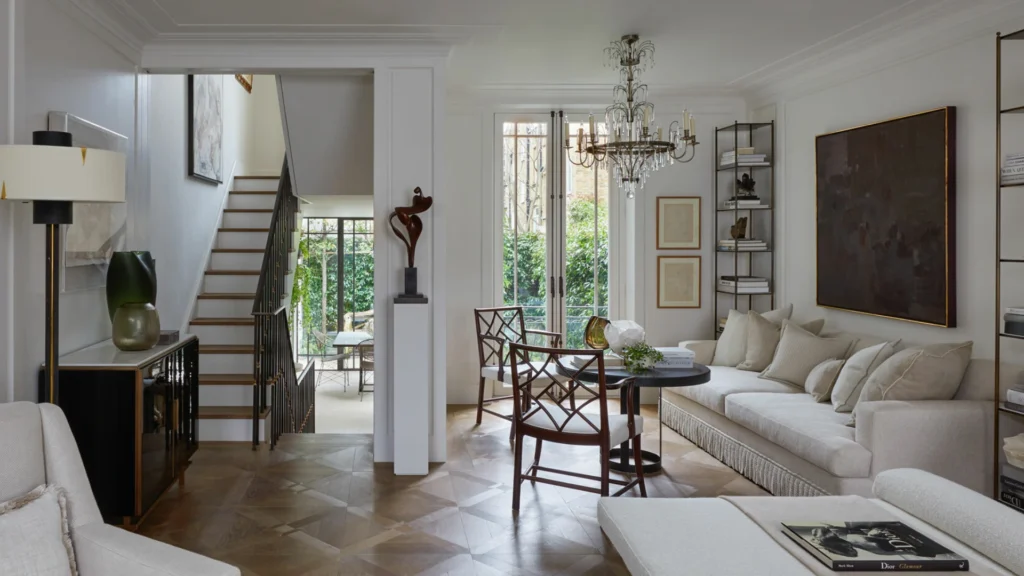
Window-Adjoining Benches and Ottomans
If functional seating near windows is desired, consider:
- Low upholstered benches
- Slim ottomans
- Minimalist window stools with open bases
These elements preserve the integrity of historic home furniture placement by avoiding tall backs that interrupt glazing.
Material and Color Considerations
Let Light Lead the Palette
Chelsea’s parlor floors are bathed in nuanced daylight—cool in the morning, golden at dusk. Materials should respond to this dynamism.
In elevated Chelsea townhouse interiors, designers frequently opt for:
- Textured linens and bouclé that catch light softly
- Light-toned woods that echo original floorboards
- Subtle metallic accents that reflect, rather than absorb, daylight
Heavy, light-absorbing fabrics positioned near windows risk muting the architectural drama. Instead, refined historic home furniture placement privileges translucency and tactility.
Framing, Not Concealing, the Windows
Window treatments should articulate the architecture rather than mask it. Ceiling-mounted drapery tracks emphasize height, while sheer panels maintain privacy without sacrificing luminosity.
A disciplined parlor floor living room layout ensures that curtain stacks do not interfere with seating proportions, allowing the windows to remain the room’s primary focal point.
Balancing Modern Living with Historic Integrity
Integrating Technology Discreetly
Contemporary living demands screens and media zones. In sensitive Chelsea townhouse interiors, designers often avoid positioning televisions opposite the window wall, which can create glare and shift focus away from original detailing.
Alternative solutions include:
- Projectors concealed within ceiling coffers
- Custom cabinetry between structural piers
- Freestanding media units positioned along interior walls
Thoughtful historic home furniture placement allows technology to coexist without undermining heritage character.
Art as an Architectural Bridge
Large-scale art placed between windows reinforces vertical rhythm. Mirrors can amplify light, especially in north-facing parlors. In both cases, proportion is key.
Within a refined parlor floor living room layout, art should enhance symmetry and echo the cadence of window spacing, strengthening the architectural narrative.
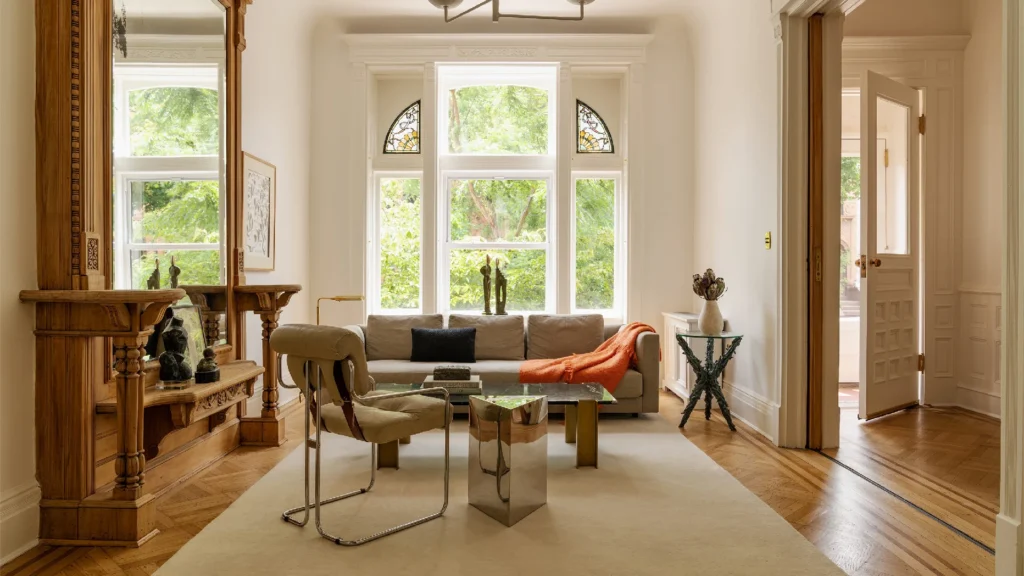
Common Mistakes to Avoid
- Blocking lower window panels with deep sofas.
- Installing built-ins across entire window walls.
- Using excessively tall plants that obscure muntins and glazing patterns.
- Ignoring circulation paths between front and rear parlors.
Avoiding these missteps ensures that Chelsea townhouse interiors retain their inherent grandeur.
A Design Philosophy Rooted in Restraint
Ultimately, furnishing a parlor floor without blocking historic windows is less about subtraction and more about orchestration. It demands an understanding of proportion, light, and spatial psychology.
For architects and interior designers shaping today’s most refined Chelsea townhouse interiors, the lesson is clear:
Let the windows breathe. Let light travel uninterrupted. Allow furniture to define intimacy without diminishing architectural legacy.
A masterfully composed parlor floor living room layout does not overpower—it frames experience. And through intelligent historic home furniture placement, the dialogue between past and present becomes seamless, elevating everyday living into an art form.
In the end, the true luxury of a Chelsea townhouse lies not in how much we add, but in how thoughtfully we arrange what is already there.