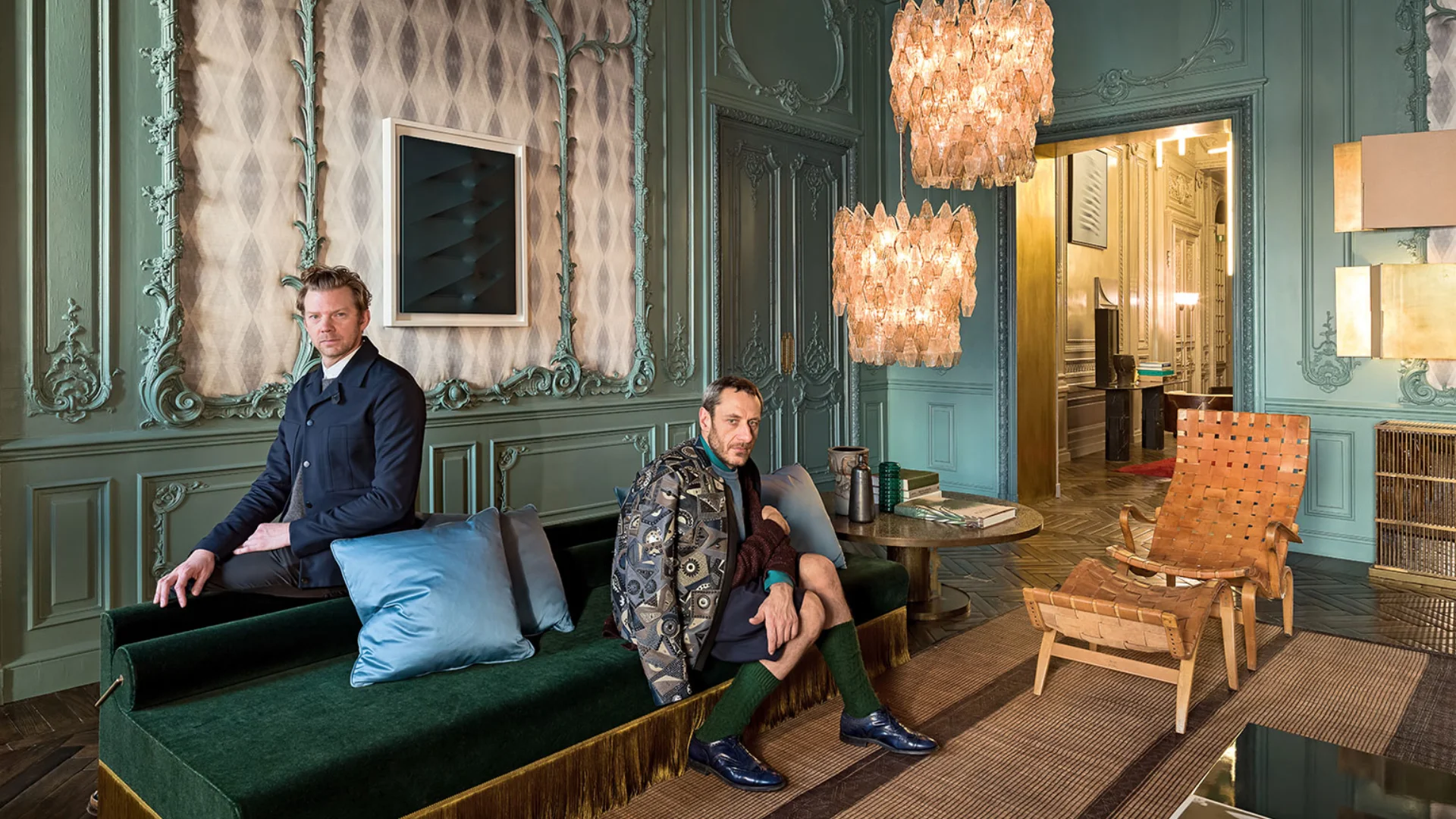
In contemporary interior design, few studios have cultivated a visual language as distinctive and evocative as Dimore Studio. Founded in Milan by Emiliano Salci and Britt Moran, the creative partnership has redefined what it means to create emotionally resonant spaces. Their work transcends traditional categories of décor, embracing a cinematic sensibility where nostalgia, bold materiality, and intellectual references converge.
Today, the influence of Dimore Studio extends far beyond the walls of private residences or luxury hotels. Their approach has helped shape a broader movement toward maximalist interior design, where contrast, storytelling, and layered textures generate interiors that feel immersive and deeply atmospheric.
For architects, designers, and discerning homeowners seeking inspiration, the studio offers a compelling blueprint for cultivating the atmospheric interior design style that defines today’s most memorable spaces. Through thoughtful composition and a commitment to layered luxury interiors, their work demonstrates how interiors can become experiential narratives rather than mere arrangements of furniture.
The Signature Language of Dimore Studio
The design philosophy of Dimore Studio can best be described as a dialogue between eras. Their interiors often juxtapose mid-century modern furniture with vintage Italian lighting, contemporary artworks, and unexpected textiles. The result is a sensorial environment that feels curated over decades rather than assembled at once.
Central to this approach is the belief that atmosphere precedes aesthetics. While many contemporary interiors prioritize minimalism and visual clarity, Dimore Studio embraces complexity. Spaces are intentionally layered, with materials, lighting, and color palettes working together to evoke mood.
This philosophy has helped establish the studio as a defining force behind the resurgence of maximalist interior design. However, their maximalism is never chaotic; instead, it is carefully orchestrated, allowing every object and surface to contribute to a larger narrative.
The Emotional Power of Atmospheric Interior Design Style
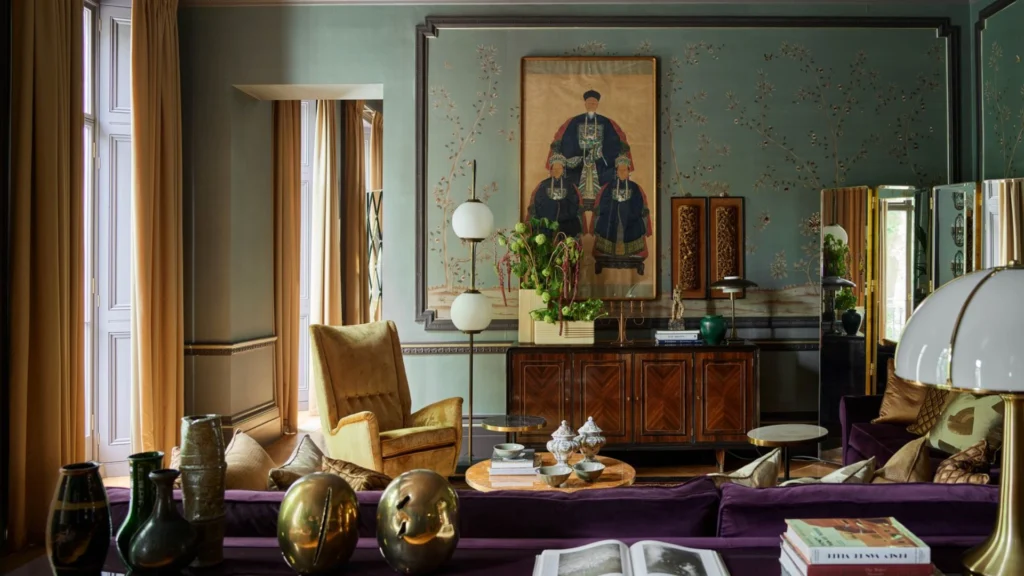
The concept of the atmospheric interior design style has gained renewed attention in recent years, particularly among high-end residential and hospitality projects. In essence, it focuses on creating spaces that stimulate emotional responses through light, texture, and spatial composition.
In the hands of Dimore Studio, atmosphere becomes the central protagonist. Rooms are often illuminated with subdued lighting, casting shadows that enhance the richness of materials such as velvet, lacquered wood, and polished brass.
This sensory approach transforms interiors into environments that feel intimate and cinematic. Rather than emphasizing brightness and openness, the atmospheric interior design style celebrates depth and mystery—qualities that resonate strongly with collectors and design connoisseurs.
Layered Luxury Interiors: Beyond Conventional Opulence
The notion of layered luxury interiors is integral to the work of Dimore Studio. Unlike traditional luxury design, which often relies on uniform materials and polished perfection, layered interiors embrace complexity and contrast.
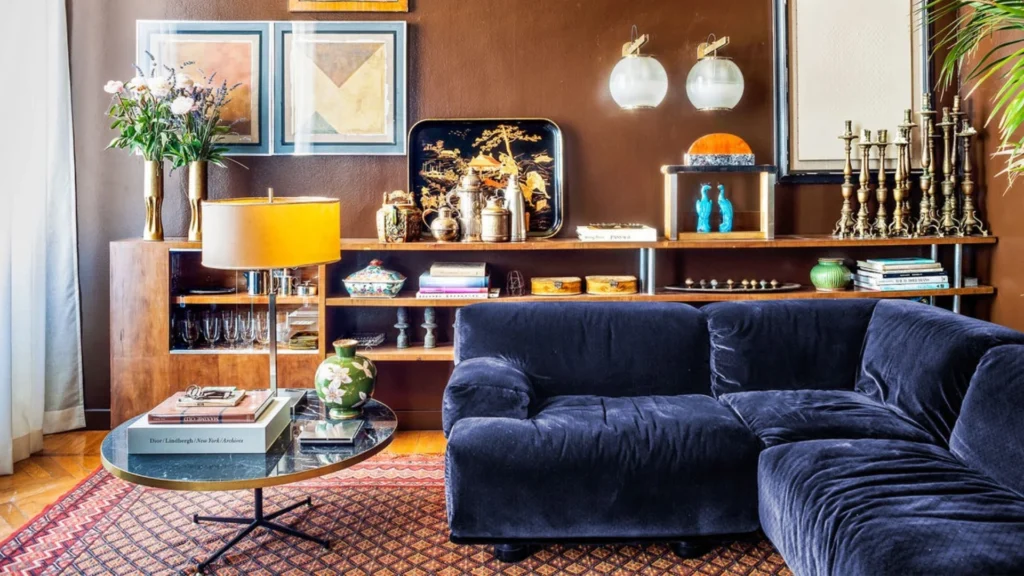
Textures are combined in unexpected ways: velvet sofas sit beside marble tables, vintage lamps cast warm pools of light, and patterned carpets anchor eclectic seating arrangements. Each element contributes to a composition that feels richly inhabited.
This approach to layered luxury interiors reflects a broader cultural shift toward authenticity. Rather than showcasing wealth through excess, the design emphasizes narrative, craftsmanship, and cultural references.
Key Design Principles Behind Dimore Studio’s Interiors
1. A Cinematic Approach to Color
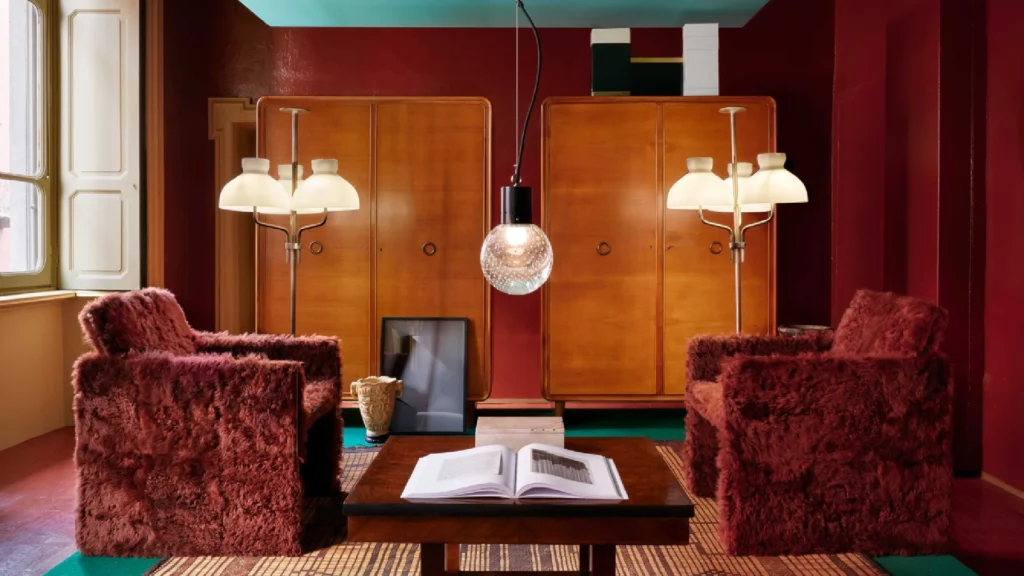
Color plays a fundamental role in shaping the visual identity of Dimore Studio. Their palettes frequently explore deep, saturated tones such as burgundy, forest green, tobacco brown, and midnight blue.
These hues contribute to the immersive qualities of the atmospheric interior design style. Instead of neutral backdrops, color becomes an architectural element that defines mood and spatial perception.
For designers seeking to emulate this approach, the key lies in balancing bold colors with complementary materials—allowing surfaces and textiles to amplify the overall ambiance.
2. Vintage Meets Contemporary
A hallmark of Dimore Studio is the seamless blending of historical references with contemporary design. Vintage Italian pieces from the 1950s and 1960s frequently appear alongside custom-designed furniture and contemporary artworks.
This juxtaposition reinforces the philosophy behind maximalist interior design: diversity creates visual richness. Each piece carries its own story, contributing to the layered narrative of the interior.
The practice of mixing eras also aligns with sustainable design principles. By integrating vintage pieces into layered luxury interiors, designers extend the life cycle of iconic objects while celebrating craftsmanship.
3. Lighting as a Narrative Tool
Lighting is perhaps the most defining element of the atmospheric interior design style. Rather than relying on uniform illumination, Dimore Studio employs a theatrical layering of light sources.
- Low ambient lighting to create intimacy
- Vintage lamps that add sculptural presence
- Directional lighting that highlights art and textures
- Reflective materials that diffuse light subtly
Through this technique, interiors gain a sense of depth and intrigue that cannot be achieved through conventional lighting schemes.
The Influence of Maximalist Interior Design in Contemporary Spaces
The growing popularity of maximalist interior design reflects a broader desire for spaces that express personality and individuality. In an era dominated by minimalist aesthetics, designers and clients increasingly seek interiors that feel distinctive and culturally informed.
Here, Dimore Studio serves as a guiding reference. Their projects demonstrate that maximalism is not about clutter but about thoughtful composition.
Elements commonly found in layered luxury interiors influenced by the studio include:
- Rich textiles such as velvet, mohair, and jacquard
- Vintage and contemporary furniture combinations
- Deeply saturated color palettes
- Artworks integrated as architectural focal points
- Layered lighting strategies
These characteristics contribute to the enduring appeal of the atmospheric interior design style, particularly in luxury hospitality and private residential environments.
Why Dimore Studio Resonates with Luxury Real Estate and Hospitality
In high-end real estate and hospitality, atmosphere plays a decisive role in shaping perception and value. Spaces that evoke emotion often leave stronger impressions than those defined solely by scale or cost.
By embracing layered luxury interiors, Dimore Studio has become a sought-after collaborator for prestigious hotels, boutiques, and private residences worldwide.
Their interiors demonstrate how the atmospheric interior design style can elevate a property beyond functional living spaces, transforming it into a destination experience.
This approach is particularly relevant for luxury developments where differentiation is essential. As noted by the international design publication Architectural Digest, interiors that prioritize storytelling and cultural references increasingly define the most successful hospitality environments.
How Designers Can Apply Dimore Studio’s Approach
Embrace Layering
The foundation of layered luxury interiors lies in combining materials, textures, and objects with intention. Designers can experiment with juxtaposing polished surfaces with tactile fabrics to achieve visual balance.
Create Atmospheric Lighting
To replicate the essence of the atmospheric interior design style, lighting should be treated as a compositional element rather than an afterthought. Layered sources and warm tones contribute to the immersive quality associated with Dimore Studio.
Curate Objects with Narrative Value
Rather than filling rooms with generic décor, consider pieces that carry cultural or historical significance. Vintage furniture, artisanal lighting, and contemporary artworks can coexist harmoniously within a maximalist interior design framework.
Use Color with Confidence
Deep, enveloping hues play a crucial role in the visual identity of interiors inspired by Dimore Studio. Rich palettes enhance the emotional impact of spaces and reinforce the layered aesthetic.
The Future of Atmospheric Interior Design
As global design culture continues to evolve, the influence of Dimore Studio remains undeniable. Their work represents a powerful counterpoint to minimalism, demonstrating how interiors can be expressive, intellectual, and deeply personal.
The continued rise of maximalist interior design suggests that clients and designers alike are rediscovering the value of complexity. In this context, the atmospheric interior design style will likely become even more prominent, particularly within luxury residences, boutique hotels, and curated cultural spaces.
Ultimately, the enduring appeal of layered luxury interiors lies in their ability to evoke emotion. By embracing texture, history, and narrative, Dimore Studio has created a design language that resonates across continents and disciplines.
The Takeaway
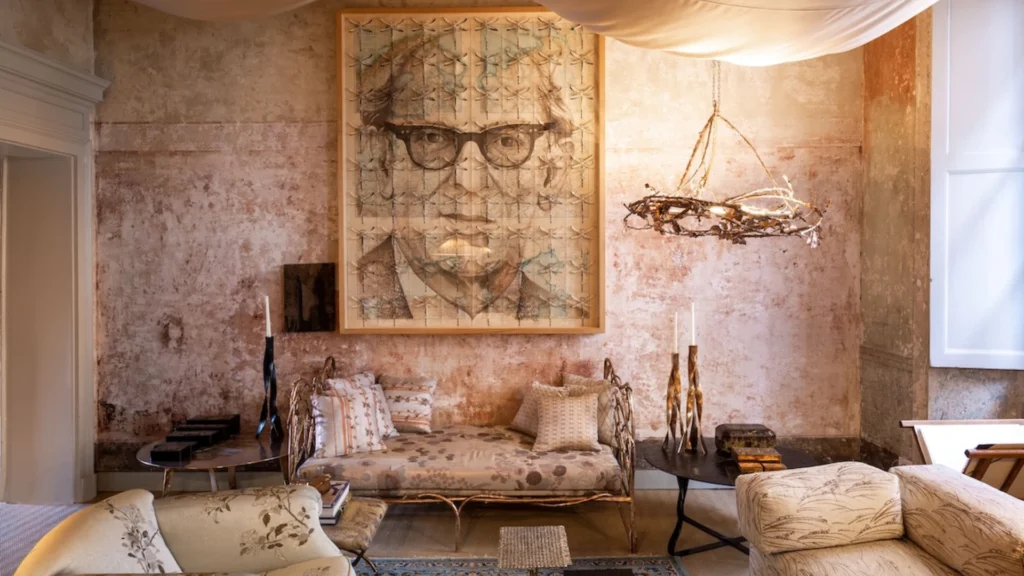
The interiors created by Dimore Studio demonstrate that great design is not merely about aesthetics—it is about atmosphere, memory, and storytelling. Through their pioneering approach to maximalist interior design, the studio has redefined how contemporary interiors can feel both luxurious and deeply personal.
For architects, designers, and collectors seeking inspiration, the principles behind the atmospheric interior design style offer a compelling framework for creating immersive spaces. By embracing the philosophy of layered luxury interiors, designers can craft environments that transcend trends and capture the timeless allure of thoughtful composition.