

In the uppermost tier of global real estate, a quiet paradox prevails. The most expensive homes—those commanding record-breaking prices in New York, London, Paris, Milan, or along the Mediterranean—rarely announce their value through spectacle. Instead, they communicate wealth through restraint. For seasoned architects, designers, developers, and high-net-worth individuals, luxury home design today is less about excess and more about intention, nuance, and confidence.
This shift toward understatement is not accidental. It reflects cultural maturity, aesthetic discernment, and an understanding that true luxury is felt rather than displayed. Quiet luxury interiors and restrained interior design have become the visual language of those who no longer need to prove success. In this context, minimalist luxury homes are not empty—they are edited, layered, and deeply considered.
Why, then, do the world’s most valuable residences often feel the most restrained? The answer lies at the intersection of psychology, craftsmanship, spatial intelligence, and cultural evolution.
The Psychology of Wealth: When Less Speaks Louder
At a certain level of affluence, display becomes unnecessary. Sociologists and design historians have long observed that newly acquired wealth often gravitates toward ornamentation, while established wealth prefers discretion. In luxury home design, this manifests as calm palettes, architectural clarity, and an absence of visual noise.
Restrained environments create psychological ease. They allow occupants to decompress, think clearly, and inhabit space without constant stimulation. For global decision-makers—entrepreneurs, collectors, investors—home is increasingly conceived as a sanctuary rather than a stage.
Confidence as an Aesthetic Choice
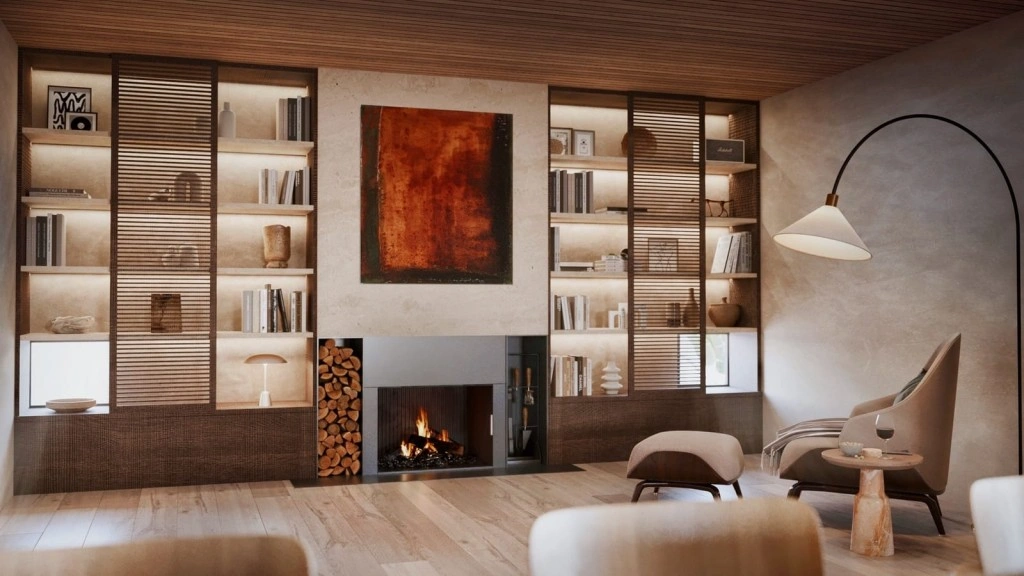
Restraint requires confidence. A pared-back interior leaves little room for distraction, meaning every decision must be precise. Materials, proportions, and craftsmanship are fully exposed. This is why quiet luxury interiors are often the most difficult—and expensive—to execute.
- There is no visual clutter to mask poor detailing.
- Materials must perform both aesthetically and sensorially.
- Spatial flow must feel intuitive and effortless.
In this sense, restraint is not minimalism for its own sake; it is refinement through subtraction.
Architecture Before Decoration
The most valuable homes prioritize architecture over adornment. Strong volumes, balanced proportions, and natural light form the foundation upon which all other elements rest. When architecture is resolved, decoration becomes secondary.
This principle is central to restrained interior design. Walls are allowed to breathe. Circulation is generous. Sightlines are uninterrupted. Rather than filling space, designers frame it.
Material Integrity and Authenticity
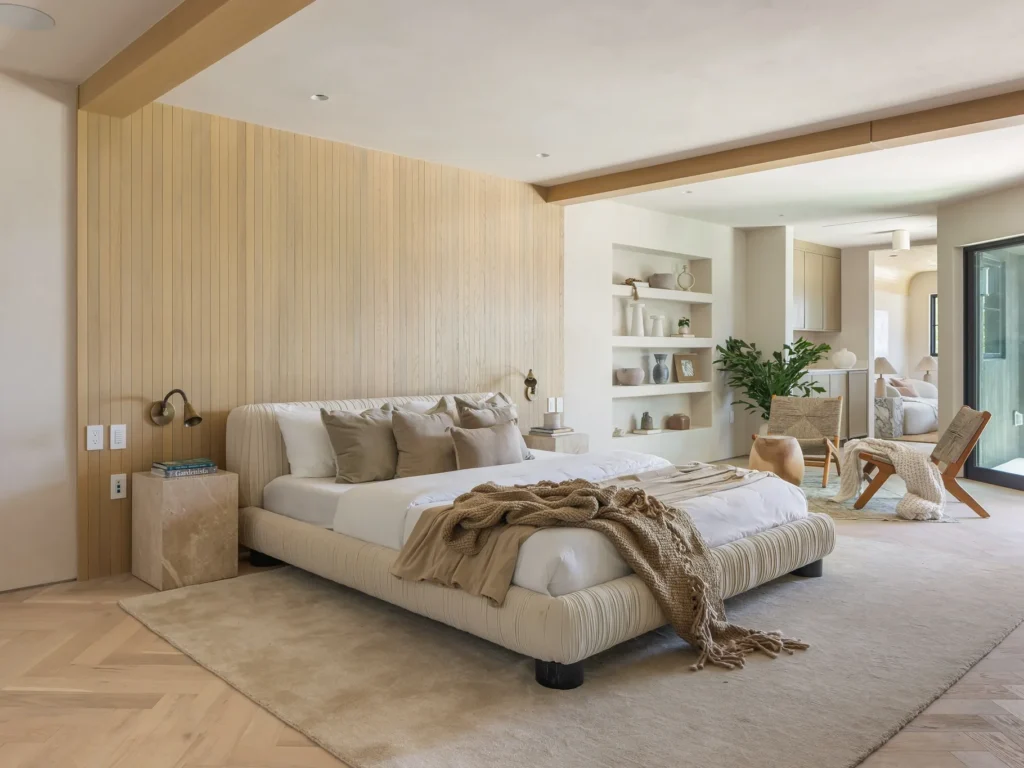
In high-end residential projects, materials are selected not for trend appeal but for longevity and authenticity. Stone, solid wood, linen, plaster, bronze, and hand-finished metals dominate minimalist luxury homes.
These materials age gracefully, developing patina rather than appearing dated. According to research published by Architectural Digest, today’s ultra-luxury buyers increasingly value craftsmanship and provenance over novelty, a trend that reinforces the move toward restraint.
Silence as a Design Strategy
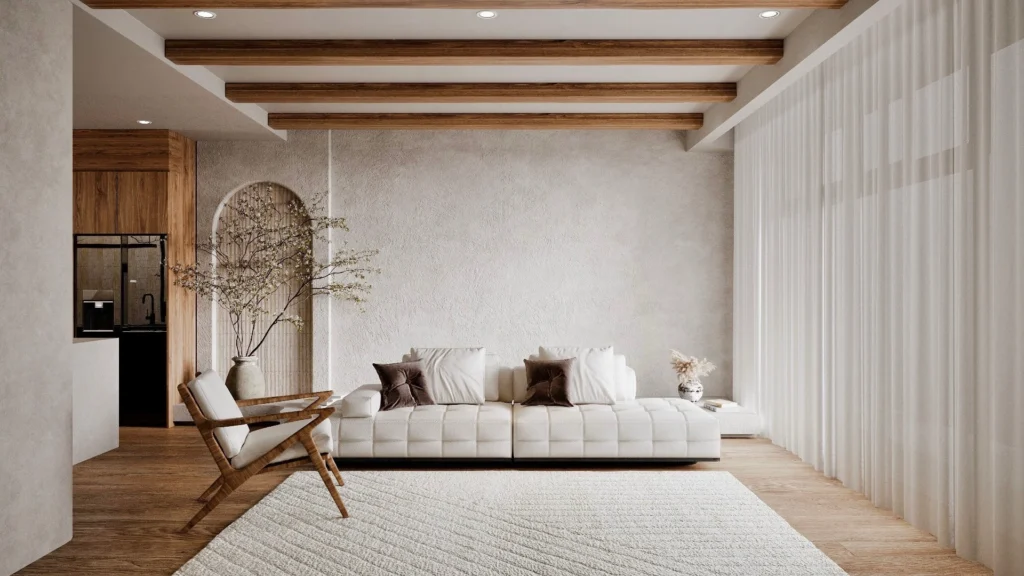
Visual silence is one of the most powerful tools in luxury home design. Neutral palettes—soft whites, warm taupes, stone greys, and muted earth tones—create continuity and calm. Rather than dominating a room, color is often embedded in material variation, texture, and light.
This approach does not eliminate richness; it reframes it. Texture replaces pattern. Depth replaces contrast. Subtle tonal shifts replace bold gestures.
The Role of Light
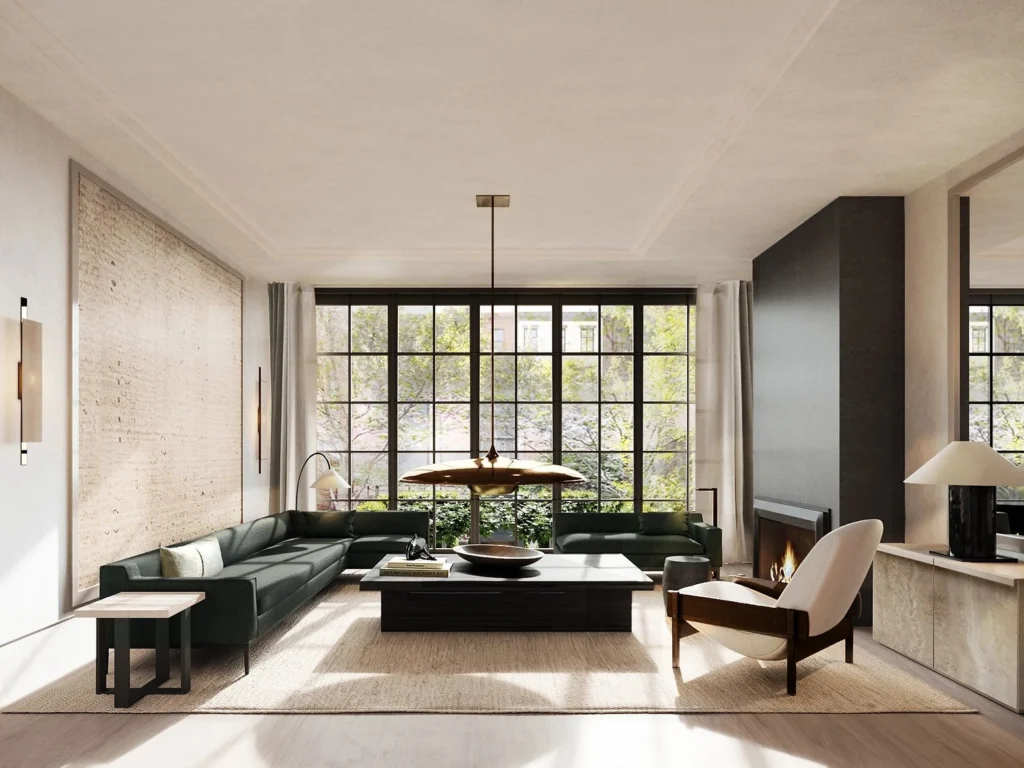
Light, both natural and artificial, is central to the restrained aesthetic. Floor-to-ceiling glazing, skylights, and carefully positioned apertures allow daylight to sculpt interiors throughout the day.
Artificial lighting, meanwhile, is layered and discreet:
- Indirect cove lighting to soften architecture
- Integrated joinery lighting to enhance materials
- Sculptural fixtures used sparingly, as punctuation rather than decoration
In quiet luxury interiors, lighting is rarely noticed—yet deeply felt.
Restraint as a Marker of Global Sophistication
The rise of restrained interiors also reflects a global convergence of taste. International clients move fluidly between continents, cultures, and properties. They seek environments that feel timeless rather than geographically fixed.
As a result, minimalist luxury homes often draw from a shared vocabulary:
- Japanese spatial philosophy and respect for emptiness
- European modernist proportions
- Scandinavian material honesty
- Mediterranean sensitivity to light and landscape
This synthesis produces spaces that feel universally sophisticated—never overdesigned, never culturally performative.
Editing as the Ultimate Luxury
Perhaps the most defining characteristic of the world’s most expensive homes is what they exclude. Editing is an act of discipline. It requires saying no to excess, trend-driven gestures, and unnecessary objects.
In restrained interior design, every element must earn its place. Furniture is selected for proportion and comfort rather than statement value. Art is curated with intention, often given generous negative space to breathe.
This philosophy aligns with how high-net-worth individuals increasingly live: fewer possessions, higher quality, deeper meaning.
Furniture That Serves the Architecture
In restrained residences, furniture is rarely the protagonist. Instead, it supports the architectural narrative. Low profiles, refined silhouettes, and tactile materials allow furnishings to integrate seamlessly into space.
Within luxury home design, this translates into pieces that prioritize craftsmanship, ergonomics, and material integrity over visual excess. The absence of overt branding or ornamentation allows the environment to feel cohesive and calm.
Custom and Bespoke Solutions
Many of the most discreet interiors rely heavily on custom elements: built-in seating, tailored storage, and made-to-measure furnishings. These solutions reduce visual clutter while enhancing functionality.
Bespoke design also reinforces exclusivity. True luxury is not about abundance, but about alignment—between space, object, and inhabitant.
The Economics of Restraint
Ironically, restraint often costs more. Seamless details, invisible technology, and flawless finishes require time, expertise, and precision. In minimalist luxury homes, the budget is concentrated not on quantity, but on execution.
Consider the cost drivers behind restrained interiors:
- High-grade natural materials with limited imperfections
- Artisanal craftsmanship and hand-finishing
- Extensive design development and detailing
- Advanced construction tolerances
When everything is visible, everything must be perfect.
Technology That Disappears
Modern luxury homes are technologically advanced, yet visually quiet. Automation, climate control, security, and entertainment systems are fully integrated—often invisible.
This seamless integration supports the ethos of quiet luxury interiors. Technology enhances comfort without disrupting aesthetics, allowing the architecture and materials to remain the focus.
Restraint as a Sustainable Mindset
There is also an ethical dimension to restraint. Longevity, adaptability, and sustainability increasingly influence high-end residential design. Timeless interiors reduce the need for frequent renovation, lowering long-term environmental impact.
In this way, restrained interior design aligns with contemporary values of responsibility and consciousness—without compromising elegance.
The New Language of Luxury
The most expensive homes feel restrained because restraint has become the ultimate expression of luxury. In a world saturated with images, noise, and excess, silence is powerful. Calm is aspirational. Precision is rare.
Luxury home design today is defined not by how much is added, but by how carefully it is edited. Quiet luxury interiors and minimalist luxury homes speak to a global audience that values discernment, cultural fluency, and timeless beauty.
For architects, designers, and clients alike, restraint is no longer a limitation—it is a statement. One that signals confidence, maturity, and an understanding that true luxury never needs to raise its voice.