

In the evolving language of New York loft interior design, proportion is power. Vast floor plates, exposed brick, cast-iron columns, and monumental windows demand furniture that neither competes with architecture nor disappears within it. Increasingly, the answer has been found close to the ground. Low modular sofas have emerged as the defining element of contemporary downtown living—reshaping how designers conceptualize space, movement, and social interaction in the urban loft.
For architects, interior designers, and discerning homeowners, this shift is not merely aesthetic. It reflects broader cultural preferences for flexibility, openness, and refined informality. In a city where square footage is both luxury and negotiation, modular sectional sofas have become a strategic instrument in composing sophisticated open-plan living room furniture arrangements that feel expansive yet intimate.
The Architectural Logic Behind the Low Profile
Classic SoHo and Tribeca lofts were born from industrial bones—warehouses transformed into residences in the mid-20th century. Their architectural character is defined by:
- Ceilings often exceeding 10 to 14 feet
- Oversized steel-framed windows
- Open spans with minimal interior walls
- Raw materials such as brick, concrete, and timber
Within this context, traditional high-back sofas can interrupt sightlines and visually fragment space. Low modular sofas, by contrast, maintain horizontal continuity. They preserve architectural drama, allowing columns, art walls, and skyline views to remain unobstructed.
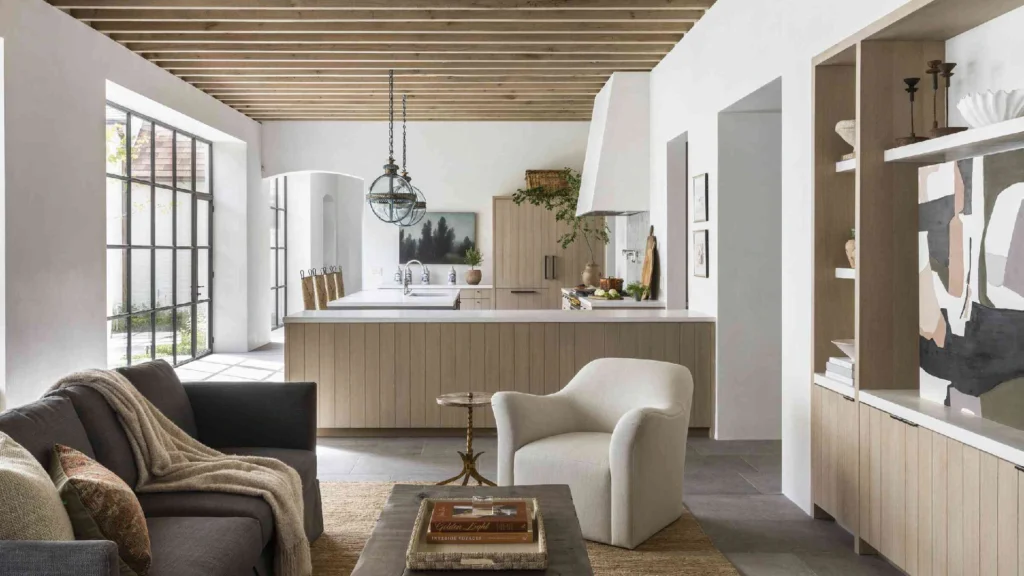
Visual Continuity in New York Loft Interior Design
In New York loft interior design, furniture must respect negative space. A lower seating profile accomplishes three critical objectives:
- Enhances ceiling height perception by emphasizing vertical volume.
- Maintains clear sightlines across open-plan layouts.
- Anchors the room horizontally without creating visual barriers.
The result is an environment that feels curated yet effortless—precisely the balance sought in high-end urban residences.
Modularity as a Reflection of Contemporary Living
The dominance of low modular sofas cannot be separated from lifestyle evolution. Today’s loft is rarely a static showpiece. It is a hybrid environment: part gallery, part workspace, part social salon.
Why Modular Sectional Sofas Respond to Urban Dynamics
Modular sectional sofas allow homeowners and designers to reconfigure seating in response to changing needs:
- Hosting art previews or intimate dinners
- Accommodating remote work setups
- Creating media lounges without dedicated rooms
- Transitioning between formal and informal gatherings
This flexibility is essential in open-plan living room furniture schemes, where a single zone must perform multiple roles. Modules can be expanded, reduced, rotated, or separated—an approach that mirrors the fluid social rhythms of New York itself.
The Psychology of Low Seating
Beyond architectural harmony, there is a psychological dimension to low modular sofas. Lower seating subtly shifts perspective. It encourages relaxation, conversation, and a more grounded experience of space.
In expansive lofts, scale can feel intimidating. A low configuration humanizes the environment. It creates a visual “horizon line” that brings proportion back to the body. For designers working within New York loft interior design, this recalibration is invaluable.
Creating Intimacy in Open Volume
Large open areas often struggle with emotional warmth. Carefully composed modular sectional sofas can define conversation pits without walls. When arranged strategically, they:
- Establish clear social zones
- Encourage face-to-face interaction
- Soften industrial materials
- Introduce tactile richness through upholstery
In this sense, open-plan living room furniture becomes a tool of choreography—guiding how people move, gather, and inhabit the space.
Materiality: Softening the Industrial Envelope
Industrial lofts are celebrated for their authenticity, yet they can verge on austere. Low modular sofas counterbalance this with texture and depth.
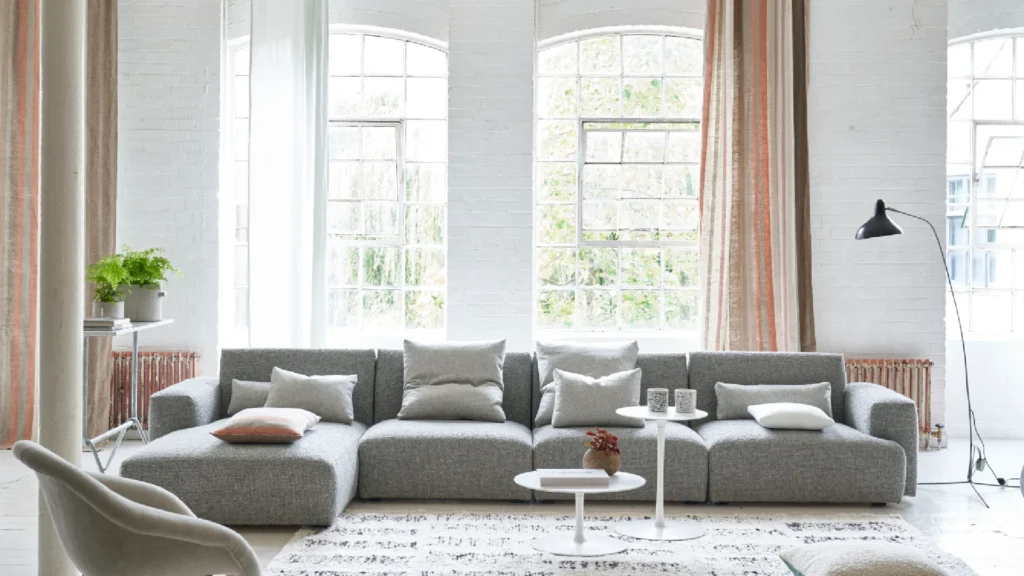
Fabric and Finish Trends in New York Loft Interior Design
Current material preferences include:
- Textured bouclé and performance linens
- Supple full-grain leathers in muted earth tones
- Deep neutrals: charcoal, stone, sand, olive
- Subtle tonal layering rather than high contrast
These finishes allow modular sectional sofas to integrate seamlessly with exposed brick and steel. Rather than competing with architecture, they provide a tactile counterpoint—elevating open-plan living room furniture into a cohesive composition.
Art, Scale, and the Gallery Effect
Many New York loft owners are collectors. Art often dictates layout. High ceilings and uninterrupted walls transform living rooms into gallery-like settings.
Low modular sofas support this curatorial ambition. Their discreet height ensures artworks remain the focal point. When paired with restrained coffee tables and sculptural lighting, they reinforce the gallery effect central to sophisticated New York loft interior design.
Strategic Placement for Visual Impact
Design professionals frequently position modular sectional sofas:
- Parallel to major art walls
- Floating centrally beneath pendant lighting
- Oriented toward panoramic windows
Such placements respect circulation while reinforcing the architectural grid—a hallmark of expertly resolved open-plan living room furniture layouts.
Open-Plan Living Room Furniture as Spatial Architecture
In loft environments, furniture often functions as architecture. Without partition walls, spatial identity must be established through arrangement and proportion.
Low modular sofas excel in this architectural role. Their adaptability allows designers to:
- Create L-shaped or U-shaped seating zones
- Frame rugs that define distinct areas
- Align modules with structural columns
- Balance dining and kitchen zones within a unified field
When thoughtfully configured, modular sectional sofas act as invisible boundaries—structuring open-plan living room furniture with clarity and sophistication.
Luxury Minimalism and the Rise of Quiet Statements
Another reason low modular sofas dominate New York loft interior design lies in the broader movement toward luxury minimalism. Today’s affluent homeowners favor restraint over ostentation.
Low silhouettes express confidence. They do not demand attention through ornament but command presence through proportion and material integrity. In high-end lofts, this understated elegance resonates more deeply than traditional formal seating.
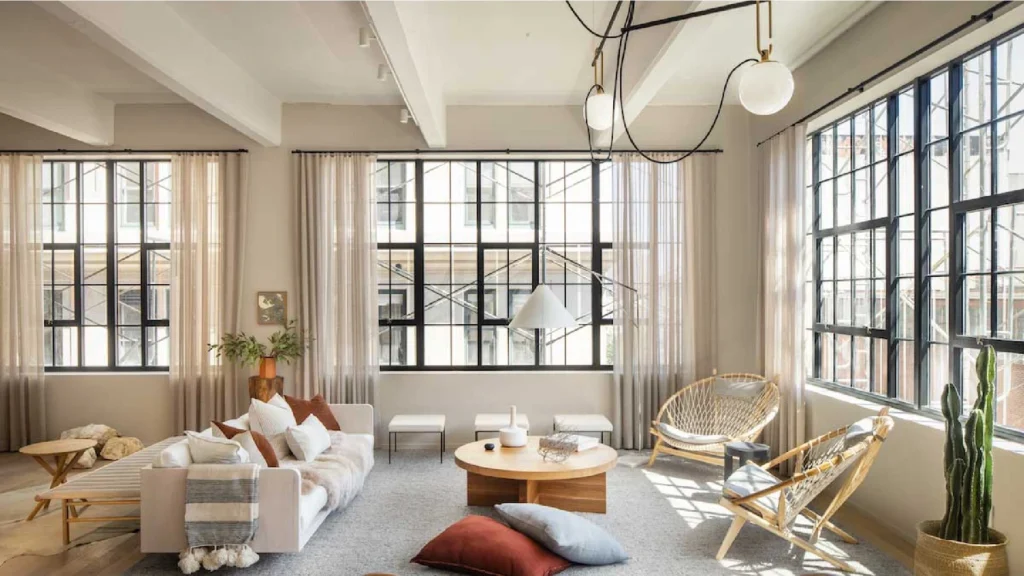
From Statement Piece to Spatial Foundation
Historically, sofas were decorative centerpieces. In contemporary lofts, modular sectional sofas operate differently. They serve as spatial foundations—platforms upon which art, lighting, and conversation unfold.
This transformation reinforces the primacy of open-plan living room furniture as an integrated system rather than isolated objects.
Designing for Global Buyers and Investors
New York remains a magnet for international buyers. For investors staging luxury lofts, low modular sofas offer universal appeal. Their modern language transcends cultural boundaries, aligning with European minimalism, Asian spatial clarity, and American industrial heritage.
Within New York loft interior design, this adaptability increases market desirability. Prospective buyers envision flexibility—spaces that evolve with family, work, and entertainment needs.
Investment Value of Modular Sectional Sofas
From a strategic standpoint, modular sectional sofas provide:
- Longevity through reconfiguration
- Ease of transport and installation
- Scalability for larger residences
- Timeless aesthetic relevance
In premium developments, refined open-plan living room furniture solutions can significantly influence perception and, ultimately, property value.
Lighting Synergy and the Horizontal Line
Lighting plays a critical role in loft interiors. Pendant fixtures, track lighting, and sculptural floor lamps often define vertical emphasis. Low modular sofas complement this by reinforcing a strong horizontal line.
The interplay between vertical illumination and horizontal seating geometry produces visual equilibrium—a key principle in advanced New York loft interior design. Designers often amplify this effect by selecting modular sectional sofas with generous depth and refined seam detailing, enhancing shadow play across upholstery surfaces.
Practical Considerations for Specifying Low Modular Sofas
For architects and interior designers specifying open-plan living room furniture, technical considerations are essential.
Key Specification Guidelines
- Seat height: Typically 14–17 inches for optimal low-profile aesthetics.
- Depth: Generous proportions (up to 40 inches) encourage lounging.
- Frame integrity: Kiln-dried hardwood for structural longevity.
- Upholstery durability: High rub-count textiles suitable for urban living.
When executed correctly, low modular sofas balance comfort with sculptural clarity—essential in high-caliber New York loft interior design projects.
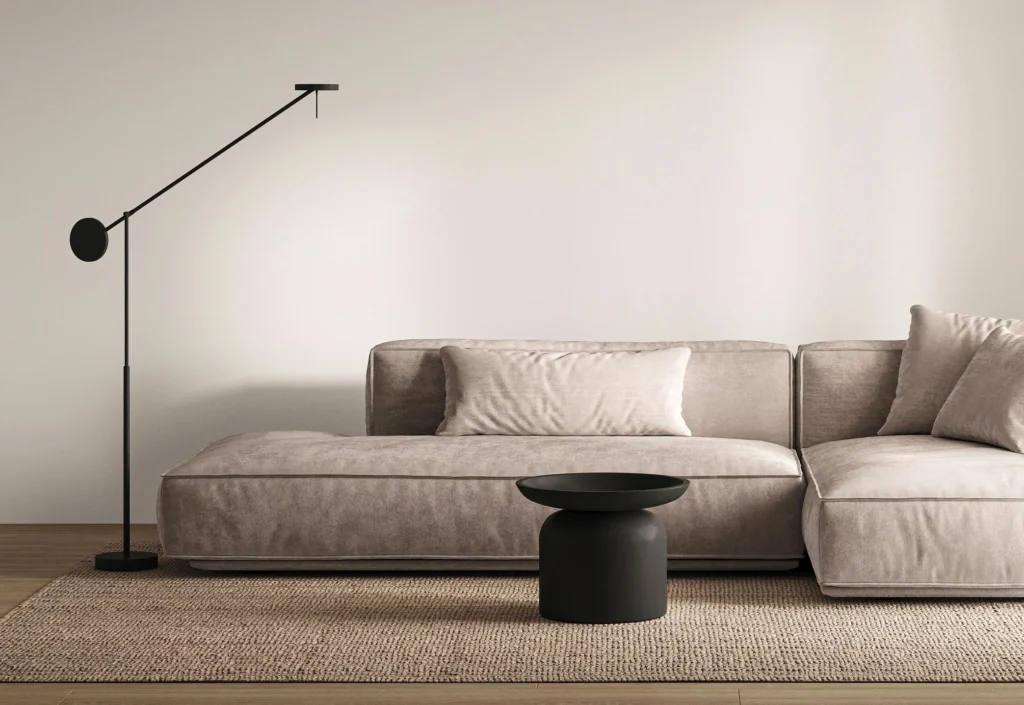
The Future of Loft Living
The rise of low modular sofas signals more than a passing trend. It reflects a redefinition of urban luxury—one that values openness, adaptability, and understated refinement.
As remote work, art patronage, and global mobility continue to shape metropolitan lifestyles, modular sectional sofas will remain integral to how designers conceptualize open-plan living room furniture. Their versatility answers the central question of contemporary loft living: how to inhabit vast space with intimacy and intelligence.
Grounded Elegance in the Urban Sky
In the vertical drama of New York’s architectural landscape, grounding becomes an act of design mastery. Low modular sofas offer precisely that—anchoring expansive interiors while preserving light, art, and architectural integrity.
For professionals shaping the next generation of New York loft interior design, the message is clear: seating is no longer peripheral. Through thoughtfully specified modular sectional sofas, open-plan living room furniture becomes a defining architectural gesture—quiet, confident, and unmistakably contemporary.