

In the evolving language of contemporary homes, neutrality has become a global design dialect. Soft mineral palettes, architectural minimalism, and tactile restraint define many of today’s most refined interiors. Yet within these composed environments, a single material continues to introduce depth, character, and emotional resonance: walnut furniture. Revered for its tonal complexity and sculptural grain, walnut bridges the gap between cool modernism and inviting domesticity, offering warmth in neutral spaces without compromising architectural clarity.
For architects, interior designers, and discerning homeowners, walnut is not merely a finish—it is a design strategy. In living room furniture, dining settings, bespoke millwork, and statement storage, walnut performs as both anchor and accent, grounding expansive spaces while enriching minimal compositions.
The Enduring Appeal of Walnut in Contemporary Design
Across Europe, North America, and Asia, walnut has long signified refinement. Its deep brown tones, often layered with subtle violet or caramel undertones, respond beautifully to natural light. Unlike lighter woods that amplify brightness, walnut introduces a measured visual weight—an essential counterbalance in open-plan contemporary homes.
From mid-century masters to today’s leading studios, designers have consistently embraced walnut for its structural integrity and aesthetic nuance. According to the Architectural Digest, darker woods are experiencing a resurgence in modern interiors, valued for their ability to create intimacy within expansive, light-filled volumes.
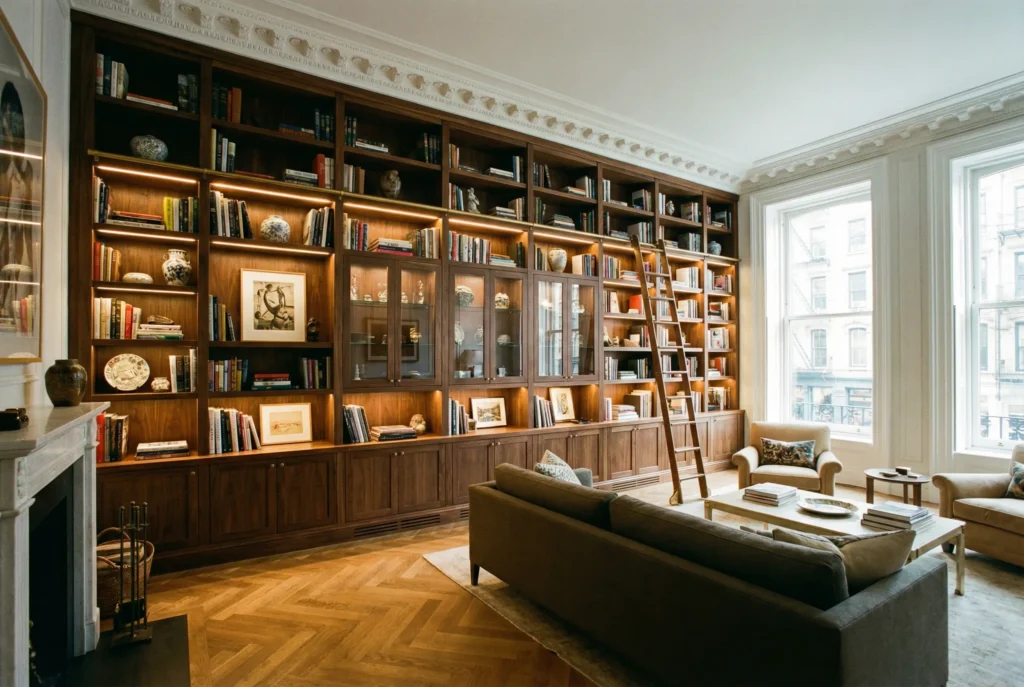
Why Walnut Furniture Works in Neutral Interiors
- Chromatic Depth: Walnut’s rich grain introduces tonal variation without overwhelming minimalist schemes.
- Material Contrast: It pairs seamlessly with stone, metal, glass, and textured textiles.
- Timeless Modernity: Walnut furniture transcends trend cycles, aligning with both classic and avant-garde aesthetics.
- Emotional Warmth: In pared-back settings, it adds a humanizing element that softens architectural rigor.
Walnut Furniture as an Architectural Anchor
In contemporary homes characterized by clean lines and open layouts, furniture often assumes an architectural role. A walnut dining table becomes a visual focal point within an expansive living area. A low walnut console delineates circulation zones without erecting physical barriers. The material’s visual density provides structure within spatial fluidity.
When used in living room furniture, walnut coffee tables, shelving systems, and sideboards establish a grounded center. Their darker presence contrasts elegantly against pale travertine floors, off-white plaster walls, or linen upholstery—creating balance through contrast rather than ornament.
Balancing Light and Shadow
Neutral interiors frequently rely on light—daylight, diffused artificial illumination, and reflective surfaces. Walnut furniture introduces shadow and depth, creating a subtle chiaroscuro effect that enriches spatial perception. Designers often position walnut pieces near windows, allowing sunlight to highlight the wood’s organic grain patterns, transforming functional objects into living surfaces.
The Living Room: A Study in Warm Minimalism
The living room is where walnut demonstrates its most compelling narrative power. In carefully curated living room furniture compositions, walnut establishes cohesion while allowing other materials to breathe.
Key Applications in Living Room Furniture
- Coffee Tables: Sculptural walnut tables introduce gravitas without heaviness.
- Media Consoles: Clean-lined walnut cabinetry conceals technology while elevating aesthetic integrity.
- Accent Chairs: Walnut frames paired with boucle or leather create textural harmony.
- Open Shelving: Floating walnut shelves offer visual warmth against neutral backdrops.
In contemporary homes, designers often juxtapose walnut furniture with tactile fabrics—wool, alpaca, raw silk—enhancing sensory richness. The result is a space that feels curated yet welcoming, structured yet intimate.
Material Dialogue: Walnut and Its Complementary Elements
One of walnut’s greatest strengths lies in its versatility. Within neutral interiors, it functions as a mediator between materials.
Walnut and Stone
Pairing walnut furniture with marble, limestone, or travertine creates a refined tension between organic warmth and mineral coolness. A walnut dining table atop a stone floor in contemporary homes exemplifies this dialogue—earth meeting earth, interpreted through modern craftsmanship.
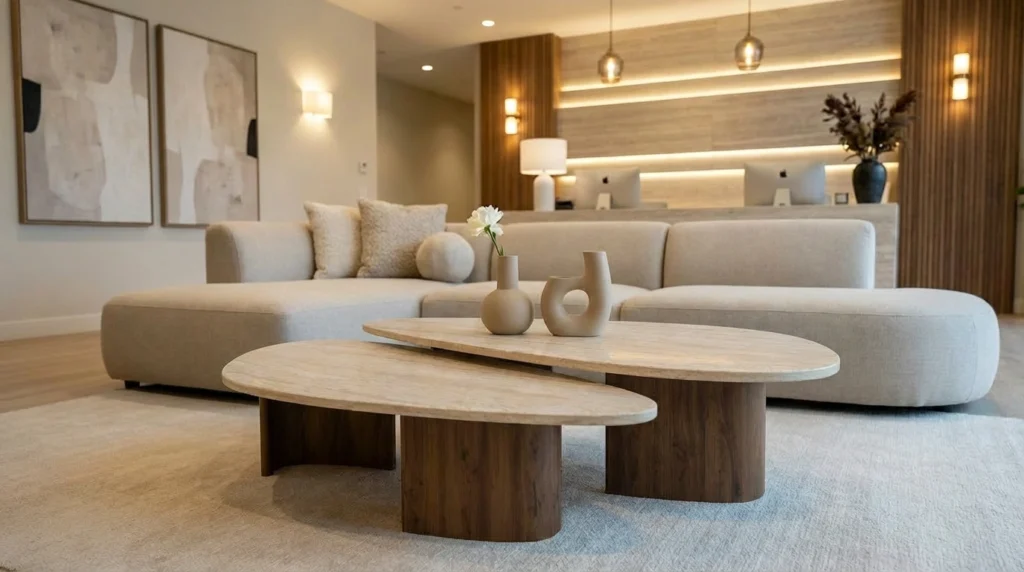
Walnut and Metal
Brushed brass, matte black steel, and bronze accents enhance walnut’s richness. In living room furniture, slender metal legs beneath a walnut console introduce lightness, preventing visual bulk while retaining sophistication.
Walnut and Textiles
Neutral interiors often rely on layered fabrics for depth. Walnut furniture intensifies this layering. Cream boucle, sand-toned linen, and taupe wool all benefit from walnut’s contrast, appearing more luminous against its darker hue.
Sustainability and Craftsmanship in Walnut Furniture
Beyond aesthetics, walnut furniture resonates with contemporary values of longevity and responsible sourcing. High-quality walnut, when ethically harvested and expertly crafted, offers durability that aligns with sustainable design principles. In contemporary homes, where permanence and investment pieces are prioritized, walnut furniture represents thoughtful acquisition over disposable trends.
Craftsmanship further elevates its appeal. Precision joinery, hand-finished surfaces, and bespoke detailing transform walnut into heirloom-quality living room furniture. For architects and developers working on luxury residences, specifying walnut communicates an understanding of material integrity and design permanence.
Global Perspectives: Walnut Across Design Cultures
The use of walnut furniture transcends geography. In Scandinavian interiors, walnut punctuates otherwise pale compositions. In Mediterranean residences, it complements textured plaster and sunlit stone. In urban penthouses across New York, London, or Singapore, walnut anchors expansive glass-and-steel environments.
This cross-cultural adaptability explains its prominence in contemporary homes. Walnut furniture carries a universal design language—neither overly rustic nor excessively formal—making it ideal for international audiences and globally influenced interiors.
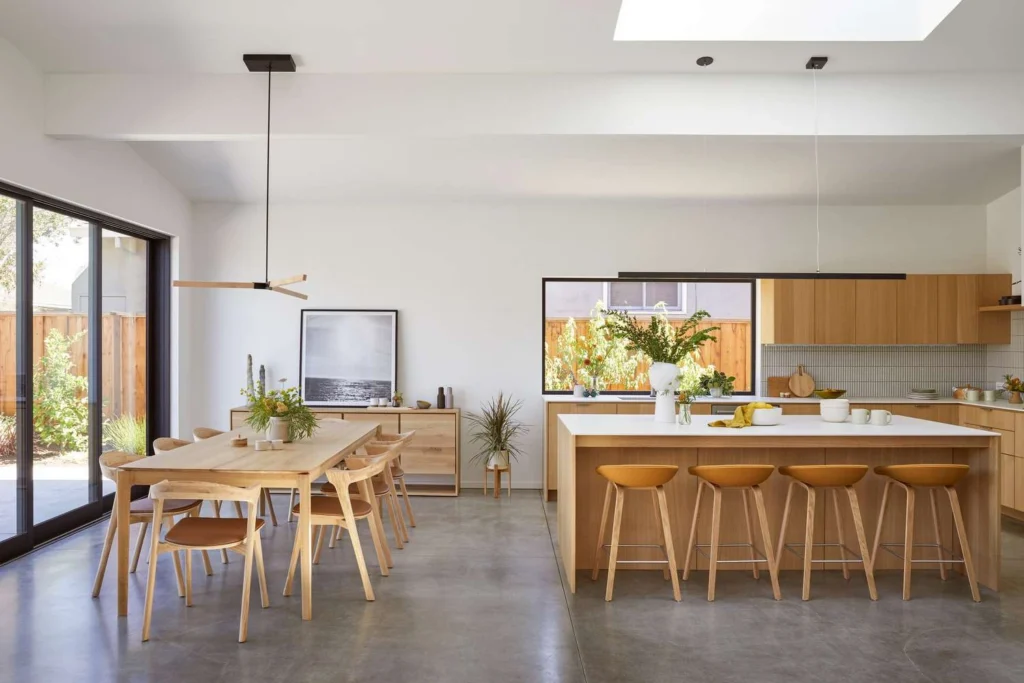
Designing with Walnut: Strategic Considerations
For professionals integrating walnut furniture into neutral spaces, strategic restraint ensures impact.
Proportional Balance
Because walnut is visually substantial, scale matters. Large volumes benefit from statement pieces—substantial dining tables or expansive wall units—while smaller spaces may call for slender profiles within living room furniture collections.
Finish Selection
- Matte Finishes: Enhance walnut’s natural grain for understated elegance.
- Satin Finishes: Introduce subtle sheen without glossiness.
- Oil Treatments: Deepen color while maintaining authenticity.
Contrast and Cohesion
In contemporary homes, walnut should neither dominate nor disappear. The most successful interiors allow walnut furniture to interact dynamically with its surroundings—contrasting with lighter surfaces while echoing other dark accents for cohesion.
The Psychology of Warmth in Neutral Spaces
Neutral interiors can risk sterility if not thoughtfully composed. Walnut furniture mitigates this risk by introducing psychological warmth. Studies in environmental psychology suggest that natural materials enhance feelings of comfort and well-being. The organic grain of walnut, visible and tactile, subtly reinforces this connection to nature.
In living room furniture, where comfort and sociability converge, walnut fosters intimacy. Its deeper tones absorb light gently, reducing glare and enhancing ambiance. In high-net-worth residences, where open-plan layouts can feel expansive, walnut furniture creates emotional grounding.
Walnut Furniture as Investment
For real estate developers and private clients alike, material selection influences long-term value. Walnut furniture, particularly in custom installations, elevates property perception. Prospective buyers touring contemporary homes often respond instinctively to material authenticity; walnut conveys permanence and curated luxury.
Moreover, premium living room furniture crafted from walnut retains desirability across decades. Unlike trend-driven finishes, walnut’s aesthetic maturity ensures relevance in evolving design narratives.
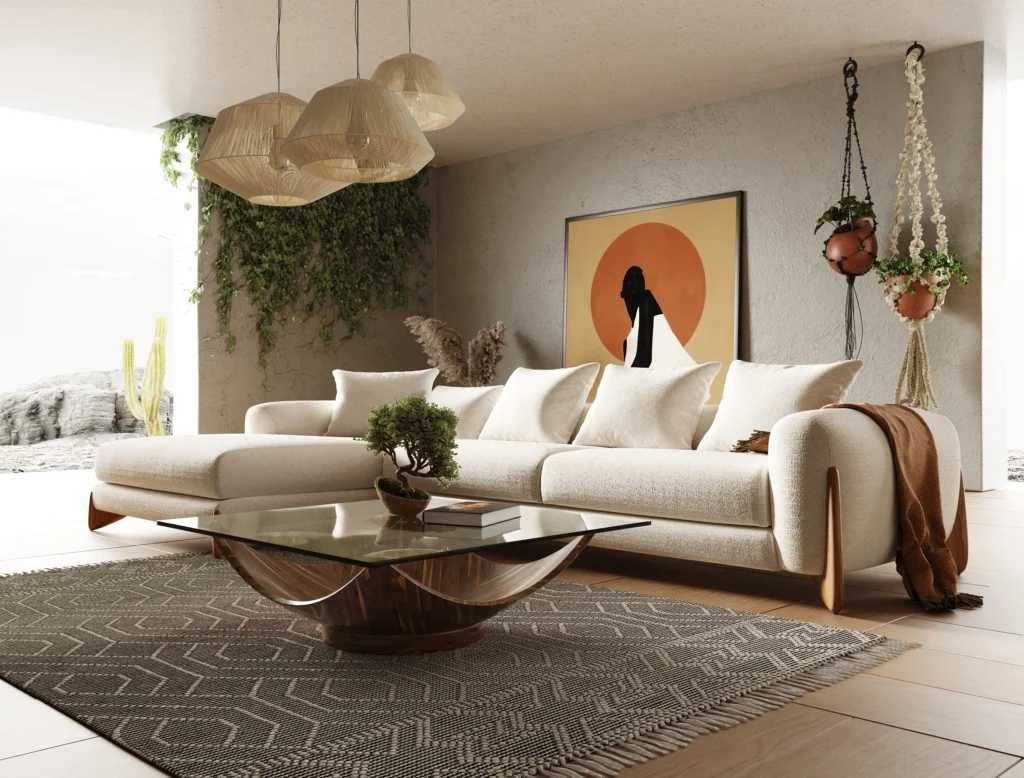
Future Directions: Walnut in Evolving Contemporary Homes
As sustainability, wellness, and authenticity continue to shape architecture and interiors, walnut furniture will likely gain further prominence. Designers are exploring innovative applications—curved walnut panels, integrated lighting within walnut shelving, and hybrid compositions combining walnut with recycled materials.
In future-forward contemporary homes, walnut may appear in unexpected forms: sculptural staircases, acoustic wall treatments, or modular living room furniture systems designed for adaptability. Its ability to merge tradition with innovation ensures its continued relevance.
A Material of Depth and Distinction
In the restrained elegance of neutral interiors, walnut furniture introduces a necessary counterpoint—warmth without excess, richness without ostentation. For architects, designers, and global homeowners, it represents a synthesis of craftsmanship, sustainability, and enduring beauty.
Within contemporary homes, walnut anchors expansive volumes and refines intimate corners. In thoughtfully composed living room furniture arrangements, it balances light with shadow, softness with structure. Ultimately, walnut furniture does more than occupy space—it defines it, shaping environments that feel both modern and profoundly human.