Luxury residential design continues to evolve toward spaces that feel expansive, fluid, and deeply connected. At the forefront of this shift is Open-Concept Living, a design approach that removes traditional barriers and redefines how people experience their homes. For interior designers, architects, and high-end furniture brands, this concept is no longer a trend—it has become a foundational principle in modern luxury environments.
What Defines Open-Concept Living?
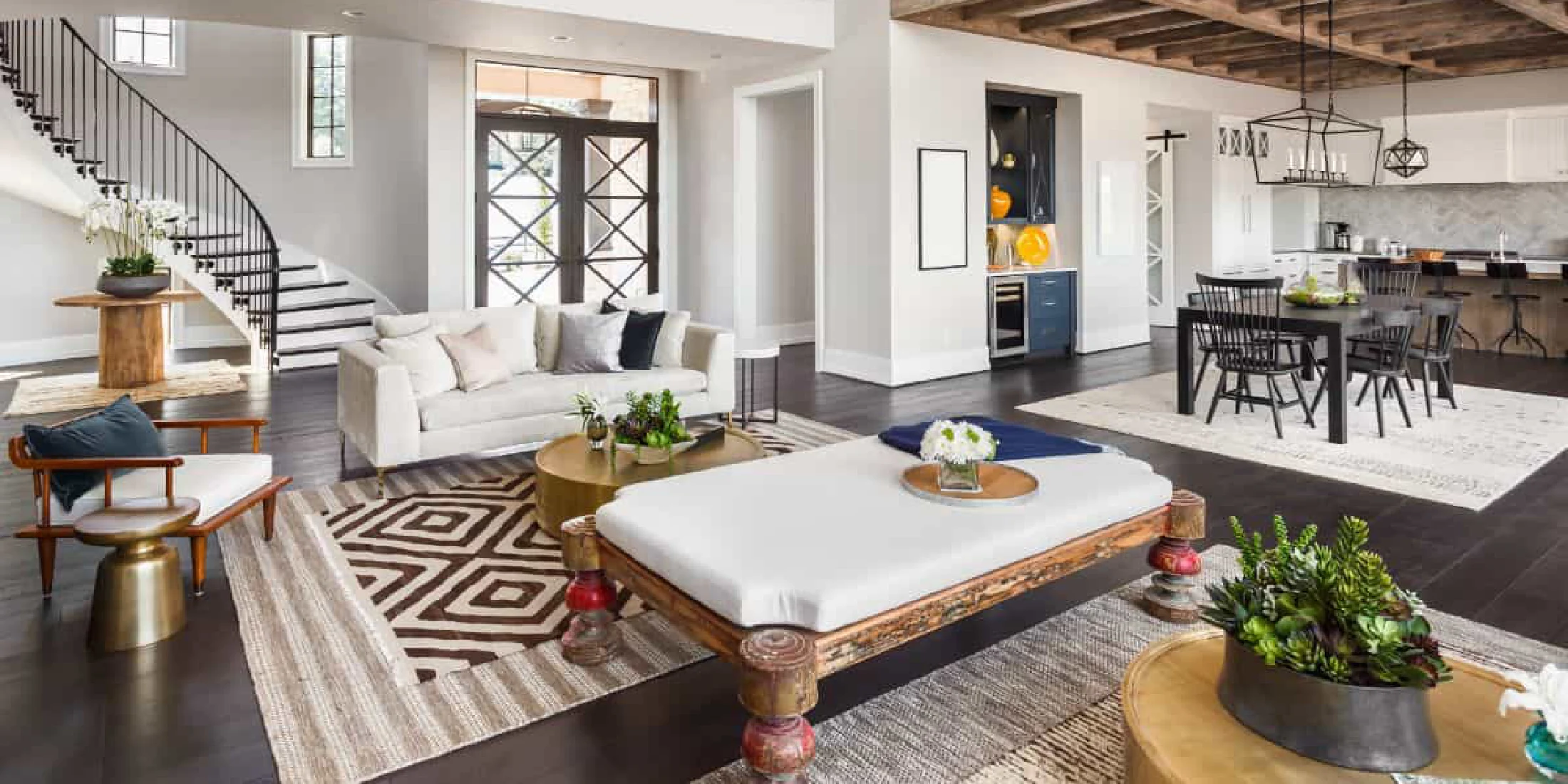
Open-Concept Living eliminates unnecessary walls and partitions, allowing key areas such as the kitchen, dining room, and living room to exist within a single, unified space. Rather than separating functions, this layout encourages continuity, visibility, and interaction.
In luxury homes, open-concept design goes beyond simple openness. It emphasizes:
- Architectural cohesion
- Seamless transitions between zones
- Integrated material palettes
- A strong connection between interior and exterior environments
The result is a spatial experience that feels both expansive and intentional.
Why Open-Concept Living Dominates Luxury Design
1. Demand for Spaciousness and Light
Affluent homeowners increasingly prioritize openness and natural light. Open-Concept Living allows light to travel freely throughout the space, enhancing both comfort and visual appeal.
Large windows, glass walls, and skylights often complement open layouts, creating interiors that feel bright and connected to the outdoors. This approach aligns with contemporary expectations of wellness and environmental awareness.
2. Social and Lifestyle Shifts
Modern lifestyles emphasize connectivity and shared experiences. Open-concept layouts support this by enabling multiple activities to occur simultaneously within the same space.
For example:
- Cooking while engaging with guests
- Hosting gatherings without spatial limitations
- Maintaining visual connection across different zones
This flexibility makes Open-Concept Living particularly appealing in luxury homes designed for entertaining.
3. Architectural Simplicity and Clarity
Removing walls simplifies the architectural language of a home. Clean lines, uninterrupted sightlines, and cohesive materials create a refined and sophisticated environment.
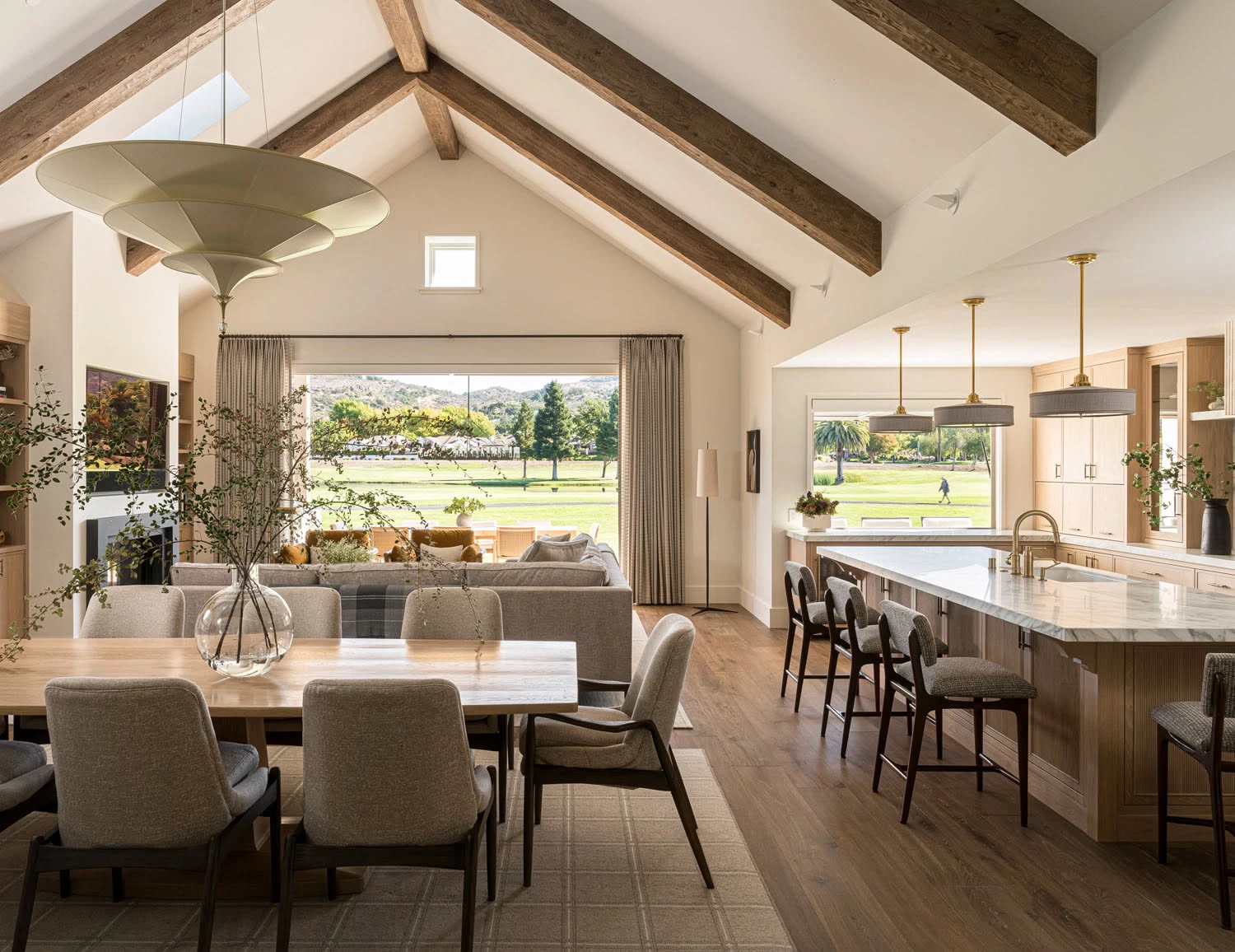
Architects use this openness to highlight structural elements such as:
- Exposed beams
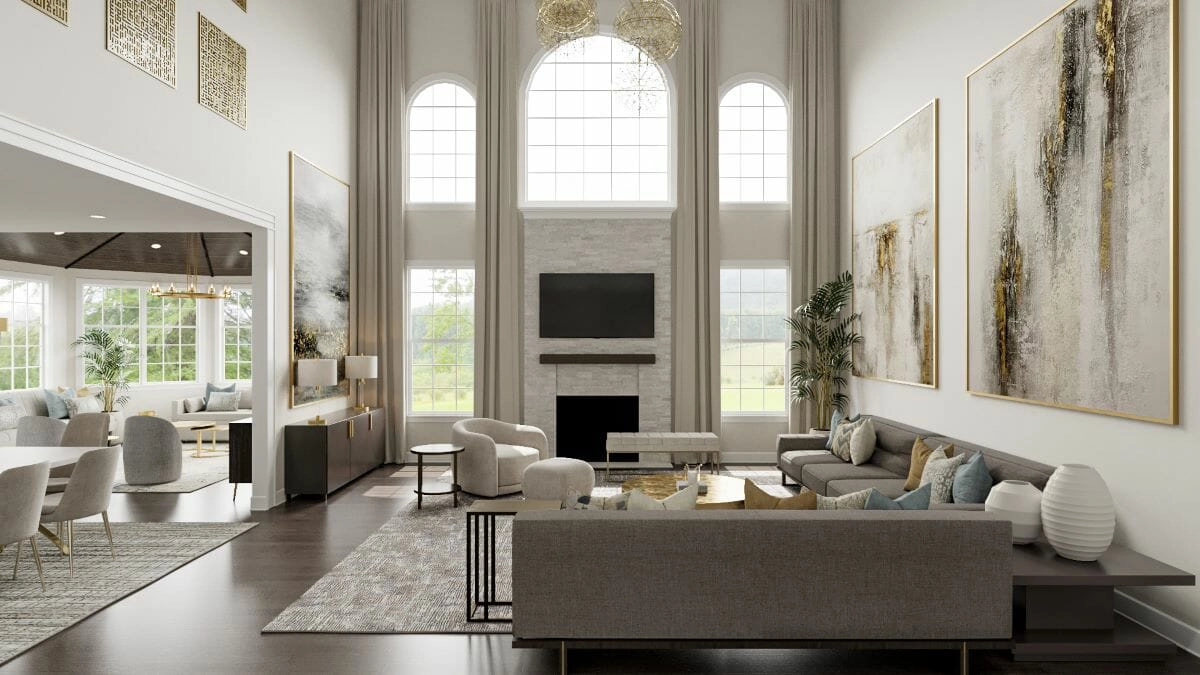
- Double-height ceilings
- Continuous flooring materials
These features contribute to a sense of unity and elegance.
4. Integration with Outdoor Spaces
Luxury homes increasingly blur the boundary between indoor and outdoor living. Open-Concept Living facilitates this integration by extending interior spaces into terraces, gardens, and patios.
Sliding glass doors, retractable walls, and consistent flooring materials create a seamless transition. This design strategy enhances both usability and visual continuity.
Core Design Strategies for Open-Concept Living
Zoning Without Walls
One of the primary challenges in Open-Concept Living involves defining functional areas without physical barriers. Designers achieve this through subtle yet effective techniques.
Common zoning methods include:
- Area rugs to distinguish living and dining zones
- Furniture placement that creates natural boundaries
- Ceiling variations or architectural details
- Changes in lighting intensity or style
These strategies maintain openness while providing structure.
Cohesive Material Palettes
Material consistency plays a crucial role in unifying open spaces. Designers often select a limited palette and apply it across the entire layout.
Typical approaches include:
- Continuous flooring materials such as wood or stone
- Repeating finishes across cabinetry and furniture
- Neutral color schemes with controlled accents
This cohesion prevents visual fragmentation and reinforces the sense of flow.
Statement Furniture as Anchors
In the absence of walls, furniture becomes essential for defining space. Designers use statement pieces to anchor different zones within the open layout.
Examples include:
- Large sectional sofas to define living areas
- Sculptural dining tables that serve as focal points
- Kitchen islands that function as both workspace and social hub
For furniture brands, this creates opportunities to design impactful pieces that command attention while supporting functionality.
Lighting as a Spatial Tool
Lighting helps articulate different zones within an open-concept environment. Layered lighting schemes ensure both functionality and ambiance.
Key elements include:
- Pendant lighting over dining areas or kitchen islands
- Recessed lighting for general illumination
- Accent lighting to highlight architectural features or artwork
A well-planned lighting strategy enhances depth and dimension within the space.
The Role of the Kitchen in Open-Concept Living
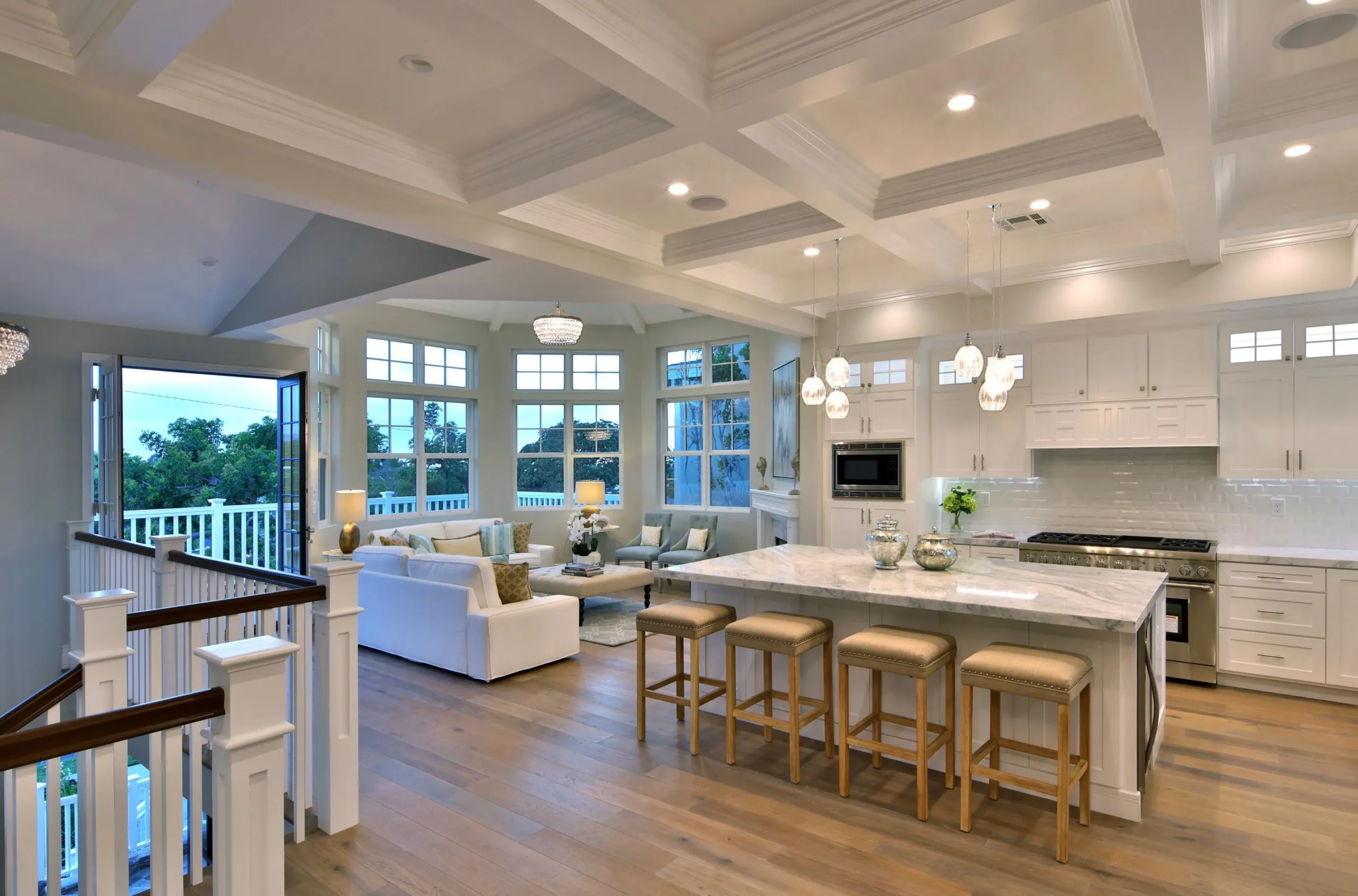
In luxury homes, the kitchen often serves as the centerpiece of Open-Concept Living. It is no longer a purely functional space but a social and visual focal point.
Design considerations include:
- High-end materials such as stone countertops and custom cabinetry
- Integrated appliances for a streamlined appearance
- Oversized islands that accommodate seating and interaction
The kitchen must balance performance with aesthetics, as it remains visible from all areas of the open space.
Acoustic and Privacy Considerations
While Open-Concept Living offers many advantages, it also introduces challenges related to acoustics and privacy.
Designers address these issues through:
- Soft materials such as rugs, upholstery, and curtains to absorb sound
- Strategic placement of partitions or screens when needed
- Dedicated quiet zones or secondary rooms for privacy
Balancing openness with comfort requires careful planning and attention to detail.
Customization in Luxury Open-Concept Homes
Luxury clients expect tailored solutions that reflect their lifestyles. Customization plays a key role in refining open-concept spaces.
Architects and designers collaborate to create:
- Bespoke millwork that integrates storage seamlessly
- Unique spatial layouts that respond to site conditions
- Personalized material selections and finishes
This level of customization ensures that each project feels distinctive and aligned with the client’s vision.
Emerging Trends in Open-Concept Living
Flexible and Adaptive Spaces
As living patterns evolve, flexibility becomes increasingly important. Open-concept layouts now incorporate elements that allow spaces to adapt over time.
Examples include:
- Sliding partitions or movable walls
- Convertible furniture systems
- Multi-use zones that serve different functions throughout the day
Technology Integration
Smart home technology enhances the functionality of open spaces. Designers integrate systems that control lighting, climate, and entertainment without disrupting the visual flow.
Sustainability and Natural Materials
Sustainability continues to influence luxury design. Open-concept homes often feature natural materials, energy-efficient systems, and designs that maximize daylight and ventilation.
Never Ending Home Luxury
The rise of Open-Concept Living reflects a broader transformation in how luxury spaces are conceived and experienced. It prioritizes connection—between people, functions, and environments—while maintaining a strong commitment to elegance and precision.
For interior designers, architects, and furniture brands, this approach offers a powerful framework for innovation. It challenges professionals to think holistically, designing spaces where architecture, interiors, and furnishings work together seamlessly.
Ultimately, Open-Concept Living is not just about removing walls—it is about creating environments that feel expansive, cohesive, and deeply aligned with contemporary lifestyles.