

The Quiet Language of Refinement
Elegant interiors rarely announce themselves. They do not rely on spectacle, novelty, or excess. Instead, they whisper—through proportion, restraint, material intelligence, and a cultivated sense of balance. For centuries, the most enduring spaces have followed a set of unspoken conventions: interior design principles that transcend trends and cultures, shaping environments that feel both inevitable and deeply personal.
These are the invisible rules of elegant interiors. They are not formulas, nor are they rigid doctrines. Rather, they form a shared design literacy—understood intuitively by accomplished architects, interior designers, and discerning clients alike. In an era saturated with visual noise and algorithm-driven aesthetics, returning to these luxury interior design rules is not an exercise in nostalgia, but a deliberate act of refinement.
This article explores the quiet foundations of timeless interior design: principles that govern harmony, longevity, and cultural sophistication across residential, hospitality, and high-end commercial spaces.
The First Rule: Proportion Is the Ultimate Luxury
Before color, before texture, before furniture, there is proportion. It is the most fundamental—and most overlooked—of all interior design principles. Elegant interiors feel correct because their spatial relationships are resolved.
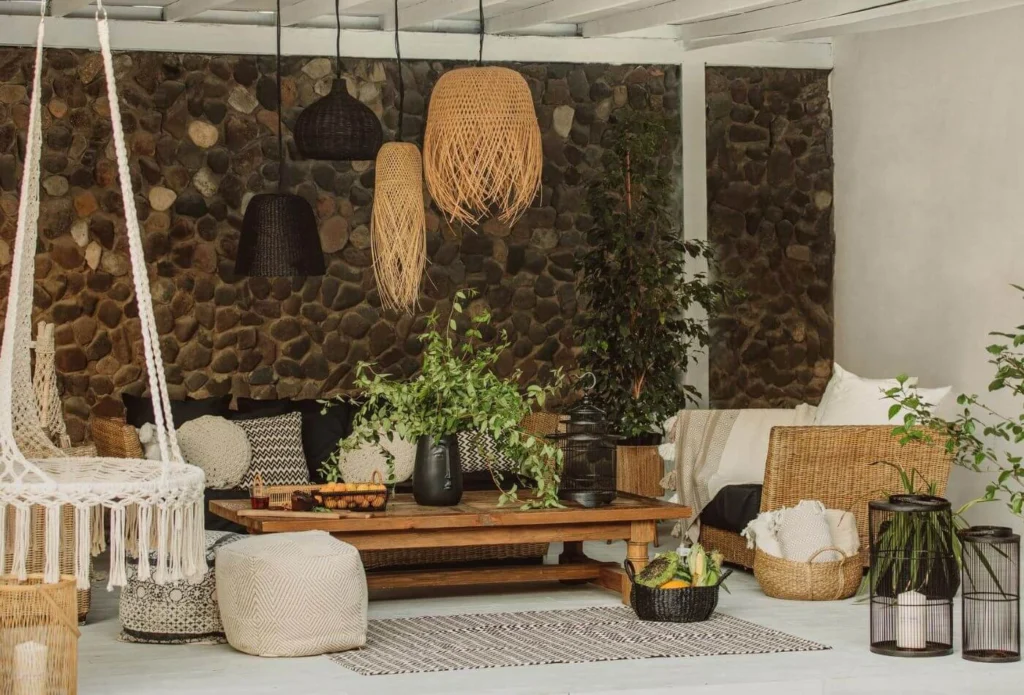
Understanding Human Scale
True luxury is not excess; it is comfort elevated to an art form. Proportion ensures that spaces relate gracefully to the human body. Ceiling heights, door widths, seating depths, and circulation clearances all contribute to a subconscious sense of ease.
- Rooms should breathe without feeling cavernous.
- Furniture should anchor a space without overpowering it.
- Negative space should be intentional, not accidental.
Historically, classical architecture codified proportion through systems such as the golden ratio. While contemporary interiors are freer in expression, the underlying discipline remains essential to timeless interior design.
Hierarchy: Knowing What Speaks First
Elegant interiors guide the eye. They do not compete for attention. One of the most enduring luxury interior design rules is hierarchy—the orchestration of focal points and supporting elements.
Creating a Visual Order
Every refined space answers three silent questions:
- What is the primary focus?
- What elements support it?
- What should recede into calm neutrality?
A fireplace, a sculptural table, a panoramic view, or a significant artwork may serve as the visual anchor. Materials, lighting, and furnishings then align themselves in service of that anchor. Without hierarchy, even the most luxurious materials feel restless.
This principle is central to interior design principles taught in leading architecture and design schools, as it mirrors the way humans instinctively process space.
Material Integrity: Authenticity Over Ornament
Elegant interiors favor materials that age with dignity. Patina, not perfection, defines refinement. This is where timeless interior design distinguishes itself from trend-led decoration.
The Quiet Power of Honest Materials
Natural stone, solid wood, linen, wool, leather, bronze, and plaster possess an inherent authority. They do not need embellishment; their beauty lies in texture, depth, and craftsmanship.
- Stone should feel geological, not decorative.
- Wood should reveal its grain and origin.
- Metals should oxidize, soften, and mature.
According to principles long advocated by institutions such as the Architectural Digest, material authenticity is a cornerstone of enduring luxury. Spaces that rely on surface-level effects rarely withstand time or scrutiny.
Restraint: The Discipline of Editing
Perhaps the most misunderstood of luxury interior design rules is restraint. Elegance is not defined by what is added, but by what is consciously left out.
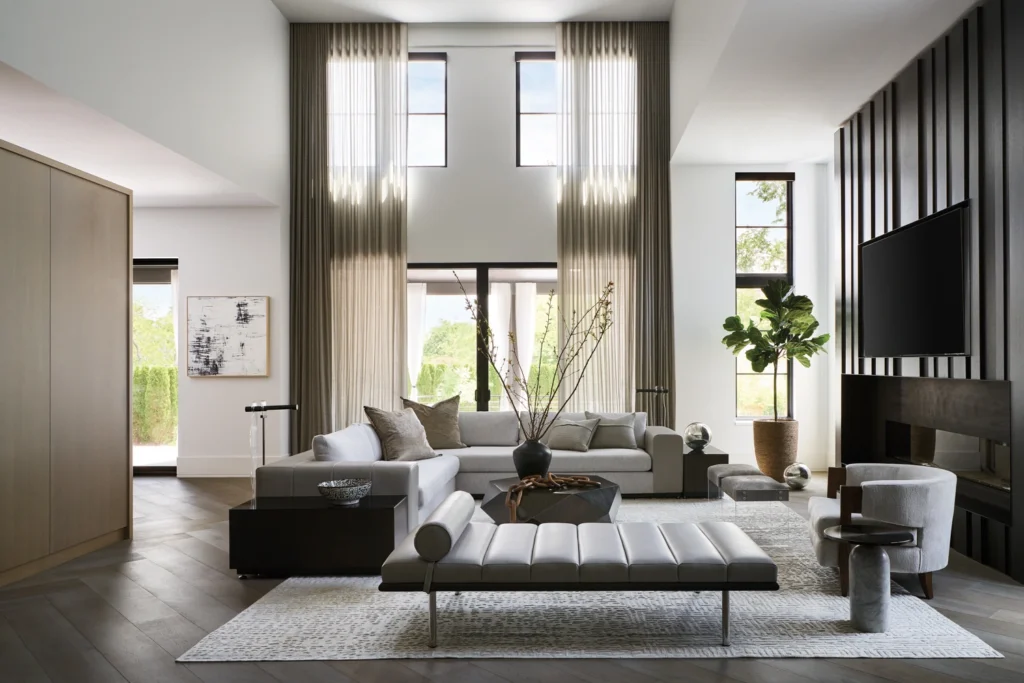
Curated, Not Decorated
In refined interiors, every object earns its place. Furniture selections are fewer but more intentional. Decorative elements are chosen for meaning, provenance, or craftsmanship—not for visual filler.
Restraint creates clarity. It allows materials to speak, light to travel, and proportions to reveal themselves. This editorial approach to space aligns closely with the sensibilities of high-net-worth individuals who value discernment over display.
Continuity: Designing a Visual Narrative
Elegant interiors unfold as a cohesive story. Moving from one room to another should feel fluid, not fragmented. Continuity is one of the most subtle yet powerful interior design principles.
Harmony Across Spaces
This does not imply uniformity. Rather, it suggests a shared language of materials, tones, and proportions that adapts gently from space to space.
- Consistent flooring or complementary transitions
- A restrained, evolving color palette
- Repeated material accents used with variation
In luxury residences and hospitality projects alike, continuity reinforces a sense of calm and intentionality—key attributes of timeless interior design.
Light as Architecture
In elegant interiors, light is never an afterthought. It is a structural element, shaping mood, depth, and perception.
Natural Light First, Always
Timeless interior design prioritizes daylight—filtered, softened, and framed. Window proportions, sheer layers, and reflective surfaces all collaborate to enhance natural illumination without glare.
Artificial Light with Purpose
Luxury interior design rules favor layered lighting strategies:
- Ambient lighting for overall balance
- Task lighting for function
- Accent lighting to reveal texture and form
Decorative fixtures play a role, but they should never dominate. In refined spaces, light reveals architecture; it does not compete with it.
Color: Nuance Over Novelty
Color in elegant interiors is rarely loud. It operates within a spectrum of nuance, tone, and depth.
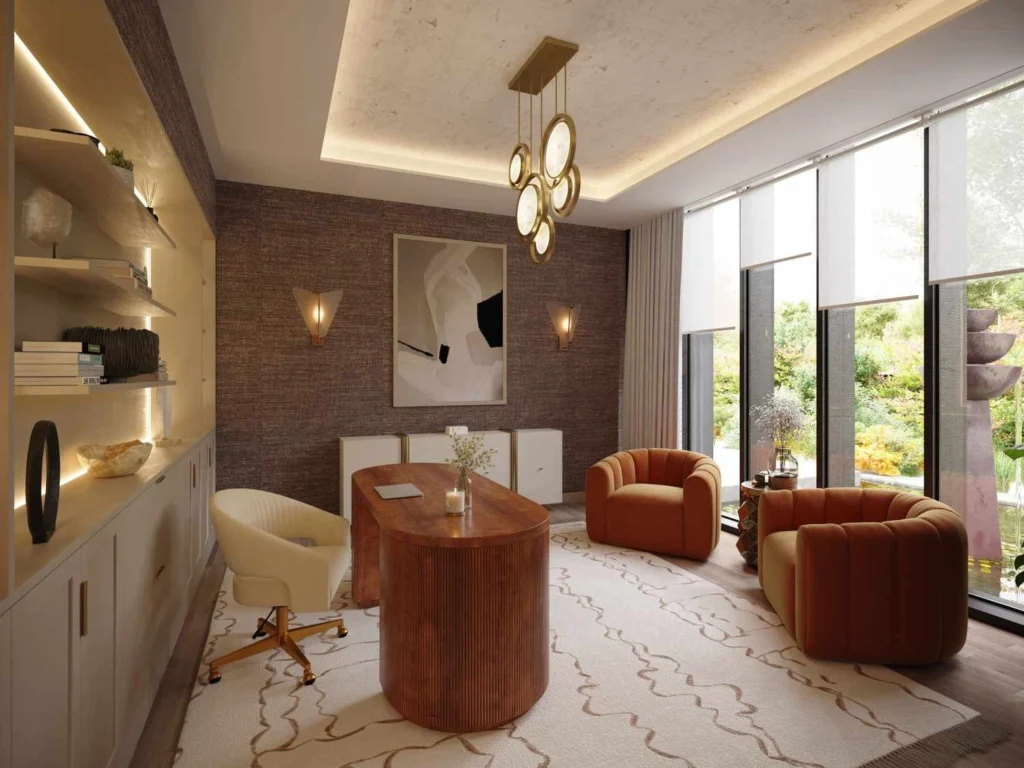
The Power of Neutrals
Neutrals—warm whites, mineral greys, soft taupes, and earthy pigments—form the backbone of timeless interior design. They allow materials, art, and form to take precedence.
When stronger colors appear, they do so with intention: a single saturated wall, a piece of upholstery, or an artwork that anchors the palette.
Furniture as Architecture
In refined interiors, furniture is not decorative clutter—it is spatial structure.
Weight, Balance, and Placement
Luxury interior design rules favor furniture with visual weight and clear geometry. Pieces should ground a room, define zones, and reinforce proportion.
- Sofas float only when space allows.
- Tables align with architectural axes.
- Seating encourages conversation and flow.
This architectural approach to furniture selection is especially valued in high-end residential and hospitality design, where longevity and adaptability are essential.
Cultural Intelligence: Spaces with Context
Elegant interiors are culturally literate. They acknowledge place, history, and craft traditions without resorting to pastiche.
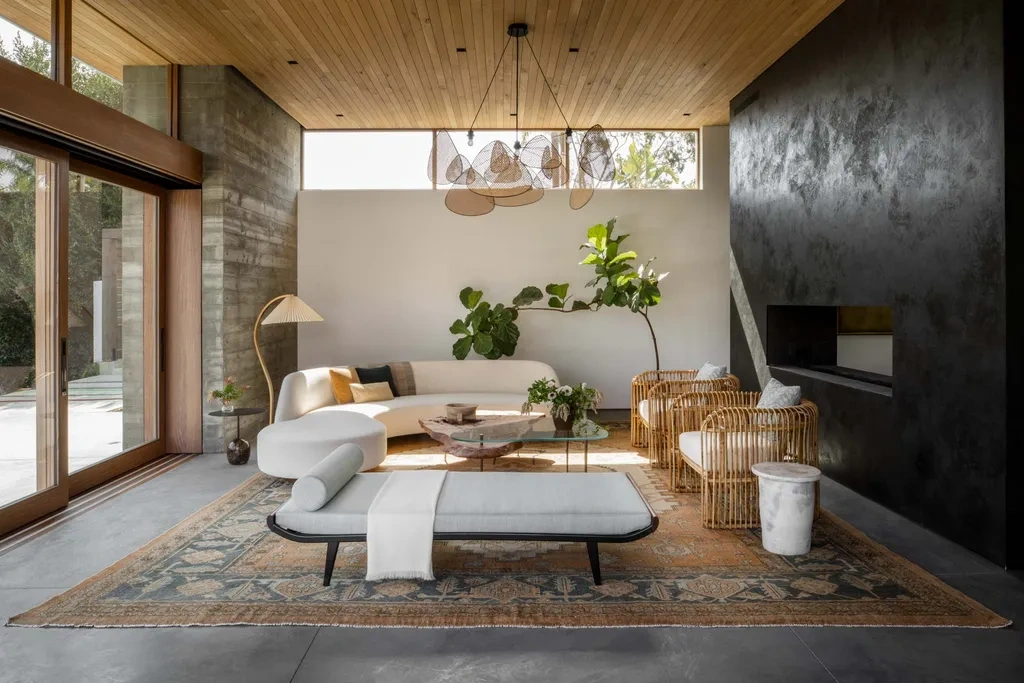
Global, Yet Grounded
For international clients and designers, timeless interior design often emerges from a dialogue between global influences and local context. A Parisian apartment, a Mediterranean villa, and a New York penthouse each demand a different expression of the same underlying principles.
This sensitivity to context is one of the most advanced interior design principles—and one that distinguishes true sophistication from generic luxury.
The Final Rule: Elegance Is Felt, Not Explained
Ultimately, the invisible rules of elegant interiors resist simplification. They operate on an emotional level, shaping how spaces are experienced rather than how they are consumed visually.
Timeless interior design does not chase attention; it earns trust. It reveals itself slowly, through use, memory, and lived experience. For architects, designers, and discerning clients, mastering these luxury interior design rules is less about control and more about clarity.
In a world of accelerating trends, elegance remains a quiet constant—defined not by what is seen, but by what is understood.