

Where Boundaries Dissolve
In contemporary design discourse, few ideas resonate as deeply as the evolving relationship between interior and exterior environments. Once treated as distinct realms, these spaces are now increasingly conceived as a single, continuous experience—fluid, adaptable, and deeply human. This shift reflects more than an aesthetic preference; it signals a cultural recalibration toward well-being, nature, and a more expansive understanding of comfort.
The comfort continuum is the conceptual framework guiding this transformation. It describes a design philosophy in which indoor outdoor living is not a lifestyle add-on but an architectural and emotional constant. Through thoughtful materiality, spatial sequencing, and sensory continuity, today’s most compelling projects achieve seamless indoor outdoor spaces that respond to climate, context, and contemporary ways of living.
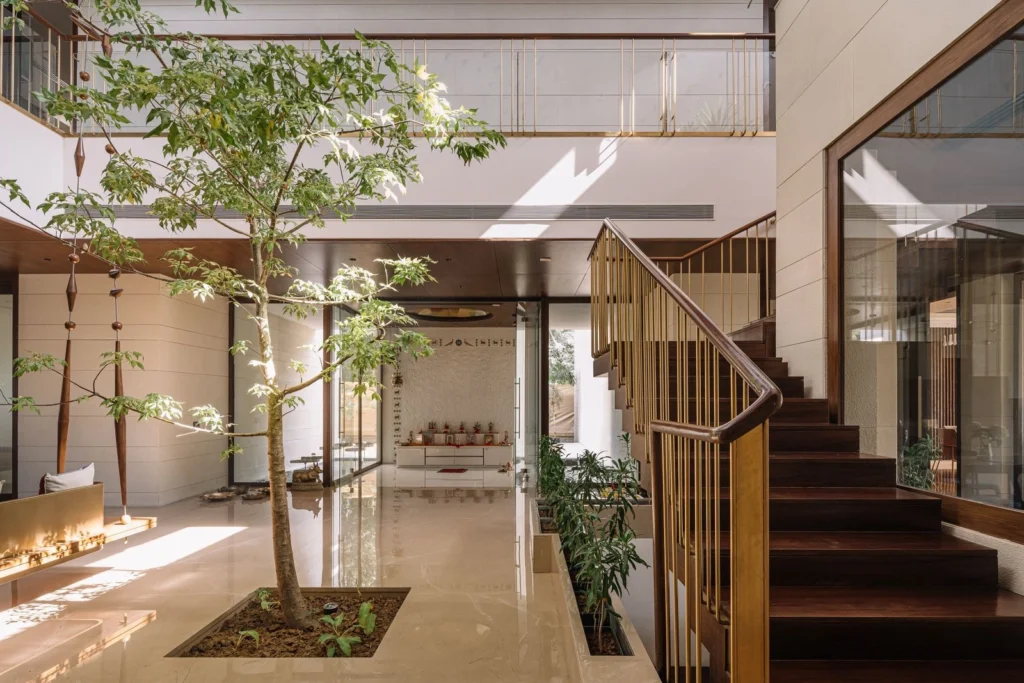
The Evolution of Indoor-Outdoor Living
Historically, architecture has always negotiated the threshold between shelter and landscape. From Roman peristyle houses to Japanese engawa verandas, civilizations have long understood the value of transitional spaces. What distinguishes the present moment is the technological and cultural capacity to erase boundaries almost entirely.
Advances in glazing systems, climate-responsive materials, and modular construction have redefined what is possible. Large-format sliding doors, retractable façades, and flush flooring systems now allow interior volumes to extend effortlessly into terraces, gardens, and courtyards. The result is not simply visual openness but a holistic indoor outdoor flow that reshapes daily rituals.
Comfort as a Continuous Experience
In this new paradigm, comfort is no longer confined to upholstered furniture or controlled interiors. It is experiential, multi-sensory, and continuous. Light, air, texture, and acoustics play as significant a role as ergonomics and layout.
Designers are increasingly attentive to how a space feels at different moments of the day and across seasons. Morning light filtering through sheer curtains that open onto a shaded terrace; the evening transition from living room to outdoor lounge without a perceptible change in level or material; the tactile consistency of surfaces underfoot—all contribute to a sense of effortless living.
Key Elements Defining the Comfort Continuum
- Material coherence: Using the same or complementary materials indoors and outdoors to reinforce spatial unity.
- Climatic adaptability: Designing spaces that perform across temperature variations without sacrificing comfort.
- Human-scale transitions: Avoiding abrupt thresholds in favor of layered, gradual shifts.
Architecture and the Art of Seamless Transitions
Achieving truly seamless indoor outdoor spaces requires architectural intention from the earliest stages of design. It begins with orientation and site analysis—understanding prevailing winds, solar paths, and views—and extends to structural decisions that prioritize openness without compromising performance.
Floor plates are often aligned to allow uninterrupted movement between inside and out, while ceiling planes extend beyond the building envelope to create sheltered exterior rooms. When executed with precision, these strategies dissolve the psychological boundary between dwelling and environment.
According to the ArchDaily editorial platform, projects that integrate interior and exterior spaces from the outset demonstrate higher long-term value, both in user satisfaction and real estate performance. This underscores the growing recognition of indoor-outdoor continuity as a marker of architectural quality.
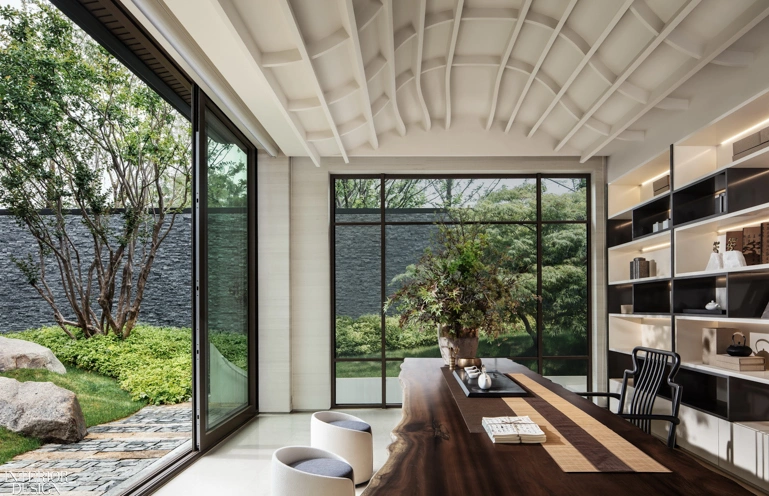
Material Intelligence: Bridging Inside and Out
Material selection is central to the comfort continuum. Today’s designers favor materials that age gracefully, perform reliably, and feel authentic in multiple contexts. Natural stone, treated woods, textured ceramics, and innovative composites are deployed to blur the line between interior refinement and exterior resilience.
Rather than replicating indoor luxury outdoors, the most successful projects reinterpret comfort through durability and tactility. Outdoor textiles now rival interior fabrics in softness and sophistication, while finishes are chosen for their ability to weather time without losing character.
Materials That Enable Indoor Outdoor Flow
- Large-format porcelain tiles suitable for both interior and exterior use
- Thermally treated woods that resist moisture and UV exposure
- Natural stone with honed finishes for consistent tactile experience
- High-performance glazing that balances transparency and insulation
This material continuity reinforces the perception of a single, expansive living environment—an essential aspect of refined indoor outdoor living.
Furniture as a Mediator of Space
Furniture plays a pivotal role in articulating the relationship between interior and exterior zones. Rather than acting as static objects, furnishings become spatial mediators—inviting movement, conversation, and repose across boundaries.
Contemporary collections increasingly prioritize modularity and adaptability, allowing pieces to migrate effortlessly between settings. A lounge chair that feels equally at home beside a fireplace or under a pergola exemplifies this shift toward flexibility.
For high-net-worth individuals and design professionals alike, this approach aligns with a broader desire for environments that are both curated and lived-in—spaces that accommodate formal entertaining as easily as private retreat.
The Role of Landscape in Interior Thinking
As interiors extend outward, landscapes are conceived with the same intentionality as rooms. Planting schemes, water features, and hardscape elements are orchestrated to complement interior palettes and sightlines.
This integration fosters a biophilic connection that enhances well-being while reinforcing the comfort continuum. Views are framed rather than incidental; outdoor rooms are furnished and lit with the same care as interiors, supporting year-round use.
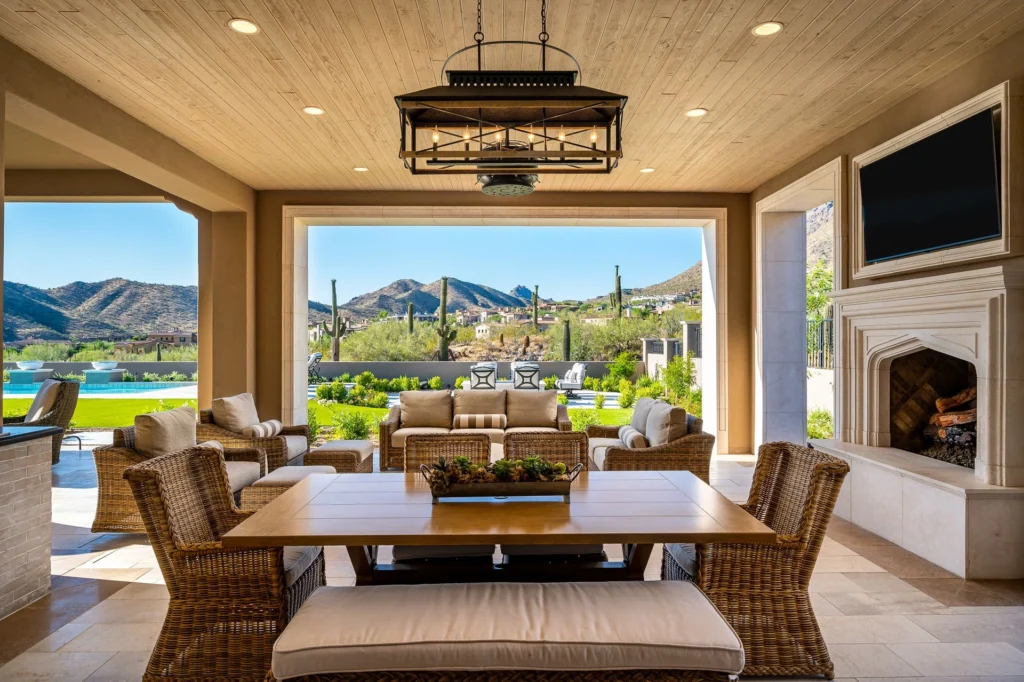
Design Strategies for Integrated Landscapes
- Align planting geometry with interior spatial grids.
- Use vegetation to create privacy without visual heaviness.
- Incorporate lighting that supports evening indoor outdoor flow.
Global Perspectives on Seamless Living
The appeal of seamless indoor outdoor spaces transcends geography, yet it manifests differently across cultures. In Mediterranean contexts, courtyards and loggias have long mediated climate and social life. In tropical regions, open-air living is a practical response to heat and humidity. In urban environments, terraces and rooftop gardens offer rare moments of openness.
What unites these diverse expressions is a shared emphasis on adaptability and connection. As international travel and cross-cultural exchange continue to influence design, the comfort continuum emerges as a universal language—one that speaks to a desire for balance between refuge and openness.
Well-Being, Sustainability, and the Future of Living
Beyond aesthetics, indoor outdoor living carries significant implications for sustainability and health. Natural ventilation reduces reliance on mechanical systems, while daylight penetration supports circadian rhythms. When designed responsibly, seamless indoor outdoor spaces can contribute to lower energy consumption and improved quality of life.
Future-forward projects increasingly integrate smart technologies to manage shading, airflow, and lighting, ensuring comfort without excess. The goal is not spectacle but harmony—spaces that respond intuitively to human needs and environmental conditions.
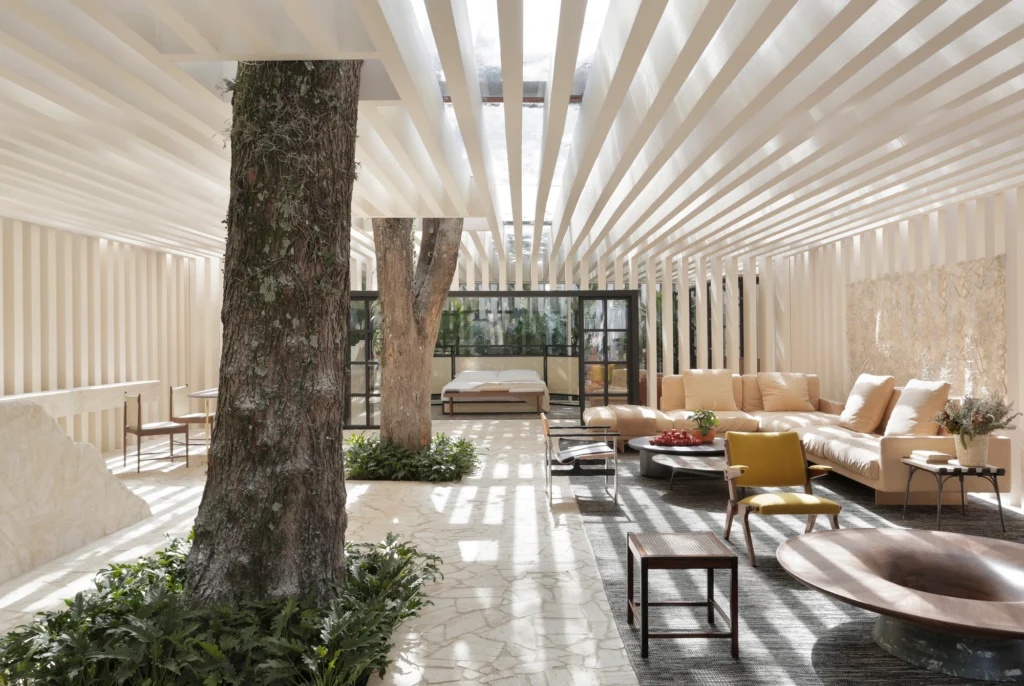
Redefining Luxury Through Continuity
In the contemporary design landscape, luxury is no longer defined solely by opulence or exclusivity. It is measured by ease, adaptability, and emotional resonance. The comfort continuum encapsulates this evolution, positioning indoor outdoor flow as a defining characteristic of thoughtful, future-oriented spaces.
For architects, designers, and discerning clients, embracing seamless indoor outdoor spaces is both a creative opportunity and a cultural responsibility. It invites us to reconsider how we inhabit the world—less confined, more connected, and attuned to the rhythms of nature. In doing so, interior and exterior cease to be opposites and instead become chapters of a single, continuous story of comfort.