

The Quiet Revolution at the Kitchen Island
Once a purely functional zone reserved for food preparation, the kitchen has undergone a profound cultural transformation over the last few decades. At the center of this evolution stands the breakfast bar — and with it, the rise of bar stools for kitchen island seating that have subtly but decisively changed the way we live, gather, and inhabit our homes. What was once a casual perch has become a defining architectural element, shaping daily rituals, social interaction, and spatial hierarchy.
Today, modern bar stools are no longer afterthoughts. They are design statements, ergonomic solutions, and cultural markers that reflect how contemporary lifestyles blur the boundaries between work, leisure, dining, and connection. For architects, interior designers, and discerning homeowners alike, the breakfast bar is where function meets ritual — and where seating becomes storytelling.
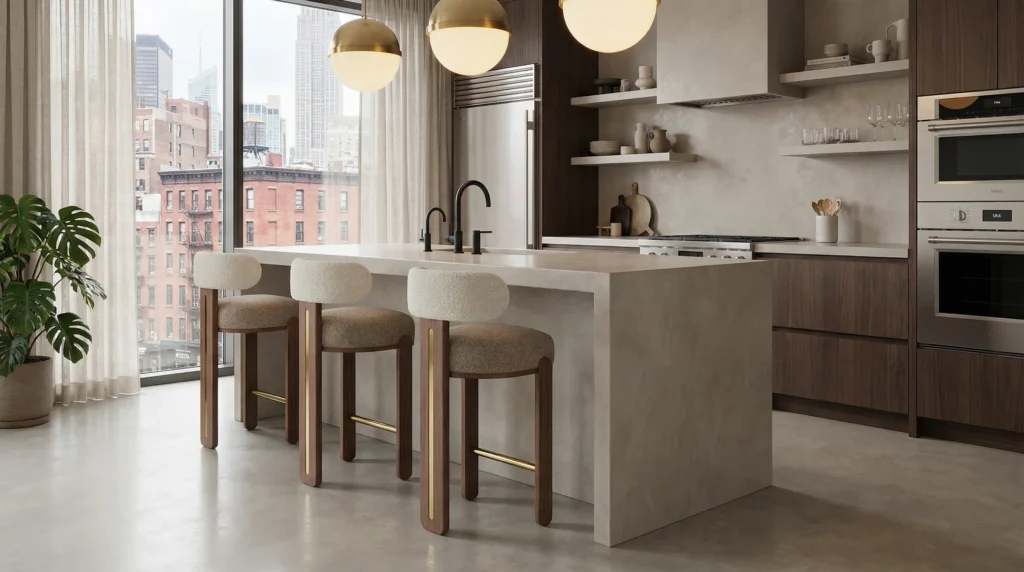
The Evolution of the Breakfast Bar
The breakfast bar emerged alongside the open-plan kitchen, a spatial concept that gained traction in the mid-20th century as domestic life became more informal and socially oriented. No longer hidden behind walls, kitchens opened toward living and dining areas, inviting participation rather than isolation.
This shift demanded a new kind of seating. Traditional dining chairs were ill-suited for elevated counters, while stools — once associated with utilitarian spaces — found a refined new role. Counter height stools bridged the vertical gap between preparation surfaces and human interaction, allowing the kitchen island to function as a place for conversation, casual meals, and shared presence.
From Utility to Lifestyle Object
Early bar stools prioritized function over form. Over time, however, designers recognized their visual and experiential impact. Materials evolved from basic wood and metal to sculptural forms in leather, molded plywood, brushed steel, and tactile fabrics. Today’s bar stools for kitchen island use are designed with the same intentionality as lounge chairs or dining furniture.
How Bar Stools Reshaped Domestic Life
The rise of kitchen island seating ideas has quietly redefined domestic behavior. The breakfast bar is no longer just for breakfast. It is where children do homework, professionals answer emails, guests linger with a glass of wine, and conversations unfold organically.
Bar stools facilitate this fluidity. Their elevated perspective creates a sense of informality without sacrificing comfort, encouraging shorter stays that often turn into longer moments of connection. In this way, the breakfast bar becomes a social condenser — a place where daily life naturally converges.
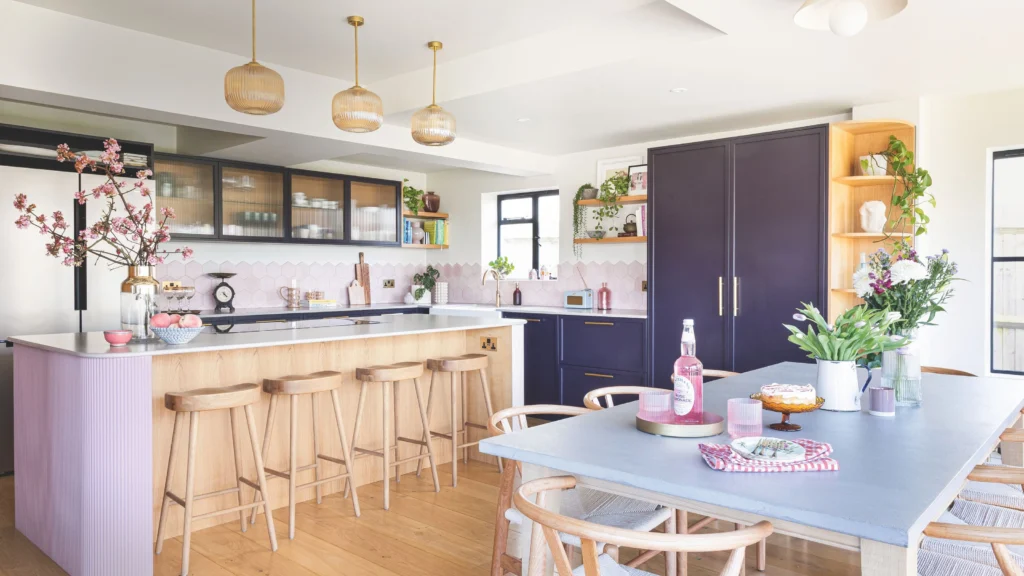
The Psychology of Height and Proximity
Height plays a subtle but powerful role in how we interact. Counter height stools position users slightly above seated dining level, creating a relaxed yet engaged posture. This elevation fosters eye-level interaction between those seated and those standing or moving within the kitchen, reinforcing a sense of inclusion.
For designers, understanding these nuances is essential when proposing kitchen island seating ideas that support both aesthetics and human behavior.
Designing the Perfect Breakfast Bar
A successful breakfast bar is the result of careful calibration between architecture, furniture, and lifestyle. While the kitchen island may anchor the space, bar stools determine how it is experienced.
Choosing the Right Height
One of the most critical considerations is proportion. Counter height stools are typically designed for surfaces between 90 and 95 cm, while bar-height options suit taller counters. Precision matters: a poorly matched stool can disrupt comfort and visual harmony.
- Counter height stools: Ideal for most residential kitchen islands.
- Bar-height stools: Best suited for lofts, entertaining spaces, or hospitality-inspired interiors.
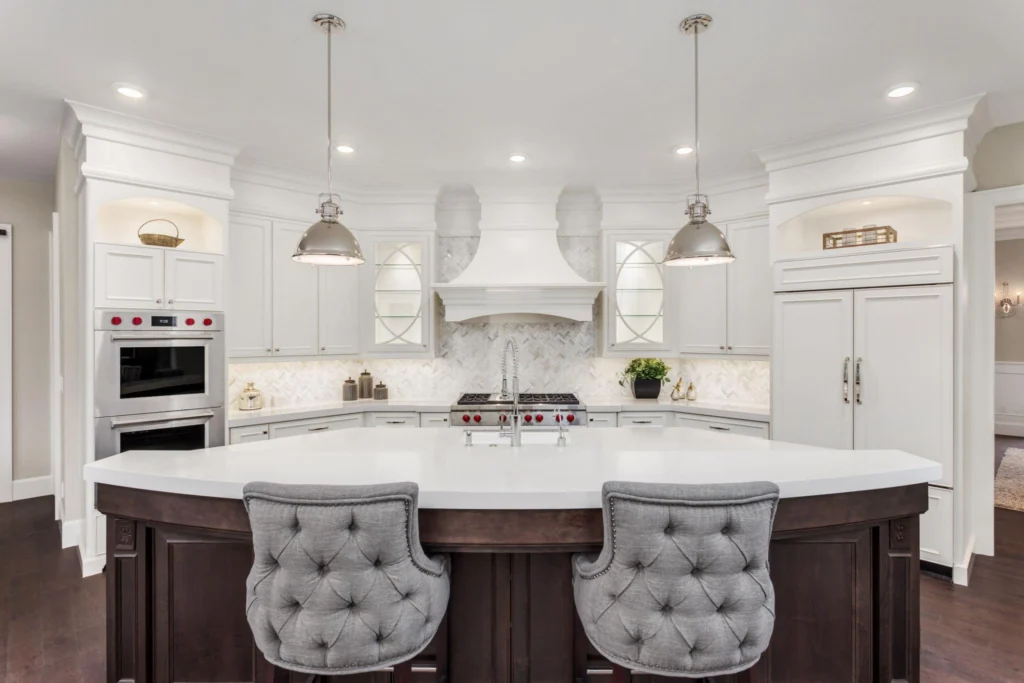
Materiality and Atmosphere
Material selection plays a defining role in how the breakfast bar integrates into the broader interior narrative. Upholstered modern bar stools introduce softness and acoustic comfort, while timber or metal designs reinforce architectural clarity.
According to research published by Architectural Digest, layered materials in kitchen seating enhance perceived warmth and encourage longer use — a key consideration for residential and mixed-use projects.
Bar Stools as Architectural Accents
Beyond comfort, bar stools act as visual punctuation marks within open-plan environments. Their repetition along an island introduces rhythm, while their silhouette can either echo or intentionally contrast surrounding forms.
In minimalist interiors, sculptural modern bar stools provide a focal point without overwhelming the space. In more expressive schemes, they can reinforce color stories or material themes established elsewhere in the home.
Fixed vs. Flexible Seating
Designers often face a strategic choice between fixed seating arrangements and adaptable layouts. Bar stools offer flexibility, allowing spaces to evolve over time without architectural intervention.
- They can be repositioned for gatherings or daily use.
- They allow the kitchen island to function as both workspace and social hub.
- They support changing household needs without renovation.
The Breakfast Bar in Luxury Real Estate
In high-end residential projects, the breakfast bar has become a non-negotiable feature. Buyers increasingly associate kitchen island seating ideas with modern living, hospitality sensibility, and spatial efficiency.
Luxury developments now treat the kitchen island as a stage — and bar stools as its audience seating. The choice of materials, craftsmanship, and ergonomics communicates quality and lifestyle aspirations as clearly as finishes or appliances.
A Global Perspective
From New York penthouses to Mediterranean villas, the language of the breakfast bar transcends geography. While cultural nuances influence formality and scale, the desire for informal gathering spaces is universal.
In urban environments, bar stools for kitchen island configurations maximize limited square footage. In expansive homes, they create intimacy within open volumes. In both cases, they support contemporary patterns of living that prioritize connection over compartmentalization.
Future Directions: Where Bar Stools Are Headed
As lifestyles continue to evolve, so too will the design of kitchen seating. Sustainability, modularity, and adaptability are shaping the next generation of modern bar stools.
Designers are exploring responsibly sourced materials, interchangeable components, and forms that transition seamlessly between residential and hospitality contexts. The goal is longevity — not only in durability, but in relevance.
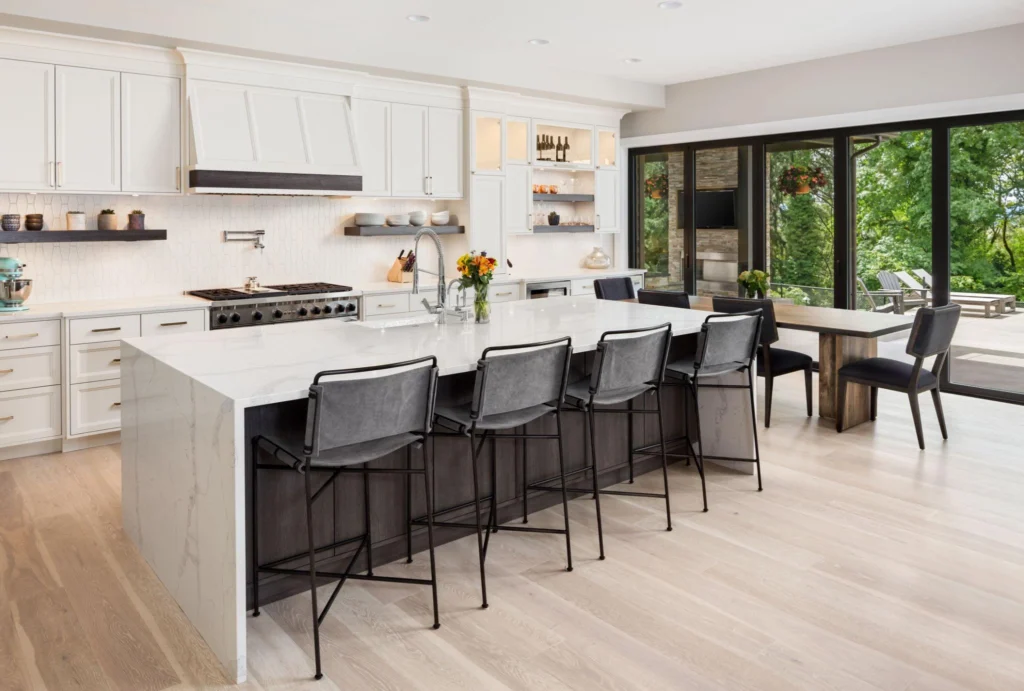
Design as a Social Catalyst
Ultimately, the enduring success of the breakfast bar lies in its ability to adapt. It responds to changing work habits, evolving family structures, and a growing desire for spaces that support both productivity and pleasure.
Bar stools may appear modest, but their impact is anything but. They have redefined how we gather, how we design, and how we live — one seat at a time.
A Seat at the Center of Modern Life
The breakfast bar is no longer an accessory; it is an architectural and cultural cornerstone. Through thoughtful design and carefully chosen bar stools for kitchen island settings, it becomes a place of ritual, dialogue, and everyday elegance.
For those shaping the future of interiors — architects, designers, and discerning homeowners — the lesson is clear: seating is never just seating. It is an invitation to live differently, more openly, and more connected than ever before.