

In an era defined by acceleration, immediacy, and perpetual connectivity, the most radical luxury may no longer be abundance—but slowness. Across global design capitals, from Milan to Copenhagen to Kyoto, a quiet shift is unfolding. Architects, interior designers, and discerning homeowners are increasingly turning toward interiors that restore balance, reduce sensory overload, and cultivate a profound sense of calm. This movement is not about retreat or minimalism as an aesthetic trend alone; it is about intention, well-being, and the emotional intelligence of space.
The art of slowness in interiors invites us to rethink how environments shape behavior, mood, and health. Through calm interior design, minimalist interior design, and wellness-focused interiors, spaces become sanctuaries—places that encourage pause, reflection, and presence. For professionals and high-net-worth individuals alike, this philosophy represents a deeper alignment between design, lifestyle, and longevity.
Understanding the Philosophy of Slowness in Interior Design
Slowness in design is not synonymous with simplicity for its own sake. Rather, it is a considered approach that values quality over quantity, restraint over excess, and meaning over spectacle. Rooted in ideas from Slow Living and informed by neuroscience, psychology, and craftsmanship, this philosophy acknowledges that the built environment has a measurable impact on human well-being.
Calm interior design seeks to reduce cognitive load. By eliminating visual noise and emphasizing harmony, proportion, and material honesty, interiors can support mental clarity and emotional ease. This is particularly relevant in urban contexts, where homes increasingly serve as workplaces, retreats, and social spaces simultaneously.
The Rise of Wellness-Focused Interiors
Wellness-focused interiors extend beyond spas and hospitality projects into private residences, offices, and luxury developments. They are informed by research showing that light, acoustics, materiality, and spatial flow influence stress levels, sleep quality, and productivity. According to studies referenced by institutions such as Harvard Health Publishing, environments that prioritize natural light, tactile materials, and visual order can significantly improve overall well-being.
As a result, wellness is no longer an add-on but a foundational principle in contemporary interior architecture.
Minimalist Interior Design as a Framework for Calm
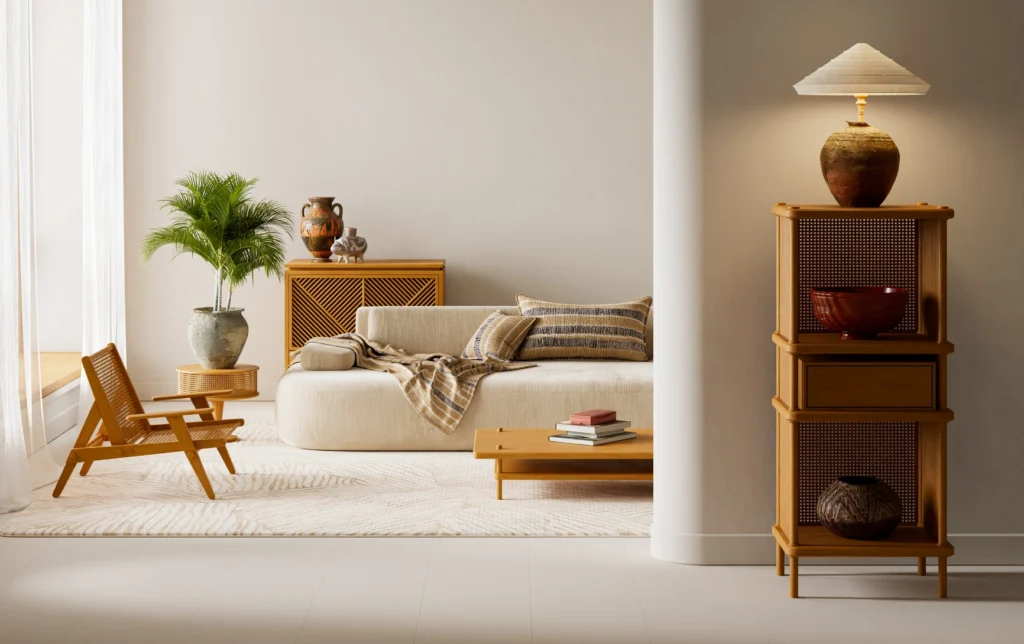
Minimalist interior design plays a central role in the art of slowness, yet its modern interpretation is far removed from austerity. Today’s minimalism is warm, tactile, and deeply human. It is less about emptiness and more about intentional presence.
By editing rather than eliminating, minimalist interior design allows each element within a space to breathe. Furniture, lighting, and objects are selected for their purpose, craftsmanship, and emotional resonance. This clarity fosters calm, encouraging occupants to slow down and engage more consciously with their surroundings.
Key Principles of Calm Minimalism
- Visual restraint: Limited color palettes and coherent material choices reduce overstimulation.
- Spatial clarity: Open layouts with defined zones promote fluid movement and mental ease.
- Functional beauty: Objects serve a purpose while contributing to the overall narrative of the space.
- Longevity: Timeless forms and durable materials support sustainable, long-term living.
Materiality: Designing Through the Senses
At the heart of calm interior design lies materiality. Natural materials—wood, stone, linen, wool, clay—anchor interiors in tactility and authenticity. These materials age gracefully, developing patina and character over time, reinforcing the philosophy of slowness.
Wellness-focused interiors prioritize sensory balance. Soft textures absorb sound, matte finishes reduce glare, and organic surfaces create visual warmth. The result is an environment that feels grounded rather than performative.
The Emotional Impact of Natural Materials
Designers increasingly recognize that materials communicate emotionally. A hand-finished timber surface or a softly woven textile carries an inherent sense of care and craftsmanship. This emotional layer enhances calm interior design, transforming spaces into lived-in, restorative environments rather than static showcases.
Light, Rhythm, and the Passage of Time
Slowness is inseparable from time—and light is its most poetic expression. Natural light introduces rhythm into interiors, marking the passage of hours and seasons. Wellness-focused interiors are carefully oriented to maximize daylight while controlling glare and heat.
Artificial lighting, when layered thoughtfully, supports circadian rhythms. Warm, dimmable light in the evening signals rest, while brighter, cooler tones during the day enhance focus. This orchestration of light reinforces the body’s natural tempo, a critical component of calm interior design.
Designing with Temporal Awareness
- Prioritize daylight through generous openings and reflective surfaces.
- Use layered lighting: ambient, task, and accent.
- Select lighting fixtures that emphasize softness over spectacle.
Spatial Flow and the Psychology of Calm
The way we move through space profoundly affects our sense of calm. Wellness-focused interiors emphasize intuitive circulation, gentle transitions, and a hierarchy of spaces that support both solitude and connection.
Rather than rigid compartmentalization, contemporary calm interior design favors fluid boundaries—sliding panels, subtle level changes, or shifts in material. These transitions encourage mindfulness, making occupants aware of movement and pause.
Designing for Emotional Zoning
High-performing interiors recognize that different activities require different emotional states. A reading corner, a contemplative bedroom, or a softly defined dining area each serve distinct purposes. Minimalist interior design supports this zoning by reducing distractions and allowing atmosphere to define function.
Color as a Tool for Stillness
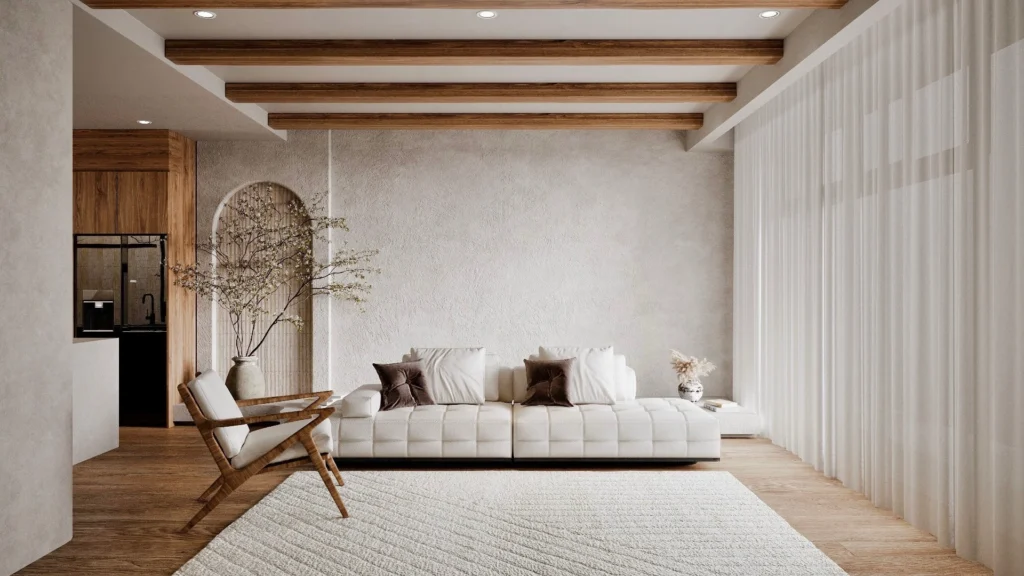
Color is one of the most powerful yet understated tools in calm interior design. Muted, nature-inspired palettes—warm neutrals, soft greys, earthy tones—create a sense of continuity and serenity. Rather than dominating a space, color in wellness-focused interiors operates quietly, supporting mood rather than commanding attention.
Subtle tonal variations add depth without visual noise. This approach aligns with minimalist interior design, where restraint allows nuance to emerge.
Psychological Effects of Calm Color Palettes
- Neutrals promote relaxation and adaptability.
- Earth tones foster grounding and comfort.
- Monochromatic schemes enhance visual coherence.
Furniture as Architecture: Fewer, Better Pieces
In the art of slowness, furniture is not decorative filler but an extension of architecture. Each piece contributes to spatial balance, ergonomics, and emotional comfort. Calm interior design favors fewer, well-crafted elements that invite use and longevity.
Minimalist interior design encourages investment in quality rather than quantity. This approach resonates with sustainability, reducing waste while elevating daily experience. Furniture becomes part of a lifestyle narrative—one that values time, care, and intentional living.
Wellness-Focused Interiors and the Future of Luxury Living
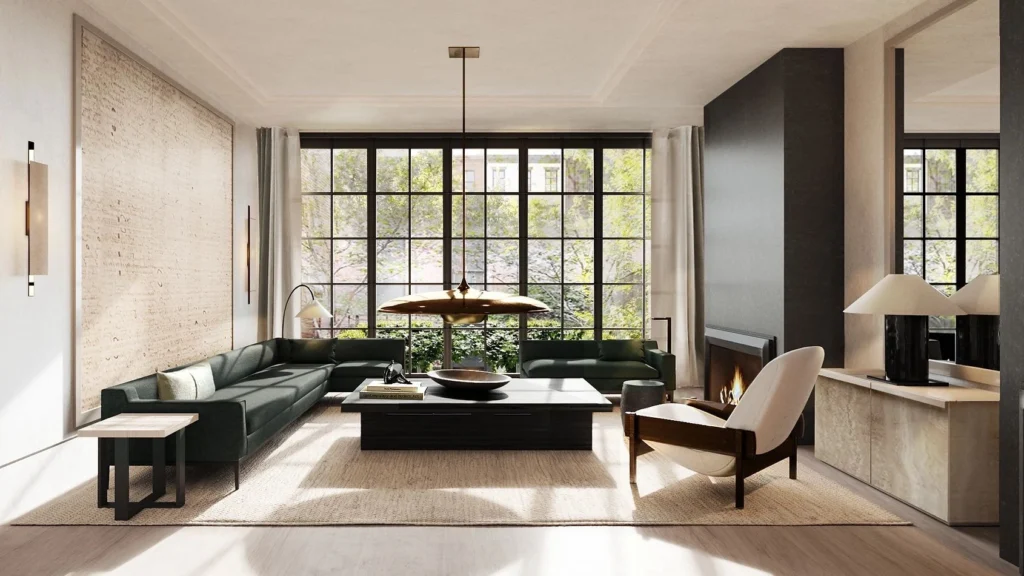
As global awareness of mental health and sustainability grows, wellness-focused interiors are redefining luxury. True luxury is no longer defined by excess but by the ability to disconnect, restore, and feel at ease. Calm interior design offers a blueprint for this evolution.
For architects and developers, this shift influences residential typologies, hospitality concepts, and mixed-use developments. For private clients, it represents an investment in quality of life—an environment that supports both ambition and repose.
Designing for a Slower, More Meaningful Life
The art of slowness is not a rejection of modernity but a refinement of it. Through calm interior design, minimalist interior design, and wellness-focused interiors, spaces can become quiet collaborators in daily life—supporting focus, reflection, and well-being.
In a world that constantly demands more, these interiors gently suggest less, but better. They remind us that design has the power not only to shape how we live, but how we feel, breathe, and ultimately, how we endure time with grace.