

Minimalism has long been associated with precision: clean lines, restrained palettes, and architecture reduced to its most essential expression. Yet within today’s most compelling minimalist interiors, a new nuance is emerging—one that embraces tactility, comfort, and emotional warmth without sacrificing clarity. The dialogue between structure and softness has become central to contemporary design thinking. At the heart of this evolution lies upholstered furniture, carefully selected pieces that temper architectural austerity and humanize space.
For architects, interior designers, and discerning homeowners, the challenge is no longer how to simplify—but how to soften without clutter. How can a minimalist living room furniture scheme remain architecturally rigorous while still inviting? How can soft furnishings in modern design elevate spatial experience rather than dilute it? And how does contemporary upholstered seating reshape the perception of volume, proportion, and light?
This article explores how upholstered elements act as a refined counterpoint to minimalism’s discipline—creating interiors that are at once serene, sculptural, and sensorial.
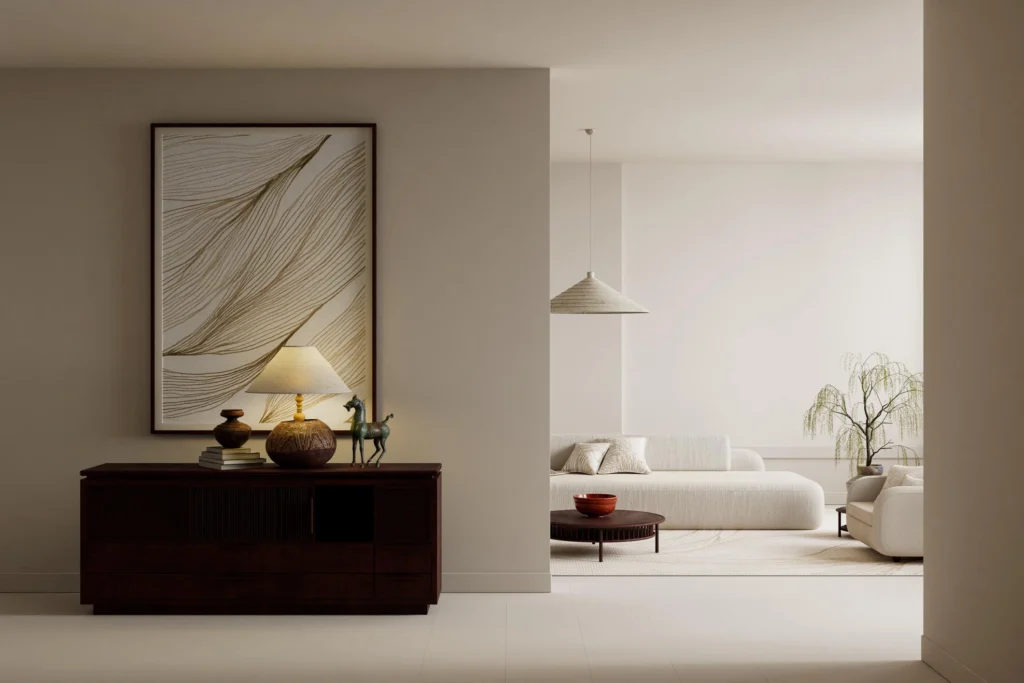
The Evolution of Minimalism: From Reduction to Refinement
Minimalist design, influenced by early 20th-century modernism and later movements such as Bauhaus and Japanese architecture, championed purity of form and material honesty. As articulated by figures like Ludwig Mies van der Rohe, the philosophy of “less is more” emphasized structural clarity and visual restraint.
Today, however, minimalism has matured beyond starkness. Contemporary interpretations prioritize sensory comfort alongside visual discipline. Rather than empty expanses, we encounter curated compositions where texture plays a vital architectural role. In this context, upholstered furniture becomes more than décor—it becomes a strategic design instrument.
Why Softness Matters in Minimalist Interiors
Minimalist interiors often feature:
- Exposed concrete or plaster walls
- Natural stone flooring
- Expansive glazing and metal detailing
- Monochromatic color palettes
While visually compelling, these elements can create acoustic harshness and emotional coolness if left unbalanced. Introducing soft furnishings in modern design—particularly upholstered pieces—absorbs sound, diffuses light, and introduces tactile depth. The result is a space that feels curated rather than clinical.
The Architectural Role of Upholstered Furniture
In refined minimalist interiors, every object must justify its presence. Upholstered pieces succeed not by ornamentation, but by proportion, silhouette, and material sophistication.
1. Sculptural Volume Without Visual Noise
Well-designed contemporary upholstered seating offers sculptural presence while maintaining formal restraint. A low-profile sofa with softened edges can anchor a double-height living space, providing gravity without competing with architecture.
Rounded forms, subtle curves, and tailored seams introduce organic movement that contrasts with rectilinear walls. This dialogue between geometry and softness creates visual tension—an essential ingredient in high-level design.
2. Defining Zones in Open-Plan Layouts
Open-plan living remains a hallmark of luxury residences. In these environments, minimalist living room furniture must delineate space without resorting to partitions.
Strategically positioned upholstered sofas and lounge chairs:
- Establish conversational groupings
- Frame views toward architectural focal points
- Create subtle thresholds between living, dining, and kitchen areas
Here, upholstered furniture functions as spatial architecture—soft walls that shape circulation while preserving openness.
3. Acoustic and Atmospheric Enhancement
Large-scale minimal residences often struggle with reverberation. Upholstery—particularly in textured bouclé, wool, or velvet—introduces sound absorption. The integration of soft furnishings in modern design thus improves acoustic comfort while reinforcing aesthetic coherence.
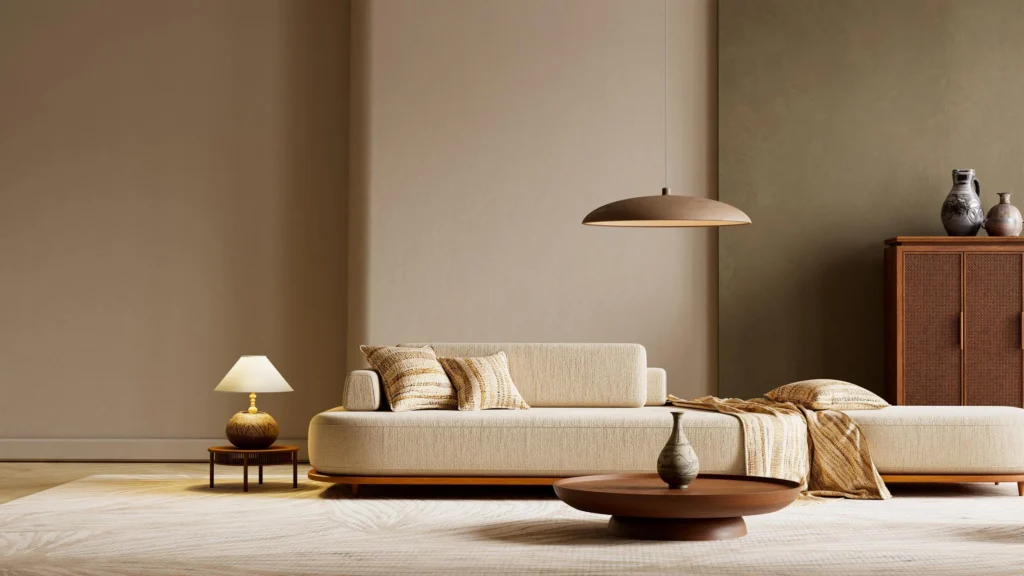
Materiality: Texture as a Design Language
Material selection determines whether softness reads as luxurious or excessive. In sophisticated minimalist interiors, upholstery choices are deliberate and often monochromatic, relying on texture rather than color contrast.
Natural Fibers and Neutral Palettes
Architects and designers frequently select:
- Wool blends for warmth and durability
- Linen for relaxed refinement
- High-performance textiles in muted tones
- Vegetable-tanned leather for subtle sheen
These materials enhance minimalist living room furniture compositions while maintaining palette discipline. Beige, ivory, stone, and taupe remain perennial choices, yet depth emerges through weave and finish.
Monochrome Does Not Mean Monotone
Layering tonal variations prevents flatness. A creamy sofa paired with slightly darker upholstered armchairs creates dimension without disrupting serenity. Thoughtful use of contemporary upholstered seating in complementary neutrals transforms a room into a nuanced study of light and shadow.
Form and Proportion: The Quiet Power of Curves
Curvilinear forms have re-emerged as a defining feature of contemporary design. Within minimalist interiors, curves soften rigid geometries and encourage fluid movement.
Low Profiles and Generous Depth
Modern upholstered furniture often features low backs and expansive seating depths. This profile preserves sightlines—particularly important in homes with panoramic glazing—while enhancing comfort.
Such silhouettes are especially effective in minimalist living room furniture schemes where visual continuity between interior and exterior is paramount.
Organic Shapes as Counterpoint
Rounded sofas and sculpted lounge chairs introduce biomorphic softness that contrasts with orthogonal architecture. Carefully curated soft furnishings in modern design thus bridge the gap between structural rigor and human scale.
Layering Soft Furnishings in Modern Design
Beyond primary seating, a comprehensive strategy for soft furnishings in modern design considers secondary elements that subtly reinforce comfort.
Textural Accents
- Upholstered ottomans that double as sculptural tables
- Bench seating integrated into architectural niches
- Headboards that extend wall-to-wall for hotel-like serenity
- Discreetly padded wall panels in private spaces
Each piece contributes to a cohesive atmosphere without introducing clutter. In high-end residences, upholstered furniture becomes part of the architectural envelope rather than an afterthought.
Designing the Minimalist Living Room
The living room remains the laboratory where softness and minimalism converge most visibly. A refined minimalist living room furniture arrangement balances three essential factors:
- Proportion: Scale must respond to ceiling height and room volume.
- Material coherence: Upholstery must harmonize with flooring and wall finishes.
- Circulation clarity: Seating should guide movement naturally.
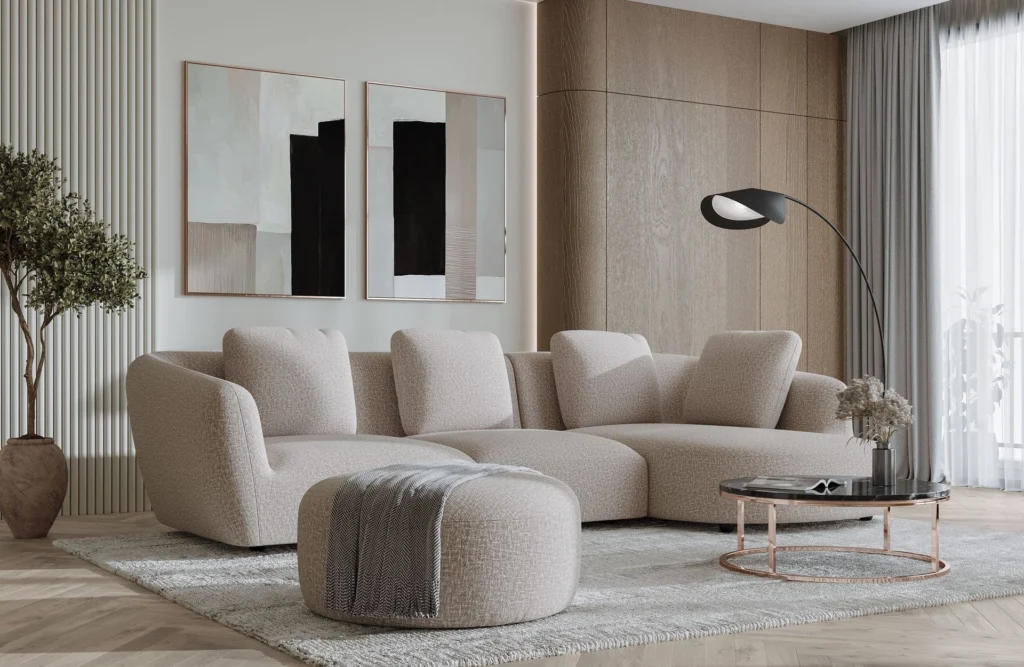
Strategic Composition
A single, impeccably crafted sofa paired with two understated lounge chairs often proves more powerful than a crowded arrangement. High-quality contemporary upholstered seating elevates the room through precision rather than abundance.
In luxury properties overlooking urban skylines or coastal horizons, the interplay between expansive views and plush interiors enhances perceived value. For real estate professionals, this subtle layering of softness within minimalist interiors directly impacts buyer perception and emotional engagement.
Psychological Impact: Comfort as Luxury
In an era defined by constant connectivity, the home has become a sanctuary. Minimalism’s clarity reduces visual stress, yet without warmth it risks feeling impersonal. Introducing upholstered furniture addresses a deeper human need for tactile reassurance.
Studies in environmental psychology confirm that texture influences emotional response. Soft, enveloping contemporary upholstered seating signals comfort and stability, reinforcing a sense of retreat. Within carefully composed minimalist interiors, this balance of restraint and softness fosters wellbeing.
Sustainability and Longevity
High-end design increasingly prioritizes sustainability. Investing in durable minimalist living room furniture crafted with responsibly sourced materials aligns aesthetic integrity with environmental responsibility.
Quality upholstered furniture designed for longevity reduces replacement cycles. Removable covers, modular configurations, and timeless silhouettes ensure that soft furnishings in modern design remain relevant for decades rather than seasons.
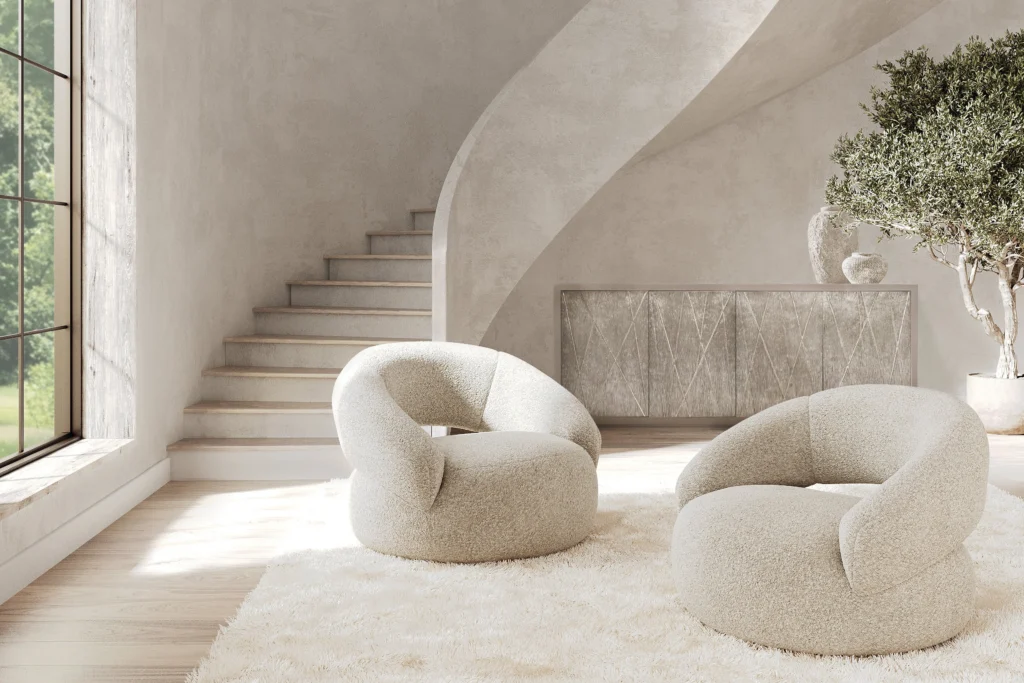
Global Influences and Cultural Nuance
Across Europe, North America, and Asia, interpretations of minimalism vary, yet the integration of softness remains universal. Scandinavian interiors emphasize wool and tactile layering; Mediterranean homes pair stone architecture with linen upholstery; Japanese-inspired spaces combine restraint with subtle cushioning.
In each context, contemporary upholstered seating adapts to cultural expectations of comfort while preserving minimal form. This cross-cultural resonance underscores the enduring relevance of upholstered elements within minimalist interiors.
The Future of Soft Minimalism
Minimalism is no longer synonymous with austerity. It has evolved into a language of intentionality—where every curve, seam, and texture serves a purpose. Upholstered furniture stands at the forefront of this transformation, offering designers a means to soften architecture without compromising precision.
Through sculptural silhouettes, refined materials, and carefully calibrated compositions, minimalist living room furniture can achieve both serenity and sensuality. Thoughtfully integrated soft furnishings in modern design enhance acoustics, comfort, and emotional resonance. And exquisitely crafted contemporary upholstered seating anchors spaces with quiet authority.
For architects, interior designers, and discerning homeowners, the message is clear: softness is not an indulgence—it is an architectural strategy. In the dialogue between structure and comfort, the most compelling minimalist interiors are those that embrace both.