

In expansive residences—from waterfront penthouses to contemporary villas—the living room often serves as both architectural centerpiece and social stage. Generous square footage offers opportunity, yet it also introduces complexity. Without thoughtful planning, scale can overwhelm, circulation can falter, and even the most exquisite furnishings may appear adrift. Among the most transformative solutions for these grand interiors are luxury sectional sofas, which anchor space, articulate zones, and shape the rhythm of movement.
For architects, interior designers, and discerning homeowners, mastering the relationship between luxury sectional sofas and living room layout is essential. The goal is not merely to fill space, but to choreograph it—balancing proportion, architectural intent, and effortless circulation. This guide explores how to achieve that equilibrium with refinement and authority.
The Architectural Role of Sectional Sofas in Large Living Rooms
In compact rooms, furniture selection is primarily about efficiency. In expansive interiors, however, it becomes architectural. Luxury sectional sofas function as spatial dividers, visual anchors, and social frameworks. They can delineate conversation zones within open-plan environments, create intimacy within lofty volumes, and reinforce symmetry in grand salons.
Why Sectionals Work in Grand Interiors
- Spatial Definition: They establish boundaries without erecting walls.
- Proportional Balance: Their extended footprint visually grounds tall ceilings and wide spans.
- Social Orientation: They foster natural conversation clusters.
- Flexibility: Modular formats adapt to evolving needs and seasonal rearrangements.
Understanding Scale: The Foundation of Balance
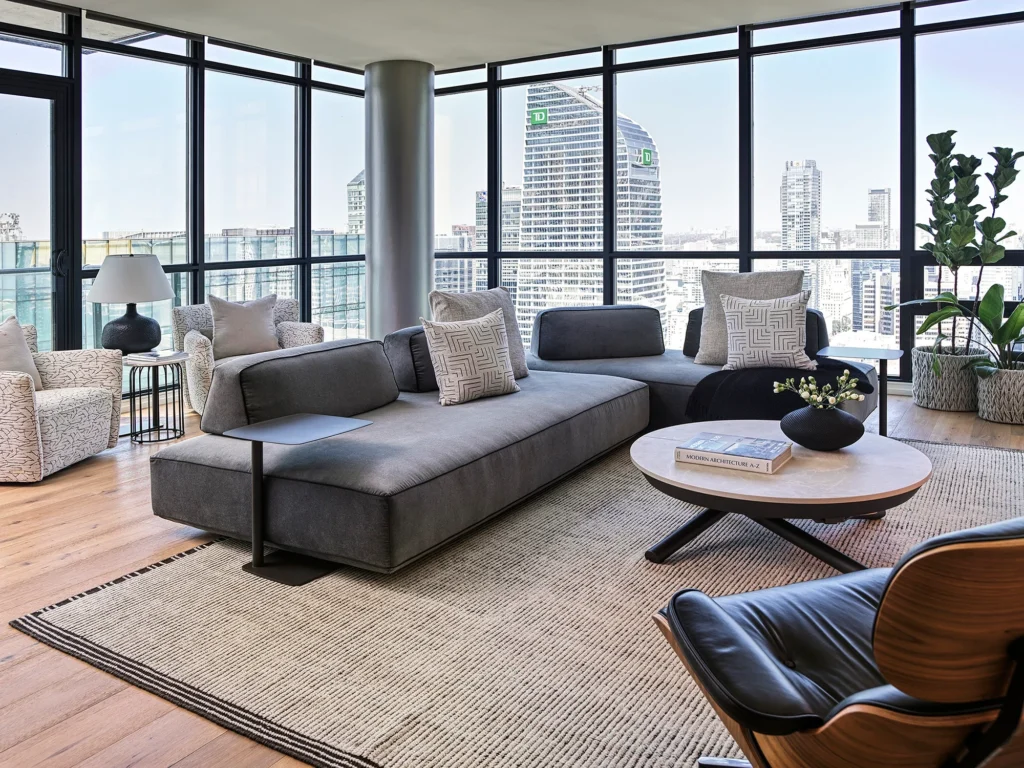
Scale is not synonymous with size. It is about proportion relative to architecture. A double-height living area with panoramic glazing demands furniture that can visually hold its own without appearing bulky. Conversely, a horizontally expansive room with low ceilings requires careful calibration to avoid heaviness.
Measuring for Architectural Harmony
Before specifying luxury sectional sofas, consider the following dimensions:
- Ceiling height and vertical sightlines.
- Width of primary circulation pathways.
- Distance between architectural focal points (fireplace, art wall, glazing).
- Proportion of solid wall to glazing.
As a guiding principle, the sectional should occupy approximately two-thirds of the primary seating zone—not the entire room. This ensures breathing space and reinforces a balanced living room layout.
Circulation: Designing for Movement and Flow
In large living rooms, circulation is often overlooked. Yet the ease with which guests move through a space defines its comfort. A sectional placed without regard to pathways can obstruct entry points, interrupt sightlines, or create awkward detours.
Establishing Primary and Secondary Pathways
Begin by identifying:
- Primary pathways: Routes connecting entry points to terraces, dining areas, or hallways.
- Secondary pathways: Access points to seating clusters and occasional tables.
A minimum clearance of 90–100 cm (35–40 inches) behind or alongside a sectional ensures graceful passage. In luxury properties, designers often extend this to 120 cm for a more generous feel. This spatial discipline is critical in achieving a refined living room layout.
Zoning Expansive Rooms with Sectional Sofas
Large living rooms frequently coexist within open-plan environments, merging with kitchens, libraries, or terraces. Here, luxury sectional sofas become tools of subtle zoning.
Techniques for Elegant Zoning
- Floating Placement: Position the sectional away from walls to define a central island of comfort.
- Back-to-Back Arrangements: Pair a sectional with a console or secondary seating group to create layered depth.
- Rug Anchoring: Use a generously scaled rug extending beyond the sofa footprint to visually contain the seating area.
- Symmetry: Align with architectural axes for classical harmony.
A carefully orchestrated living room layout ensures each zone retains intimacy while contributing to the overarching composition.
Proportion and Visual Weight
Not all luxury sectional sofas carry the same visual weight. Upholstery choice, leg profile, arm thickness, and back height all influence perception.
Balancing Mass and Lightness
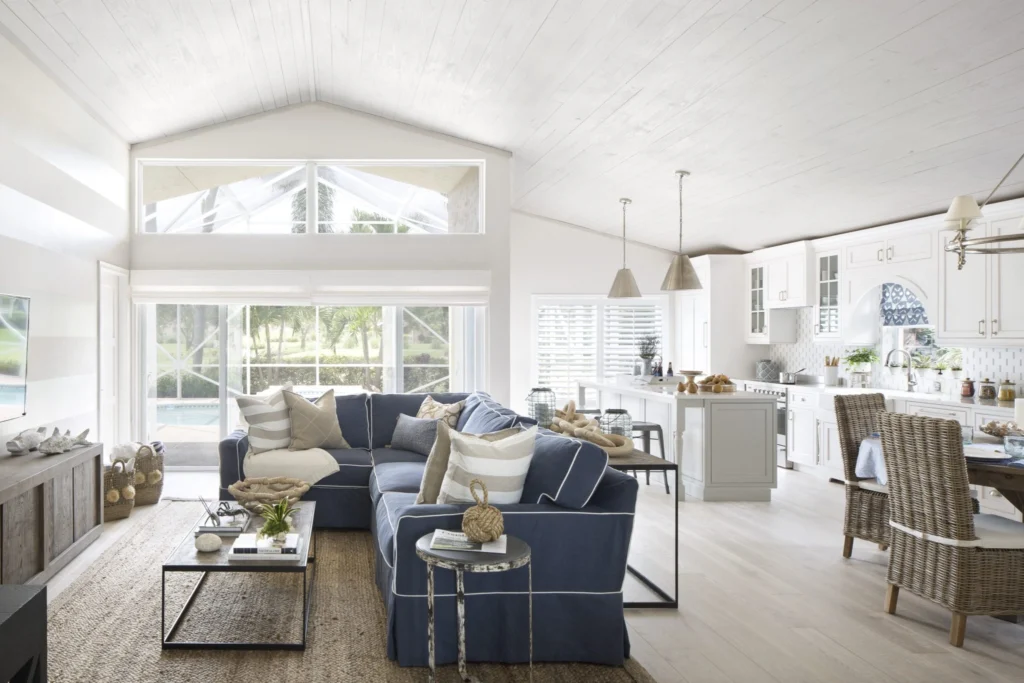
In rooms with floor-to-ceiling glazing, opt for:
- Slim arms and elevated legs to maintain visual permeability.
- Neutral, textural fabrics that reflect light.
- Modular silhouettes with clean geometry.
In contrast, richly paneled interiors with fireplaces and art collections may welcome deeper seats and more sculptural forms, enhancing gravitas without overpowering the living room layout.
Creating Conversational Intimacy in Expansive Settings
One of the greatest challenges of large rooms is preventing emotional distance. Furniture placed too far apart discourages conversation. Luxury sectional sofas mitigate this by consolidating seating into a cohesive arrangement.
Optimal Conversation Distances
Professional designers often maintain:
- 2.1–2.7 meters (7–9 feet) between primary seats.
- Accessible side tables within arm’s reach.
- A central focal point—fireplace, artwork, or panoramic view.
Through disciplined spacing, the living room layout becomes both impressive and inviting.
Layering with Complementary Furnishings
A sectional alone cannot complete a grand interior. The surrounding elements refine scale and circulation.
Essential Complementary Pieces
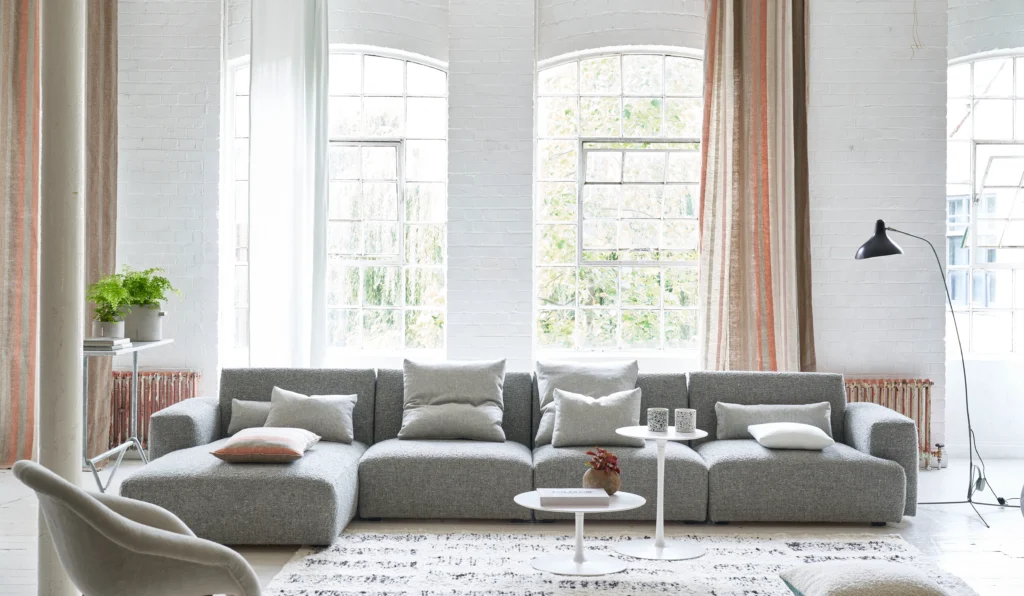
- Coffee Tables: Overscaled or modular designs proportional to the sectional’s footprint.
- Accent Chairs: Introduce contrast in material or silhouette.
- Consoles: Define the rear boundary when the sectional floats.
- Lighting: Floor lamps and sculptural pendants articulate vertical dimension.
When integrated thoughtfully, these elements enhance both the luxury sectional sofas and the broader living room layout.
Modularity: Adaptability for Contemporary Living
Modern lifestyles demand flexibility. Enter modular luxury sectional sofas, which allow reconfiguration for intimate gatherings, formal receptions, or seasonal transformations.
Advantages of Modular Systems
- Reorientation to maximize views or seasonal light.
- Expansion for entertaining large groups.
- Subdivision into smaller clusters when desired.
This adaptability reinforces a dynamic living room layout, ensuring longevity in both function and aesthetic relevance.
Common Mistakes to Avoid
Even experienced designers can miscalculate in large interiors. Awareness prevents imbalance.
Frequent Pitfalls
- Choosing a sectional too small, causing it to “float” without presence.
- Pushing furniture against walls, creating disconnected voids.
- Neglecting circulation clearances.
- Overcrowding with excessive accent pieces.
Each misstep disrupts the harmony between luxury sectional sofas and the overall living room layout.
Designing for Lifestyle and Legacy
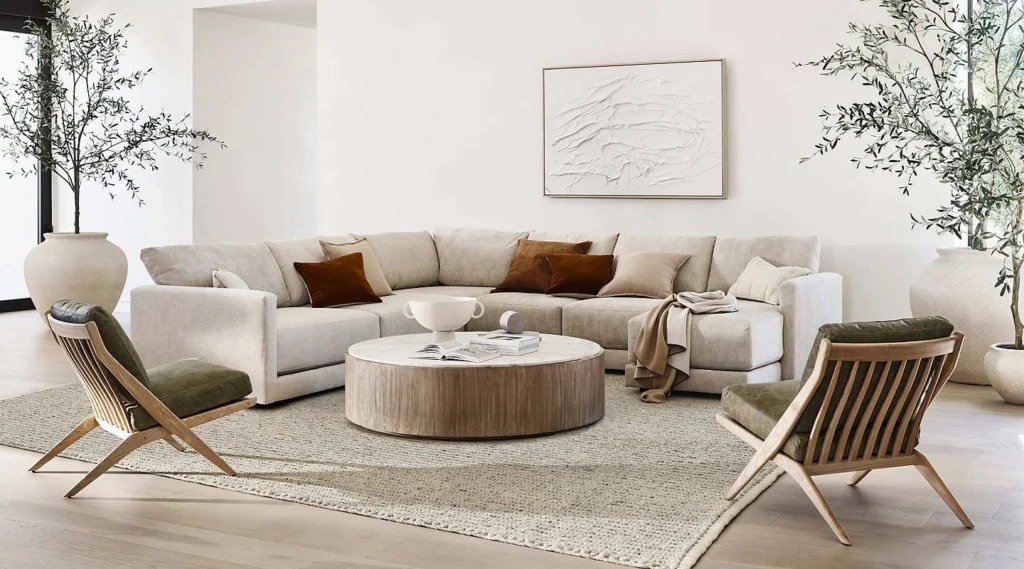
In luxury real estate, the living room often reflects not only aesthetic preference but legacy. The choice and placement of luxury sectional sofas signal a commitment to comfort, hospitality, and architectural respect.
For international professionals and high-net-worth homeowners, the objective is clear: create environments that feel curated rather than staged, expansive yet intimate, impressive yet welcoming. The living room layout becomes a testament to thoughtful design intelligence.
Mastering Scale with Confidence
Sectional sofas, when chosen and positioned with architectural sensitivity, transform large living rooms into cohesive, livable masterpieces. By balancing scale, safeguarding circulation, and layering complementary elements, designers achieve both visual drama and effortless flow.
Ultimately, luxury sectional sofas are not merely furnishings—they are spatial instruments. When integrated into a carefully considered living room layout, they define how a room is experienced, how conversations unfold, and how architecture comes to life.