

In the evolving language of contemporary interiors, the accent armchair has emerged as far more than a supplementary seat. Today, it occupies a central role in shaping atmosphere, articulating taste, and expressing architectural intent. Reimagined through sculptural forms, refined materials, and innovative craftsmanship, the modern accent armchair has become a focal point of sophisticated living rooms worldwide.
For architects, interior designers, and discerning homeowners alike, the modern armchair represents a convergence of art, ergonomics, and cultural storytelling. No longer confined to the margins of a seating arrangement, the designer armchair now stands as a curated object—one that bridges function and emotion, structure and softness, heritage and innovation.
This article explores how the accent armchair has been redefined in contemporary interiors, examining its sculptural evolution, material intelligence, and enduring relevance in refined living spaces.
The Evolution of the Accent Armchair
Historically, armchairs were conceived as symbols of authority and comfort—often ornate, heavily upholstered, and bound to classical proportions. As modernism reshaped interior architecture in the 20th century, seating design began to reflect cleaner lines, functional clarity, and industrial experimentation.
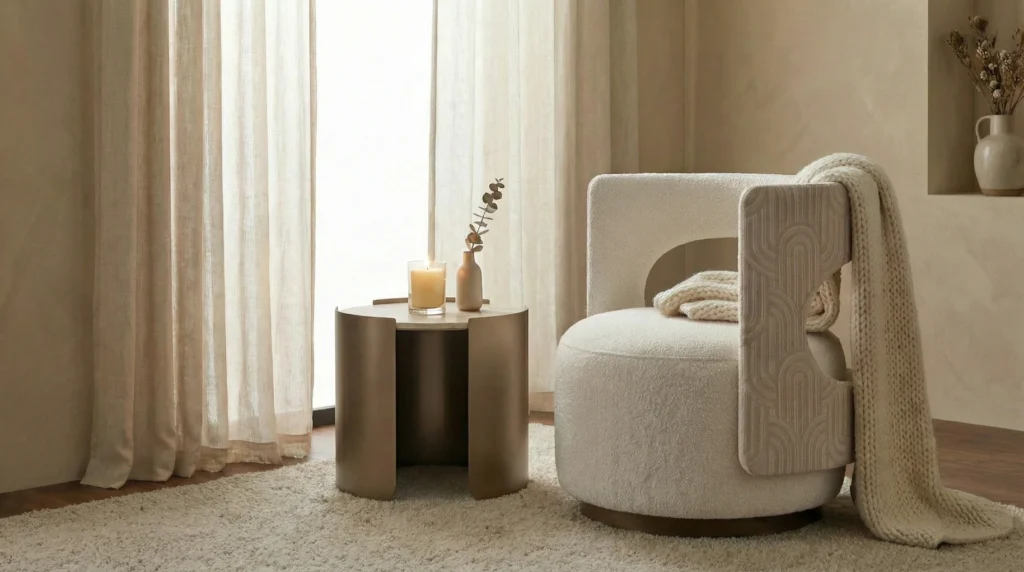
Today’s accent armchair builds upon this lineage while embracing a new narrative. It is lighter in visual presence yet richer in conceptual depth, often designed to be viewed from multiple angles, much like a piece of sculpture. In contemporary living rooms, the armchair is no longer an accessory—it is an intentional design statement.
From Supporting Role to Sculptural Centerpiece
What distinguishes the contemporary accent armchair is its ability to command attention without overpowering a space. Designers increasingly treat the chair as a standalone object, capable of anchoring a room composition or punctuating an open-plan interior with character.
This shift aligns with broader architectural trends that favor curated minimalism, where fewer but more expressive pieces define a space. In this context, the designer armchair becomes both functional seating and spatial punctuation.
Sculptural Design: Where Art Meets Function
Sculptural seating is defined by its three-dimensional presence. Unlike traditional seating, which prioritizes frontal aesthetics, the modern accent armchair is conceived as a holistic form—meant to be experienced in the round.
Architectural Forms and Organic Curves
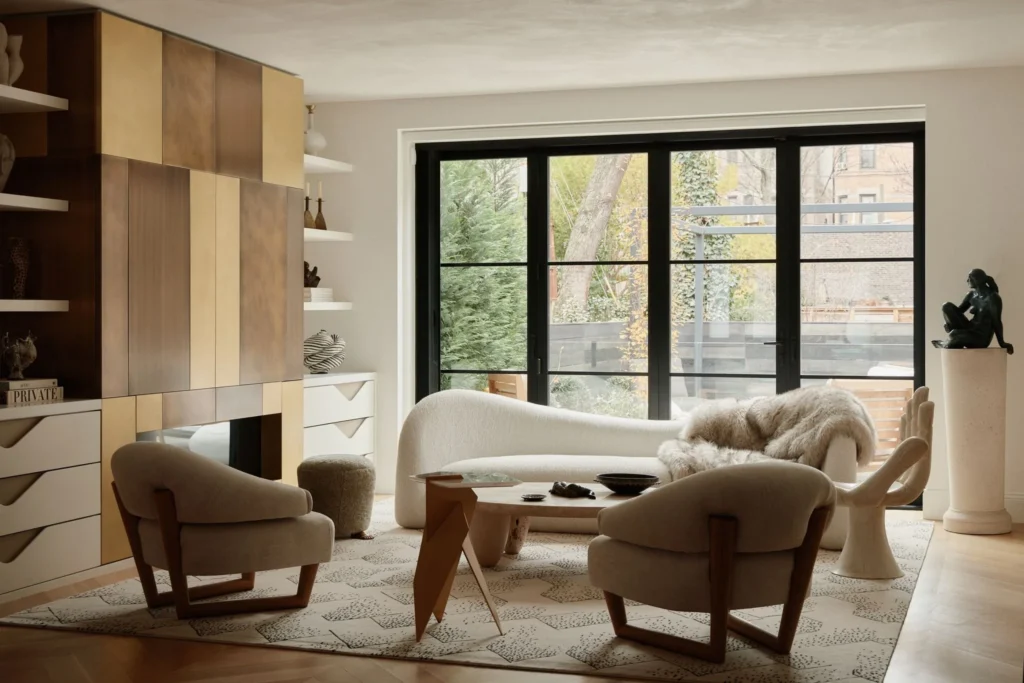
Many contemporary modern armchair designs draw inspiration from architecture, fine art, and nature. We see bold cantilevers, enveloping silhouettes, and fluid curves that soften rectilinear living rooms. These forms create visual rhythm and contrast, especially in spaces dominated by clean-lined sofas and linear cabinetry.
Organic shapes, in particular, have gained prominence as interiors move toward warmer, more human-centered environments. Rounded backs, cocooning armrests, and sculpted bases contribute to a sense of comfort that is both physical and emotional.
Balance Between Comfort and Visual Impact
While sculptural ambition is central, comfort remains non-negotiable. A successful accent armchair achieves equilibrium between expressive form and ergonomic intelligence. Carefully calibrated seat depths, supportive backrests, and considered proportions ensure that beauty does not come at the expense of usability.
This balance is critical in high-end residential projects, where living rooms must support both formal entertaining and intimate daily rituals.
Material Intelligence in Contemporary Armchair Design
Materiality plays a defining role in elevating the accent armchair from furniture to collectible design object. Today’s designers favor materials that communicate authenticity, tactility, and longevity.
Upholstery: Texture as Narrative
From bouclé and brushed wool to supple leathers and performance textiles, upholstery choices shape the emotional tone of a designer armchair. Textural fabrics add depth and invite interaction, particularly in monochromatic or restrained interiors.
Neutral palettes—ivory, taupe, sand, and charcoal—remain dominant, allowing form and texture to take precedence. However, accent armchairs also provide an opportunity for controlled experimentation through muted color, tonal contrast, or artisanal weaves.
Structural Materials: Wood, Metal, and Beyond
The base and frame of a modern accent armchair often reveal its architectural soul. Solid woods such as oak or walnut bring warmth and heritage, while powder-coated metals and brushed finishes introduce a contemporary edge.
Increasingly, designers combine materials to create layered compositions—upholstered volumes resting on slender metal legs, or carved wooden shells softened by tailored cushions. This interplay enhances visual intrigue while reinforcing craftsmanship.
The Accent Armchair in Sophisticated Living Rooms
In refined living spaces, the accent armchair serves both aesthetic and functional purposes. Its placement and selection are integral to the overall spatial narrative.
Defining Zones in Open-Plan Interiors
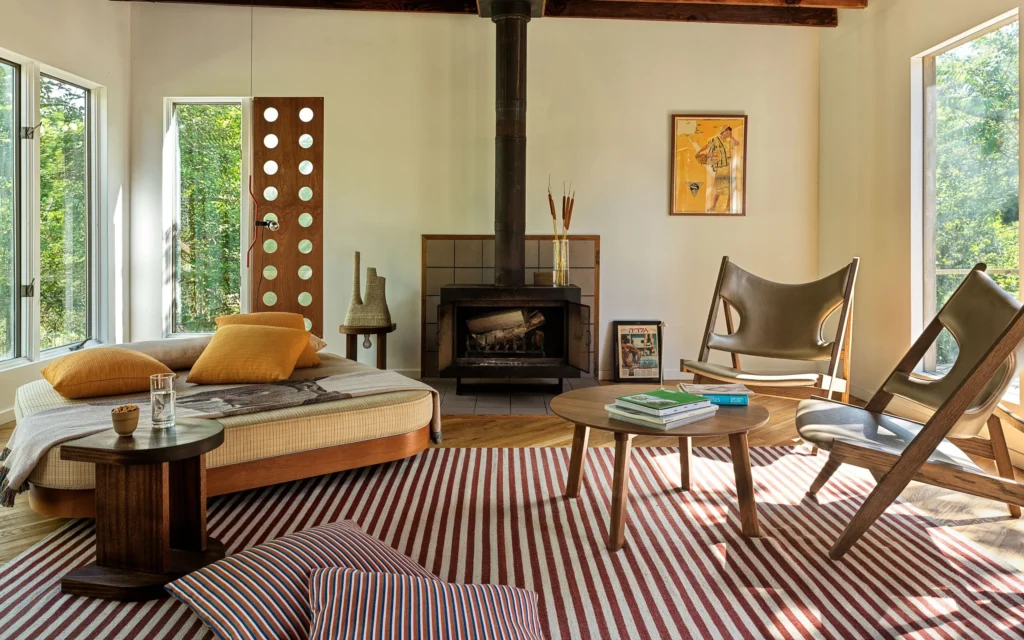
As open-plan living becomes the norm in luxury residences, furniture plays a crucial role in defining zones without physical barriers. A thoughtfully positioned accent armchair can delineate a reading corner, frame a conversation area, or soften transitions between living and dining spaces.
Paired with a side table or floor lamp, the armchair creates moments of intimacy within expansive layouts.
Creating Visual Counterpoints
In living rooms dominated by large sofas or sectional seating, the accent armchair offers visual relief. Contrasting shapes, materials, or heights introduce dynamism and prevent monotony.
For example, a sculptural modern armchair with curved lines can counterbalance a linear sofa, adding depth and compositional balance to the room.
Design Selection: What Professionals Consider
For architects and interior designers, selecting the right accent armchair involves more than aesthetics. It requires an understanding of context, scale, and narrative coherence.
Key Criteria for Selection
- Proportion: The chair must relate harmoniously to surrounding furniture and architectural elements.
- Material Compatibility: Finishes should complement flooring, wall treatments, and other textiles.
- Functionality: Consider how the chair will be used—occasional seating, reading, or conversation.
- Longevity: Timeless design and durable materials ensure lasting relevance.
In high-end projects, the accent armchair often reflects the overall design philosophy—whether rooted in contemporary minimalism, mid-century modern references, or soft modern luxury.
The Cultural Significance of Designer Armchairs
Beyond function, the designer armchair holds cultural weight. Many iconic designs are exhibited in museums and referenced in academic discourse, underscoring the chair’s role as a medium of design innovation.
Institutions such as the Museum of Modern Art have long recognized seating as a form of applied art, highlighting how furniture reflects societal values, technological progress, and aesthetic movements. An authoritative overview of this evolution can be found through MoMA’s design collection:
https://www.moma.org/collection/works?classification=design.
In contemporary living rooms, choosing a sculptural accent armchair is a way of participating in this ongoing cultural dialogue—where design is both lived with and contemplated.
Sustainability and the Modern Accent Armchair
Sustainability has become a defining consideration in contemporary furniture design. High-end armchairs increasingly reflect responsible sourcing, ethical production, and longevity over disposability.
Responsible Materials and Craft
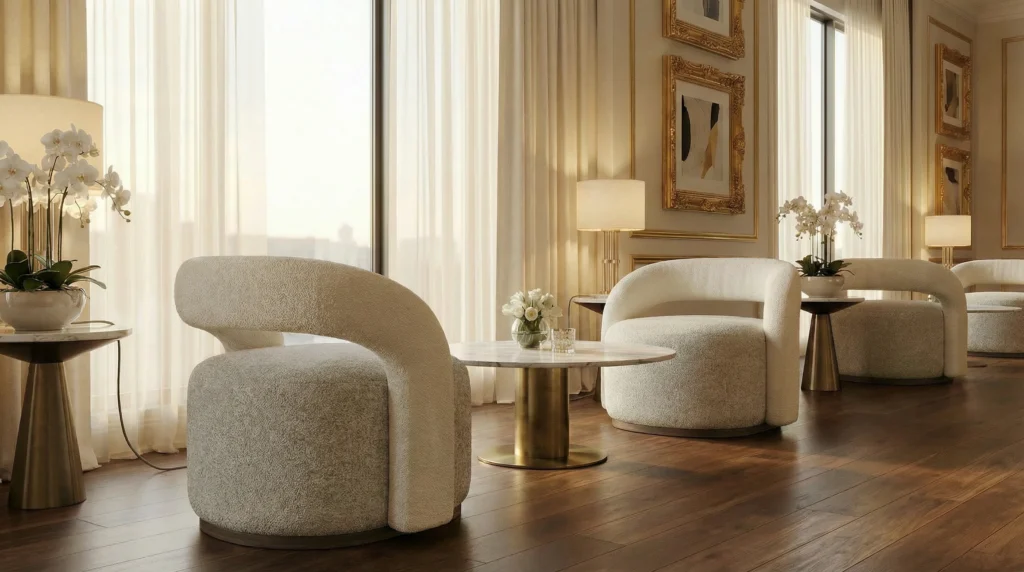
Designers and manufacturers are prioritizing FSC-certified woods, low-impact finishes, and durable upholstery designed for long-term use. This approach aligns with a broader shift toward conscious luxury, where quality and responsibility coexist.
For clients and professionals alike, investing in a well-crafted accent armchair is both an aesthetic and ethical choice.
A New Icon of Refined Living
The accent armchair has been reimagined as a sculptural, expressive, and culturally resonant element of contemporary interiors. Through thoughtful design, material intelligence, and architectural presence, it transcends its traditional role to become a defining feature of sophisticated living rooms.
Whether specified by architects, curated by interior designers, or chosen by design-literate homeowners, the modern accent armchair embodies a refined balance of comfort and artistry. As living spaces continue to evolve toward personalization and narrative depth, the accent armchair stands poised as a quiet yet powerful icon of modern luxury.