
The Notting Hill Living Room
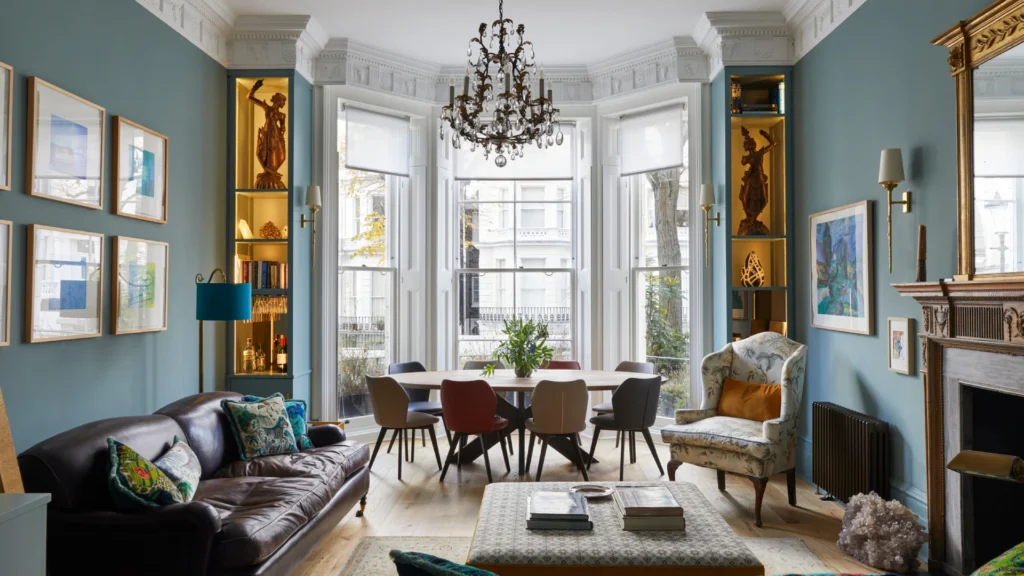
In the elegant neighborhoods of West London, few architectural scenes are as evocative as a Notting Hill townhouse living room framed by tall French doors opening onto a quiet garden terrace. These luminous interiors—where heritage architecture meets contemporary living—present a design opportunity that many architects and interior designers know well: how to position furniture without compromising the rhythm of the architecture.
Among the most debated choices is the placement of the sofa. In a living room with French doors, conventional wall placement often disappears, replaced by vertical glazing, garden views, and historic proportions. Yet placing a sofa between tall French doors has become an increasingly celebrated solution in period home interior design. When executed thoughtfully, this arrangement enhances symmetry, improves spatial flow, and celebrates the architectural heritage of the classic London townhouse.
This article explores why designers increasingly adopt this layout in historic homes, how it enhances light and circulation, and the design strategies that transform a potentially awkward configuration into a refined centerpiece.
The Architectural Context of the Notting Hill Townhouse
To understand the logic of placing sofas between doors, it is essential to appreciate the spatial DNA of the Notting Hill townhouse. Developed primarily during the Victorian and Georgian eras, these homes were designed to maximize natural light while maintaining a strong connection to private gardens.
Typical characteristics include:
- Tall ceilings often exceeding three meters
- Full-height French doors opening to terraces or garden squares
- Long, narrow reception rooms
- Decorative cornicing, fireplaces, and tall sash windows
- Symmetrical architectural compositions
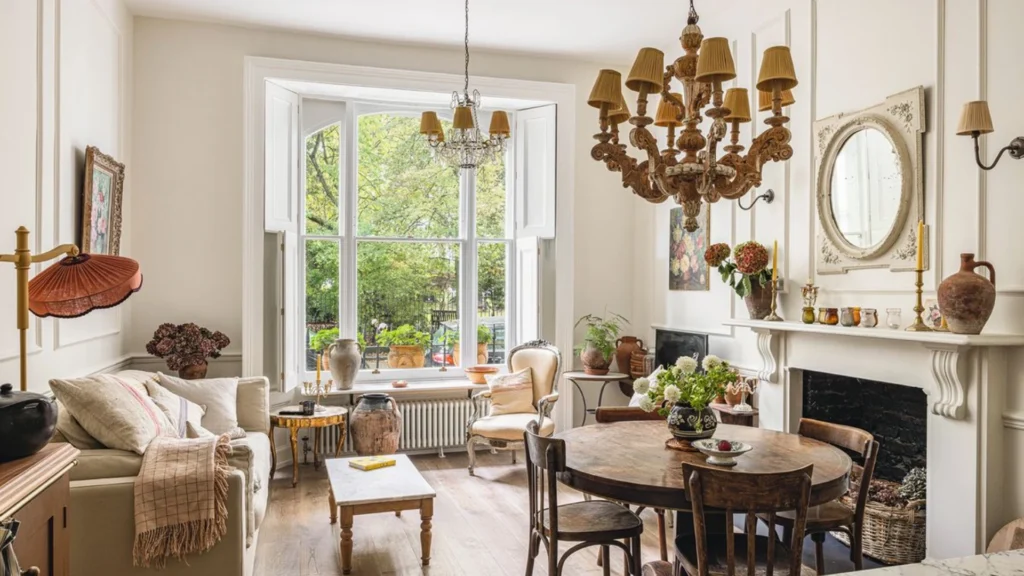
In many cases, the main reception room of a London townhouse features two sets of French doors rather than solid walls. This creates a breathtaking sense of openness but removes the obvious location for a sofa. Rather than fighting the architecture, contemporary period home interior design embraces it—transforming the space between the doors into a deliberate focal point.
Architectural historians often note that Victorian interiors prioritized axial symmetry, a principle that remains influential today. As discussed by the Victoria and Albert Museum’s research on Victorian domestic interiors, balanced room compositions were fundamental to 19th-century residential design. Placing furniture centrally between architectural elements echoes this historical logic while adapting it to modern living.
Why Designers Place Sofas Between French Doors
1. Respecting Architectural Symmetry
One of the most compelling reasons for placing a sofa between tall French doors in a Notting Hill townhouse is the preservation of architectural symmetry. French doors naturally create a framed composition within the room. Positioning a sofa centrally between them strengthens this visual balance.
Instead of appearing as an afterthought, the furniture becomes an anchor point within the architectural framework. In sophisticated period home interior design, the sofa often aligns with:
- The central axis of the room
- A fireplace opposite the doors
- A chandelier or pendant light overhead
- Garden views beyond the glazing
The result is a composition that feels intentional, elegant, and historically sympathetic.
2. Preserving Natural Light
A defining characteristic of the living room with French doors is the abundance of daylight. Blocking these openings with oversized furniture can dramatically reduce the luminous quality that makes a London townhouse so desirable.
Placing a sofa between doors rather than directly in front of them preserves:
- Garden sightlines
- Sunlight penetration
- Visual continuity between interior and exterior
- The vertical rhythm of the architectural openings
This approach transforms the seating area into a viewing platform rather than an obstacle.
3. Creating a Natural Conversation Zone
The traditional reception rooms of a Notting Hill townhouse are often long and narrow. Without careful planning, furniture can drift toward the walls, leaving the center of the room empty and disconnected.
A centrally placed sofa establishes a natural gathering area. Designers often complement the layout with:
- Two armchairs facing the sofa
- A sculptural coffee table
- A statement rug defining the seating zone
- Side tables with reading lamps
In a living room with French doors, this arrangement transforms circulation into a fluid loop around the seating group rather than a path cutting through it.
Spatial Strategies Designers Use
Choosing the Right Sofa Proportions
Scale is critical in the refined interiors of a London townhouse. Oversized furniture can overwhelm the delicate proportions typical of Victorian rooms.
Interior designers working with period home interior design often select sofas with:
- Low backs that preserve sightlines
- Refined arms rather than bulky profiles
- Raised legs to maintain visual lightness
- Lengths proportionate to the distance between doors
A sofa that is too wide can block access to the doors, while one that is too small fails to anchor the space.
Maintaining Circulation Paths
The placement of furniture must respect the practical use of the room. French doors frequently open onto terraces or gardens, meaning circulation paths must remain unobstructed.
Professional designers typically ensure:
- At least 80–90 cm clearance on each side of the sofa
- Direct access to each door panel
- Clear walking routes between seating and garden
In high-end period home interior design, these invisible ergonomic considerations are essential to maintaining both elegance and functionality.
Styling the Sofa Placement
Layering Textures and Materials
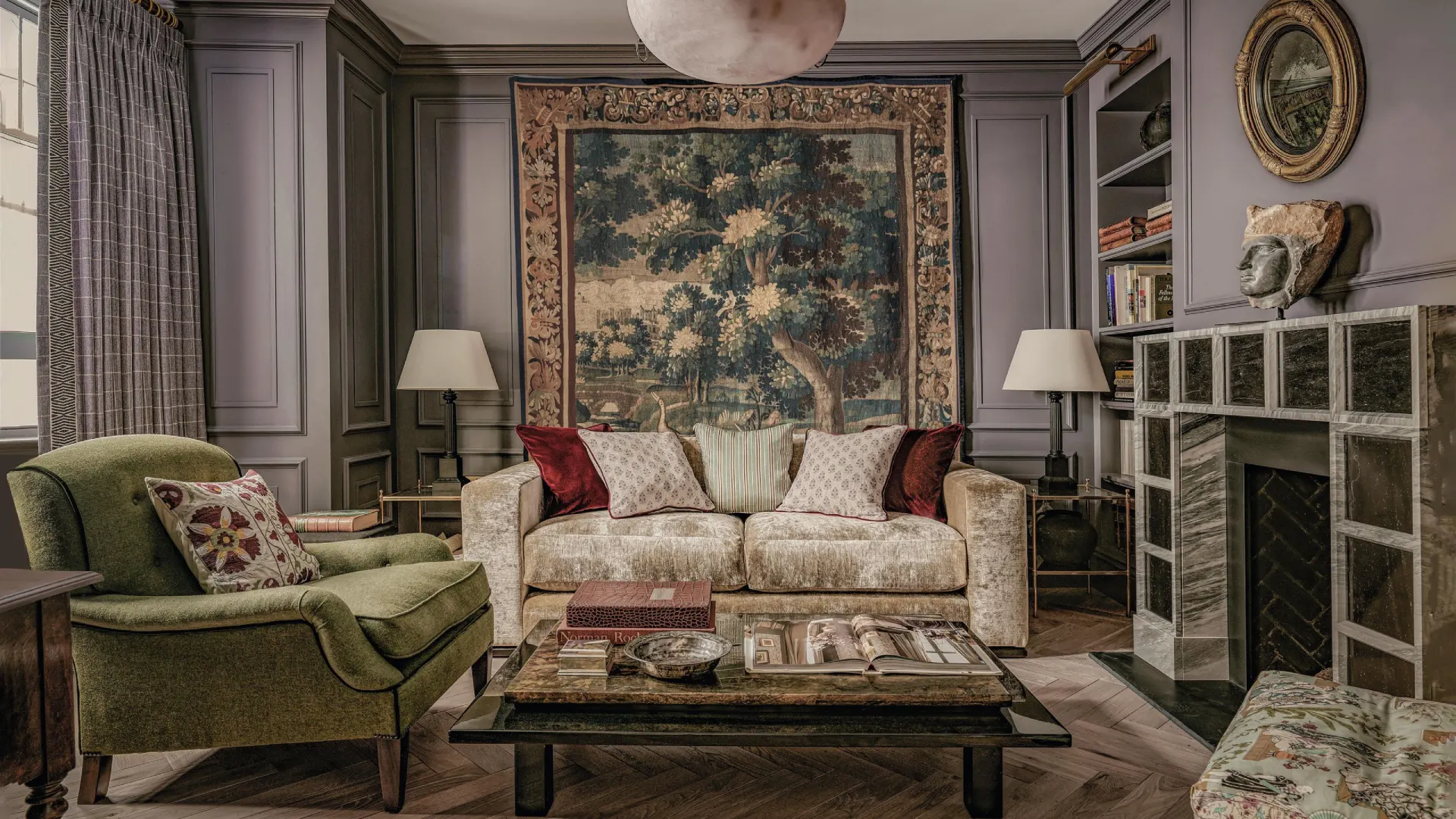
A well-positioned sofa becomes the visual centerpiece of the living room with French doors. Designers often reinforce this focal point through thoughtful material layering.
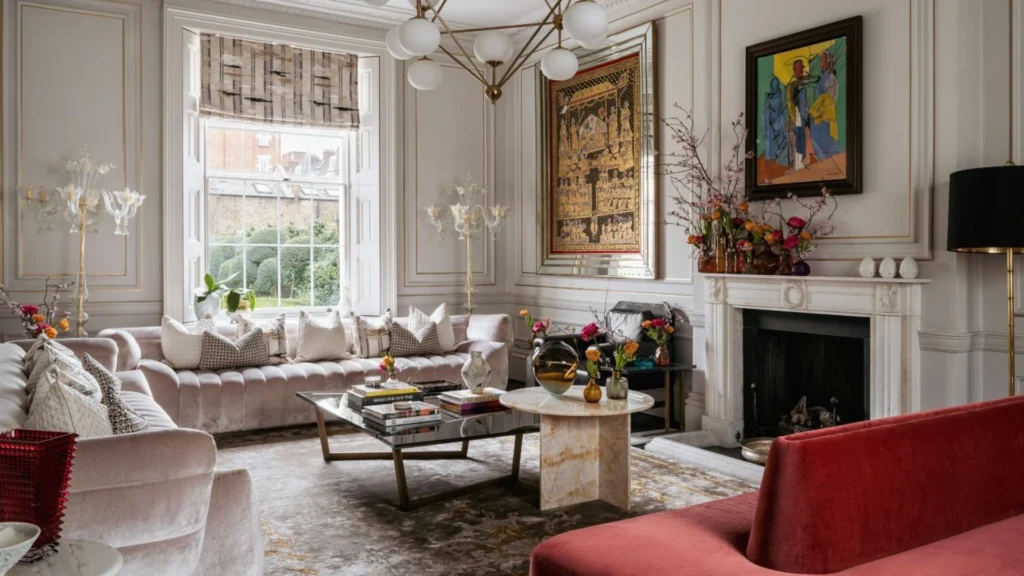
Popular combinations in a Notting Hill townhouse include:
- Soft wool or linen upholstery
- Velvet accent cushions
- Brass or marble side tables
- Handwoven rugs grounding the seating area
These materials complement the historic architecture while introducing contemporary warmth.
Framing the View
One of the most poetic advantages of the sofa-between-doors layout is the opportunity to frame the garden beyond.
Designers frequently enhance this connection by:
- Keeping window treatments minimal
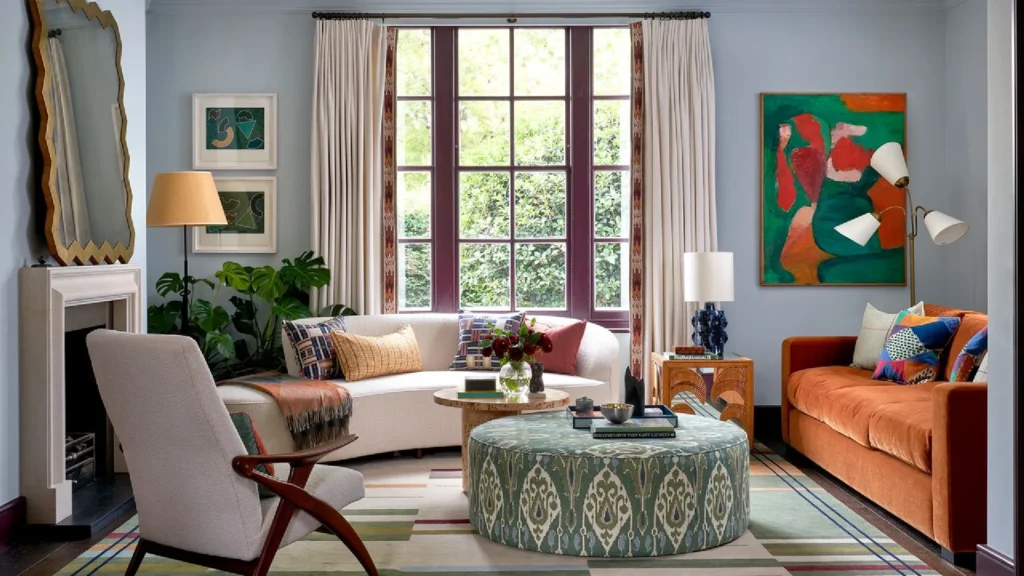
- Using sheer linen curtains that diffuse light
- Aligning the sofa with a central garden axis
- Positioning artwork or mirrors opposite the doors to reflect greenery
The effect is a seamless visual dialogue between interior comfort and outdoor tranquility—an essential characteristic of the classic London townhouse.
Lighting the Space
Balancing Daylight and Ambient Lighting
While a living room with French doors benefits from abundant daylight, evening lighting must recreate the same sense of balance and atmosphere.
Interior designers often combine several layers:
- A central chandelier emphasizing the room’s axis
- Floor lamps positioned behind the sofa
- Table lamps on side tables
- Wall sconces that highlight architectural moldings
When placed between the doors, the sofa becomes a sculptural silhouette against the evening glow of the garden beyond.
Modern Interpretations of a Historic Layout
Although rooted in tradition, the sofa-between-doors arrangement has evolved alongside contemporary design trends.
Today’s interpretations of the Notting Hill townhouse living room often incorporate:
- Minimalist furniture forms
- Neutral color palettes
- Contemporary art collections
- Subtle architectural lighting
These modern interventions preserve the integrity of the original architecture while aligning the interior with international design sensibilities.
Common Mistakes to Avoid
Blocking Door Access
One of the most frequent mistakes in a living room with French doors is placing furniture too close to the openings. Doors must remain fully operational.
Ignoring Architectural Axes
In a London townhouse, symmetry is rarely accidental. Ignoring the room’s natural axis can disrupt the harmony that defines period home interior design.
Using Heavy Furniture
Bulky sofas can visually compete with the vertical elegance of French doors. Lightweight silhouettes better complement the architectural lines.
The Enduring Appeal of the Notting Hill Living Room
Few interiors capture the romance of London living quite like a thoughtfully designed Notting Hill townhouse. The pairing of tall French doors, garden views, and refined furnishings reflects a tradition of domestic architecture that values both elegance and livability.
Placing a sofa between these doors may seem unconventional at first glance. Yet in practice, it reveals a deeper understanding of space—one that honors symmetry, light, and movement within the room.
For architects, designers, and discerning homeowners, this layout demonstrates how period home interior design can evolve gracefully. By aligning furniture with architectural rhythms, the modern London townhouse living room becomes not only functional but profoundly atmospheric—an interior where heritage and contemporary life coexist in quiet harmony.