

In recent years, neutral interior design has evolved from a minimalist preference into a global design language. From Manhattan penthouses to Mediterranean villas and contemporary urban developments in Dubai or Singapore, neutral palettes have become synonymous with refinement, longevity, and architectural clarity. Yet for many professionals and discerning homeowners, a critical question persists: how do we achieve serenity without sterility? How do we design contemporary neutral interiors that feel dimensional, tactile, and emotionally resonant rather than flat?
The answer lies not in color saturation, but in composition. True depth in a neutral scheme emerges through the layered dialogue of fabric, wood, and metal—materials that introduce nuance, reflection, and organic complexity. When orchestrated with intention, these elements transform neutral living room ideas from quiet backdrops into compelling spatial narratives.
The Evolution of Neutral Interior Design
Neutral palettes have long been associated with modernism, but their application today is far more sophisticated than the white-on-white minimalism of decades past. According to Architectural Digest, leading designers are redefining neutrality through texture, patina, and artisanal craftsmanship rather than stark contrast.
In contemporary practice, neutral interior design is less about removing color and more about refining it. Warm taupes, mineral greys, chalky beiges, sand, ecru, and soft umber replace pure white, creating a tonal foundation that invites layering. This shift is especially evident in contemporary neutral interiors, where restraint coexists with tactile richness.
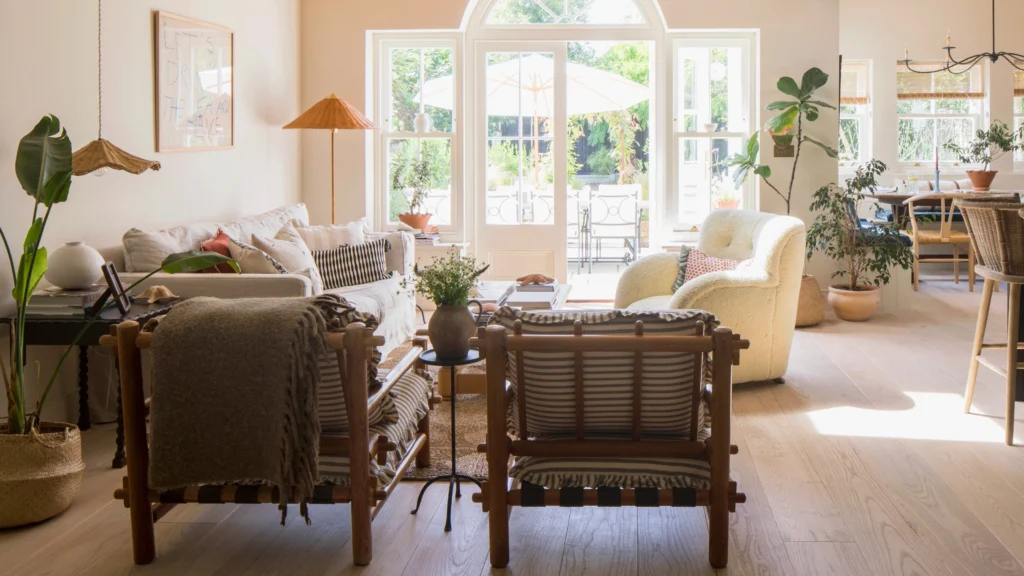
Why Neutral Does Not Mean Monochrome
Flatness occurs when a space relies on a single tone or finish without modulation. Successful neutral interior design embraces subtle gradation:
- Multiple shades within the same tonal family
- Contrasting surface textures (matte vs. polished)
- Organic materials balanced with refined metals
- Strategic shadow and light interplay
These nuances prevent visual fatigue while preserving serenity.
The Foundation: Fabric as Atmospheric Architecture
Textiles are often underestimated in neutral living room ideas, yet they are the primary vehicle for softness and depth. In a restrained palette, fabric becomes architectural—defining mood, acoustics, and tactile experience.
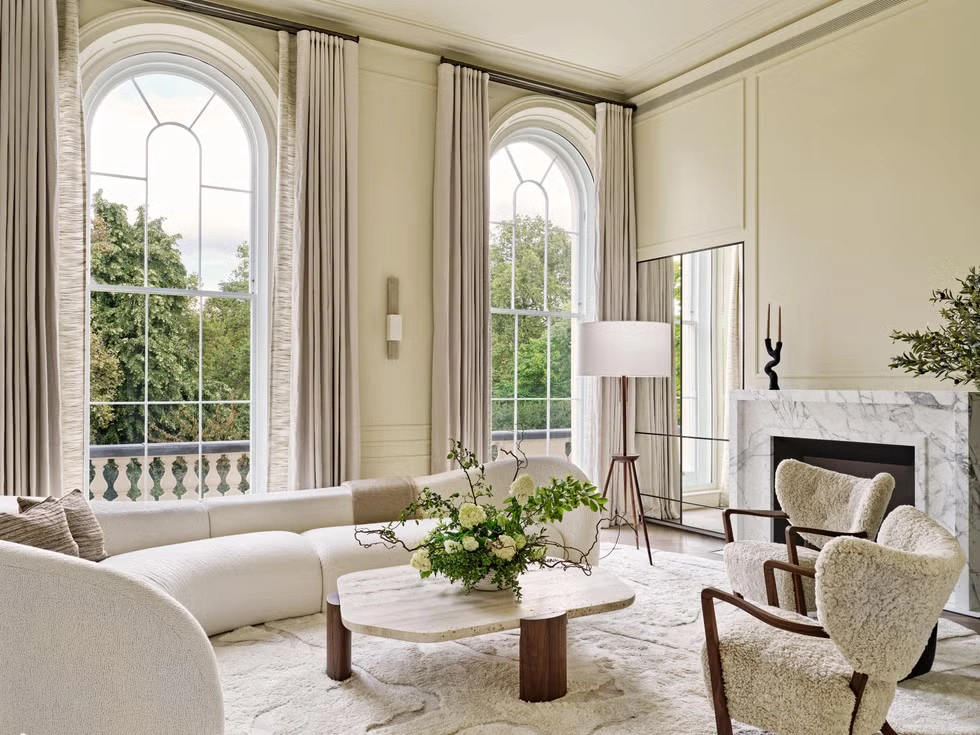
Layering Upholstery and Soft Furnishings
In contemporary neutral interiors, the interplay between linen, bouclé, wool, velvet, and cashmere introduces dimension without color contrast. Consider the following layering approach:
- Primary Upholstery: A tailored sofa in textured linen or soft wool blend.
- Secondary Seating: Bouclé or brushed cotton armchairs that subtly shift tone.
- Accent Textiles: Cushions in raw silk, alpaca, or fine knit to add micro-texture.
- Floor Anchoring: A handwoven rug in tonal gradations to ground the composition.
The result is a neutral interior design scheme that feels curated rather than clinical.
The Role of Drapery
Floor-to-ceiling drapery in sheer linen or layered gauze diffuses light, creating a soft atmospheric envelope. In high-end neutral living room ideas, drapery should never be an afterthought; it is a spatial filter that modulates brightness and enhances architectural lines.
For large-scale residences and luxury developments, combining sheer panels with heavier wool or silk-blend curtains allows for seasonal adaptability—an essential consideration in contemporary neutral interiors across diverse climates.
Wood: Organic Warmth and Structural Integrity
If fabric introduces softness, wood provides grounding. The strategic integration of timber is central to elevating neutral interior design beyond minimalism.
Embracing Grain and Tone Variation
Flatness often results from uniform finishes. Instead, contemporary neutral interiors benefit from varied wood expressions:
- White oak with visible grain for Scandinavian clarity
- Walnut for depth and quiet luxury
- Smoked or fumed finishes for contemporary sophistication
- Light ash to maintain luminosity in compact spaces
In refined neutral living room ideas, a sculptural coffee table in solid oak or walnut becomes both focal point and counterbalance to upholstered elements.
Architectural Wood Applications
Beyond furniture, wood can define walls, ceilings, and built-ins. Vertical slatted panels introduce rhythm, while fluted cabinetry adds shadow play. These architectural gestures reinforce the layered essence of neutral interior design, ensuring the palette feels dynamic rather than static.
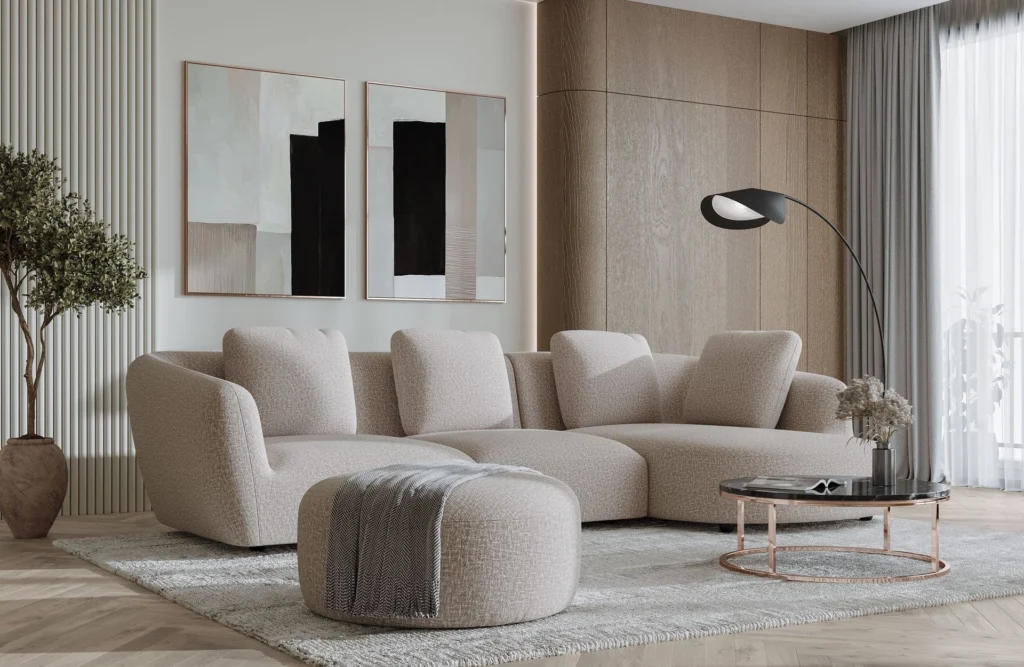
Metal: Light, Contrast, and Precision
Metal introduces tension and luminosity—two critical components in preventing visual monotony. In contemporary neutral interiors, metallic elements should be deliberate, not decorative excess.
Selecting the Right Finish
Each metal finish communicates a different design language:
- Brushed brass: Warmth and understated glamour
- Blackened steel: Graphic definition and modern contrast
- Polished chrome: Reflectivity and urban clarity
- Bronze: Depth and artisanal character
When integrated into lighting, table bases, or architectural detailing, these materials sharpen neutral living room ideas without overwhelming the palette.
The Power of Reflection
One reason neutral interior design can appear flat is insufficient interaction with light. Metal surfaces subtly reflect their surroundings, multiplying tonal variation. A brushed brass floor lamp or sculptural steel console introduces movement as daylight shifts—an essential quality in high-end contemporary neutral interiors.
Creating Dimension Through Contrast
Neutral does not imply absence of contrast; it simply reframes it. In sophisticated neutral living room ideas, contrast is expressed through:
- Matte walls against satin upholstery
- Rough-hewn wood beside polished stone
- Soft textiles paired with structured metal frames
- Light-toned rugs anchoring deeper wood finishes
This interplay ensures that neutral interior design remains visually engaging while preserving calm.
Spatial Layering: Foreground, Midground, Background
Architects and interior designers increasingly apply a cinematic approach to contemporary neutral interiors. Rather than treating the room as a single plane, they compose it in layers:
Background
Walls in warm greige or textured plaster establish a nuanced canvas for neutral interior design.
Midground
Sofas, armchairs, and shelving units define functional zones within neutral living room ideas.
Foreground
Sculptural tables, lighting, and curated objects add personality and refinement to contemporary neutral interiors.
This layered hierarchy introduces depth without relying on bold color statements.
Lighting as a Material
Lighting is often the silent partner in neutral interior design. Layered lighting—ambient, task, and accent—creates gradients that enhance materiality.
- Warm LED temperatures (2700–3000K) enhance wood tones.
- Concealed architectural lighting emphasizes texture on plaster or stone walls.
- Statement pendants in metal or glass become sculptural anchors in neutral living room ideas.
In luxury residences, programmable lighting systems further animate contemporary neutral interiors, adjusting mood from day to evening entertaining.
Curated Restraint: Editing for Impact
The most compelling neutral interior design projects share one quality: disciplined editing. Over-accessorizing flattens a space just as quickly as under-layering it.
Best Practices for Designers and Homeowners
- Select fewer, higher-quality pieces with strong material presence.
- Balance handcrafted elements with contemporary silhouettes.
- Allow negative space to frame statement furniture.
- Introduce art that complements rather than competes with the palette.
These principles elevate neutral living room ideas from trend-driven to timeless.
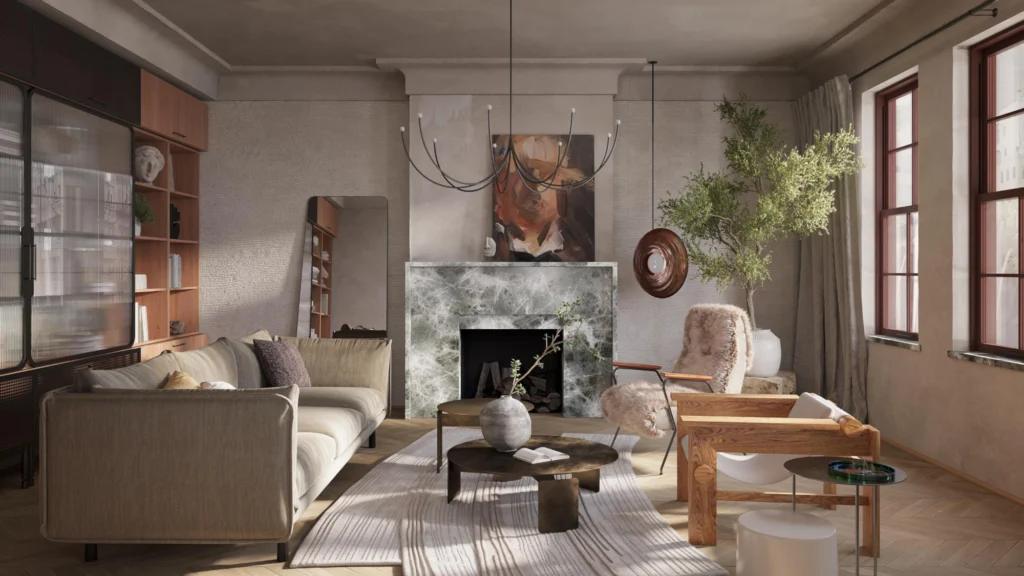
The Global Appeal of Contemporary Neutral Interiors
From European heritage properties to newly constructed waterfront residences, contemporary neutral interiors resonate because they transcend geography. They photograph beautifully, age gracefully, and accommodate evolving tastes.
For architects and developers, neutral interior design provides a flexible canvas that enhances property value and market appeal. For private clients, it offers a sanctuary—an environment where material richness replaces chromatic intensity.
Designing Depth Without Color Saturation
Neutrality is not the absence of expression; it is its refinement. When fabric, wood, and metal are layered with intention, neutral interior design acquires complexity, warmth, and architectural gravitas. Through tactile textiles, expressive timber, and precisely chosen metallic accents, neutral living room ideas become immersive experiences rather than subdued backdrops.
Ultimately, the success of contemporary neutral interiors lies in nuance. It is the subtle shift in tone, the quiet gleam of metal at dusk, the softness of woven fibers against natural wood grain. In these carefully calibrated contrasts, neutrality reveals its true power: timeless sophistication with enduring depth.