Marrakech Riads represent one of the most compelling intersections of architecture, craftsmanship, and sensory design in the world of luxury interiors. Rooted in Moroccan tradition yet increasingly reinterpreted for contemporary living, these inward-focused homes offer a unique spatial experience defined by privacy, texture, and artisanal richness. Moreover, riads are not simply architectural typologies—they are immersive environments where light, material, and proportion converge. For designers and architects, they provide a masterclass in how craftsmanship and spatial intimacy can elevate residential design into something both timeless and deeply atmospheric.
Architectural Essence of Marrakech Riads
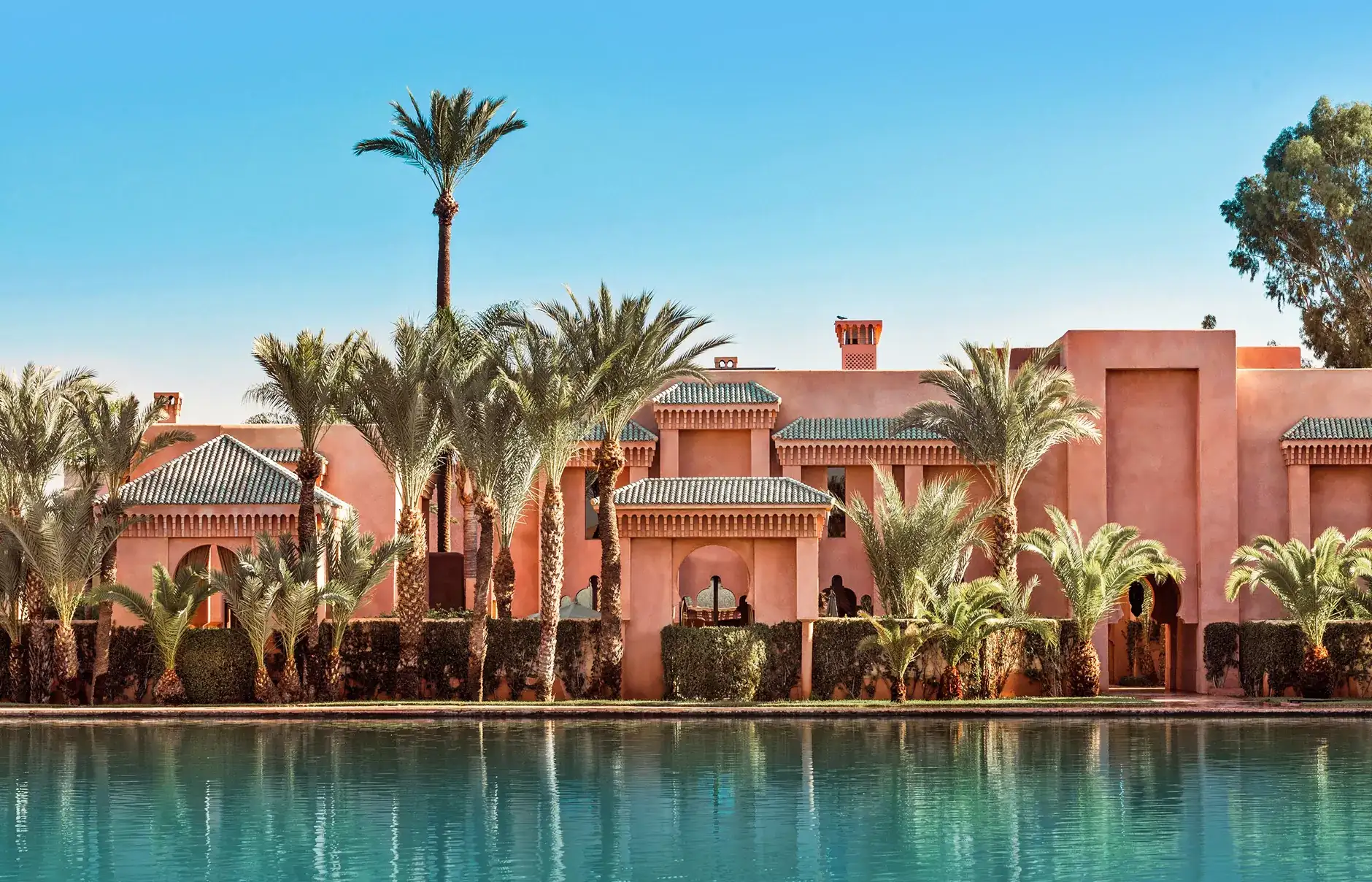
The defining features of Marrakech Riads are shaped by both cultural and environmental considerations. Key architectural characteristics include:
- Central courtyards that act as the heart of the home
- Inward-facing layouts that prioritize privacy and serenity
- Thick walls that regulate temperature and enhance comfort
- Vertical spatial organization across multiple levels
- Integration of water elements such as fountains for cooling and ambiance
Together, these elements create a sanctuary-like environment, where architecture supports both climate responsiveness and a refined sense of enclosure.
Spatial Experience and Sensory Design
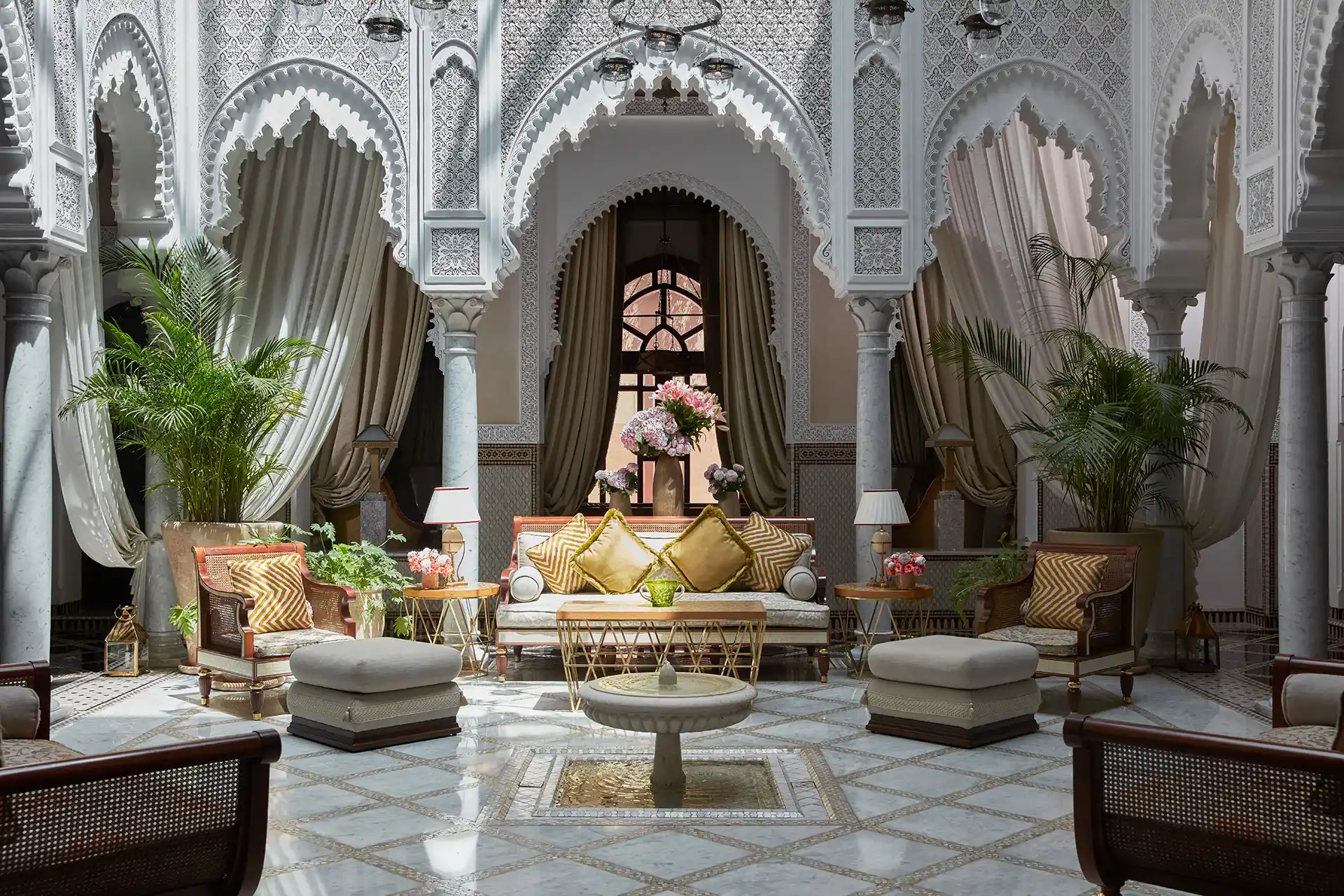
The spatial experience within Marrakech Riads is deeply immersive, emphasizing a gradual unfolding of space. Upon entry, the transition from narrow streets into open courtyards creates a powerful contrast that heightens perception. Light filters through carved screens and arches, casting intricate shadows that shift throughout the day. Furthermore, the layering of spaces—from intimate rooms to expansive terraces—encourages movement and discovery. This orchestration of scale, light, and sequence transforms the home into a sensory journey, where every transition feels intentional and emotionally engaging.
Materials and Craftsmanship in Marrakech Riads
Materiality is central to the identity of Marrakech Riads, reflecting centuries of artisanal expertise. Designers often highlight:
- Tadelakt plaster finishes known for their smooth, polished texture
- Zellige tilework featuring intricate geometric patterns
- Carved cedar wood used in ceilings and doors
- Wrought iron detailing for screens and fixtures
- Natural stone surfaces that add depth and durability
These materials are not merely decorative; they embody craftsmanship and cultural heritage, contributing to interiors that feel authentic, tactile, and richly layered.
Marrakech Riads and the Language of Texture
Texture is perhaps the most defining characteristic of Marrakech Riads, shaping both visual and tactile experiences. Surfaces are rarely flat or uniform; instead, they reveal subtle variations that capture light and shadow. Walls finished in tadelakt offer a soft, almost luminous quality, while handcrafted tiles introduce rhythm and complexity. Moreover, textiles such as woven rugs and embroidered fabrics add warmth and softness. This interplay of textures creates interiors that feel alive and dynamic, demonstrating how material richness can elevate even the simplest architectural forms into expressions of luxury.
Furniture and Decorative Elements
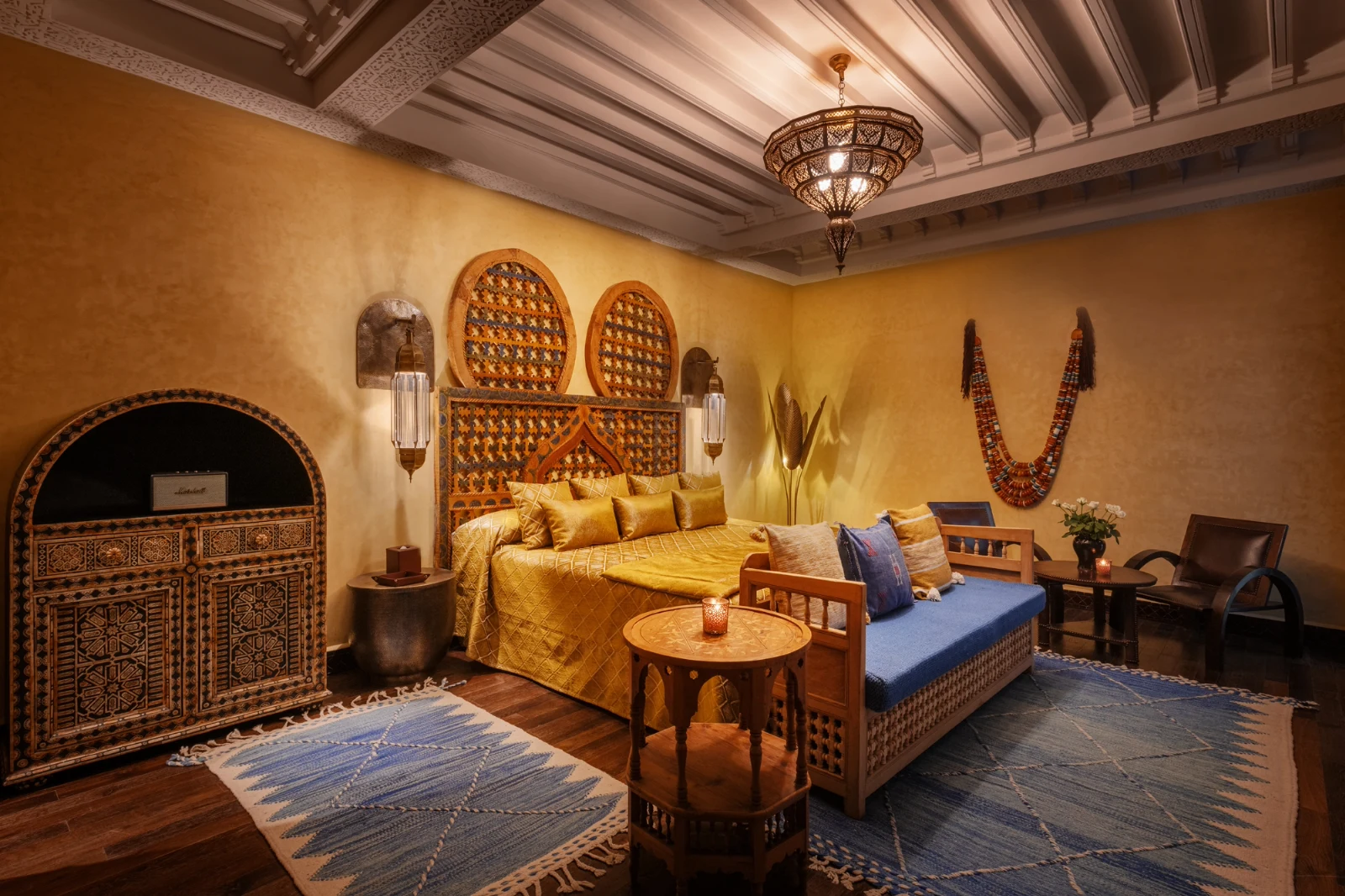
Furniture within Marrakech Riads is carefully curated to complement the architectural framework. Designers often focus on:
- Low-profile seating that enhances spatial openness
- Handcrafted wooden pieces with intricate carvings
- Layered textiles that add comfort and visual richness
- Decorative lanterns that create ambient lighting
- Artisanal accessories that reflect local craftsmanship
These elements work together to create interiors that feel cohesive and intimate, where every object contributes to the overall narrative of the space.
Light and Shadow as Design Tools
Light plays a transformative role in Marrakech Riads, shaping the atmosphere throughout the day. Natural light enters through courtyards, skylights, and lattice screens, creating a dynamic interplay of brightness and shadow. This filtered illumination softens the intensity of the sun while enhancing the textures of walls and materials. Additionally, artificial lighting—often in the form of lanterns and concealed fixtures—adds warmth during the evening. As a result, light becomes an active design element, continuously redefining the spatial experience and reinforcing the sense of intimacy.
Marrakech Riads in Contemporary Luxury Interiors
In contemporary design, Marrakech Riads serve as a source of inspiration for creating refined yet culturally grounded interiors. Designers often reinterpret traditional elements through a modern lens by incorporating:
- Simplified geometric patterns for a more minimal aesthetic
- Neutral color palettes that highlight material textures
- Contemporary furniture that contrasts with traditional architecture
- Open-plan adaptations while preserving courtyard concepts
- Integration of modern amenities without disrupting authenticity
This approach allows designers to honor tradition while meeting the expectations of modern luxury living.
High-End Residential Trends Inspired by Riads
The influence of Marrakech Riads extends beyond Morocco, shaping global luxury design trends. Notable influences include:
- Emphasis on inward-focused layouts for privacy and tranquility
- Increased use of handcrafted materials and artisanal techniques
- Integration of courtyards and outdoor living spaces
- Focus on sensory design, including texture and light
- Preference for timeless, culturally inspired aesthetics
These trends highlight how riads continue to inform contemporary design, offering valuable insights into creating meaningful and enduring interiors.
Balancing Tradition and Modern Comfort
One of the key challenges in designing riad-inspired interiors is balancing tradition with modern comfort. Designers must carefully integrate contemporary systems and amenities without compromising the authenticity of the space. This often involves subtle interventions, such as concealed technology and refined material transitions. Moreover, maintaining the integrity of craftsmanship is essential, ensuring that new elements complement rather than overshadow traditional features. When executed thoughtfully, this balance results in interiors that feel both authentic and functional, meeting the demands of modern luxury while preserving cultural depth.
Outdoor-Indoor Harmony in Riad Design
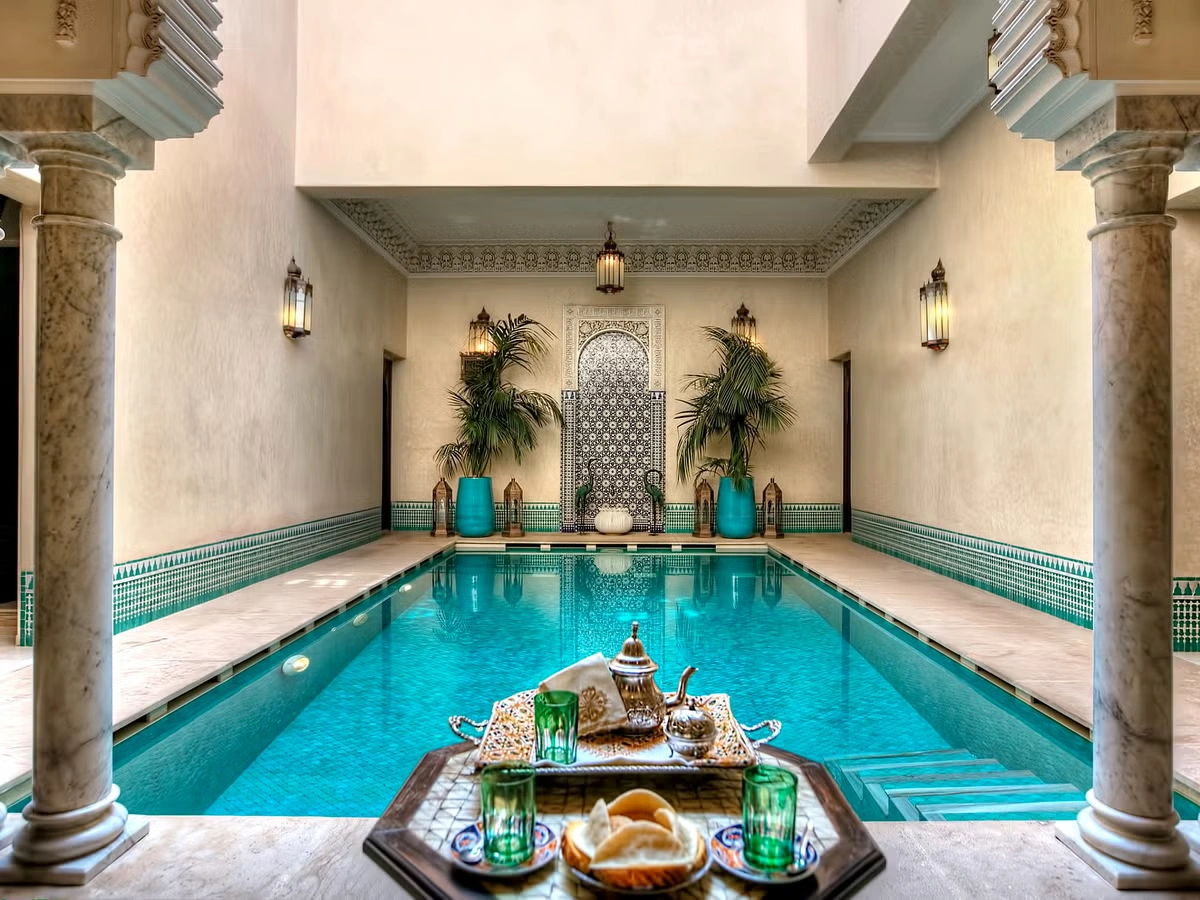
The relationship between indoor and outdoor spaces is fundamental to the success of Marrakech Riads. Designers typically emphasize:
- Central courtyards that act as natural extensions of interior spaces
- Use of greenery to enhance ambiance and air quality
- Water features that introduce movement and sound
- Consistent material palettes across indoor and outdoor areas
- Rooftop terraces that provide additional living space
This seamless integration creates a holistic environment, where boundaries between inside and outside are softened, enhancing both comfort and aesthetic appeal.
Conclusion
Marrakech Riads offer a timeless blueprint for luxury interior design, demonstrating how craftsmanship, texture, and spatial intimacy can transform residential environments. By embracing their principles—layered materials, thoughtful light, and inward-focused layouts—designers can create spaces that feel both sophisticated and deeply personal. As global design continues to evolve, the influence of riads remains strong, inspiring new interpretations of luxury rooted in authenticity. For architects and designers, exploring this typology opens the door to richer, more meaningful design experiences.