Kit Kemp
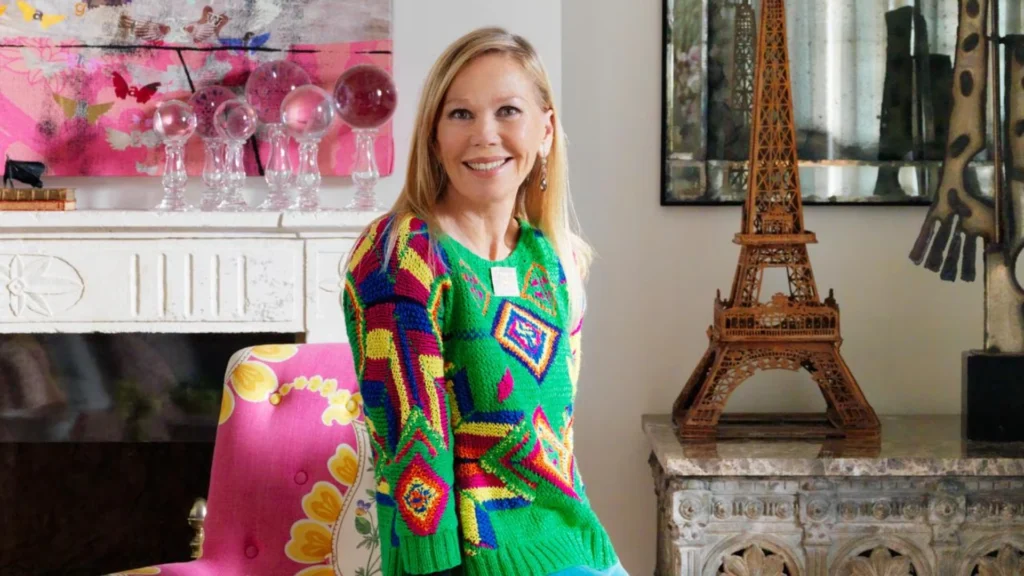
Few designers have shaped the language of British interior design with as much personality and imagination as Kit Kemp. Known internationally for her joyful layering of textiles, bold use of color, and masterful pattern combinations, Kemp has created interiors that feel simultaneously playful, cultivated, and deeply personal. Whether designing private residences or the celebrated Firmdale Hotels, her approach celebrates individuality, craftsmanship, and narrative-driven spaces.
In an era when minimalism often dominates architectural discourse, Kemp’s work offers an alternative vision—one rooted in richness, texture, and cultural storytelling. Her interiors demonstrate how pattern and layering can transform a home into a sophisticated, lived-in environment that reflects both heritage and contemporary creativity.
For architects, interior designers, and collectors of exceptional design, the homes shaped by Kit Kemp offer valuable lessons about composition, contrast, and emotional resonance. The careful balance between structure and spontaneity reveals a philosophy where decoration is not excess but rather a language of identity.
The Design Philosophy of Kit Kemp
At the core of Kit Kemp’s work lies a belief that interiors should evoke happiness and authenticity. Rather than adhering to rigid stylistic rules, she approaches each project with curiosity, blending traditional craftsmanship with modern sensibility. This perspective has helped redefine the narrative of British interior design, moving it beyond historical formality toward a more expressive and eclectic future.
Kemp frequently speaks about interiors as storytelling environments. Every textile, artwork, or object contributes to the narrative of a space. Her homes often feel layered over time—even when newly completed—because they incorporate artisanal elements, vintage finds, and globally inspired materials.
Key Principles Behind Her Layered Aesthetic
- Emotional warmth over strict minimalism
- Fearless mixing of patterns and textures
- Celebration of craft and handmade objects
- Balance between contemporary design and heritage
- Spaces designed to spark joy and conversation
These principles have positioned Kit Kemp as one of the most influential voices in modern British interior design, admired by architects and collectors worldwide.
The Art of Pattern: A Signature of British Interior Design
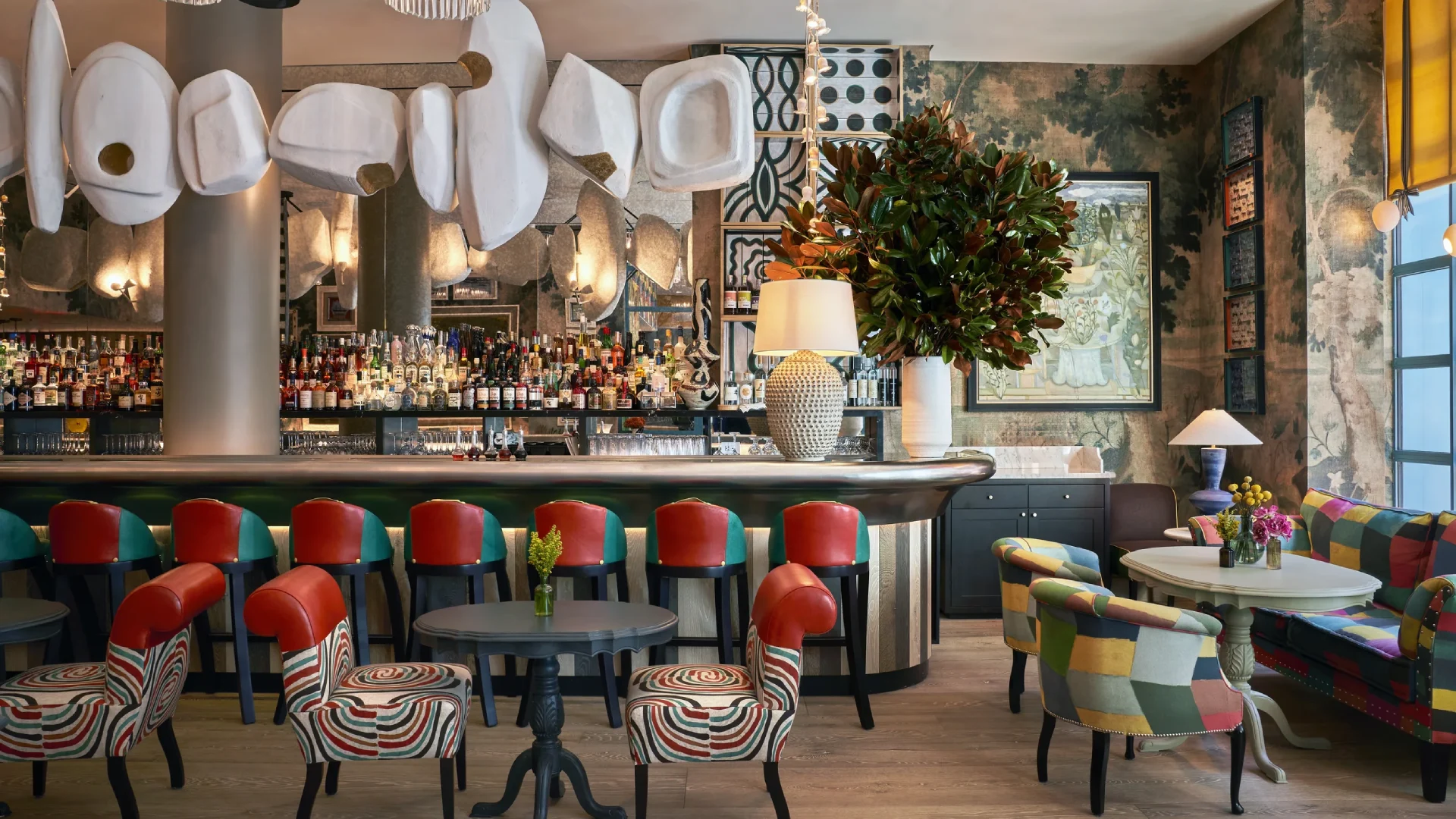
Pattern is the defining language in the work of Kit Kemp. Rather than using it sparingly, she embraces pattern as the structural rhythm of an interior. Florals, geometrics, stripes, and folkloric motifs appear together in dynamic harmony, creating spaces that feel vibrant yet cohesive.
This fearless approach reflects the historical roots of British interior design, where textiles, wallpapers, and decorative arts have long played a central role. Yet Kemp modernizes this tradition by combining patterns at varying scales and intensities.
How Pattern Creates Visual Dialogue
The secret behind Kemp’s success lies in contrast and rhythm. Instead of matching patterns, she orchestrates them—much like a composer arranging instruments in an orchestra.
- Large-scale prints anchor a room and provide visual drama
- Medium-scale textiles soften transitions between furniture and architecture
- Small-scale patterns add depth and intricate detail
- Solid colors allow the eye to rest between decorative elements
This balance ensures that even highly decorated spaces remain refined rather than chaotic—a hallmark of Kit Kemp’s interpretation of British interior design.
Layering Textures for Dimensional Living Spaces
Beyond pattern, texture plays an equally important role in the interiors created by Kit Kemp. Layering materials—linen, wool, velvet, wood, ceramic, and woven fibers—introduces tactile richness that elevates the sensory experience of a home.
For Kemp, texture is not merely decorative; it brings depth and authenticity. A handwoven rug beside a lacquered table, or embroidered cushions against a tailored sofa, creates a layered narrative of craftsmanship and comfort.
The effect is particularly powerful in residential environments, where layered textures evoke warmth and intimacy without sacrificing elegance.
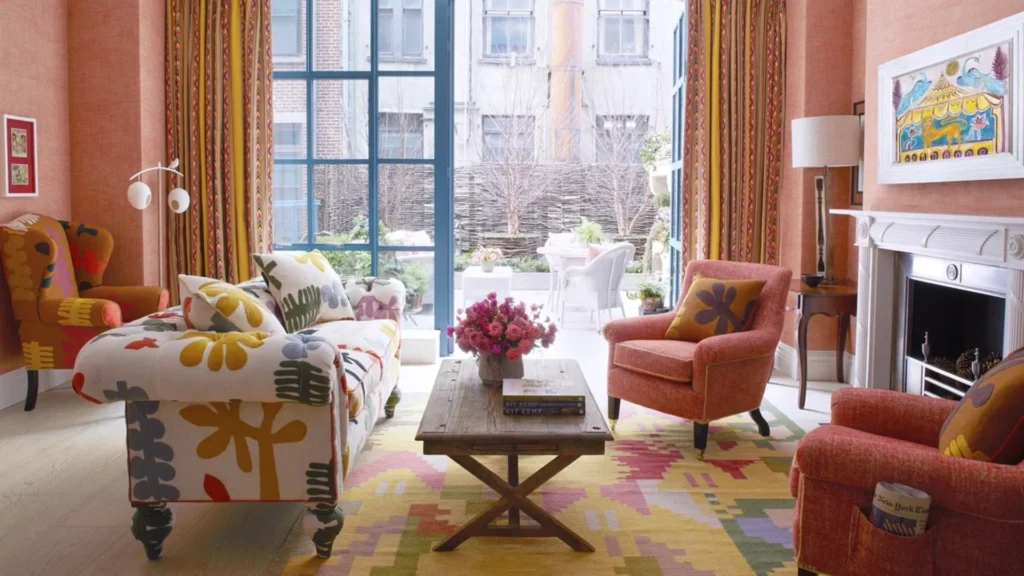
Textural Strategies Frequently Seen in Kemp’s Homes
- Layered rugs combining antique and contemporary designs
- Handmade ceramics and sculptural decorative objects
- Textile-rich seating with patterned upholstery
- Natural materials such as oak, stone, and woven grasses
- Soft lighting that highlights surfaces and fabrics
These techniques demonstrate how the principles of British interior design can evolve into sophisticated yet welcoming living spaces.
Color as a Framework for Layering
Color acts as the connective tissue in the interiors designed by Kit Kemp. While patterns and textures create complexity, color provides cohesion. Her palettes often feature vibrant combinations—turquoise with coral, mustard with indigo, or soft pink with forest green.
These palettes draw inspiration from art, nature, and travel. Kemp frequently references folk art, tribal textiles, and global craft traditions when assembling color stories for a home.
Importantly, color is rarely confined to walls. It appears throughout the interior—on upholstery, artwork, ceramics, and architectural details—allowing spaces to feel immersive rather than compartmentalized.
Balancing Boldness and Sophistication
Despite the apparent exuberance, Kemp’s interiors remain elegant because color is carefully structured. She often relies on a disciplined framework:
- Establish a dominant color family
- Introduce two or three contrasting tones
- Repeat key colors across textiles and accessories
- Anchor the composition with neutral architectural elements
This method ensures that layered patterns remain visually harmonious—a strategy frequently admired within contemporary British interior design.
The Role of Craft and Artisanship
Another defining characteristic of interiors created by Kit Kemp is the celebration of craft. Handmade objects—embroidered fabrics, carved wood, ceramics, and folk art—appear throughout her projects.
Kemp’s collaborations with textile artists and craftspeople demonstrate how design can support cultural preservation while enriching residential environments. Each handcrafted element contributes to the layered narrative of a home.
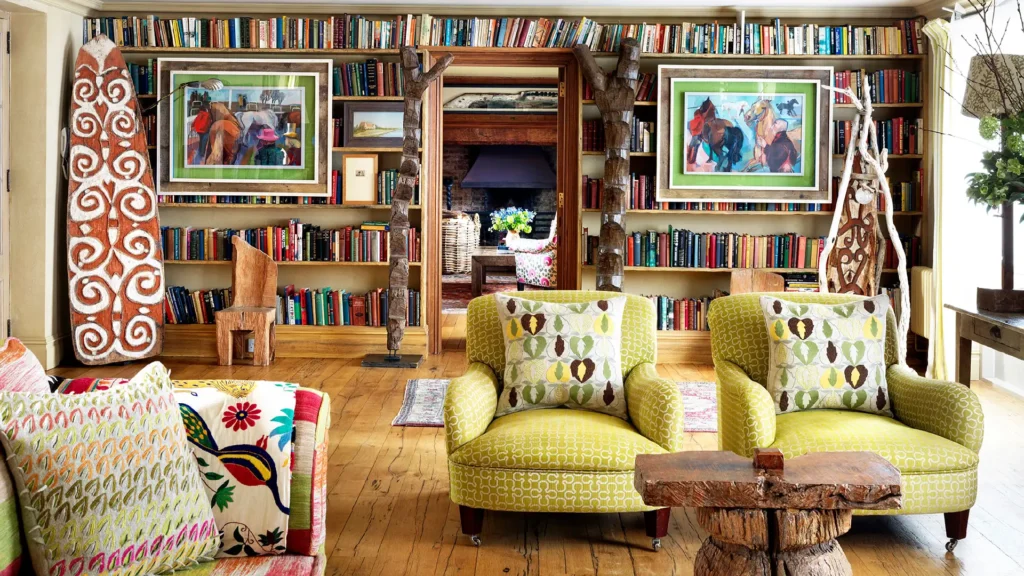
Creating Personality in Residential Interiors
For Kit Kemp, the most successful homes are those that reflect the personality of their owners. Pattern and layering become tools for self-expression rather than purely decorative strategies.
Rather than imposing a rigid aesthetic, Kemp encourages clients to embrace meaningful objects—art collections, travel souvenirs, heirloom textiles—and integrate them into the design narrative.
Ways to Introduce Layered Personality
- Display curated art collections alongside contemporary pieces
- Combine antique furniture with modern design
- Introduce handcrafted textiles with cultural significance
- Layer decorative accessories to create visual storytelling
- Allow color and pattern to reflect personal taste
Through this approach, the home becomes a reflection of identity rather than a showroom environment.
Lessons for Architects and Designers
The influence of Kit Kemp extends far beyond hospitality interiors. Architects and interior designers studying her work can extract valuable insights about creating emotionally engaging environments.
Design Lessons from Kit Kemp
- Embrace complexity — layered interiors can still feel cohesive
- Use pattern strategically to create rhythm and movement
- Prioritize craftsmanship to enrich visual and tactile experience
- Allow color to unify diverse elements
- Design for personality and storytelling
These principles reveal how contemporary British interior design can merge tradition, artistry, and innovation.
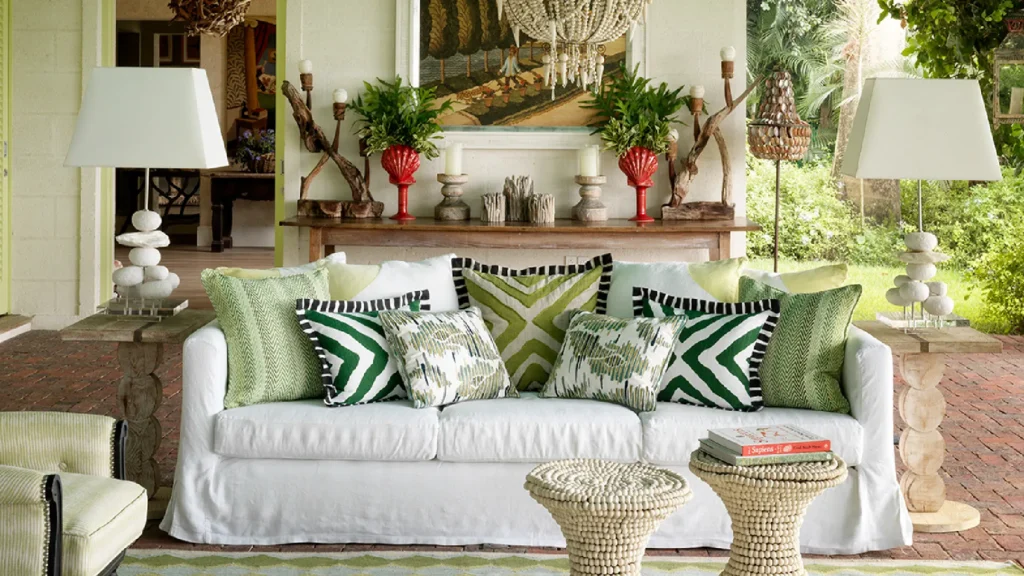
The Enduring Influence of Kit Kemp
Today, Kit Kemp remains one of the most distinctive voices in global interior design. Her work challenges the notion that luxury must be restrained or minimal. Instead, it demonstrates that richness, color, and pattern—when thoughtfully composed—can create spaces that are both sophisticated and joyful.
Through her layered aesthetic, Kemp has reimagined the possibilities of British interior design, proving that interiors can be expressive without losing elegance. For architects, designers, and discerning homeowners, her projects offer a compelling reminder that great interiors are not simply arranged—they are composed, layered, and lived in.
Ultimately, the homes designed by Kit Kemp illustrate a powerful design philosophy: when pattern, color, texture, and craftsmanship are orchestrated with confidence, interiors transcend decoration and become immersive works of art.