

In the rarefied world of contemporary design, where excess often masquerades as luxury, Joseph Dirand stands apart. His work embodies a rigorous, almost philosophical commitment to restraint—an approach that has come to define a new chapter in architectural minimalism. Rooted in classical discipline yet unmistakably modern, Dirand’s interiors articulate a refined vision of Parisian luxury interiors, where space, proportion, and materiality speak more eloquently than ornament.
For architects, designers, and discerning collectors alike, Joseph Dirand’s projects offer more than visual pleasure. They propose a way of living—measured, intentional, and deeply attuned to architectural heritage. In Paris, a city saturated with history and stylistic bravura, Dirand’s minimalist language feels both radical and inevitable.
Joseph Dirand: A Parisian Architect of Discipline and Restraint
Born in Paris and educated at the École Nationale Supérieure d’Architecture de Paris-Belleville, Joseph Dirand developed his practice at the intersection of classical architecture and contemporary minimalism. From the outset, his work rejected superficial trends in favor of structural clarity and timeless composition.
Unlike decorative minimalism, which often relies on emptiness for effect, Joseph Dirand’s architectural minimalism is rooted in precision. Every line is deliberate; every surface calibrated. His Parisian luxury interiors demonstrate how reduction, when guided by architectural intelligence, can amplify rather than diminish emotional impact.
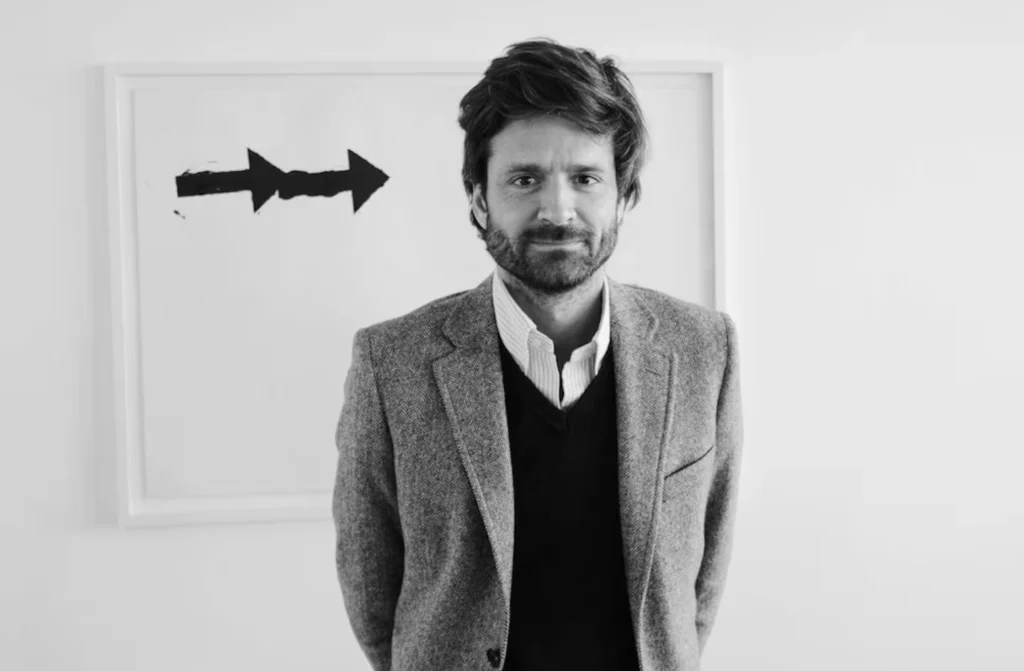
The DNA of Architectural Minimalism in Dirand’s Work
At the core of Dirand’s philosophy lies an almost monastic respect for architecture itself. Walls are not backdrops but protagonists. Floors, ceilings, and thresholds are treated as continuous planes that guide movement and perception.
Key characteristics define his approach:
- Monumental simplicity inspired by classical architecture.
- Strict symmetry and proportion as organizing principles.
- Reduction of visual noise to heighten spatial awareness.
- Material honesty, allowing stone, wood, and metal to express their intrinsic qualities.
This disciplined vocabulary positions Joseph Dirand as a central figure in contemporary architectural minimalism, particularly within the context of Parisian luxury interiors.
Parisian Luxury Interiors: Between Heritage and Modernity
Designing in Paris requires a sensitive dialogue with history. Haussmannian apartments, hôtels particuliers, and postwar modernist buildings all carry distinct architectural identities. Joseph Dirand’s genius lies in his ability to intervene without erasure.
Rather than competing with ornate moldings or historic proportions, his minimalist interventions create contrast through calm. In many Parisian luxury interiors, Dirand strips spaces back to their architectural bones, revealing volumes that feel both ancient and contemporary.
This balance between reverence and reinterpretation resonates strongly with global clients seeking authenticity rather than spectacle.
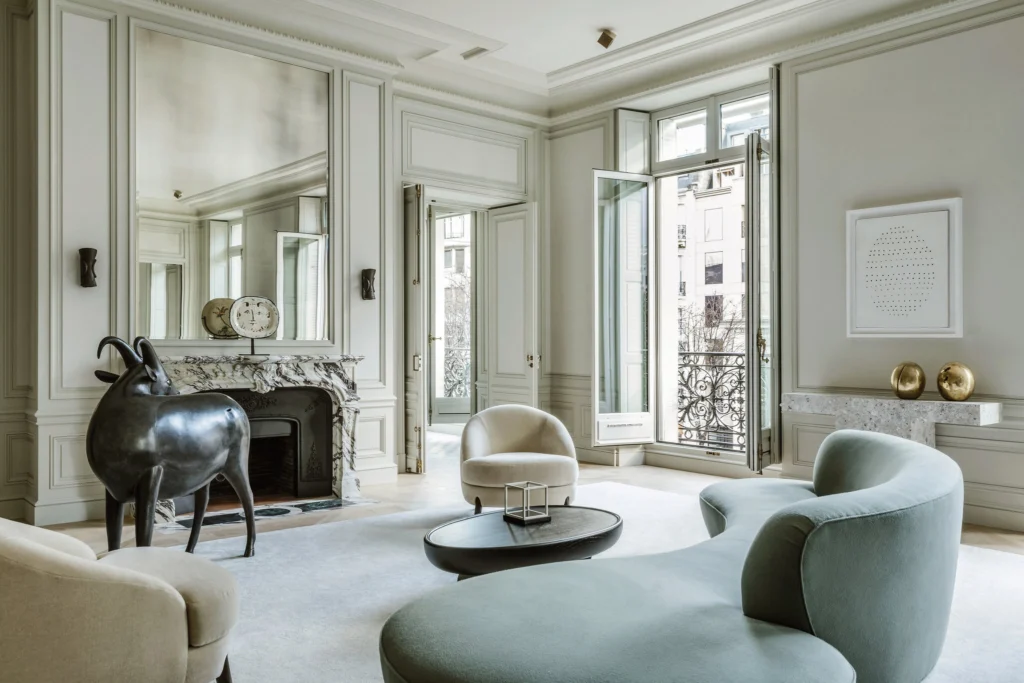
Materiality as Silent Luxury
In Joseph Dirand’s interiors, luxury is never loud. It is conveyed through materials selected for their density, tactility, and aging potential. Stone—often limestone or marble—features prominently, lending gravity and permanence. Dark-stained woods introduce warmth without ornament, while brushed metals add subtle reflectivity.
Importantly, materials are rarely mixed excessively. A limited palette reinforces the architectural minimalism that defines Dirand’s aesthetic, allowing light and shadow to become active design elements.
This approach aligns with a broader shift in Parisian luxury interiors, where understated material excellence increasingly replaces overt decoration.
Light, Shadow, and Spatial Rhythm
Light plays a crucial role in Joseph Dirand’s work. Natural illumination is carefully framed, often softened through architectural screens or deep-set openings. Artificial lighting, meanwhile, is integrated discreetly, reinforcing volumes rather than highlighting objects.
The result is a spatial rhythm that unfolds gradually. Movement through a Dirand interior feels choreographed—transitions are deliberate, and moments of compression give way to expansive volumes. This cinematic quality elevates architectural minimalism into an experiential art form.
Furniture as Architecture
Beyond interiors, Joseph Dirand’s furniture and object designs further articulate his architectural ethos. Tables, seating, and lighting are conceived as extensions of space rather than standalone pieces.
Characteristics of his furniture language include:
- Geometric purity echoing architectural forms.
- Structural legibility with no concealed mechanisms.
- Material continuity between interior architecture and furnishings.
In Parisian luxury interiors, this holistic approach ensures coherence. Furniture does not decorate space—it completes it.
Global Influence Rooted in Paris
While deeply Parisian in spirit, Joseph Dirand’s influence extends far beyond France. His projects span London, New York, Miami, and the Middle East, yet they retain a consistent architectural language.
What travels globally is not a style but a methodology: architectural minimalism as a framework for luxury living. This universality explains Dirand’s appeal among international professionals and high-net-worth individuals who value discretion and cultural depth.
As noted by Architectural Digest, Dirand’s work exemplifies a new luxury paradigm—one defined by calm authority rather than visual excess.
Architectural Minimalism as Cultural Statement
In an era of accelerated consumption and visual saturation, Joseph Dirand’s interiors propose an alternative. Architectural minimalism becomes a cultural stance—a refusal of the ephemeral in favor of permanence.
This philosophy resonates strongly in Paris, where intellectual rigor and aesthetic discipline have long shaped creative production. Dirand’s Parisian luxury interiors thus feel less like design statements and more like architectural essays—precise, measured, and enduring.
Why Joseph Dirand Matters Today
The relevance of Joseph Dirand extends beyond aesthetics. His work addresses contemporary concerns around sustainability, longevity, and meaning. By prioritizing durable materials, timeless proportions, and spatial clarity, his architectural minimalism inherently resists obsolescence.
For clients and professionals alike, this approach offers reassurance in uncertain times. Luxury, in Dirand’s world, is not about accumulation but about refinement.
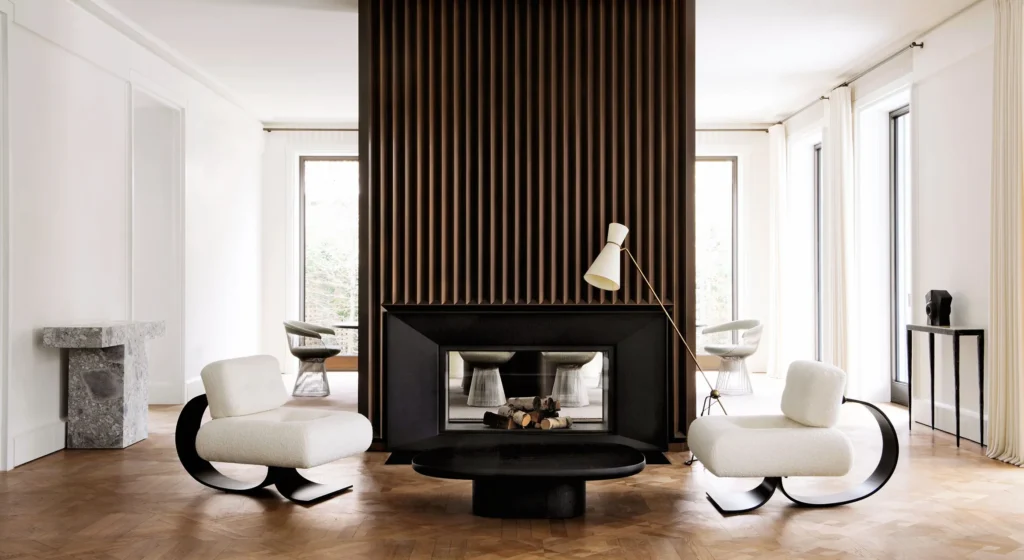
Lessons for Architects and Designers
Joseph Dirand’s practice offers valuable insights for the global design community:
- Architecture first: Let structure and proportion lead design decisions.
- Edit relentlessly: Remove elements that do not serve the spatial narrative.
- Trust materials: Quality speaks louder than decoration.
- Design for time: Create spaces that age gracefully.
These principles, while demanding, underpin the enduring appeal of Parisian luxury interiors shaped by architectural minimalism.
The Future of Parisian Luxury Interiors
As luxury continues to evolve, the influence of Joseph Dirand is likely to deepen. His work anticipates a future where understatement defines prestige and where architecture regains primacy over surface design.
In Paris and beyond, architectural minimalism is no longer a niche—it is becoming a benchmark for thoughtful, culturally grounded luxury.
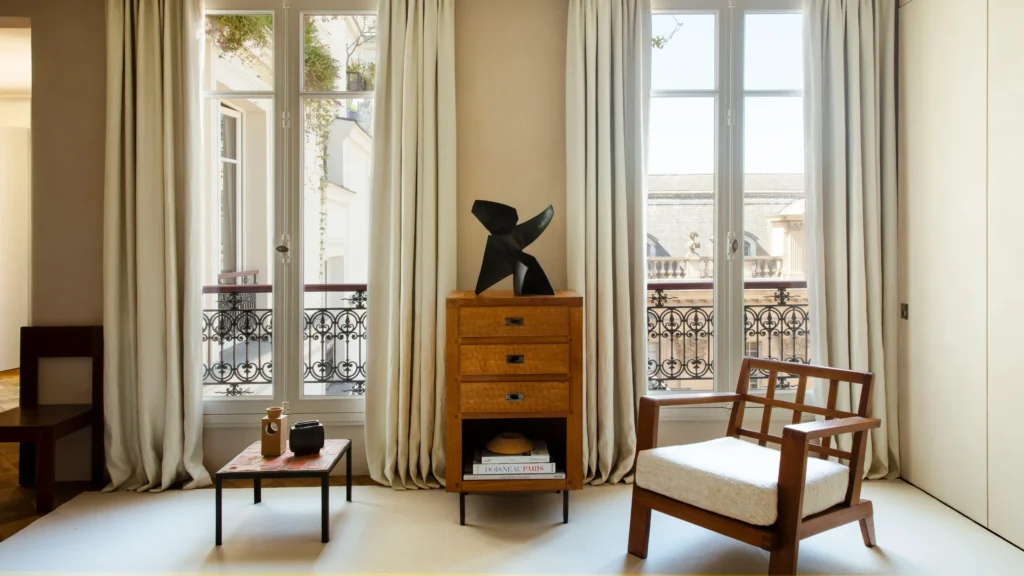
The Quiet Authority of Joseph Dirand
Joseph Dirand does not seek to impress through spectacle. Instead, his work commands attention through silence, proportion, and material truth. In the landscape of Parisian luxury interiors, his architectural minimalism represents both continuity and progression—a bridge between classical discipline and contemporary living.
For those who understand that true luxury is felt rather than displayed, Joseph Dirand’s architecture offers a compelling, enduring vision—one that redefines what it means to live well in the modern world.