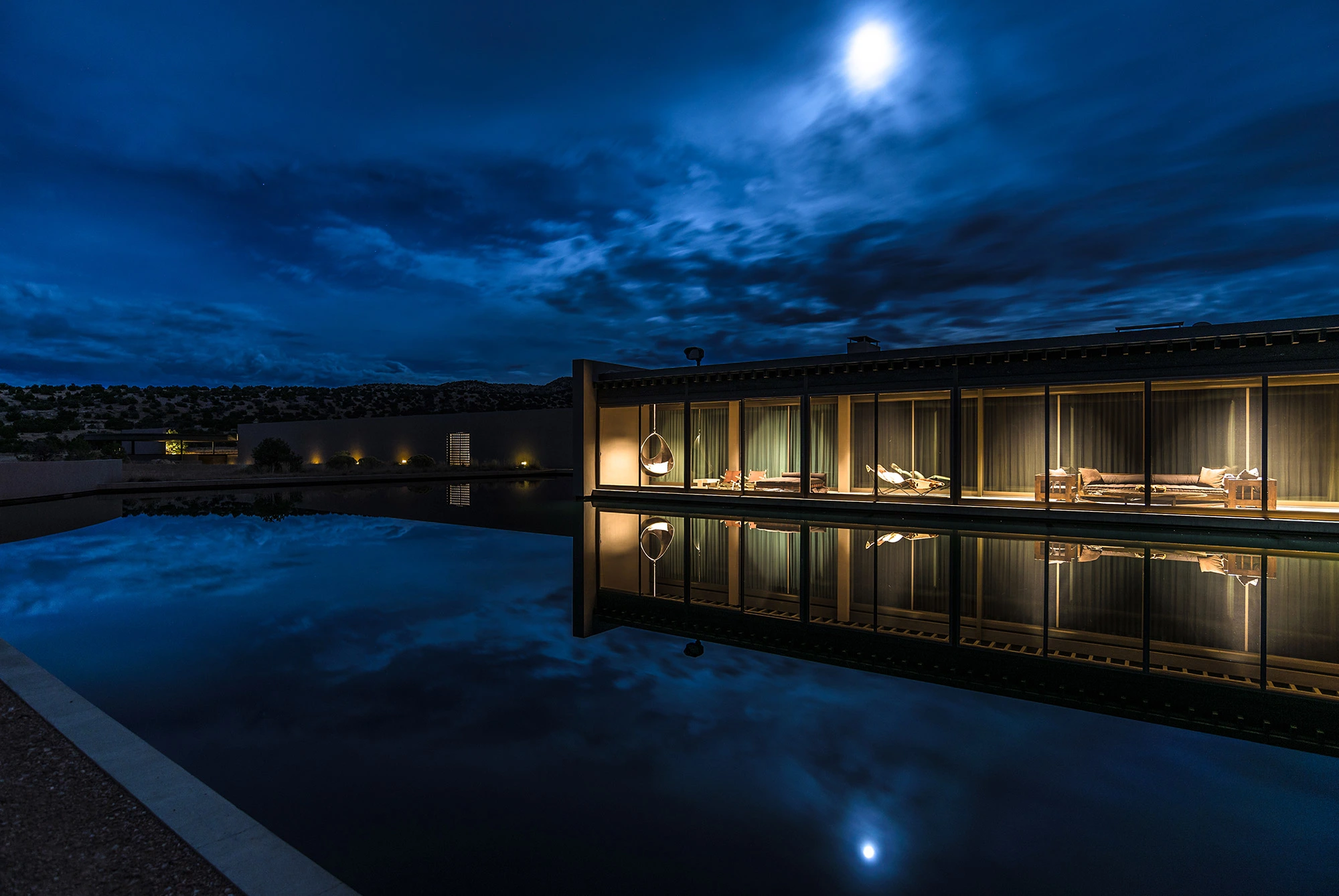

Set against the vast landscape of New Mexico, Tom Ford’s Ranch Estate at Cerro Pelon Ranch stands as one of the most compelling examples of contemporary desert architecture and luxury design. Designed by renowned Japanese architect Tadao Ando, the estate merges monumental minimalism with the dramatic natural environment of the American Southwest. For interior designers, architects, and luxury design studios, the property offers a masterclass in spatial restraint, material purity, and architectural atmosphere. Rather than relying on ornamentation, the estate achieves luxury through proportion, silence, light, and an exceptional relationship with the desert landscape.
Cerro Pelon Ranch and the Desert Landscape
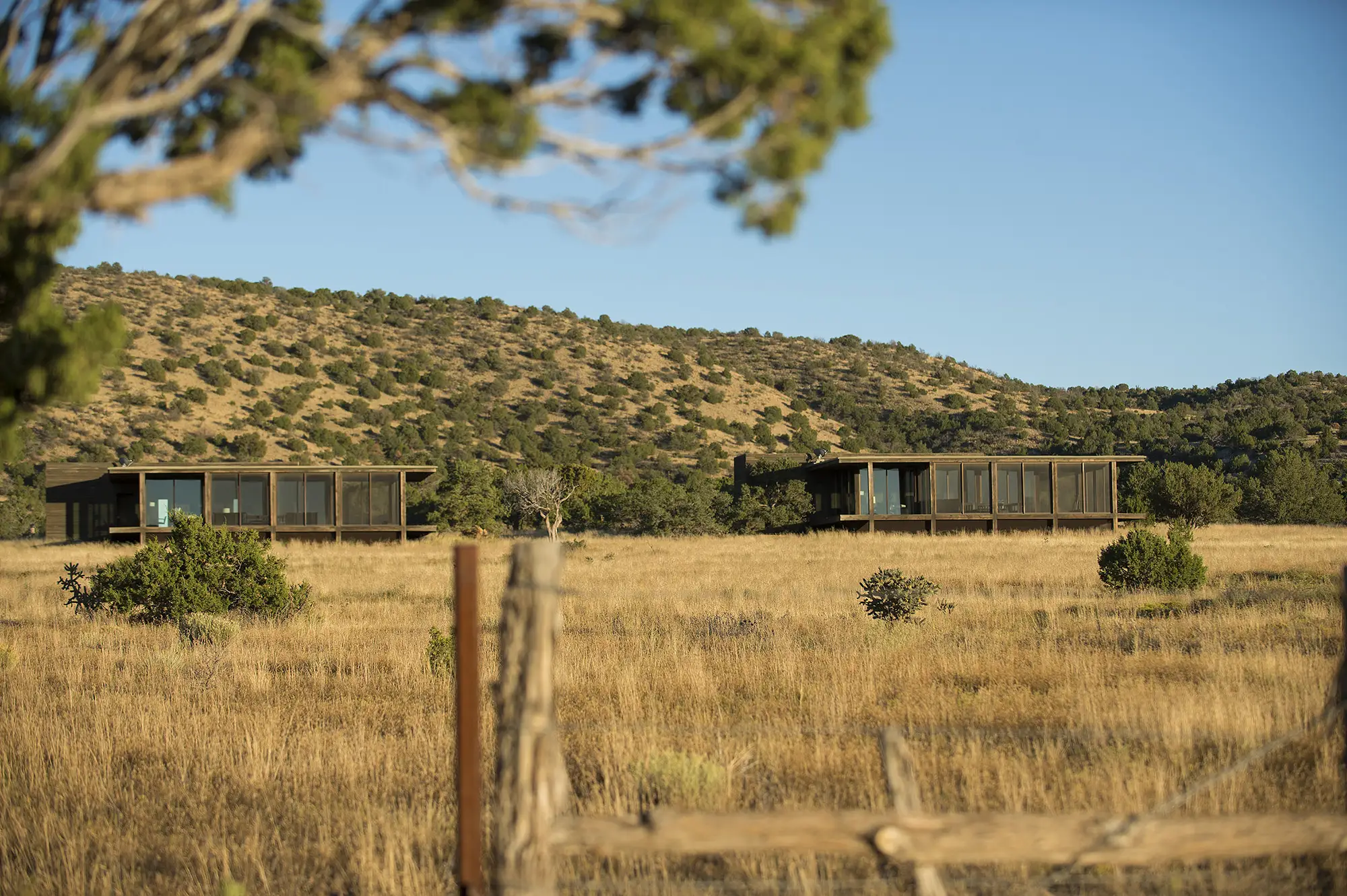
Located in New Mexico, Cerro Pelon Ranch extends across thousands of acres of open desert terrain, creating a setting defined by isolation, horizon lines, and changing natural light. The estate itself is deeply integrated into this environment, allowing architecture and landscape to coexist seamlessly.
Rather than dominating the site, the design responds to the surrounding topography with low horizontal forms and restrained geometries. This sensitivity to place is central to the project’s impact. The ranch demonstrates how contemporary luxury architecture can amplify the emotional power of natural environments while maintaining a profound sense of calm and permanence.
Tadao Ando’s Architectural Language
The architectural identity of Tom Ford’s Ranch Estate reflects the unmistakable philosophy of Tadao Ando:
- Minimalist forms with precise geometric composition
- Extensive use of smooth concrete surfaces
- Strong relationships between light and shadow
- Water elements that reinforce reflection and stillness
- Spatial sequences designed around contemplation
These principles create an environment that feels meditative and monumental simultaneously, reinforcing the emotional depth of the architecture.
Minimalism as Luxury
One of the most striking aspects of Tom Ford’s Ranch Estate is its interpretation of luxury through minimalism. Instead of decorative excess, the project emphasizes clarity, restraint, and material precision.
The interiors are intentionally quiet, allowing proportion and texture to become the primary sources of visual richness. Large open spaces, uninterrupted surfaces, and carefully controlled lighting establish a sense of serenity rarely found in contemporary luxury homes. This approach demonstrates how minimalism, when executed with exceptional craftsmanship, can create environments that feel deeply sophisticated and emotionally immersive.
Materiality and Architectural Texture
Material selection plays a defining role in shaping the atmosphere of the estate. Concrete, wood, glass, and water are used with remarkable discipline, allowing each material to retain its intrinsic character.
- Concrete surfaces that emphasize permanence and purity
- Natural wood accents that soften architectural rigidity
- Expansive glazing that frames desert views
- Reflective water features integrated into the composition
- Stone pathways that reinforce connection to the landscape
Together, these materials create a tactile and sensory experience rooted in simplicity and authenticity.

Spatial Experience and Emotional Atmosphere
Tom Ford’s Ranch Estate is designed as a sequence of experiences rather than a collection of isolated rooms. Movement through the property is carefully choreographed, with corridors, courtyards, and framed views creating moments of anticipation and reflection.
Natural light changes continuously throughout the day, transforming surfaces and spatial perception. Shadows become architectural elements in themselves, adding depth and rhythm to the minimalist interiors. Consequently, the estate feels dynamic despite its restrained palette. This sophisticated manipulation of atmosphere demonstrates the emotional power of carefully composed architecture.
The Relationship Between Architecture and Nature
A defining characteristic of the estate is its seamless dialogue with the desert environment. The architecture does not compete with the landscape but instead frames and intensifies it.
Large openings direct attention toward mountains, sky, and horizon lines, while reflective pools mirror the surrounding scenery. The absence of visual clutter allows nature itself to become part of the interior experience. This strategy reinforces a growing movement in luxury architecture where spatial experience is shaped as much by the environment as by the built form itself.
Interior Design Through Restraint
The interiors of Tom Ford’s Ranch Estate reveal how restraint can become a powerful design strategy:
- Neutral palettes that emphasize natural light
- Minimal furnishings that preserve spatial openness
- Clean architectural lines without visual excess
- Carefully curated materials with tactile richness
- Furniture positioned to reinforce views and proportion
This disciplined approach allows every element to contribute meaningfully to the overall architectural composition.
Water as an Architectural Element
Water plays a crucial role throughout the estate, functioning as both a visual and atmospheric device. Reflective pools create moments of stillness and amplify the geometric clarity of the architecture.
Additionally, water introduces movement and subtle sensory contrast within the arid desert environment. The interaction between concrete, sky, and reflection enhances the meditative quality of the spaces. This integration of water demonstrates how elemental design strategies can elevate minimalist architecture into a deeply immersive experience.
Influence on Contemporary Luxury Design
Tom Ford’s Ranch Estate has become highly influential within contemporary luxury architecture because it challenges conventional notions of opulence. The project proves that grandeur can emerge through restraint rather than ornamentation.
For designers and architects, the estate offers valuable lessons in material honesty, spatial sequencing, and emotional atmosphere. Its influence is especially visible in modern luxury residences that prioritize minimalism, landscape integration, and sensory experience over decorative complexity. This shift reflects broader changes in how luxury is understood within contemporary design culture.
Lessons for Interior Designers and Architects
The estate provides several important insights for design professionals:
- Use minimalism to enhance emotional impact
- Prioritize spatial experience over decoration
- Integrate architecture closely with landscape
- Allow natural light to shape interiors dynamically
- Focus on material authenticity and craftsmanship
These principles demonstrate how thoughtful restraint can create interiors and architecture that feel timeless, immersive, and deeply sophisticated.
The Legacy of Tom Ford’s Ranch Estate
Tom Ford’s Ranch Estate remains one of the most iconic examples of desert modernism and contemporary architectural minimalism. Through its collaboration with Tadao Ando, the project transcends the boundaries between architecture, landscape, and art.
Its enduring relevance lies in its ability to create emotional resonance through simplicity. Rather than following trends, the estate embraces timeless architectural principles rooted in proportion, light, and silence. For luxury design studios and architects, it continues to serve as a benchmark for how architecture can engage the senses while remaining profoundly restrained.
Conclusion
Tom Ford’s Ranch Estate at Cerro Pelon Ranch represents a remarkable synthesis of desert architecture, minimalist interiors, and refined luxury. Through Tadao Ando’s disciplined design language, the estate transforms simplicity into an immersive spatial experience shaped by light, materiality, and landscape.
For interior designers, architects, and luxury design studios, the project offers invaluable inspiration. It demonstrates that the future of luxury design may not lie in excess, but in the careful orchestration of atmosphere, proportion, and connection to nature.