
Monochrome Luxury defines a new era of high-end interior design, where restraint, material purity, and spatial clarity replace excess and ornamentation. Few residences embody this philosophy as distinctly as the home of Kim Kardashian. Her minimalist mansion, designed in collaboration with Axel Vervoordt, has become a global reference point for architects, interior designers, and luxury studios seeking to understand how simplicity can convey extraordinary sophistication.
This residence moves beyond conventional minimalism. It refines space into an almost meditative experience, where every element serves a purpose and every surface contributes to a cohesive monochrome narrative.
The Philosophy Behind Monochrome Luxury
Monochrome Luxury relies on subtlety rather than contrast. Instead of layering bold colors, the design focuses on tonal variation within a narrow palette—primarily whites, creams, and soft neutrals. This approach creates visual calm while allowing form, proportion, and texture to take center stage.
In Kim Kardashian’s home, color rarely distracts the eye. Instead, light, shadow, and materiality define the environment. Walls, floors, and ceilings blend seamlessly, forming continuous surfaces that enhance spatial flow.
This design philosophy aligns closely with European minimalism, where designers like Axel Vervoordt emphasize authenticity, imperfection, and the emotional impact of space.
Architectural Simplicity with Monumental Presence
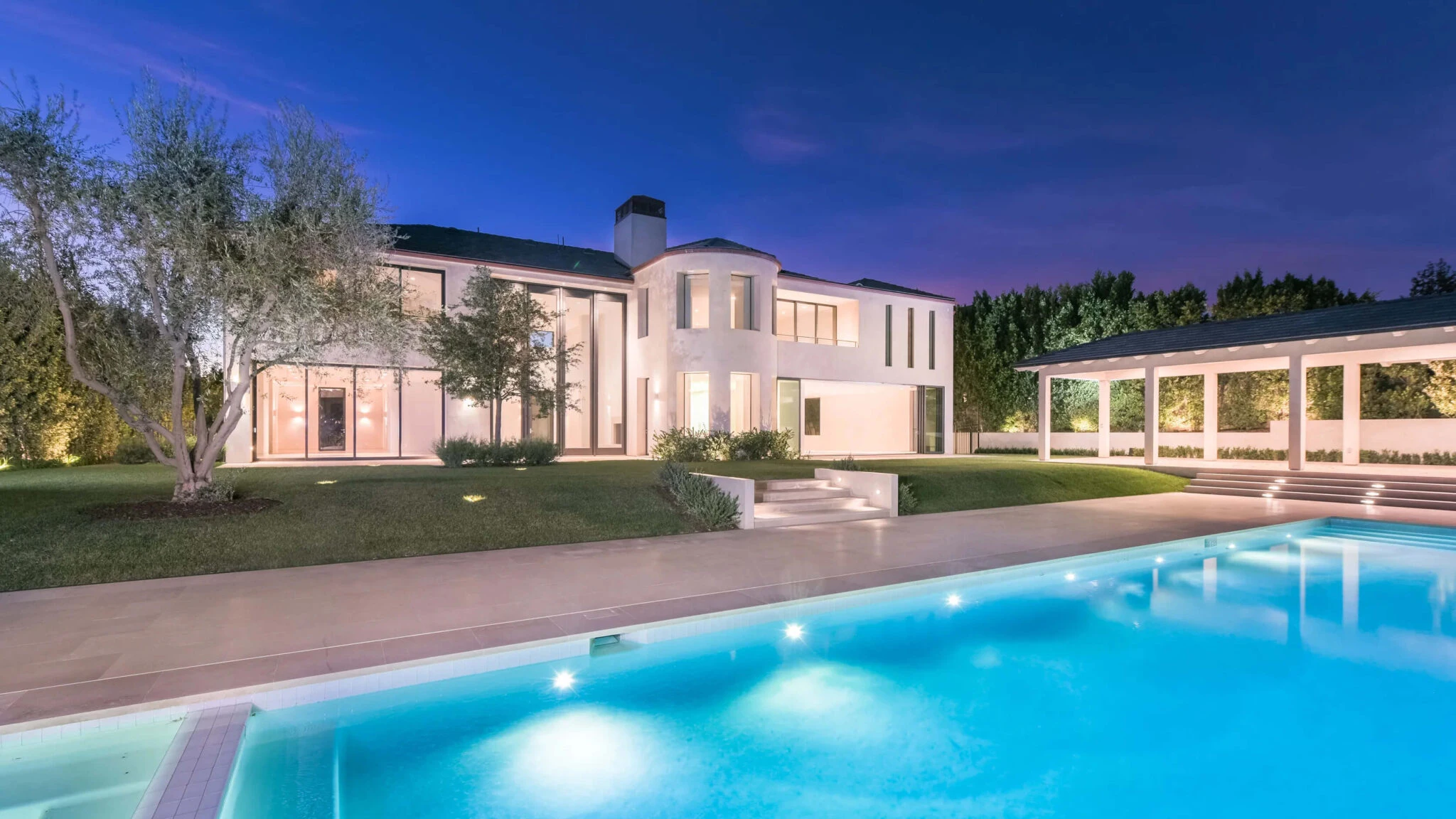
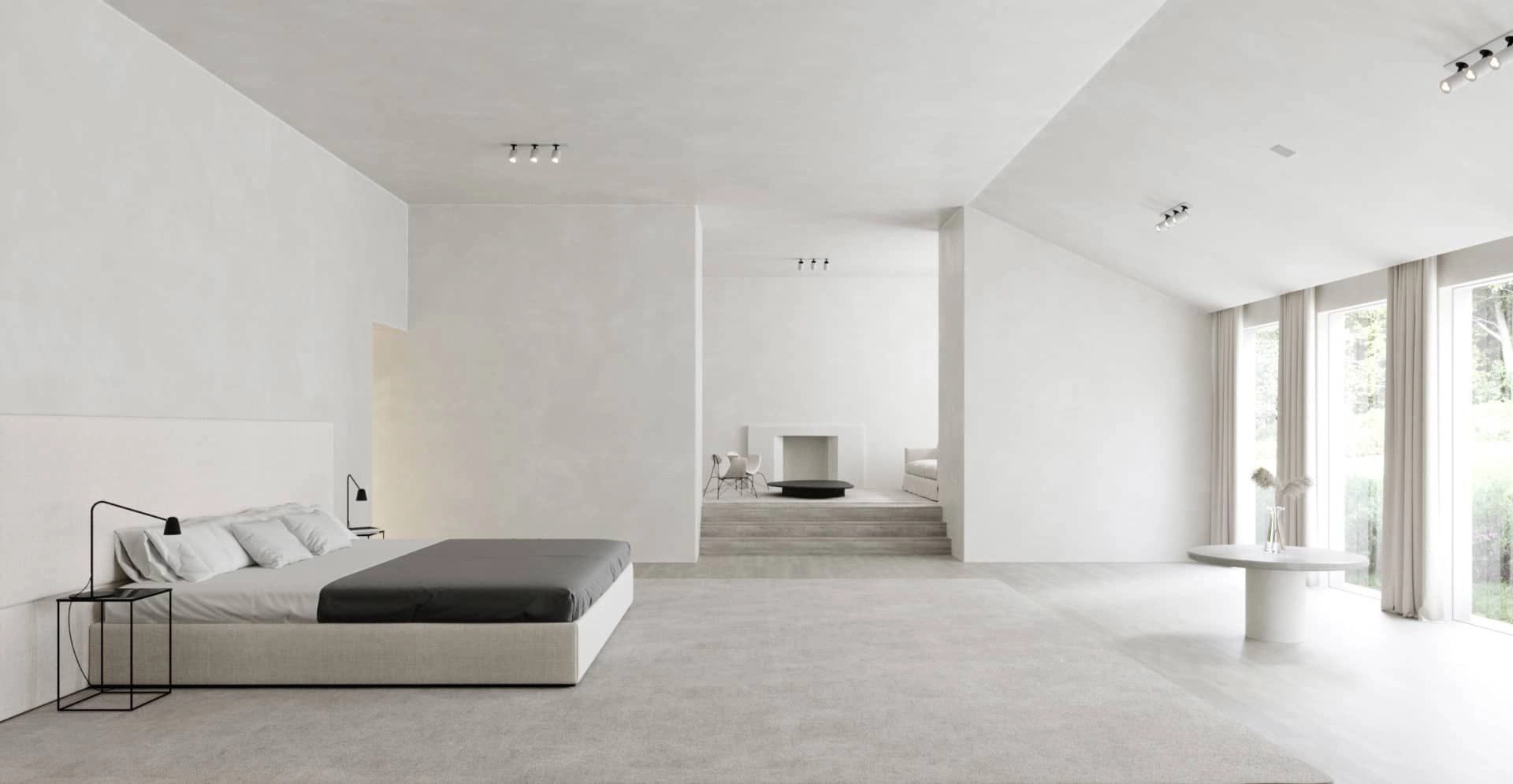
The mansion’s architecture avoids complexity but achieves grandeur through scale and proportion. Wide hallways, high ceilings, and expansive open spaces create a sense of quiet luxury.
Rounded edges soften the geometry, replacing sharp lines with fluid transitions. Arched doorways and curved walls introduce subtle variation without disrupting the monochrome scheme.
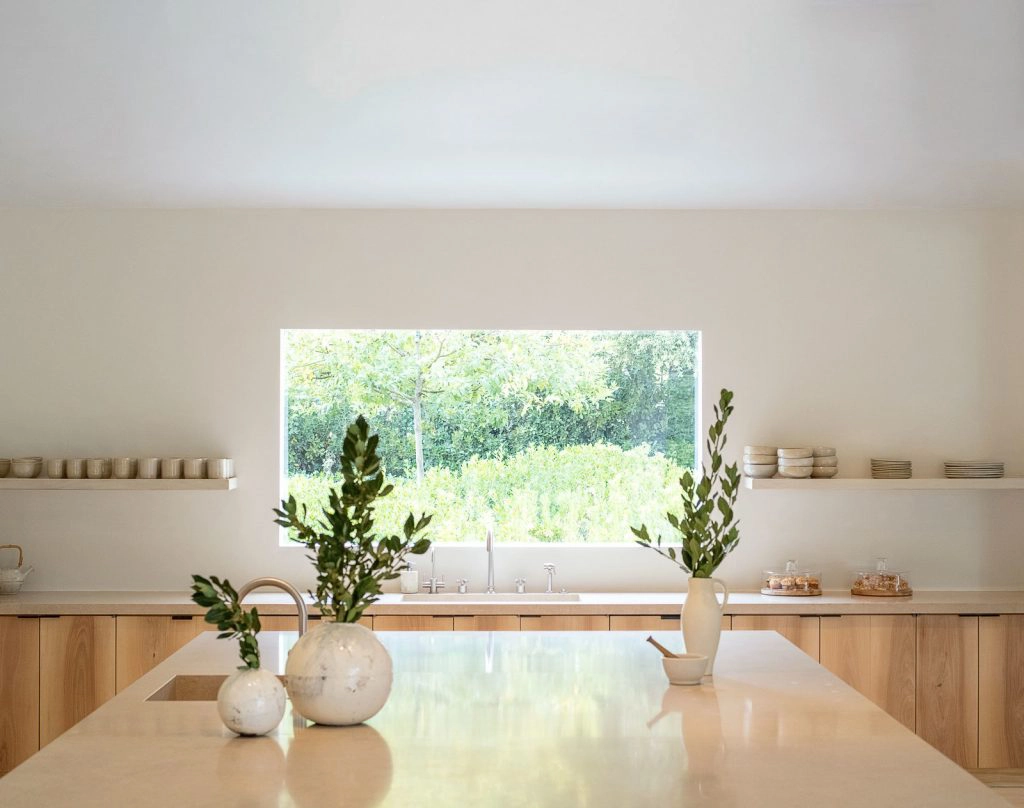
Natural light plays a crucial role. Large windows and carefully positioned openings allow sunlight to wash over surfaces, revealing texture and depth within the neutral palette. This dynamic interaction ensures that the interiors never feel flat despite the limited color range.
Material-Driven Design: The Core of the Aesthetic
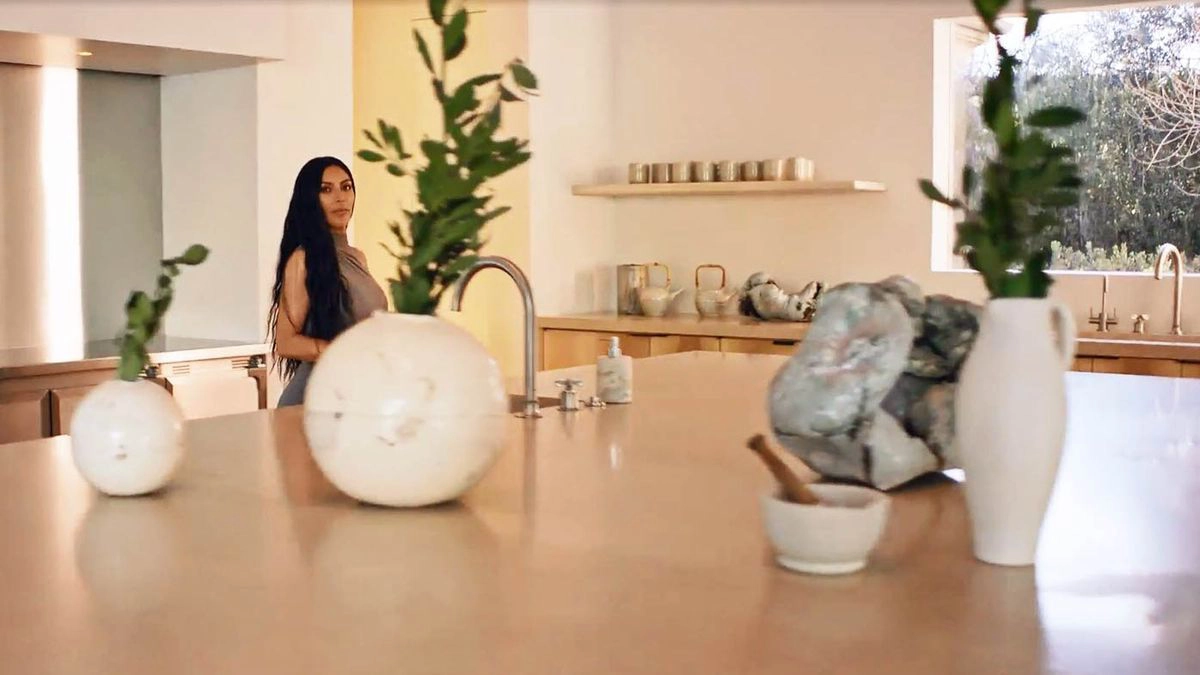
Materials carry the visual weight in a monochrome environment. In this home, designers selected finishes that offer tactile richness while maintaining chromatic consistency.
Key materials include:
- Hand-plastered walls with a matte, almost velvety finish
- Pale stone flooring that reflects light softly
- Natural wood elements stripped of heavy staining
- Linen and boucle textiles that introduce softness
Each material contributes to a layered sensory experience. Even within a single color family, variations in texture create depth and interest.
The absence of glossy finishes reinforces the understated elegance. Matte surfaces absorb light, enhancing the calm and contemplative atmosphere.
Furniture as Sculpture
Furniture in Kim Kardashian’s home functions as both utility and art. Rather than filling rooms with multiple pieces, the design focuses on fewer, carefully selected objects that command attention through form.
Custom seating features exaggerated proportions and soft, rounded silhouettes. Sofas appear almost carved from a single volume, with seamless upholstery that blends into the surrounding palette.
Tables and consoles often resemble sculptural installations. Their organic shapes echo the architectural curves, creating continuity throughout the space.
This restrained approach allows each piece to breathe. Negative space becomes just as important as the objects themselves, reinforcing the principles of Monochrome Luxury.
The Power of Negative Space
One of the most defining characteristics of this mansion lies in its use of emptiness. Rooms often appear sparsely furnished, yet they never feel incomplete.
Negative space enhances:
- Visual clarity
- Circulation flow
- The prominence of key design elements
By reducing visual noise, the design invites occupants to engage more deeply with the environment. Every curve, texture, and shadow gains significance.
For luxury design studios, this approach challenges traditional notions of opulence. Instead of showcasing abundance, it emphasizes precision and intentionality.
Lighting as a Design Tool
Lighting in a monochrome interior must do more than illuminate—it must sculpt the space. In this residence, designers use both natural and artificial lighting to highlight architectural features and material textures.
Recessed lighting maintains clean lines and avoids visual clutter. Hidden light sources create soft glows that accentuate curves and surfaces without drawing attention to fixtures.
Daylight remains the dominant force. As it shifts throughout the day, it transforms the perception of the space, revealing new tonal variations within the neutral palette.
Seamless Integration of Art and Architecture
Art within a Monochrome Luxury setting requires careful curation. In Kim Kardashian’s home, artwork does not disrupt the palette but complements it.
Pieces often feature:
- Minimal compositions
- Neutral tones
- Textural or sculptural qualities
Rather than acting as focal points through color, these works integrate into the architectural language. This approach reinforces the idea that the entire space functions as a unified composition.
The Role of Customization
Customization drives the uniqueness of this mansion. From furniture to architectural details, nearly every element reflects bespoke design.
Built-in seating, concealed storage, and tailored proportions ensure that nothing feels generic. This level of precision aligns with the expectations of high-end residential projects, where clients seek exclusivity and coherence.
For furniture brands and architects, the project highlights the importance of collaboration between disciplines. Architecture, interior design, and product design merge seamlessly to achieve a singular vision.
Monochrome Luxury in Contemporary Design Culture
Kim Kardashian’s minimalist mansion has influenced a broader shift in luxury interiors. Designers increasingly explore neutral palettes and simplified forms, moving away from heavily layered or decorative styles.
This trend reflects a growing desire for spaces that promote calm, clarity, and mindfulness. In a fast-paced world, interiors that offer visual and emotional relief resonate strongly with high-end clients.
Monochrome Luxury does not eliminate personality—it refines it. Through material choices, spatial composition, and subtle detailing, designers can create environments that feel both personal and universally appealing.
Final Thoughts
Inside Kim Kardashian’s home, Monochrome Luxury emerges as more than an aesthetic—it becomes an experience shaped by light, material, and space. The residence demonstrates how restraint, when executed with precision, can achieve a level of sophistication that rivals more elaborate designs.
For interior designers, architects, and luxury studios, this project underscores the power of simplicity. By focusing on form, texture, and proportion, Monochrome Luxury transforms minimalism into a statement of quiet opulence.