

The Subtle Art of Choosing Counter Stools for High-End Kitchens
In the architecture of a high-end kitchen, every element plays a dual role: functional necessity and aesthetic statement. Among these, counter stools occupy a particularly nuanced position. They are not merely seating solutions but social anchors—where morning rituals unfold, informal meetings take place, and design narratives quietly assert themselves.
For architects, interior designers, real estate professionals, and discerning homeowners, selecting the right kitchen counter stools requires a thoughtful balance of proportion, materiality, ergonomics, and visual harmony. In luxury kitchens—where craftsmanship, spatial flow, and longevity are paramount—this decision becomes an exercise in precision rather than preference.
This editorial guide explores how to choose counter height stools for high-end kitchens, offering an authoritative framework rooted in design intelligence, global standards, and refined living.
Understanding Counter Height: Precision Before Aesthetics
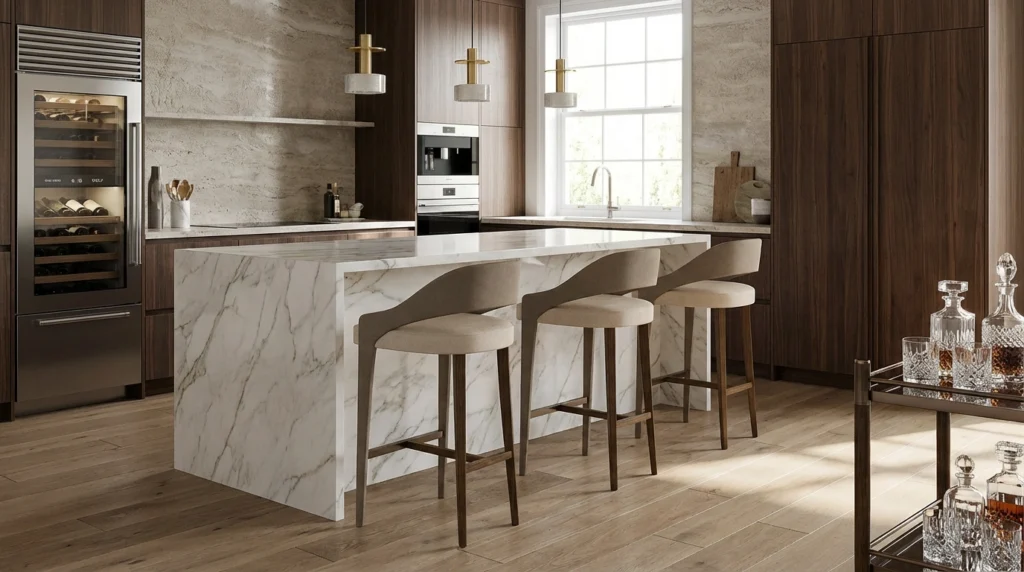
The foundation of selecting appropriate counter stools lies in understanding counter height itself. Unlike bar stools, which cater to taller surfaces, counter height seating is designed for kitchen counters and islands that typically measure between 90–95 cm (36–38 inches).
Standard Measurements for Counter Height Stools
To ensure comfort and proper posture, the seat height of counter height stools should generally fall between 60–66 cm (24–26 inches), allowing for adequate legroom beneath the counter overhang.
- Ideal clearance: 25–30 cm (10–12 inches) between seat and counter
- Island overhang: Minimum 30 cm (12 inches) for comfortable seating
- Spacing: 55–65 cm (22–26 inches) per stool for ease of movement
Organizations such as the National Kitchen & Bath Association provide globally recognized guidelines that reinforce these ergonomic principles, widely adopted in luxury residential projects.
Ergonomics Meets Elegance: Comfort as a Design Imperative
In high-end kitchens, comfort is never optional—it is an expectation. Well-designed kitchen counter stools support the body intuitively, allowing users to linger comfortably without visual heaviness.
Key Ergonomic Considerations
- Backrests: Low or mid-height backs provide support while preserving sightlines
- Footrests: Essential for posture, particularly for longer seating durations
- Seat depth: Balanced proportions prevent fatigue without overextending the footprint
For open-plan kitchens that merge seamlessly with living and dining areas, ergonomics must align with visual lightness. Sculptural silhouettes, gently contoured seats, and refined joinery elevate counter stools from utility to design object.
Materiality: A Dialogue Between Touch and Time
Material selection defines not only the aesthetic language of counter height stools but also their longevity. In luxury environments, materials should age gracefully, developing patina rather than wear.
Wood: Warmth and Architectural Integrity
Solid wood remains a cornerstone of refined kitchen design. Oak, walnut, and ash offer tonal depth and tactile warmth, particularly suited to kitchens that emphasize natural materials or artisanal craftsmanship.
Metal: Precision and Contemporary Sophistication
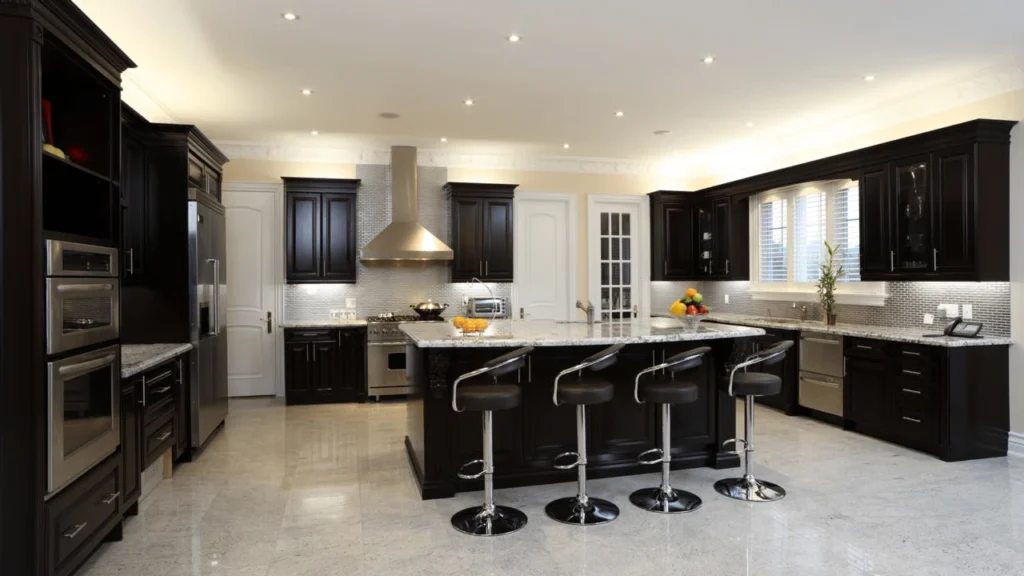
Metal frames—whether brushed stainless steel, matte black steel, or bronze finishes—introduce a sense of structure and modernity. When paired with upholstered or timber seats, metal adds contrast without dominance.
Upholstery: Softness with Purpose
In luxury kitchens, upholstery should be both sensorial and practical. Performance fabrics, premium leathers, and stain-resistant textiles ensure durability while enhancing comfort.
- Full-grain leather for timeless elegance
- High-performance textiles for family-oriented luxury homes
- Neutral palettes to ensure design longevity
Design Language: Harmonizing with the Kitchen Architecture
High-end kitchens are often defined by a cohesive architectural vision. Kitchen counter stools should complement this narrative rather than compete with it.
Minimalist Kitchens
For minimalist or contemporary kitchens, opt for streamlined counter stools with clean lines, understated finishes, and minimal ornamentation. Monochromatic schemes reinforce visual calm.
Classic and Transitional Kitchens
In more traditional settings, counter height stools with gently curved backs, subtle detailing, or upholstered seats add softness while respecting architectural heritage.
Statement Kitchens
In kitchens designed as focal points—often within luxury penthouses or villas—counter stools may act as sculptural accents. Here, form, texture, and proportion become expressive tools.
Scale and Proportion: Designing for Spatial Flow
Luxury kitchens prioritize spatial clarity. Overly bulky counter stools can disrupt circulation and visual balance, while underscaled seating risks appearing inconsequential.
Guidelines for Visual Balance
- Match stool width to island length and surrounding cabinetry
- Avoid overly tall backs in open-plan spaces
- Consider armless designs for tighter layouts
For professional designers, specifying counter height stools becomes an exercise in spatial choreography—supporting movement, conversation, and visual rhythm.
Functionality for Modern Lifestyles
Today’s high-end kitchens serve multiple roles: culinary workspace, social hub, and informal office. As such, kitchen counter stools must adapt seamlessly.
Swivel vs. Fixed Stools
Swivel stools encourage interaction and flexibility, particularly in social kitchens. Fixed stools, by contrast, offer greater visual stability and are often preferred in architectural compositions.
Stackability and Weight
In secondary residences or urban apartments, lighter stools or stackable designs allow for versatility without compromising elegance.
Color and Finish: The Quiet Power of Restraint
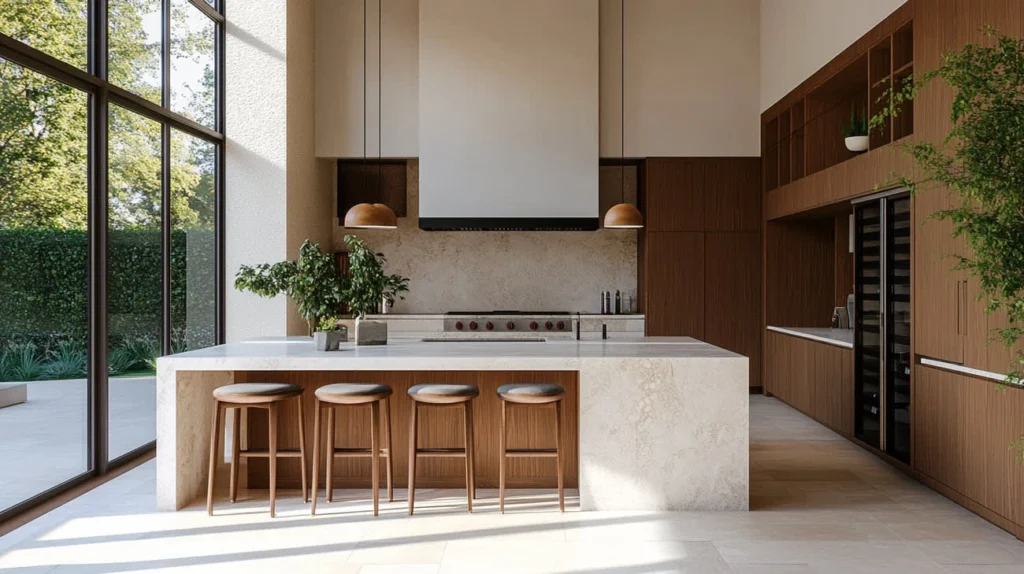
In luxury interiors, color choices are rarely impulsive. Neutral tones—stone, taupe, charcoal, and warm woods—dominate high-end counter stools, allowing kitchens to evolve without requiring replacement.
For designers seeking subtle contrast, tonal variations within the same palette often prove more enduring than bold color statements.
Sustainability and Craftsmanship
Discerning clients increasingly value sustainability as a marker of true luxury. Responsibly sourced materials, artisanal production, and long product lifecycles elevate counter height stools beyond trend-driven consumption.
- Certified woods and low-impact finishes
- Hand-finished details and small-batch production
- Designs intended for decades, not seasons
Counter Stools as Architectural Accents
Choosing the right counter stools for a high-end kitchen is a study in nuance. It requires an understanding of ergonomics, material integrity, spatial proportion, and lifestyle patterns—all filtered through a lens of architectural coherence.
For professionals and private clients alike, well-chosen kitchen counter stools enhance not only how a kitchen looks, but how it is lived in. In luxury design, it is often these quiet decisions—executed with intention and restraint—that define enduring excellence.