How Tadao Ando Designed Minimalist Luxury Living at 152 Elizabeth Street

Minimalism in architecture often carries a misconception: that simplicity reduces luxury. Yet few architects have proven the opposite as convincingly as Tadao Ando. His residential building at 152 Elizabeth Street demonstrates how restraint, material precision, and spatial clarity can redefine luxury living in dense urban environments.
Located in the Nolita district of New York City, the seven-story condominium represents Ando’s first residential building in the city and one of his rare projects in the United States. Designed in collaboration with Gabellini Sheppard Associates, the project merges Japanese architectural philosophy with contemporary Manhattan luxury living.
For architects, interior designers, and luxury design brands, the building offers a compelling case study in how minimalist architecture can shape a high-end residential experience.
Tadao Ando’s Philosophy: Minimalism as Luxury
At the core of Tadao Ando’s work lies a philosophy rooted in simplicity, contemplation, and spatial purity. His architecture often relies on a limited palette of materials—most notably smooth cast concrete, glass, water, and natural light—to create environments that feel both calm and monumental.
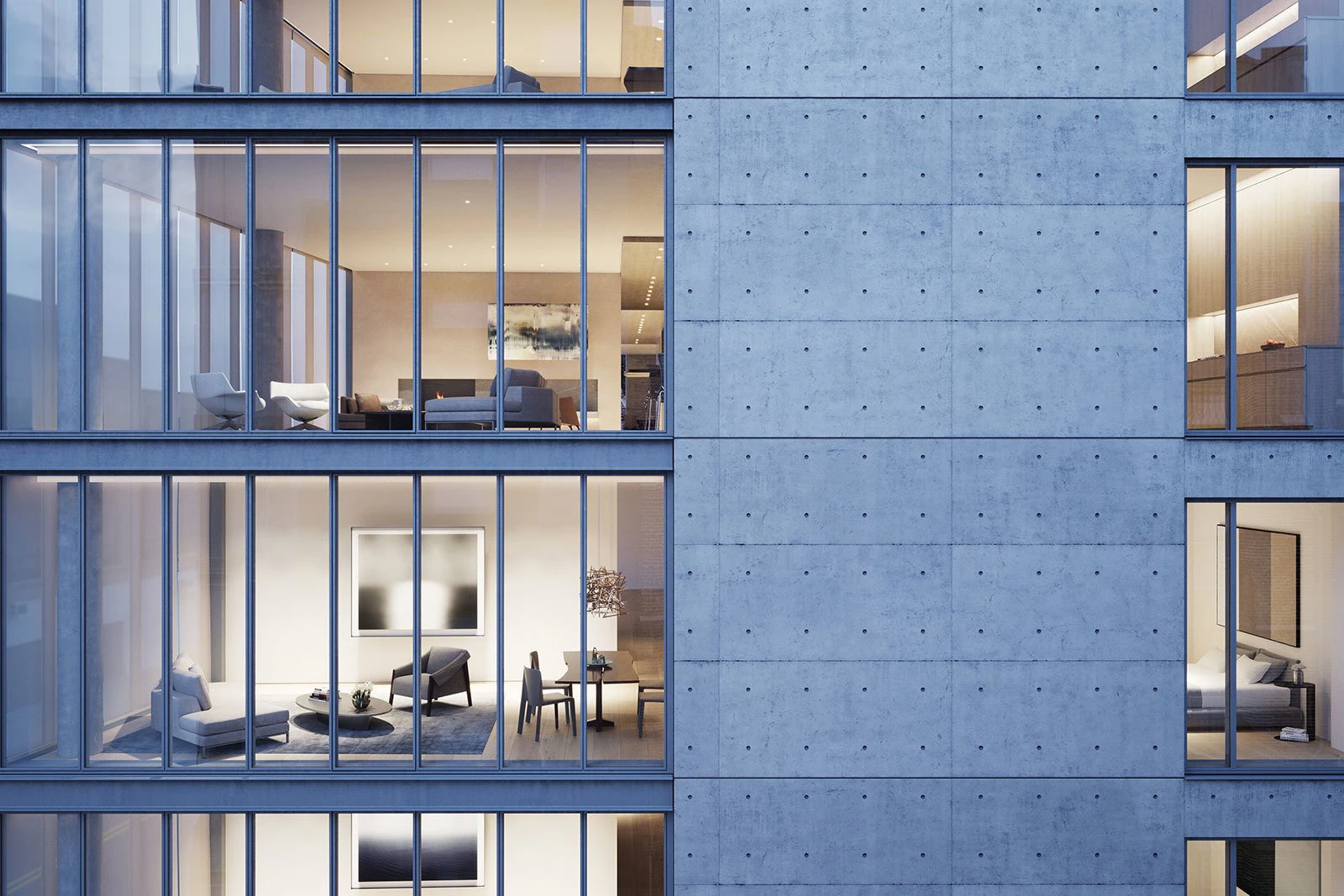
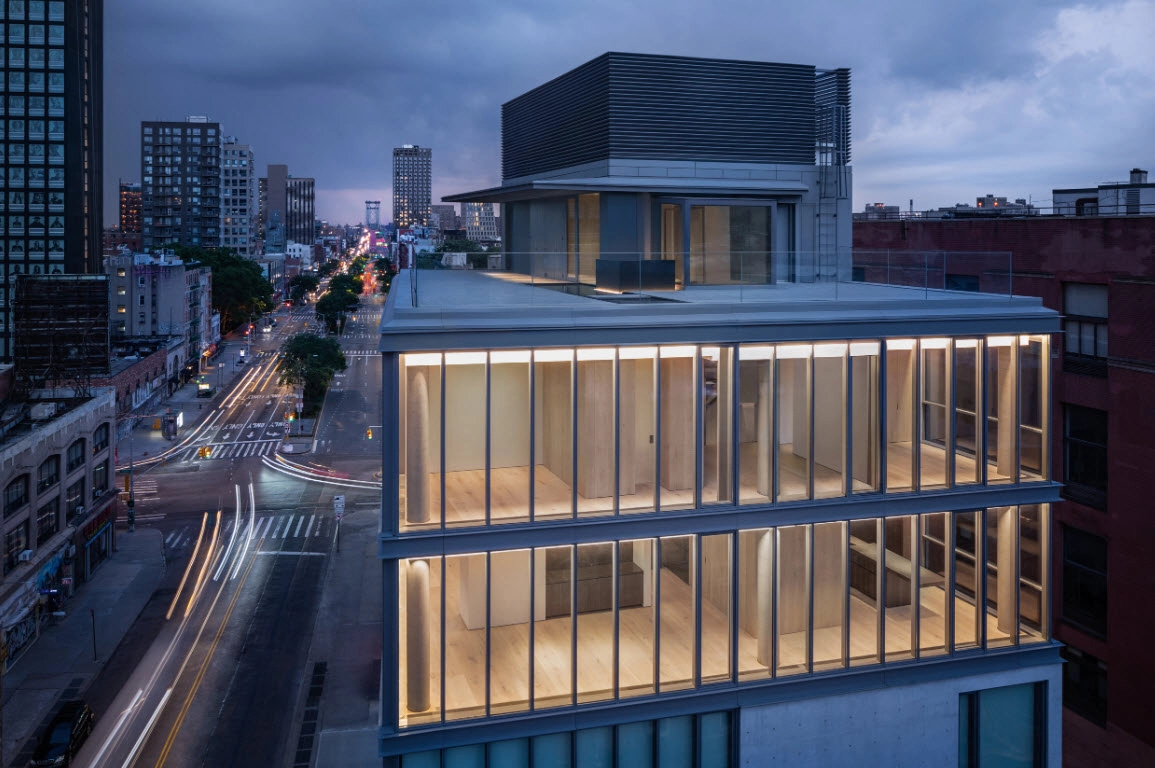
This approach is evident throughout 152 Elizabeth Street. The structure’s form is composed of simple geometric volumes, emphasizing proportion rather than ornament. Polished in-situ concrete panels form the backbone of the building’s façade, while expansive curtain glass creates a striking contrast between opacity and transparency.
For designers and architects, this balance between mass and lightness illustrates how minimalism can produce emotional resonance rather than visual austerity.
A Concrete and Glass Jewel in Nolita
The building stands discreetly among Nolita’s historic streetscape yet instantly distinguishes itself through material clarity and structural elegance.
The façade combines Ando’s signature poured-in-place concrete with large glass panels framed by slender mullions. These floor-to-ceiling windows maximize daylight while reducing urban noise through high-performance glazing.
Key exterior features include:
- Exposed concrete panels with precise formwork marks
- Full-height glazing wrapping the building
- Burnished metal structural elements
- A monumental living green wall spanning the southern façade
The 55-foot-tall vertical garden introduces a dynamic natural element that evolves seasonally, softening the otherwise austere architectural expression.
For luxury design studios and architects, this integration of vegetation demonstrates how urban residential architecture can incorporate biophilic principles without compromising a minimalist aesthetic.
A Boutique Residential Concept
Unlike many luxury developments in Manhattan, 152 Elizabeth Street is intentionally intimate.
The building contains only seven bespoke residences, each designed to function more like a private house than a conventional apartment. Homes range from approximately 1,900 to 5,000 square feet, with a penthouse spanning multiple levels and expansive outdoor terraces.
This boutique scale supports a highly curated architectural experience:
- Private elevator access
- Expansive floor plans with minimal internal partitions
- Seamless indoor-outdoor transitions
- Custom-designed architectural details
By limiting the number of residences, the project reinforces exclusivity—an essential component of contemporary luxury residential branding.
Interior Design: Warm Minimalism
To complement Ando’s architectural framework, the interiors were developed by Gabellini Sheppard Associates, a firm known for refined minimalist interiors.
The design strategy introduces warmth through carefully selected natural materials and subtle textures.
Notable interior elements include:
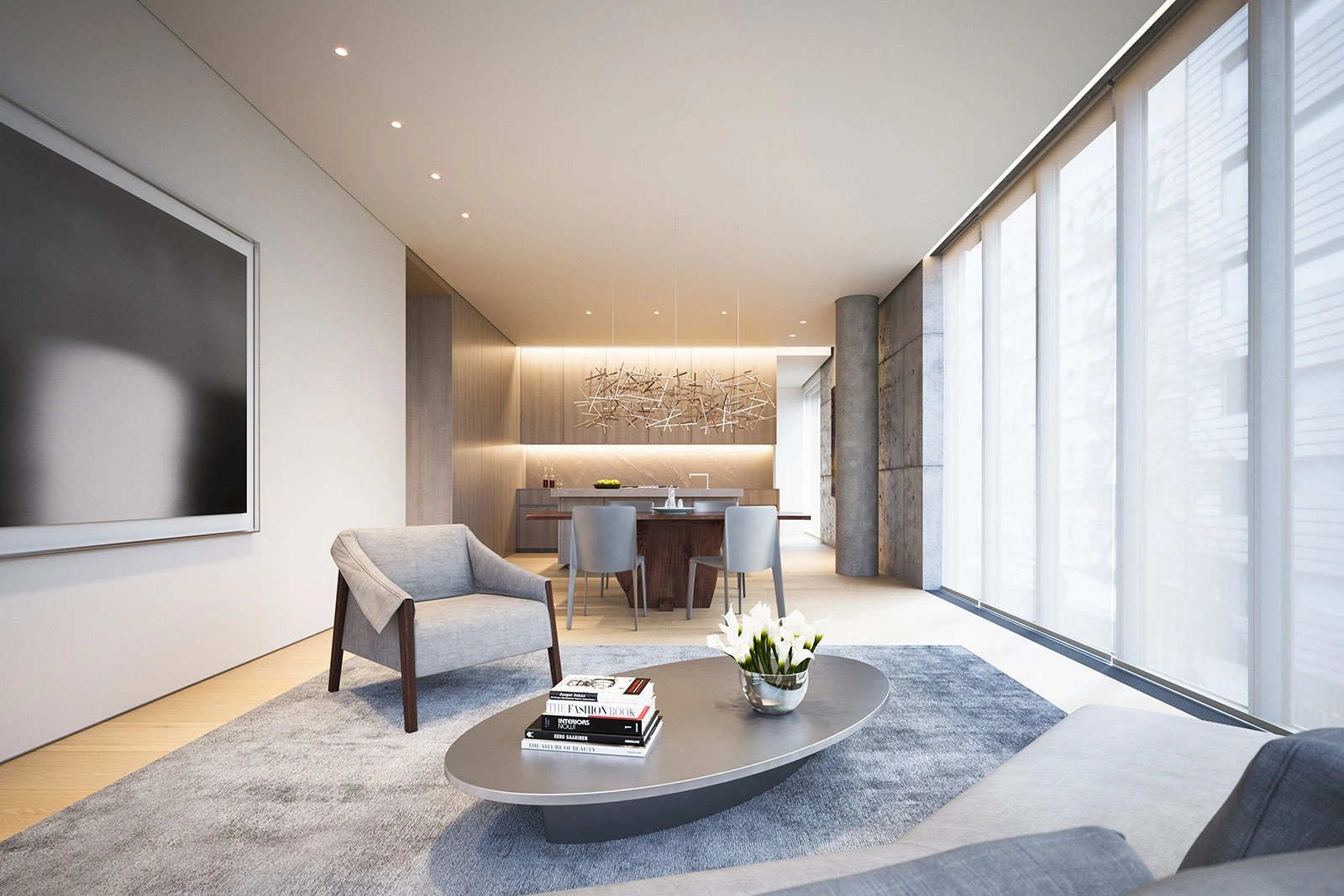
- Wide-plank Danish oak flooring
- Eucalyptus wood cabinetry
- Bianco Sivec marble bathrooms
- Custom stone fireplaces and sculptural staircases
These materials soften the rigorous geometry of the concrete shell, producing an atmosphere that feels both luxurious and serene.
For interior designers and furniture brands, the project illustrates how high-end materials can coexist with restrained architectural language.
Light, Water, and Spatial Atmosphere
Few architects manipulate environmental elements as precisely as Tadao Ando.
At 152 Elizabeth Street, light and water are fundamental components of the spatial experience.
Residents enter through a vestibule featuring a backlit water wall, creating a transitional moment between the noise of the city and the calm interior environment.
Throughout the building, Ando’s design integrates:
- Reflecting pools
- Water walls
- Carefully controlled natural light
- Acoustic insulation from the exterior environment
These elements create what the design team describes as an architecture of quiet—spaces that encourage contemplation within one of the world’s busiest cities.
Outdoor Living in a Dense Urban Context
A defining feature of the development is the extensive outdoor space incorporated into the residences.
Terraces, balconies, and rooftop gardens allow residents to experience private outdoor living despite the density of Manhattan.
The penthouse, for example, includes multiple terraces with landscaping, reflecting pools, and custom-designed architectural features such as granite fireplaces and outdoor kitchens.
For architects and developers, this demonstrates how thoughtful spatial planning can transform limited urban footprints into expansive living environments.
A Landmark for Minimalist Architecture in New York
Although Tadao Ando has designed projects across Asia, Europe, and North America, his built work in New York remains rare. 152 Elizabeth Street therefore carries particular architectural significance.
The building illustrates how Ando’s meditative architectural language can adapt to a dense Western metropolis while maintaining its philosophical core.
By combining concrete precision, natural light, water features, and carefully curated interiors, the project stands as one of the most distinctive luxury residential buildings in Manhattan.
Lessons for Architects, Designers, and Luxury Brands
For professionals in architecture, furniture design, and luxury interiors, 152 Elizabeth Street offers several valuable design insights:
1. Minimalism can enhance luxury rather than reduce it.
Careful material selection and spatial clarity elevate the living experience.
2. Environmental elements add emotional depth.
Light, water, and vegetation introduce sensory richness to minimalist architecture.
3. Boutique scale increases exclusivity.
Fewer residences allow for more personalized design and greater architectural integrity.
4. Collaboration strengthens design outcomes.
The partnership between Tadao Ando and Gabellini Sheppard Associates created a balanced dialogue between architecture and interior design.
The Future of Minimalist Luxury
As luxury residential architecture continues to evolve, projects like 152 Elizabeth Street demonstrate that the future of high-end design may lie in precision rather than excess.
Tadao Ando’s approach reminds designers that restraint can be powerful. When space, material, and light are carefully orchestrated, minimalism becomes not just an aesthetic—but a luxury experience.