

Vertical Living as the New Luxury Frontier
In the early decades of the 21st century, vertical living has evolved from a pragmatic response to urban density into a defining expression of contemporary luxury. Nowhere is this transformation more pronounced than in New York and London—two global capitals whose skylines are being reshaped not only by height, but by a reimagining of what it means to live well above the city. From meticulously curated NYC interiors to the refined elegance of London luxury apartments, these cities are setting new benchmarks for residential design at altitude.
Luxury living at height is no longer about spectacle alone. It is about spatial intelligence, cultural context, wellness, and craftsmanship—values increasingly shared by architects, designers, and high-net-worth individuals alike. As towers rise higher, expectations deepen, and the conversation shifts from square footage to experience.
New York: Reinventing the Skyline Through Design
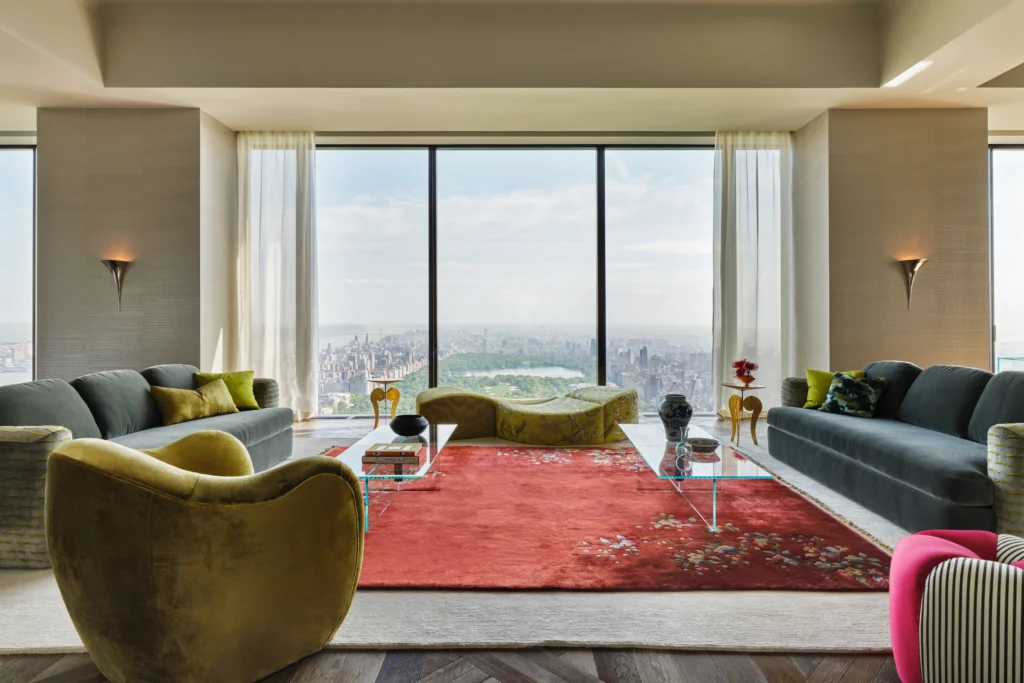
New York has long been synonymous with vertical ambition. Yet today’s supertall and high-rise residential buildings are less about bravado and more about precision. The latest generation of towers integrates architecture, interiors, and lifestyle into cohesive environments that elevate daily living.
NYC Interiors: From Monumentality to Intimacy
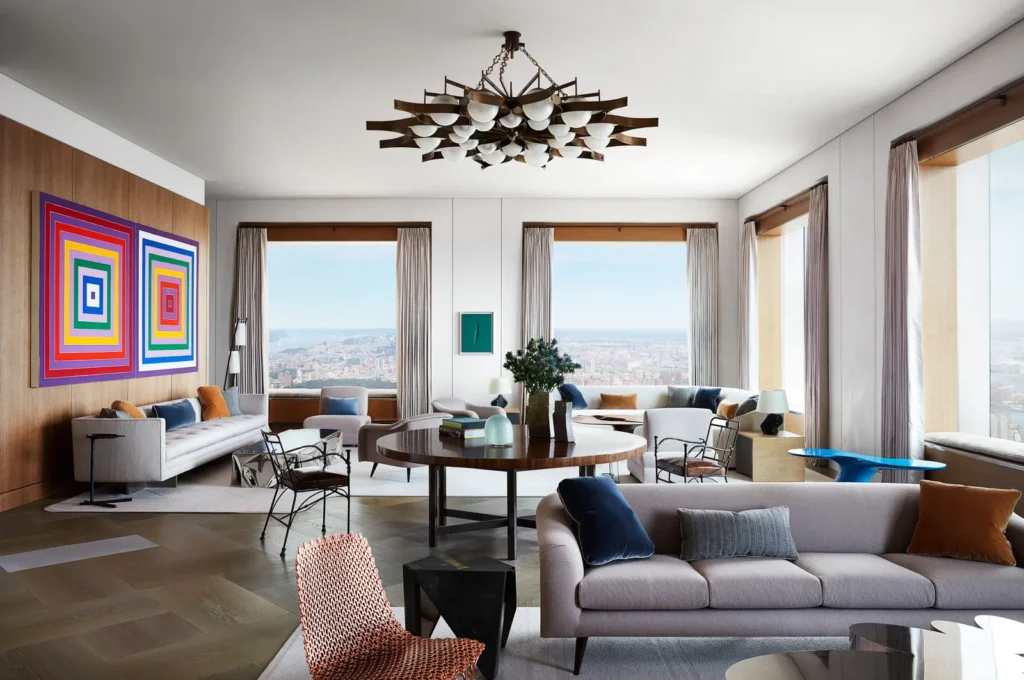
The most compelling NYC interiors now balance grandeur with restraint. While panoramic views remain essential, interior architecture has become warmer, more tactile, and deeply residential. Designers are favoring layered materials—natural stone, bespoke millwork, hand-finished metals—to counterbalance the scale of glass façades.
Open-plan layouts are increasingly nuanced, with subtle zoning that allows spaces to shift seamlessly from entertaining to retreat. Kitchens are no longer utilitarian backdrops but sculptural centers of the home, often integrated with living spaces to frame the city as a living artwork beyond the windows.
Key Characteristics of Contemporary High-Rise Living in New York
- Floor-to-ceiling glazing engineered for acoustic comfort
- Custom interiors tailored to light orientation and skyline views
- Private elevator access and discreet circulation
- Residential amenities conceived as extensions of the home
Wellness as an Architectural Imperative
In New York, vertical living has become inseparable from wellness. Developers and designers are investing in biophilic strategies, advanced air filtration systems, and spa-grade amenities. Light, air, and silence—once rare commodities in the city—are now core components of luxury at height.
This shift reflects a broader cultural recalibration: luxury is no longer defined by excess, but by the ability to disconnect without leaving the city.
London: The Poetics of Elevation
If New York’s approach to vertical living is bold and contemporary, London’s is layered and contextual. The rise of London luxury apartments within carefully planned towers reflects a sensitivity to heritage, proportion, and urban continuity.
London Luxury Apartments: Discretion Over Display
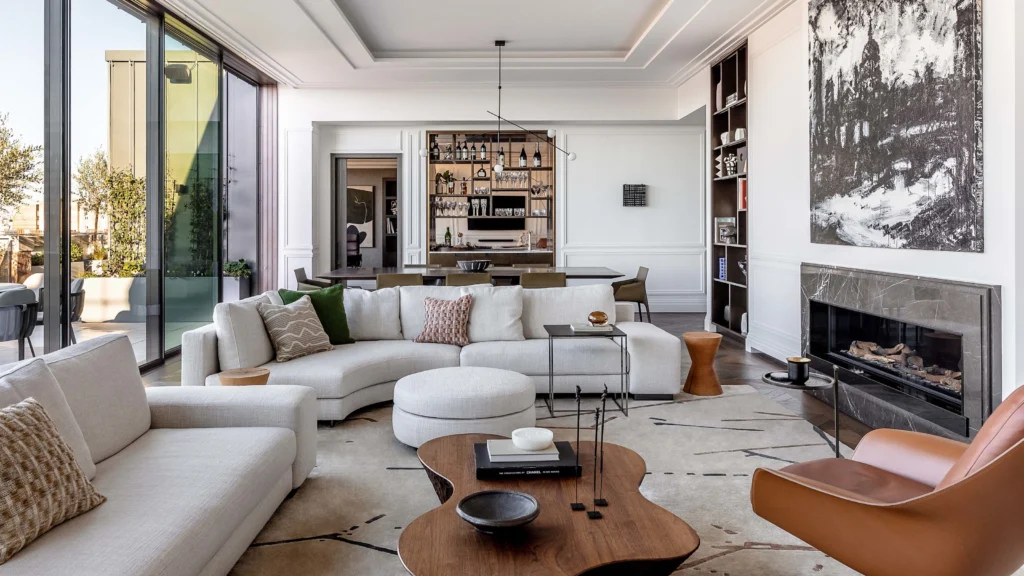
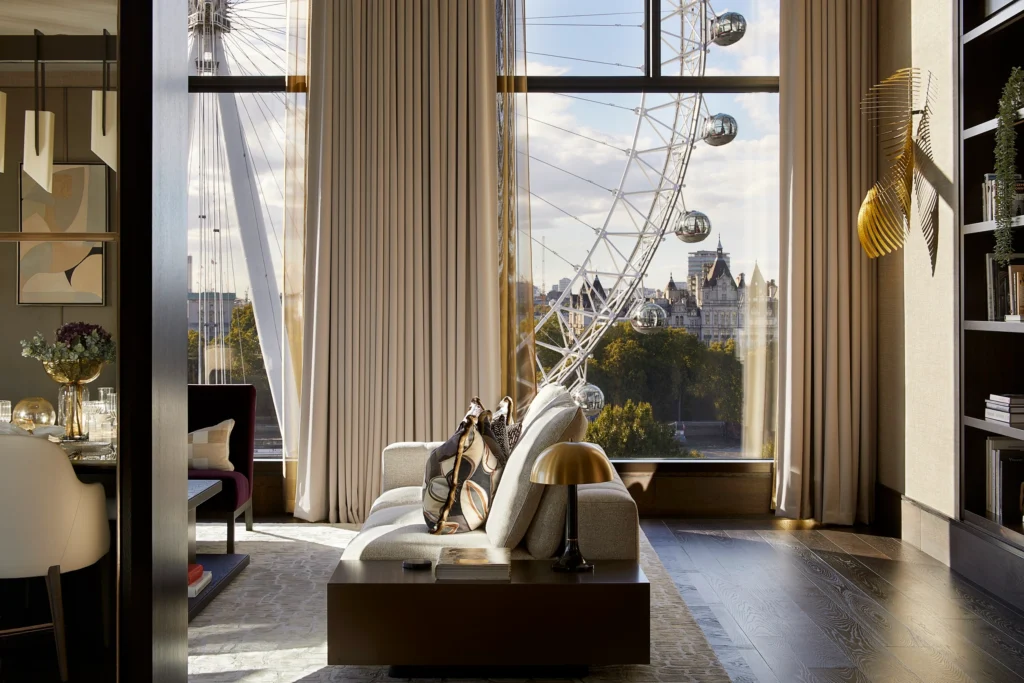
Luxury living at height in London is marked by understatement. Interiors draw from the city’s architectural lineage—Georgian proportions, artisanal detailing, and a muted palette that privileges longevity over trend. Even within striking new towers, the experience remains distinctly residential.
Layouts are often more compartmentalized than their New York counterparts, offering a sense of enclosure and privacy. Materials are chosen for their patina and tactility, reinforcing a sense of permanence that resonates with international buyers seeking stability as much as status.
Defining Elements of London’s Vertical Residences
- Balanced façades that respect historic sightlines
- Interiors inspired by classic European craftsmanship
- Concierge services rooted in hospitality rather than spectacle
- Shared amenities designed as social salons, not showpieces
Urban Integration and Cultural Continuity
Unlike cities that pursue height as an isolated gesture, London integrates vertical living into a broader urban narrative. Towers are positioned near cultural institutions, green spaces, and transport hubs, reinforcing the idea that elevation should enhance, not detach from, city life.
Vertical Living as a Global Lifestyle Statement
Across both cities, vertical living has become a language spoken fluently by a global audience. International buyers recognize in NYC interiors and London luxury apartments a shared commitment to design excellence, cultural relevance, and long-term value.
What differentiates this new era is not height alone, but intentionality. Every square meter is curated, every view considered, every material selected to age gracefully. The result is a form of luxury that feels personal rather than performative.
Technology Meets Craft
Smart home systems are now seamlessly integrated into high-rise residences, enhancing comfort without overshadowing design. Lighting, climate, and security technologies operate quietly in the background, allowing craftsmanship and materiality to remain at the forefront.
This balance between innovation and tradition is particularly evident in bespoke furniture and interior elements, where customization responds to architecture rather than imposing upon it.
Comparative Perspectives: New York vs. London
While both cities are redefining luxury living at height, their approaches reveal distinct cultural values.
New York
- Expressive architecture and bold silhouettes
- Interiors emphasizing openness and flexibility
- Amenities positioned as lifestyle destinations
London
- Contextual architecture with restrained profiles
- Interiors rooted in tradition and proportion
- Amenities designed for discretion and community
Together, these perspectives enrich the global discourse on vertical living, offering complementary visions of what elevated urban life can be.
The Future of Luxury Living at Height
As cities continue to densify, the lessons emerging from New York and London will shape residential development worldwide. The future of vertical living lies not in taller towers, but in smarter ones—buildings that prioritize human experience, environmental responsibility, and cultural authenticity.
For architects, designers, and discerning residents, luxury at height is becoming a question of quality rather than quantity. It is about how space feels, how light moves, and how architecture supports life rather than dominating it.
Elevation with Intention
New York and London are not merely building higher; they are thinking deeper. Through refined NYC interiors and thoughtfully crafted London luxury apartments, these cities demonstrate that vertical living can be both aspirational and humane.
In redefining luxury living at height, they offer a compelling vision for the future of global cities—one where elevation enhances connection, design honors context, and luxury is measured by experience as much as by view.