

A New Geography of Design
In today’s interconnected world, the idea of place has evolved. Homes are no longer shaped solely by local traditions or regional aesthetics; instead, they reflect a broader, more fluid dialogue between cultures, continents, and disciplines. At the center of this shift stands the new international interior designer—a creative professional who navigates multiple markets, cultural references, and lifestyles with ease. These designers and their interior design studios operate beyond borders, crafting spaces that feel at once rooted and global.
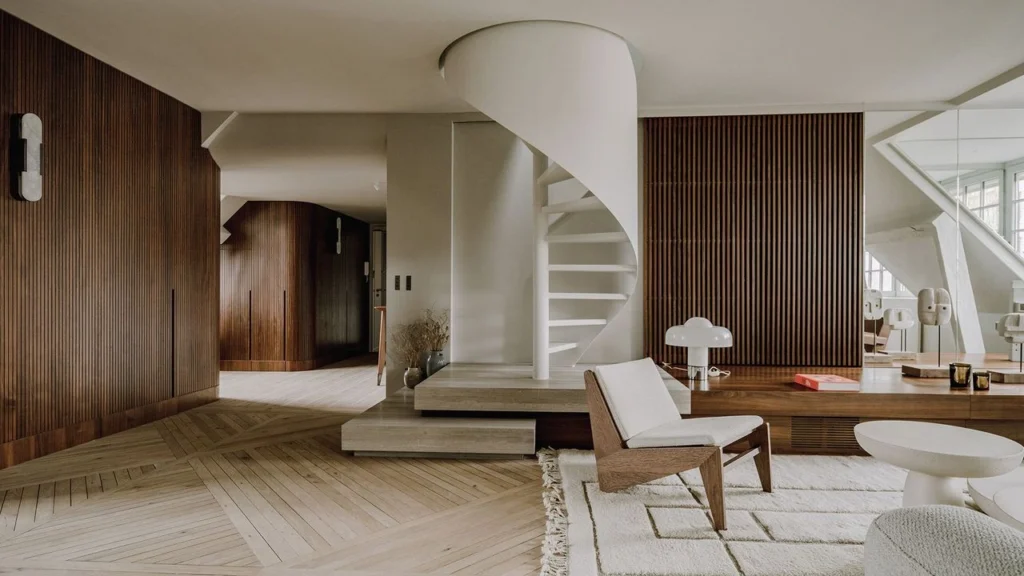
This evolution is redefining luxury residential design. From Parisian apartments envisioned by Milan-based studios to oceanfront villas in Miami designed by teams in London or Barcelona, global studios are shaping homes that respond to international tastes while remaining deeply personal. The result is a new design language—cosmopolitan, informed, and quietly confident.
The Rise of the International Interior Designer
The international interior designer is not simply someone who works abroad. Rather, this role represents a mindset shaped by travel, cross-cultural collaboration, and a nuanced understanding of how people live across different contexts. These designers are fluent in multiple design vocabularies, seamlessly blending architectural heritage with contemporary innovation.
Several factors have contributed to this rise:
- The globalization of real estate investment and second-home ownership.
- Increased mobility among high-net-worth individuals.
- The digitalization of design processes, enabling remote collaboration.
- A growing appetite for culturally layered, bespoke interiors.
For clients, working with an international interior designer offers access to a broader vision—one that transcends trends and speaks to lifestyle, identity, and long-term value.
Global Interior Design Studios as Cultural Interpreters
Today’s leading interior design studios act as cultural interpreters. Their role extends beyond aesthetics to include anthropology, craftsmanship, and environmental awareness. A residence in Dubai may incorporate European modernism, Japanese restraint, and Middle Eastern artisanal details—carefully balanced to reflect the client’s global outlook.
These studios often operate with multidisciplinary teams spread across cities such as New York, London, Milan, and Hong Kong. This structure allows them to respond to diverse markets while maintaining a cohesive design philosophy.
Designing Across Continents: What Changes, What Endures
While materials, climate, and regulations vary widely, certain principles remain constant in international luxury residential design:
- Spatial intelligence: Homes are designed to flow intuitively, regardless of scale.
- Material authenticity: Natural stone, wood, and handcrafted finishes are valued across cultures.
- Timelessness: Global clients favor enduring design over short-lived trends.
At the same time, sensitivity to local context is essential. An interior design studio working internationally must understand how light behaves in different latitudes, how social rituals shape layouts, and how regional craftsmanship can elevate a project.
Luxury Residential Design in a Global Context
Luxury residential design has shifted from overt opulence to understated sophistication. International clients increasingly seek homes that feel calm, meaningful, and adaptable. This is where global studios excel: they curate environments that support modern lifestyles while honoring cultural nuance.
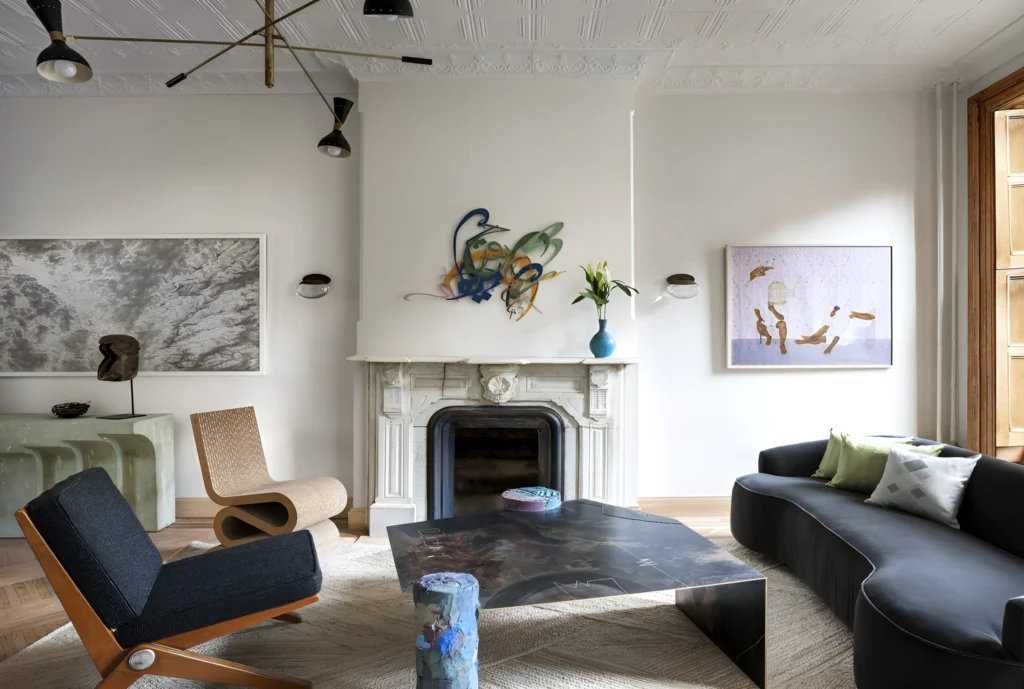
In cities such as Paris, London, and New York, luxury apartments are often designed as urban sanctuaries—layered with texture, art, and custom furniture. In contrast, villas in Marbella, Miami, or the South of France emphasize indoor-outdoor continuity, natural materials, and sculptural forms.
Across these contexts, the international interior designer acts as a unifying force, ensuring that each home reflects both its location and the client’s global identity.
The Influence of Travel, Art, and Craft
Travel has long influenced design, but today it plays a more refined role. Rather than literal references, global studios translate impressions—colors of a landscape, proportions of historic architecture, or the tactility of local materials—into contemporary interiors.
Art also serves as a bridge between cultures. Many international interior design studios collaborate closely with galleries and artists, integrating collectible pieces into residential projects. This approach not only personalizes a home but also positions it within a broader cultural narrative.
Craftsmanship as a Universal Language
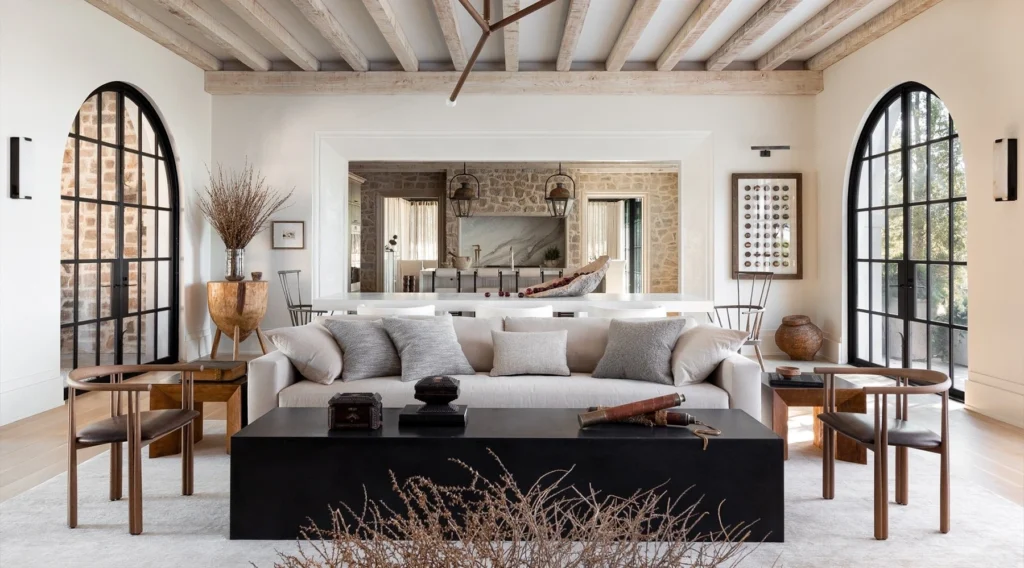
Despite cultural differences, craftsmanship resonates universally. Handwoven textiles, bespoke joinery, and artisanal furniture create a sense of authenticity that transcends geography. In luxury residential design, these elements convey quiet sophistication and long-term value.
Technology and the Global Design Process
Technology has fundamentally reshaped how international interior designers work. Virtual presentations, digital mood boards, and real-time collaboration tools allow interior design studios to manage projects across continents with precision.
This technological fluency benefits clients by enabling greater transparency and involvement throughout the design process. It also allows studios to source globally—selecting furniture, lighting, and materials from the best artisans and manufacturers worldwide.
Sustainability in International Luxury Design
Sustainability is no longer optional in global practice. International studios must navigate varying environmental standards while maintaining a responsible approach to sourcing and construction. Increasingly, luxury residential design incorporates:
- Locally sourced materials to reduce environmental impact.
- Energy-efficient systems adapted to climate.
- Durable design choices that prioritize longevity over excess.
This conscious approach aligns with the values of globally minded clients who view sustainability as an integral part of luxury.
The Client Behind the Global Home
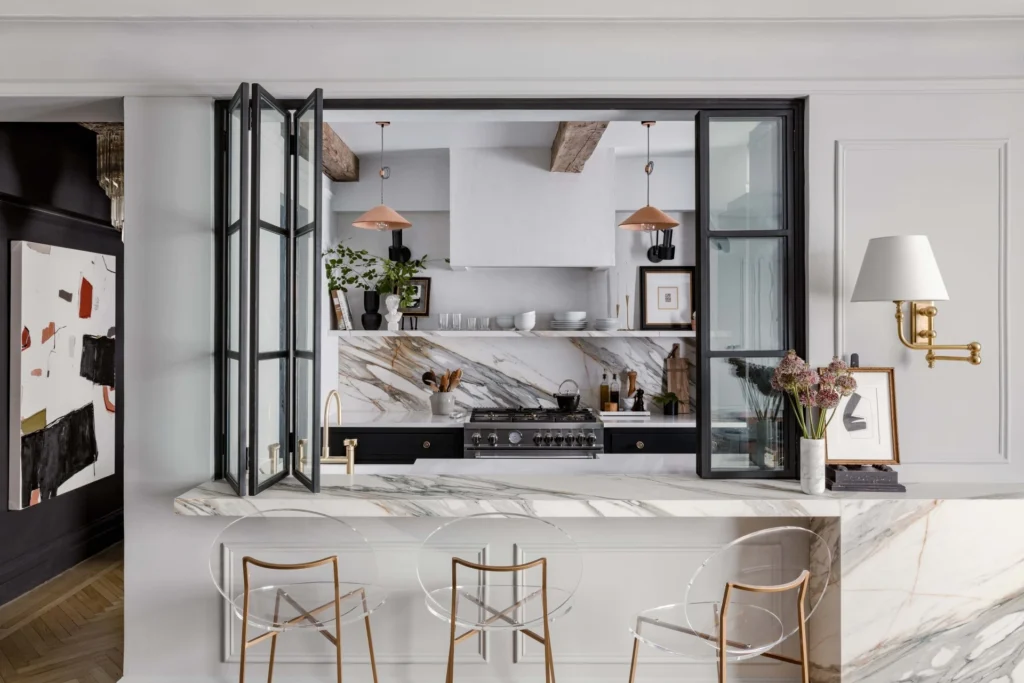
The clientele driving this evolution is as international as the designers themselves. These are individuals who live between cities, value cultural literacy, and expect their homes to reflect a refined global lifestyle. For them, working with an international interior designer is not about status, but about alignment.
They seek interior design studios capable of listening deeply, translating personal narratives into spatial experiences, and delivering homes that feel both exceptional and effortless.
Why Global Design Adds Long-Term Value
From a real estate perspective, internationally informed design often enhances property value. Homes conceived with a global sensibility tend to age well, appeal to a broader market, and stand apart in competitive luxury segments.
Developers and private clients alike recognize that thoughtful luxury residential design is an investment—one that balances aesthetics, functionality, and cultural relevance.
A Borderless Future for Interior Design
The new international interior designer embodies the spirit of our time: curious, connected, and culturally fluent. Through globally operating interior design studios, these professionals are shaping homes that transcend geography while remaining deeply human.
As luxury residential design continues to evolve, the most compelling interiors will be those that tell stories—of places visited, traditions respected, and futures imagined. In this borderless landscape, design becomes not just a reflection of where we live, but of how we see the world.