Few interior features embody intellectual elegance quite like floor-to-ceiling bookshelves. Rising from the floor and stretching toward the ceiling, these architectural elements transform walls into curated galleries of literature, art, and personal history. When paired thoughtfully with reading chairs and side tables, they create immersive environments where architecture, comfort, and culture converge.
In contemporary home library design, the bookshelf is no longer a passive storage solution. Instead, it becomes a spatial framework that shapes how people inhabit a room. Architects and interior designers increasingly integrate seating, lighting, and surface elements into a carefully orchestrated reading corner layout, ensuring that the experience of reading is both functional and emotionally resonant.
For discerning homeowners and design professionals, the integration of floor-to-ceiling shelving with refined furniture pieces represents a sophisticated balance between aesthetics and lifestyle. It invites moments of contemplation while enhancing the architectural identity of a space.
The Architectural Power of Floor-to-Ceiling Bookshelves
Floor-to-ceiling shelving introduces vertical drama while maximizing storage efficiency. Unlike standard bookcases, these installations operate as architectural features, framing entire rooms and reinforcing spatial hierarchy.
In thoughtful home library design, vertical shelving accomplishes several objectives simultaneously:
- Optimizes storage capacity while maintaining visual order.
- Draws the eye upward, emphasizing ceiling height and architectural scale.
- Creates immersive environments that celebrate books, objects, and art.
- Establishes focal walls within living rooms, studies, or transitional spaces.
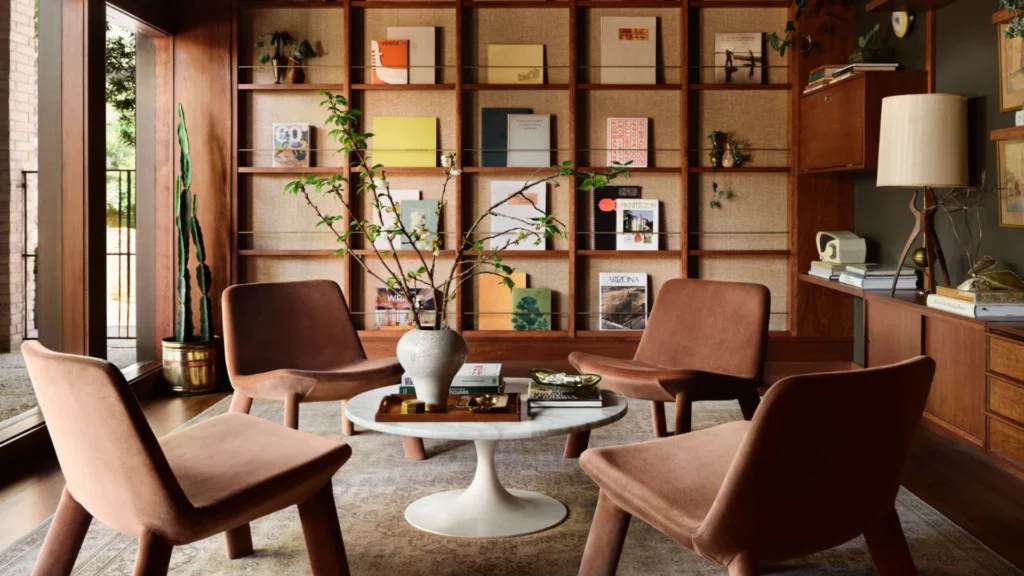
Designers often treat these installations as built-in architectural systems, crafted in materials ranging from warm walnut and oak to lacquered finishes and brushed metals. When combined with a thoughtful reading corner layout, these shelves transform an ordinary room into an intimate intellectual retreat.
Materiality and Craftsmanship
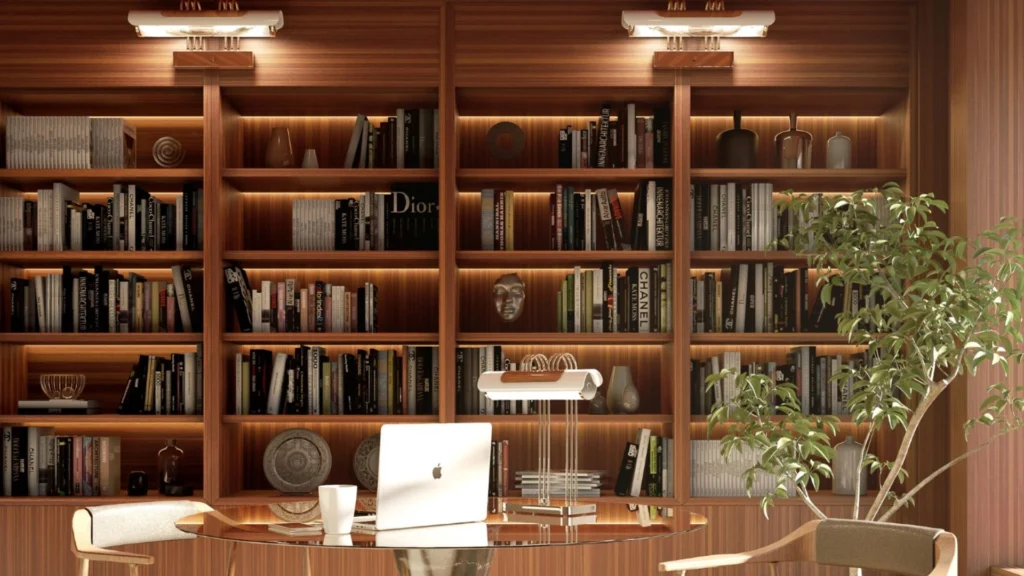
The success of floor-to-ceiling shelving lies in material expression. Natural woods bring warmth and timeless sophistication, while lacquered finishes introduce contemporary precision. Metal frameworks, meanwhile, evoke gallery-like minimalism that resonates with modern home library design principles.
According to the Architectural Digest, integrated shelving remains one of the most influential design features in luxury residences, precisely because it merges architecture with personal narrative.
Designing an Intelligent Reading Corner Layout
While shelving defines the architectural envelope, the true experience of a library emerges through the reading corner layout. This micro-environment within the larger room shapes how the user interacts with the collection.
A successful reading corner layout balances ergonomics, lighting, and spatial intimacy. The goal is to create a dedicated enclave that feels both sheltered and visually connected to the broader room.
Key Elements of a Refined Reading Corner
- A comfortable reading chair with proper lumbar support.
- A well-proportioned side table for books, beverages, or writing tools.
- Layered lighting, including task lighting and ambient sources.
- Strategic placement within the shelving architecture.
- Textural accents such as rugs or throws that soften the space.
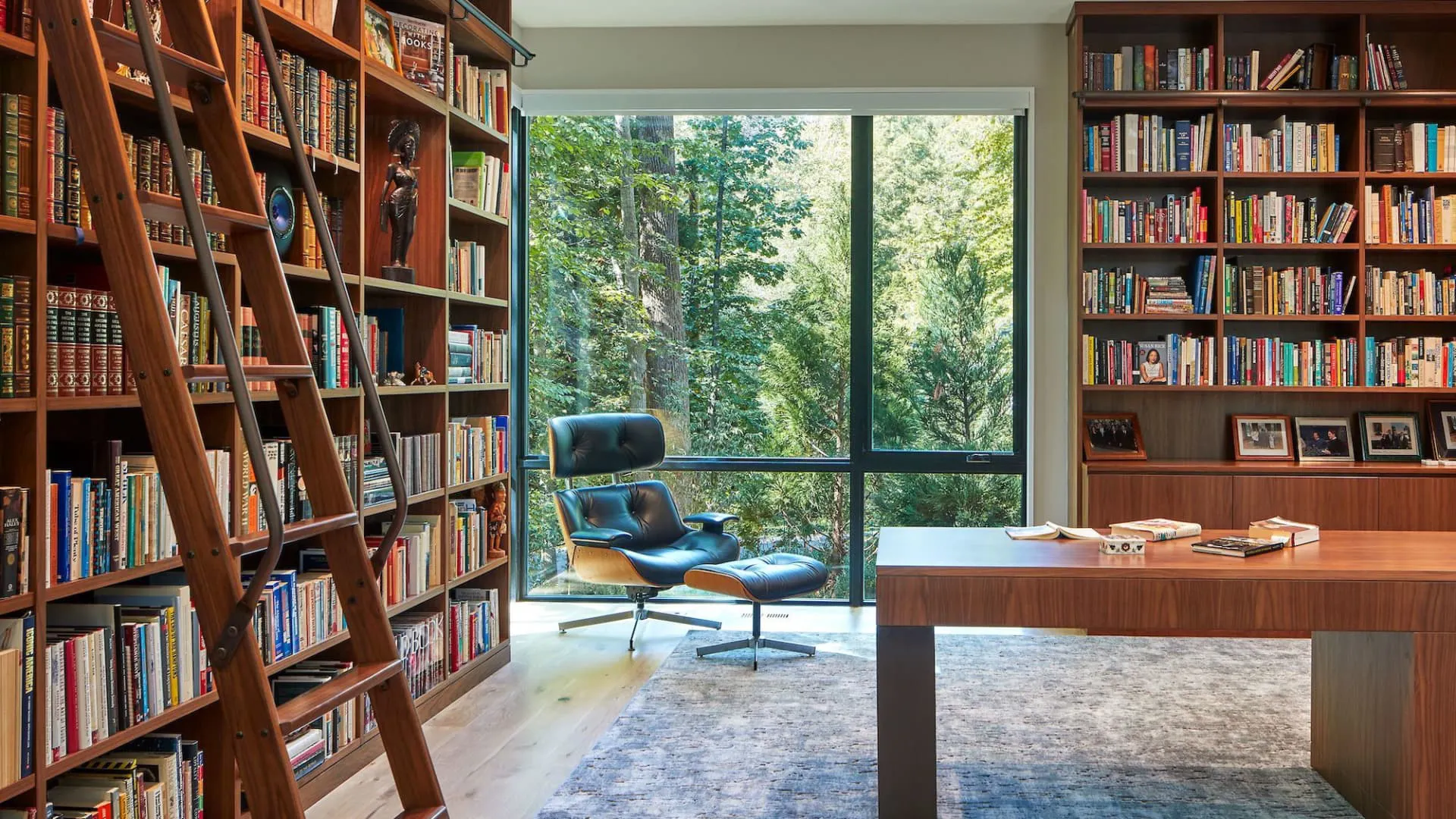
Within contemporary home library design, designers frequently place the reading corner near natural light sources, such as tall windows or skylights, allowing daylight to interact with the bookshelves and furniture.
The Role of Reading Chairs in Home Library Design
A reading chair anchors the emotional center of the library. It must provide physical comfort while visually harmonizing with the architectural shelving.
In sophisticated home library design, the reading chair functions as both a sculptural object and a practical tool. Designers often select pieces with generous proportions, tactile upholstery, and elegant silhouettes that echo the rhythm of the shelving.
Ideal Chair Characteristics
- Deep seating that encourages long reading sessions.
- High or winged backs that create acoustic and visual intimacy.
- Premium upholstery such as wool, leather, or boucle.
- Rotational flexibility for dynamic reading corner layout options.
The chair’s placement should feel naturally embedded within the shelving environment. A slightly angled orientation toward the shelves enhances the sensory relationship between reader and collection.
The Subtle Importance of Side Tables
While often understated, side tables play a crucial role in a functional reading corner layout. They provide practical support while reinforcing the aesthetic coherence of the library.
The most effective side tables strike a delicate balance between scale and presence. They should remain visually light enough not to compete with the shelving while offering enough surface area for books, notebooks, or a cup of tea.
Design Guidelines for Side Tables
- Choose materials that complement shelving finishes.
- Maintain proportional harmony with the reading chair.
- Consider multi-level designs for additional storage.
- Ensure stable placement within the reading corner layout.
Stone, marble, or bronze side tables often introduce a tactile counterpoint to wooden shelves, enriching the overall home library design.
Spatial Strategies for Integrating Shelves and Seating
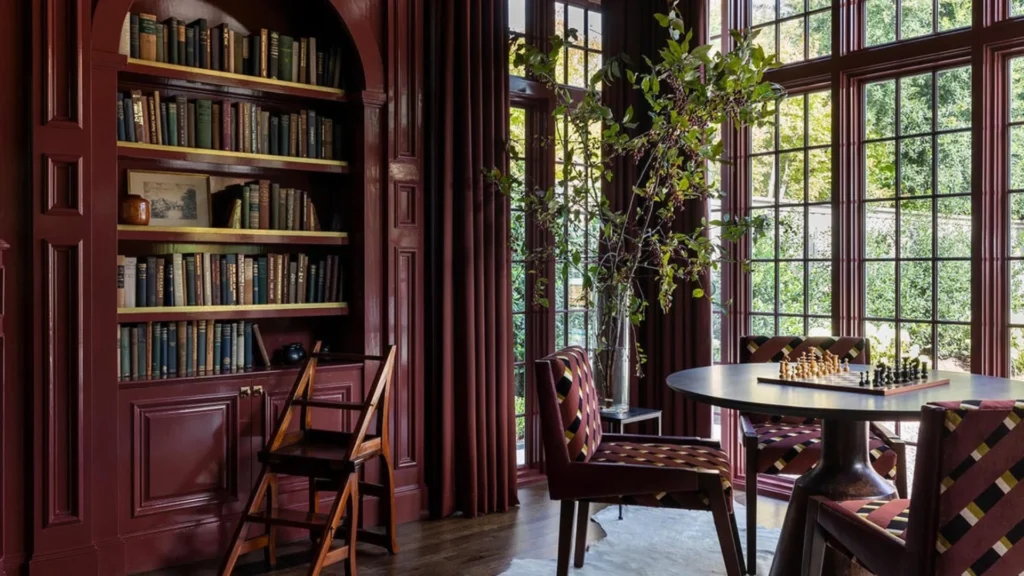
Integrating furniture within floor-to-ceiling shelving requires spatial sensitivity. Designers frequently experiment with built-in niches, recessed seating areas, or layered zones to refine the reading corner layout.
Common Architectural Approaches
1. The Library Alcove
A recessed alcove carved into the shelving wall creates a cocoon-like reading environment. This strategy strengthens the sense of intimacy central to successful home library design.
2. Floating Reading Corners
Positioning a reading chair slightly away from the shelving wall produces a more open reading corner layout while maintaining visual alignment with the books.
3. Window-Adjacent Libraries
Placing the reading corner near tall windows merges natural light with vertical shelving, creating one of the most sought-after compositions in modern home library design.
Lighting the Modern Home Library
Lighting profoundly influences the atmosphere of a library. Without careful illumination, even the most beautiful shelving can feel static.
Effective lighting strategies within a reading corner layout typically combine three layers:
- Ambient lighting to softly illuminate the entire library.
- Integrated shelf lighting to highlight books and objects.
- Focused task lighting for the reading chair.
Architects often integrate LED strips within shelving structures, creating subtle halos of light that enhance both the collection and the architectural lines of the shelves.
Balancing Aesthetics and Function
In luxury interiors, home library design must reconcile beauty with usability. Floor-to-ceiling bookshelves may appear visually dominant, yet their true success depends on human interaction.
A well-designed reading corner layout ensures that books remain accessible, seating remains inviting, and circulation flows naturally around the space.
Designers frequently achieve this balance by:
- Introducing rolling ladders or hidden step systems.
- Varying shelf heights to accommodate books and decorative objects.
- Creating negative space to prevent visual overcrowding.
- Integrating furniture seamlessly into the architectural composition.
Home Library Design as Cultural Expression
Beyond its practical role, the home library remains a powerful cultural symbol. Floor-to-ceiling bookshelves communicate intellectual curiosity, personal identity, and aesthetic refinement.
Within contemporary residences—from metropolitan penthouses to expansive countryside estates—the library increasingly serves as a sanctuary for reflection. A carefully orchestrated reading corner layout amplifies this experience, transforming reading into a ritual rather than a casual activity.
For architects and designers, the challenge lies not only in arranging shelves and furniture but in shaping an atmosphere that invites contemplation. Through thoughtful home library design, the reading corner becomes a place where architecture, literature, and lifestyle intersect.
Designing Spaces That Invite Reflection
Floor-to-ceiling bookshelves represent more than storage—they are architectural statements that define the identity of a room. When paired with elegant reading chairs and refined side tables, they create environments that celebrate both knowledge and comfort.
By prioritizing intelligent home library design and crafting a thoughtful reading corner layout, designers can transform libraries into immersive living spaces. These rooms become places where quiet moments flourish, where design enhances intellectual curiosity, and where the simple act of reading evolves into a luxurious daily ritual.
Ultimately, the most compelling libraries are those where architecture disappears into experience—where shelves, seating, and light converge to create a timeless refuge for the mind.