

A fireplace has long been considered the emotional and architectural heart of the home. Whether sculptural and contemporary or carved in stone with historic gravitas, it possesses a gravitational pull that shapes the entire living room layout. For architects, interior designers, and discerning homeowners, mastering furniture placement around fireplace is not merely a decorative decision—it is a spatial strategy that determines flow, hierarchy, and comfort.
In high-caliber interiors, the fireplace becomes more than a focal point; it establishes alignment, proportion, and conversation. Yet centering a living room properly requires nuance. Sofa placement, circulation pathways, and sightlines must coexist with architectural constraints, art installations, and increasingly, integrated media walls.
This guide explores how to orchestrate an elegant living room layout that respects the fireplace while maintaining balance, functionality, and aesthetic integrity.
The Fireplace as Architectural Anchor
From classical salons to contemporary penthouses, the fireplace historically symbolized gathering, warmth, and prestige. According to the Architectural Digest editorial archives, focal-point planning remains one of the most consistent principles in high-end residential design. In modern projects, that focal point often remains the hearth—even when flames are gas-fed or digitally simulated.
Understanding furniture placement around fireplace begins with recognizing the fireplace as:
- An axial marker within the room
- A visual anchor that establishes symmetry
- A heat source influencing material and distance choices
- A narrative element reflecting architectural character
The most refined living room layout solutions treat the fireplace not as an obstacle but as a design compass.
Symmetry vs. Asymmetry: Choosing the Right Dialogue
In classical interiors, symmetrical arrangements—twin armchairs flanking the hearth, a central sofa facing it—create order and formality. This approach to furniture placement around fireplace suits grand proportions, panelled walls, and heritage properties.
Contemporary spaces often embrace asymmetry. A sculptural lounge chair offset to one side, a low-profile sectional angled toward the fire, or curated accent tables can create dynamic tension. Here, sofa placement becomes an expressive tool rather than a rigid alignment exercise.
Establishing the Ideal Living Room Layout
A successful living room layout begins with zoning. The fireplace may define the primary seating cluster, but secondary functions—reading corners, piano placement, or integrated bar cabinetry—must coexist harmoniously.
Step 1: Measure and Map Circulation
Before finalizing furniture placement around fireplace, define clear circulation routes. Professionals typically allow:
- 90–100 cm minimum for primary walkways
- 45 cm between coffee table and seating
- 30–45 cm between sofa and side table
Improper circulation compromises both comfort and elegance, no matter how refined the materials.
Step 2: Determine Primary Sightlines
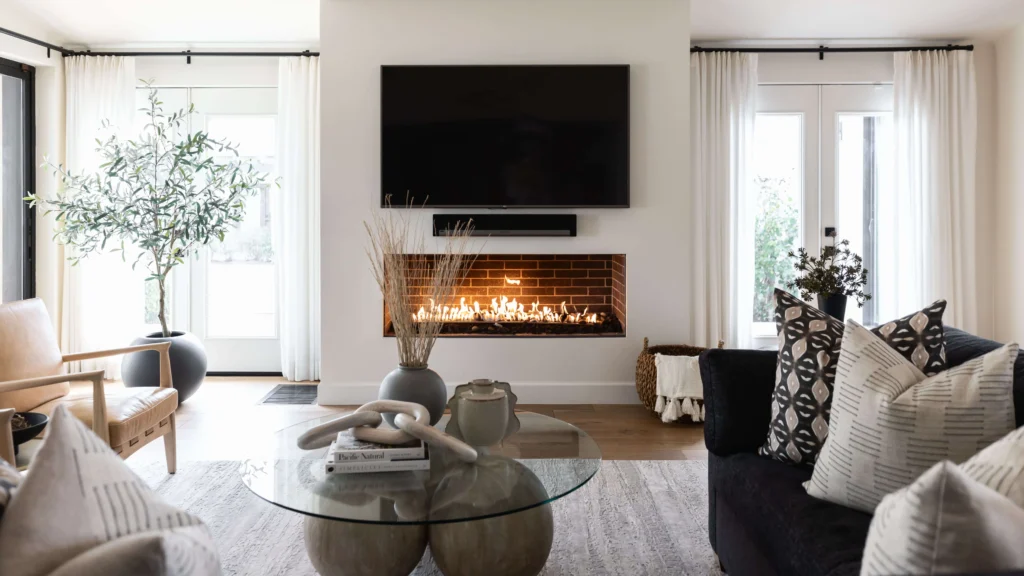
Does the fireplace compete with panoramic windows? Is there a television above the mantel? In luxury residences, designers often negotiate a dual focal strategy—balancing fire and media without sacrificing compositional integrity.
In this context, sofa placement should ensure optimal viewing angles to both elements while maintaining ergonomic depth and proportion.
Step 3: Anchor with the Sofa
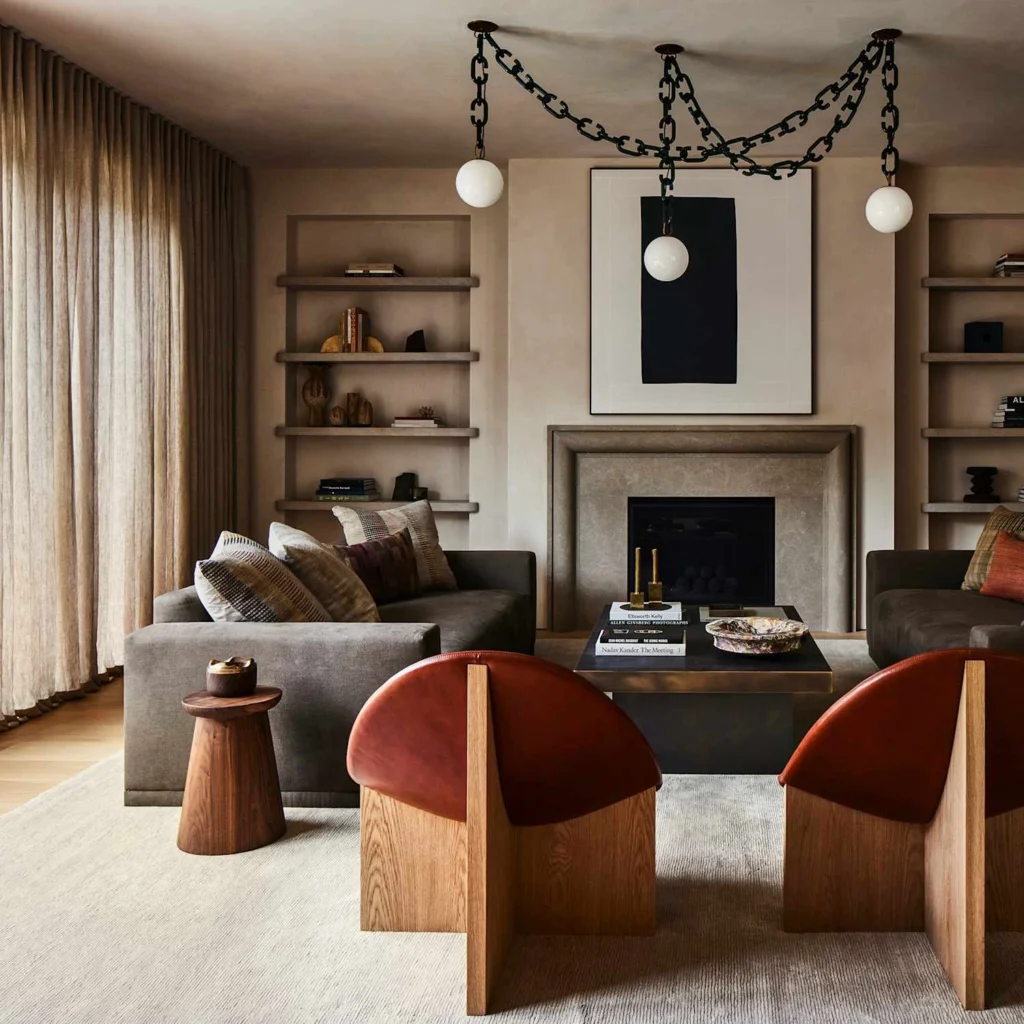
The sofa remains the cornerstone of the living room layout. When centering a room around the hearth, consider three refined approaches:
- Direct Alignment: Sofa facing the fireplace for classic symmetry.
- L-Configuration: Sectional partially oriented toward the fire, encouraging conversation.
- Floating Arrangement: Sofa positioned away from walls to create architectural depth.
Each solution reshapes furniture placement around fireplace and influences spatial perception.
Sofa Placement: Precision and Proportion
Few decisions impact a room more than sofa placement. In elite interiors, proportions are meticulously calibrated to fireplace scale. A narrow mantel demands restraint; a monumental stone hearth can accommodate generous, low-profile seating.
Distance from the Fireplace
For safety and comfort, maintain at least 90–120 cm between seating and open flames. Gas or electric installations may allow more flexibility, yet the psychological comfort of adequate spacing remains essential.
Floating vs. Wall-Hugging Sofas
Floating sofas—positioned centrally rather than against a wall—often produce the most sophisticated living room layout. They:
- Create architectural layering
- Define zones in open-plan environments
- Encourage intimate conversation clusters
Thoughtful furniture placement around fireplace transforms even expansive rooms into cohesive, welcoming environments.
Furniture Placement Around Fireplace in Different Room Types
Open-Plan Living Areas
In open-plan layouts, the fireplace frequently acts as a spatial divider. A double-sided fireplace can delineate lounge and dining areas without walls. Here, sofa placement often floats perpendicular to the hearth, reinforcing zoning while maintaining transparency.
Compact Urban Apartments
In metropolitan residences, scale discipline is paramount. Slim-profile sofas, armless lounge chairs, and nesting tables allow efficient furniture placement around fireplace without crowding. Vertical storage and integrated shelving around the hearth can amplify visual height.
Grand Salons and Luxury Villas
In expansive properties, the challenge shifts from space-saving to cohesion. Multiple seating clusters may orbit the fireplace. The primary living room layout might center directly on the hearth, while secondary arrangements address garden views or art walls.
Balancing the Fireplace with Media Integration
Modern living often introduces a television above the mantel—a controversial but practical decision. Designers increasingly integrate concealed panels or sliding art systems to preserve aesthetic hierarchy.
When planning furniture placement around fireplace in media-centric homes:
- Ensure eye-level alignment for seated viewing
- Maintain balanced proportions between screen and mantel
- Consider acoustic treatments in large rooms
Strategic sofa placement must accommodate both flame and frame without privileging one excessively.
Materiality and Texture: Supporting the Centerpiece
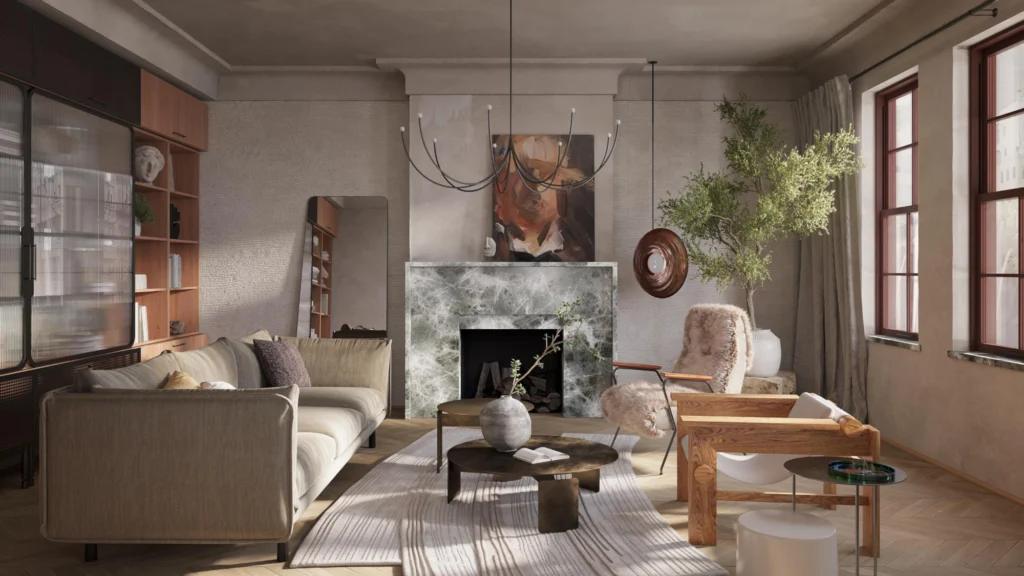
A refined living room layout extends beyond geometry. Texture amplifies warmth. Natural wool rugs anchor seating clusters. Marble coffee tables echo stone mantels. Velvet or boucle upholstery softens architectural rigidity.
Layered materials reinforce intentional furniture placement around fireplace, ensuring the hearth feels integrated rather than isolated.
Rugs as Spatial Frames
A properly scaled rug should extend beneath the front legs of all primary seating pieces. This visually consolidates sofa placement and reinforces unity.
Lighting the Fireplace-Centered Living Room
Lighting defines mood as profoundly as flame. Layered illumination enhances the living room layout and complements the hearth’s glow.
- Ambient: Recessed ceiling fixtures or concealed coves.
- Task: Reading lamps near lounge chairs.
- Accent: Wall washers highlighting mantel textures.
Thoughtful lighting refines furniture placement around fireplace by sculpting depth and shadow.
Common Mistakes to Avoid
Even experienced designers can miscalculate spatial relationships. The most frequent errors include:
- Pushing all furniture against walls, weakening the focal hierarchy
- Oversized sectionals overwhelming the hearth
- Ignoring traffic flow for aesthetic symmetry
- Positioning seating too far from the fireplace, diluting intimacy
Correct sofa placement restores proportion and enhances experiential comfort.
Design Philosophy: Beyond Formula
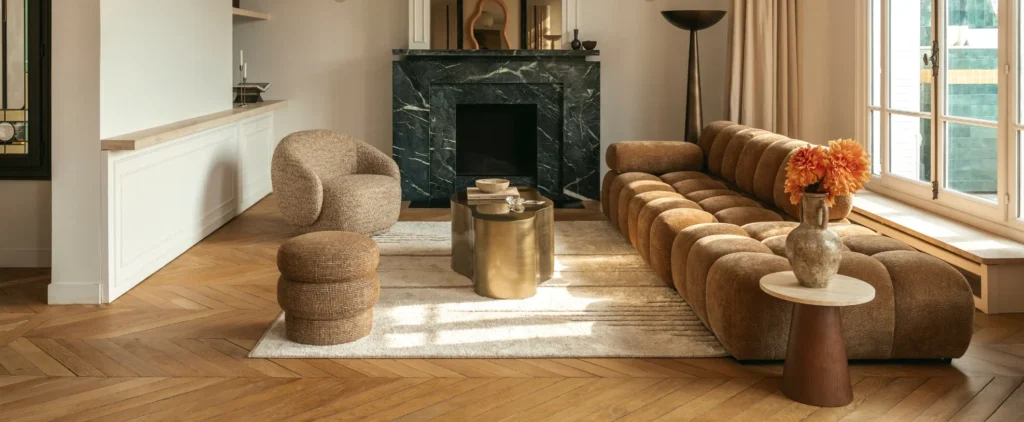
Ultimately, furniture placement around fireplace is not formulaic. It requires sensitivity to architecture, lifestyle, and cultural context. In Scandinavian interiors, minimal lines frame a restrained hearth. In Mediterranean villas, textured plaster and generous sofas create enveloping warmth.
A masterful living room layout respects both tradition and contemporary living patterns. It considers how residents entertain, relax, read, and gather.
Centering with Intention
The fireplace remains one of the most enduring architectural gestures in residential design. When approached with rigor and artistry, it can elevate the entire living room layout. Through calibrated sofa placement, deliberate circulation planning, and nuanced furniture placement around fireplace, designers craft rooms that feel both anchored and effortless.
In refined interiors, centering a living room properly is less about strict symmetry and more about experiential harmony. The hearth becomes a spatial compass—guiding alignment, comfort, and aesthetic coherence.
For architects, designers, and global tastemakers, mastering this balance ensures that the living room is not merely arranged, but truly composed.