

Open plan living has become the architectural signature of contemporary luxury residences—from Manhattan lofts to Mediterranean villas and coastal retreats. Walls have dissolved, sightlines have expanded, and interiors now unfold as fluid landscapes of light and movement. Yet with this spatial generosity comes a sophisticated design challenge: how to define distinct zones without interrupting the architectural flow.
For architects, interior designers, and discerning homeowners, the question is not whether to divide space, but how to orchestrate a nuanced furniture layout that creates intimacy, hierarchy, and purpose within a single volume. The answer lies in strategic placement, material intelligence, and a deep understanding of spatial psychology.
This guide explores how furniture becomes the primary architectural tool in open plan living environments—shaping zones for dining, lounging, working, and entertaining—without resorting to walls.
The Philosophy of Zoning in Open Plan Living
At its most refined, open plan living is not about emptiness; it is about continuity. Spatial zoning should feel intuitive rather than imposed. The goal is to maintain visual permeability while subtly signaling function.
Design theorists often reference the concept of “prospect and refuge,” explored in environmental psychology and discussed in publications such as Architectural Digest. Humans instinctively seek areas that offer both openness and protection. A well-considered furniture layout can create these micro-environments within a single expansive room.
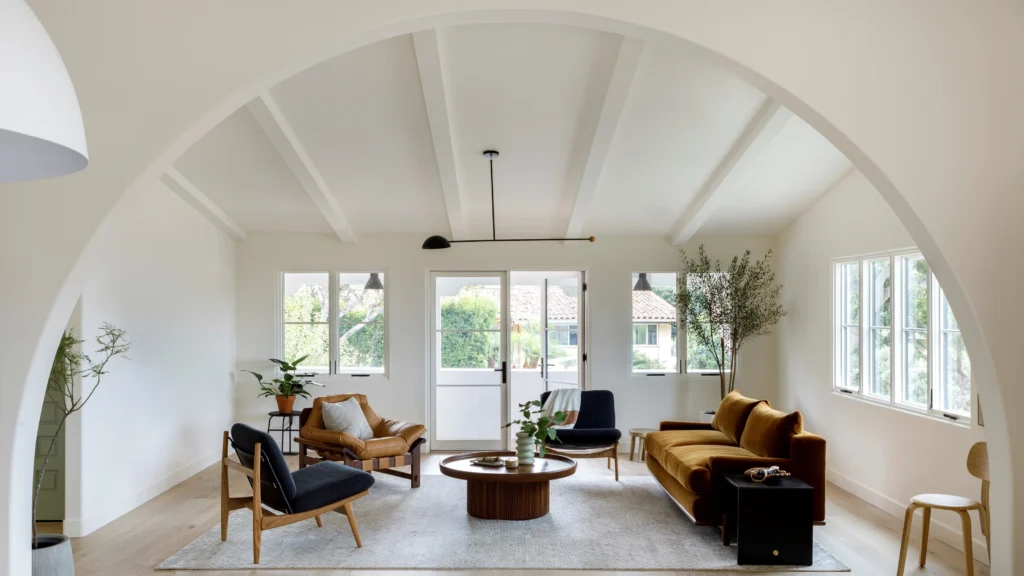
Why Furniture Is the New Architecture
In the absence of walls, furniture performs multiple roles:
- Spatial divider without blocking light
- Visual anchor that defines purpose
- Circulation guide directing movement
- Acoustic softener improving comfort
The most successful open plan living spaces feel cohesive yet layered—each zone clearly articulated, yet seamlessly connected.
Establishing the Primary Living Zone
The living area typically forms the emotional center of an open plan living environment. Its placement should respond to natural light, focal points, and circulation paths.
Use the Sofa as a Spatial Boundary
A generously proportioned sofa positioned away from the wall immediately defines territory. In a refined furniture layout, the back of the sofa often acts as a subtle divider between the lounge and dining areas.
- Float the sofa centrally to create a “room within a room.”
- Align it with architectural features such as fireplaces or glazing.
- Pair with a console behind to reinforce the boundary.
This approach preserves openness while clearly delineating use.
Anchor with a Rug
A rug is one of the most powerful zoning tools in open plan living. It visually contains furniture and establishes scale.
- Select a rug large enough for all major pieces to sit partially or fully on it.
- Contrast textures between zones to enhance distinction.
- Maintain proportional harmony to avoid fragmentation.
When executed thoughtfully, the rug becomes an invisible architectural frame.
Defining the Dining Area Without Enclosure
Dining zones within open plan living must feel intentional rather than incidental. A carefully curated furniture layout ensures the table is neither adrift nor congested.
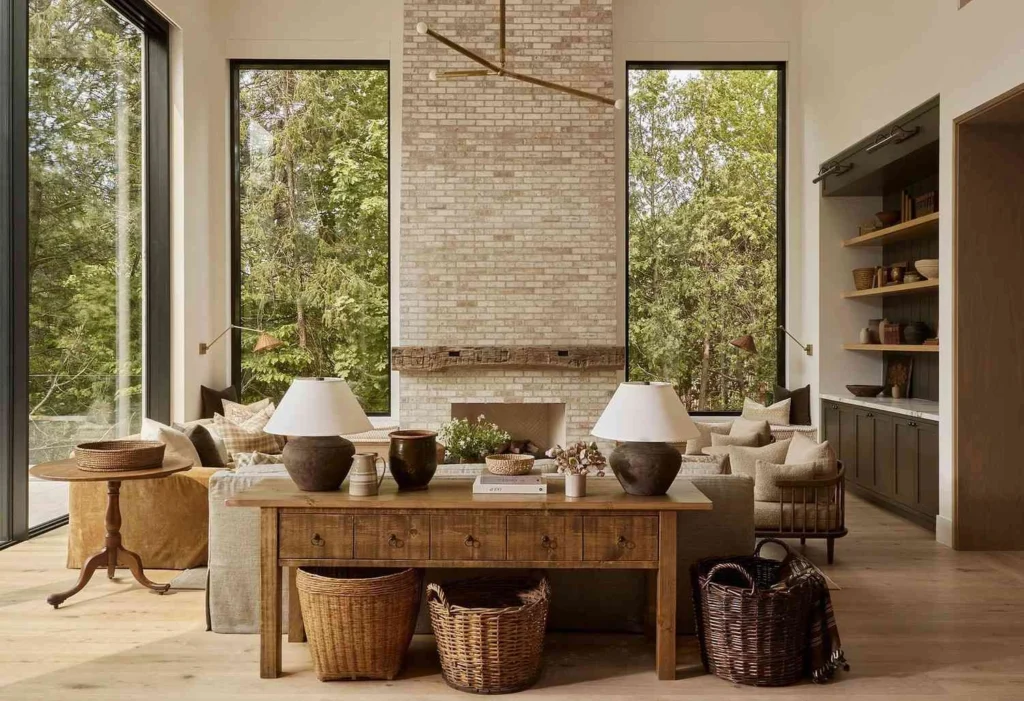
Centering and Alignment
Align the dining table with overhead lighting or architectural axes. A sculptural pendant fixture can create a vertical boundary that visually lowers the ceiling over the table, reinforcing intimacy.
Material Transitions
Subtle material shifts can distinguish areas without physical barriers:
- Different wood finishes between dining and lounge furniture
- Upholstery contrasts that maintain tonal harmony
- Metal accents that echo across zones for cohesion
In high-end interiors, repetition of materials ensures unity, while variation introduces clarity.
Integrating a Workspace Seamlessly
As hybrid lifestyles become permanent, integrating a workspace into open plan living is increasingly essential. The challenge is discretion.
Strategic Placement
Position desks near natural light yet slightly removed from primary circulation routes. Consider:
- Placing the desk behind a sofa to form a secondary zone.
- Using shelving units as semi-transparent partitions.
- Employing tailored cabinetry that conceals equipment when not in use.
A refined furniture layout allows productivity to coexist with leisure without visual clutter.
Circulation: The Invisible Framework
In open plan living, circulation must remain intuitive. Designers often map pathways before placing any furniture. Clear routes—typically 90 to 120 centimeters wide—prevent zones from feeling congested.
Consider movement between:
- Entry and living area
- Kitchen and dining table
- Lounge and terrace access
A masterful furniture layout supports these transitions naturally, without abrupt detours.
Using Height and Volume to Define Space
Verticality is frequently overlooked in open plan living. Varying heights can subtly distinguish functions.
Low vs. High Elements
- Low-profile seating maintains visual openness.
- Tall bookcases or screens introduce gentle separation.
- Statement lighting defines zones from above.
By layering heights, designers create rhythm within a unified volume.
The Role of Lighting in Spatial Zoning
Lighting is arguably as influential as furniture in shaping open plan living environments.
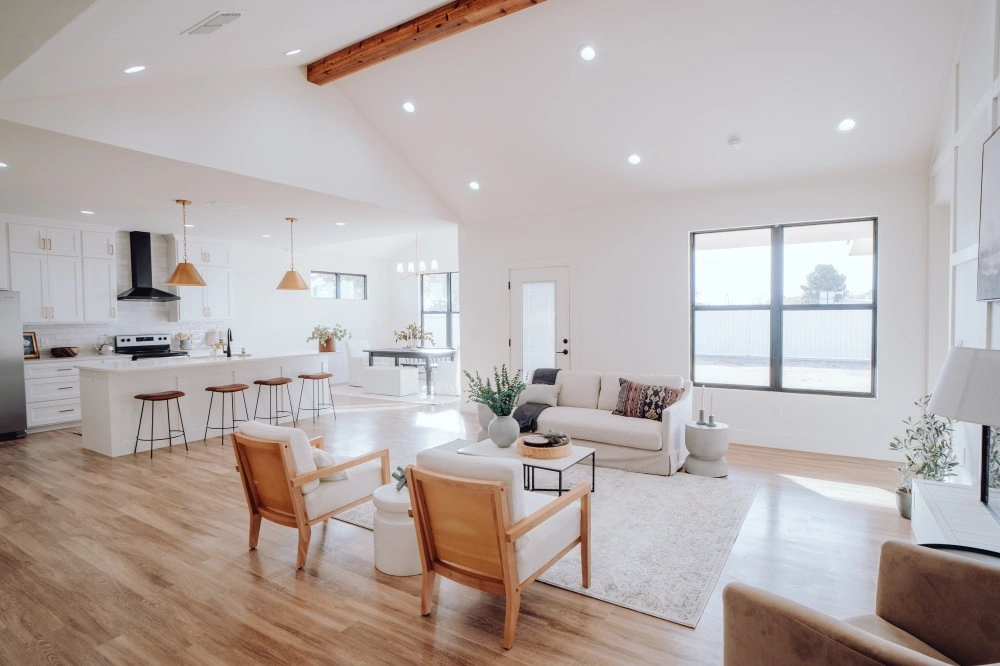
Layered Lighting Strategy
- Ambient lighting for overall cohesion
- Task lighting for work and dining precision
- Accent lighting to emphasize artwork or architectural features
Each lighting layer reinforces the intended furniture layout, clarifying purpose without erecting barriers.
Color, Texture, and Visual Continuity
In open plan living, excessive contrast can fragment space. Conversely, monotony diminishes character. The solution lies in controlled variation.
- Adopt a cohesive base palette.
- Introduce tonal shifts between zones.
- Repeat key materials across the entire space.
This ensures that while each zone feels distinct, the overall composition remains harmonious.
Common Mistakes in Open Plan Furniture Layout
Even expansive interiors can feel disordered without strategic planning. Avoid:
- Pushing all furniture against walls, which creates a void in the center.
- Using underscaled rugs that visually shrink zones.
- Ignoring sightlines between key areas.
- Overcrowding circulation paths.
A successful furniture layout balances generosity with restraint.
Case Study Principles for Luxury Residences
In premium real estate developments, open plan living often connects to terraces, gardens, or panoramic views. Here, zoning must respect both interior and exterior relationships.
Designers frequently:
- Align lounge seating toward views while maintaining conversation clusters.
- Use indoor-outdoor materials to extend zones seamlessly.
- Position dining areas adjacent to kitchens yet visually distinct.
Such strategies elevate open plan living from functional necessity to architectural experience.
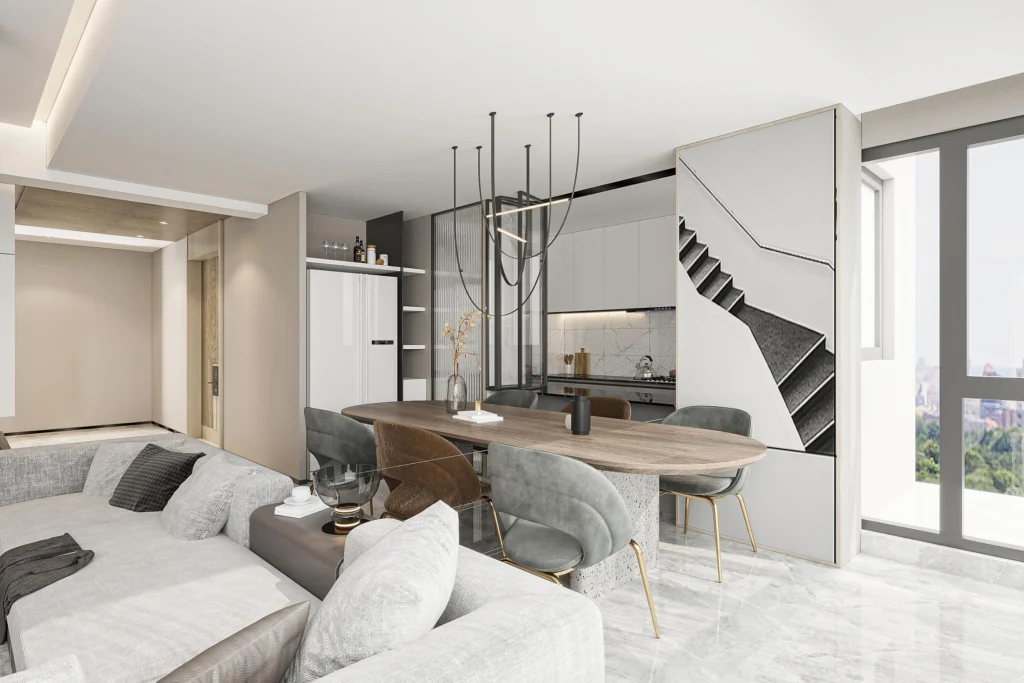
The Emotional Dimension of Open Plan Living
Beyond aesthetics, zoning influences how a space feels. A thoughtfully executed furniture layout fosters:
- Comfort and psychological security
- Ease of entertaining
- Visual clarity
- Acoustic balance
In high-end interiors, luxury is not defined by scale alone, but by how intuitively space responds to human behavior.
Designing Flow Without Compromise
Open plan living represents modernity’s desire for connection—between people, functions, and environments. Yet openness without intention can feel undefined. Through a disciplined and artful furniture layout, designers transform expansive rooms into curated landscapes of living.
The future of interior architecture lies not in erecting walls, but in mastering the subtle language of placement, proportion, and material dialogue. When zoning is executed with intelligence and elegance, open plan living becomes both expansive and intimate—a seamless choreography of space tailored to contemporary life.