

Each year, the world’s most influential design fairs act as cultural barometers, revealing not only what is new, but what is next. From Milan to Paris, these global stages debut ideas that quietly shape the interiors of private residences months—and often years—later. For architects, designers, real estate professionals, and discerning homeowners alike, understanding how furniture trends from design fairs translate into luxury homes is no longer optional; it is central to creating spaces that feel both contemporary and enduring.
In high-end residential projects, furniture is not a decorative afterthought. It is a strategic element that mediates between architecture, lifestyle, and emotional resonance. The journey from trade fair prototype to bespoke living room is one of refinement, contextualization, and cultural interpretation. This article explores how contemporary furniture trends introduced on the international stage are thoughtfully adapted for private residences, shaping the evolving language of high-end interior design trends.
The Role of Design Fairs as Trend Laboratories
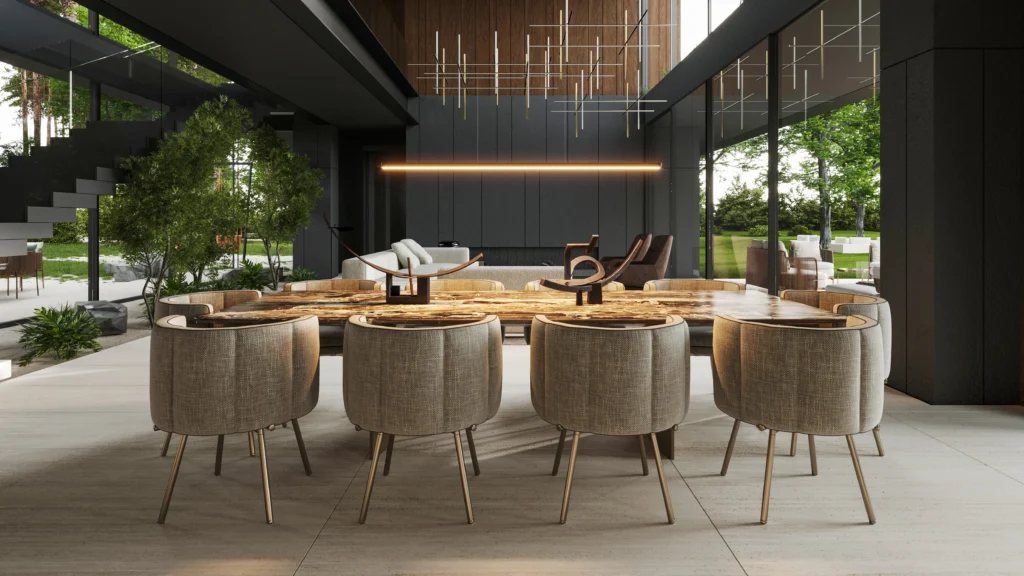
International design fairs function as experimental laboratories where manufacturers, designers, and brands test new materials, forms, and philosophies. These environments encourage boldness—sometimes theatrical, sometimes radical—that would be impractical in a residential setting without careful translation.
Rather than dictating direct replication, design fairs establish conceptual frameworks. Curved silhouettes, tactile materials, modular systems, and sustainability narratives often debut here in their purest form. Over time, these ideas are softened, edited, and adapted to suit the rhythms of daily life.
Why Design Fairs Matter to Residential Interiors
- They set the aesthetic agenda for upcoming seasons in furniture and interiors.
- They influence manufacturers’ long-term collections, not just limited editions.
- They reflect broader cultural shifts—from wellness to environmental responsibility.
- They guide investment decisions for developers and private collectors alike.
For luxury residences, the value lies not in following trends verbatim, but in understanding their underlying logic.
From Concept to Context: Translating Trends into Homes
The transition from trade fair to private residence is a process of curation. What appears striking under exhibition lighting must be recalibrated for intimacy, comfort, and longevity. This is where professional discernment becomes essential.
Editing Scale and Proportion
Furniture trends from design fairs often emphasize generous proportions and sculptural presence. In private homes, these statements are recalibrated to maintain balance within architectural constraints. Oversized sofas become modular seating systems; monumental tables are refined through material lightness or softened edges.
Material Innovation Meets Everyday Living
Design fairs are platforms for material experimentation—textured stones, innovative composites, recycled metals, and artisanal finishes. In residential interiors, these materials are selected for durability as much as beauty, ensuring they age gracefully while retaining their tactile appeal.
According to Architectural Digest, the most successful interiors today balance innovation with familiarity, allowing new materials to feel intuitive rather than intrusive.
Key Contemporary Furniture Trends Shaping Luxury Homes
Several contemporary furniture trends consistently emerge from leading fairs and find lasting relevance in high-end residences worldwide.
Soft Geometry and Organic Forms
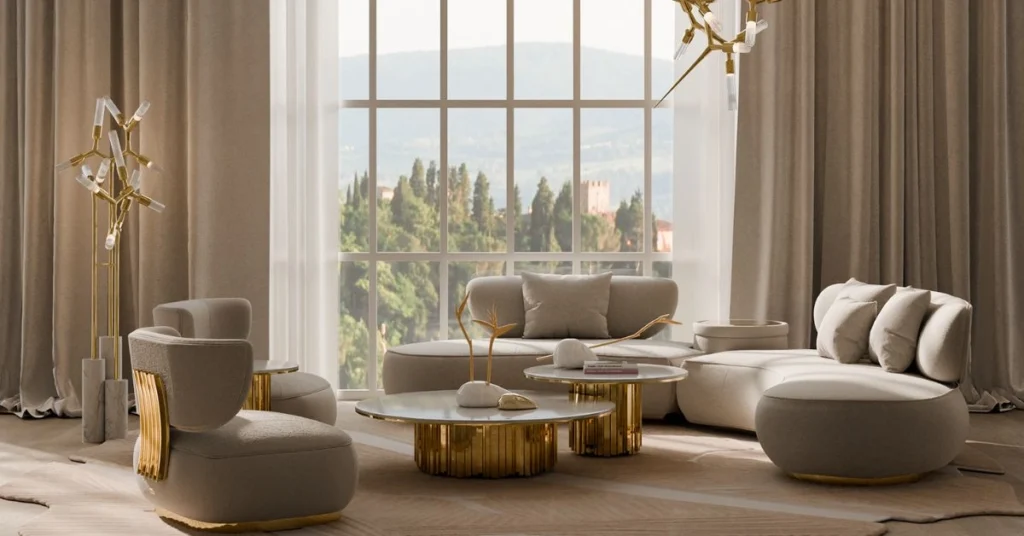
Rigid minimalism has given way to softer, more fluid silhouettes. Rounded sofas, curved armchairs, and oval tables introduce a sense of ease and approachability. In private residences, these forms encourage movement and conversation, reinforcing the home as a place of comfort rather than display.
Tactility as a Design Priority
Luxury today is increasingly experienced through touch. Bouclé upholstery, brushed wood grains, honed stone, and hand-finished leathers transform furniture into sensory objects. This emphasis on tactility, first amplified at design fairs, translates seamlessly into residential settings where emotional comfort is paramount.
Modularity and Adaptability
Modern lifestyles demand flexibility. Modular furniture systems showcased at fairs respond to this need, offering configurations that evolve with changing uses. In luxury homes, modularity supports both intimate living and large-scale entertaining without compromising aesthetic coherence.
A New Language of Sustainability
Sustainability has moved beyond messaging to become a design driver. Responsible sourcing, longevity of materials, and transparency of production are now integral to high-end interior design trends. In private residences, this translates into furniture choices that align ethics with aesthetics.
The Designer’s Eye: Interpreting Trends with Restraint
For architects and interior designers, the challenge lies in interpretation rather than adoption. A luxury residence must reflect the identity of its occupants as much as the spirit of its time. Trends serve as reference points, not prescriptions.
Balancing Timelessness and Relevance
The most refined interiors incorporate contemporary furniture trends without becoming time-bound. Designers often anchor spaces with classic proportions or neutral palettes, allowing trend-driven pieces to act as accents rather than focal points.
Custom and Bespoke Adaptations
High-net-worth clients increasingly seek customization. Furniture trends from design fairs inspire bespoke adaptations—altered dimensions, exclusive finishes, or tailored configurations—that ensure uniqueness while retaining contemporary relevance.
Luxury Real Estate: Furniture as a Value Signal
In the luxury real estate market, furniture plays a strategic role beyond aesthetics. Well-curated interiors communicate quality, cultural awareness, and lifestyle aspiration.
Showcasing Contemporary Living
Developers and agents use contemporary furniture trends to signal modernity and global sophistication. Prospective buyers respond to interiors that feel current yet comfortable, aspirational yet livable.
Enhancing Perceived Longevity
Furniture informed by design fairs—but thoughtfully edited—suggests longevity rather than novelty. This perception enhances property value by reassuring buyers that interiors will remain relevant beyond seasonal shifts.
Cultural Influence and Global Dialogue
Design fairs are inherently international, and the furniture trends they generate reflect a global dialogue. Japanese restraint, Scandinavian warmth, Italian craftsmanship, and French refinement often intersect within a single collection.
In private residences, this cultural layering creates interiors that feel worldly yet personal. The most compelling homes today are not defined by geography, but by a sophisticated synthesis of global influences.
The Future of Furniture Trends in Residential Design
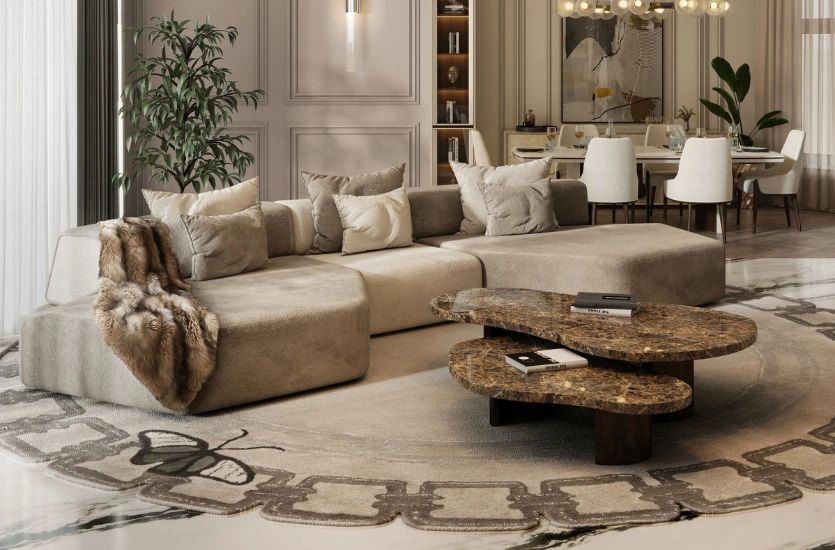
Looking ahead, the relationship between trade fairs and private residences will continue to evolve. Digital previews, limited-edition releases, and direct collaborations between designers and clients are reshaping how trends are disseminated.
From Spectacle to Substance
While fairs will remain visually compelling, their influence will increasingly be measured by substance—craftsmanship, sustainability, and emotional resonance. Luxury homes will reflect this shift through interiors that prioritize depth over display.
Furniture as a Long-Term Investment
For collectors and homeowners alike, furniture inspired by contemporary design fairs is increasingly viewed as a long-term investment. Pieces that combine innovation with timeless design transcend trends, becoming part of a home’s legacy.
Curated Translation, Not Imitation
The journey from trade fair to private residence is not about replication, but interpretation. Furniture trends from design fairs provide a lens through which designers and homeowners can understand the evolving language of contemporary living. When thoughtfully adapted, these trends enrich residential interiors with cultural relevance, material intelligence, and emotional depth.
In the realm of luxury homes, the most successful spaces are those that quietly embody the spirit of their time while remaining deeply personal. By translating contemporary furniture trends with restraint and discernment, today’s interiors achieve a balance that defines the future of high-end interior design trends.