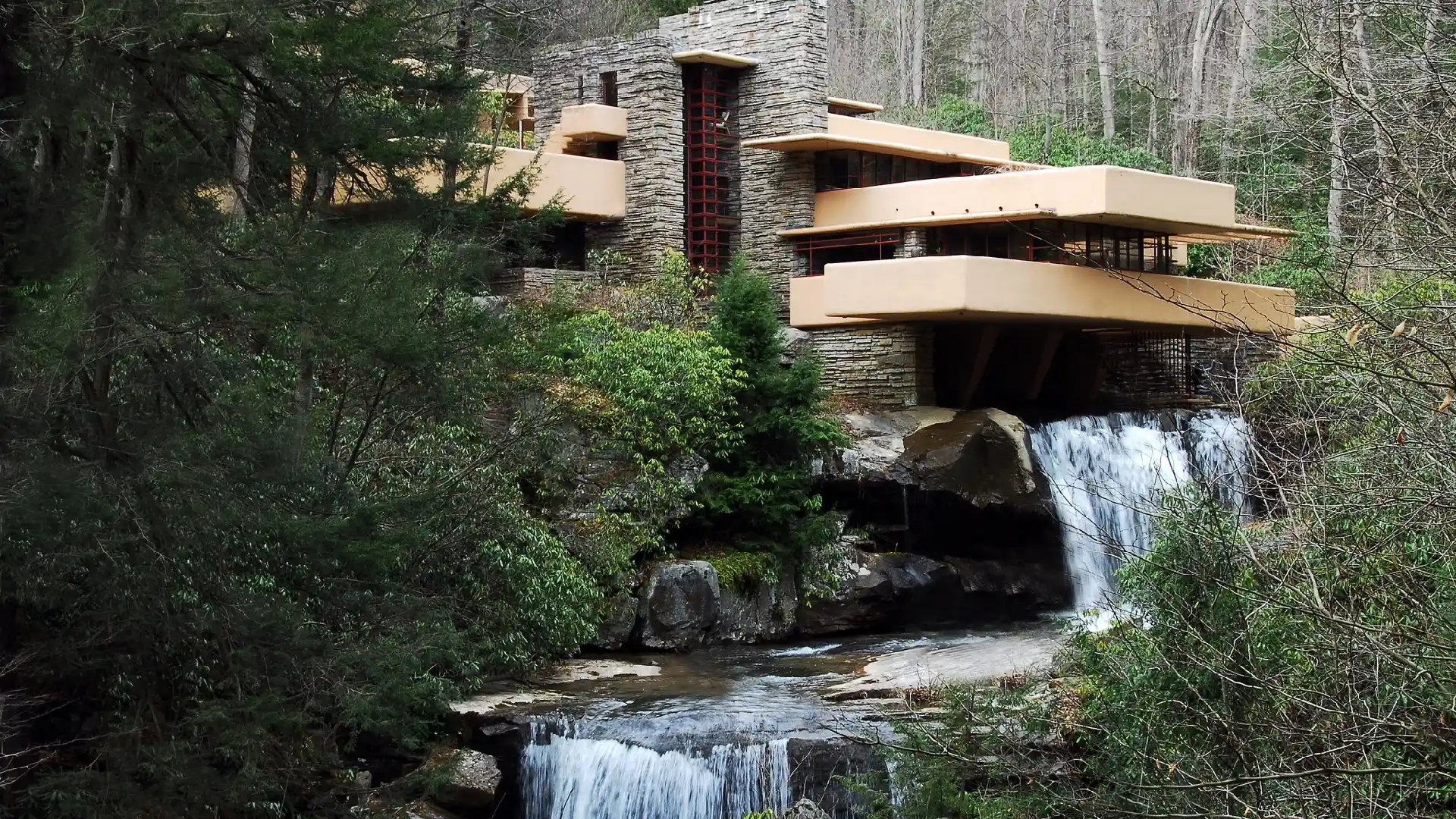

Few residential works in architectural history have reshaped the relationship between home and landscape as profoundly as Fallingwater. Designed by Frank Lloyd Wright in 1935 for the Kaufmann family in rural Pennsylvania, the house remains a defining example of organic architecture—a philosophy that advocates harmony between human habitation and the natural environment.
Rather than situating the residence with a view of the waterfall on Bear Run, Wright made the radical decision to build the house directly above it. The result is a structure that seems to grow organically from the rock ledges beneath it, blurring the boundaries between architecture, landscape, and experience. Today, Fallingwater continues to offer powerful lessons for contemporary residential design, particularly as architects and homeowners increasingly seek sustainable, nature-integrated living environments.
For architects, designers, and discerning homeowners alike, studying Fallingwater reveals how thoughtful spatial planning, material authenticity, and environmental sensitivity can create homes that feel both timeless and deeply rooted in place.
The Vision Behind Fallingwater
Commissioned by Pittsburgh department store magnate Edgar J. Kaufmann, Fallingwater was conceived during a period when Frank Lloyd Wright was redefining his architectural philosophy. His concept of organic architecture proposed that buildings should not dominate landscapes but instead become part of them.
Wright rejected the conventional approach of placing a house facing a natural feature. Instead, he envisioned the dwelling as an extension of the rocky hillside itself. By anchoring the structure into the existing stone ledges and projecting horizontal concrete terraces over the waterfall, he created a residence that appears suspended within nature.
This revolutionary approach redefined residential architecture. The home did not merely observe the landscape—it participated in it. The sound of water permeates the interior spaces, while expansive glass walls dissolve the distinction between interior and exterior environments.
Organic Architecture: A Philosophy Rooted in Nature
At the core of Fallingwater lies Wright’s philosophy of organic architecture, a concept that continues to influence architects worldwide. Rather than imposing rigid geometric forms upon a site, organic architecture encourages a design language that responds to its surroundings.
In the case of Fallingwater, Wright studied the rock formations, forest canopy, and natural water flow before designing the residence. The resulting composition feels inevitable, as though the home had always belonged to the landscape.
Key principles of organic architecture visible in Fallingwater include:
- Integration with site topography rather than altering the natural terrain.
- Use of natural materials sourced locally.
- Fluid spatial relationships between interior and exterior spaces.
- Human-centered design that enhances sensory connection with nature.
These principles remain highly relevant today as designers confront environmental challenges and seek more sustainable approaches to residential architecture.
Architecture That Grows from the Landscape
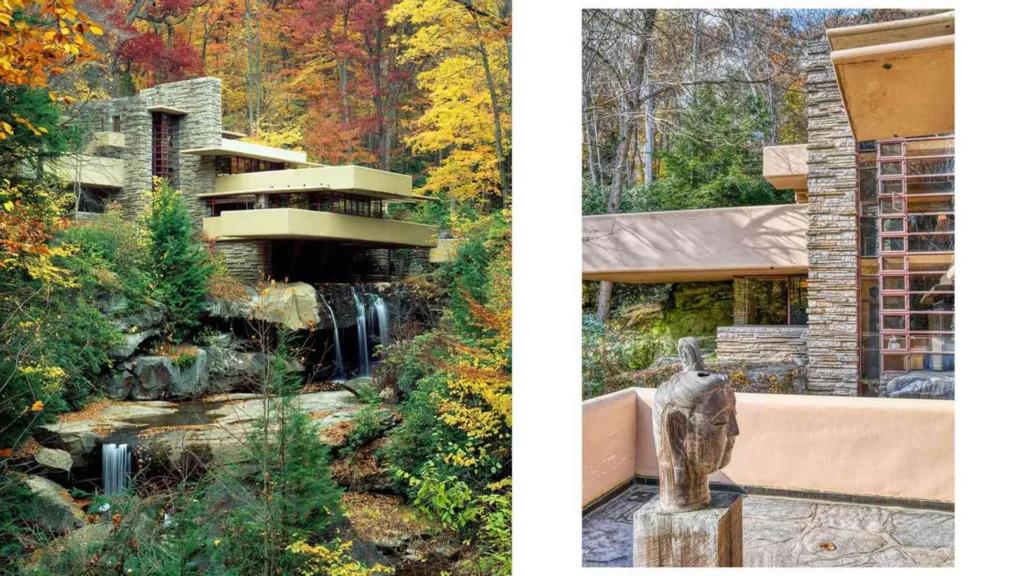
Perhaps the most striking lesson of Fallingwater lies in its seamless relationship with the surrounding terrain. Wright anchored the structure directly into the sandstone bedrock, allowing the house to emerge from the hillside like a geological extension of the site.
The cantilevered terraces—one of the most iconic elements of Fallingwater—echo the layered rock formations found along Bear Run. Their strong horizontal lines mirror the natural stratification of the cliffs while offering panoramic views of the forest canopy.
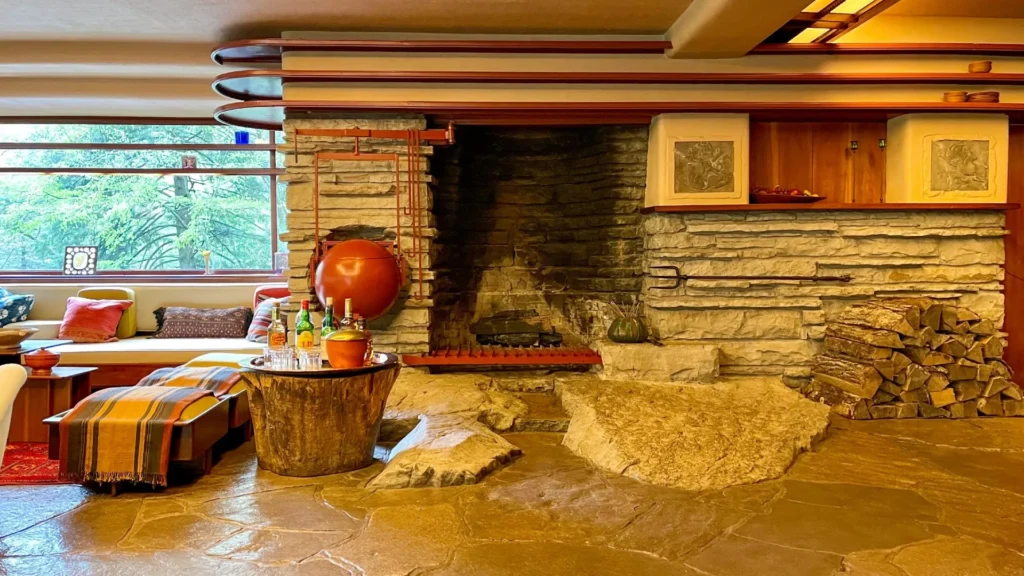
Inside the home, Wright reinforced this connection by leaving portions of natural rock exposed in the floors and hearth. The living room fireplace, for example, rises directly from the existing stone ledge, grounding the interior space in its natural context.
This design strategy demonstrates how architecture can enhance rather than compete with its environment—a lesson increasingly embraced in contemporary luxury residences and eco-conscious developments.
The Sensory Experience of Living with Water
Beyond its visual drama, Fallingwater offers a deeply sensory living experience. Wright intentionally allowed the sound of cascading water to permeate the home, creating a constant connection to the natural rhythms of the site.
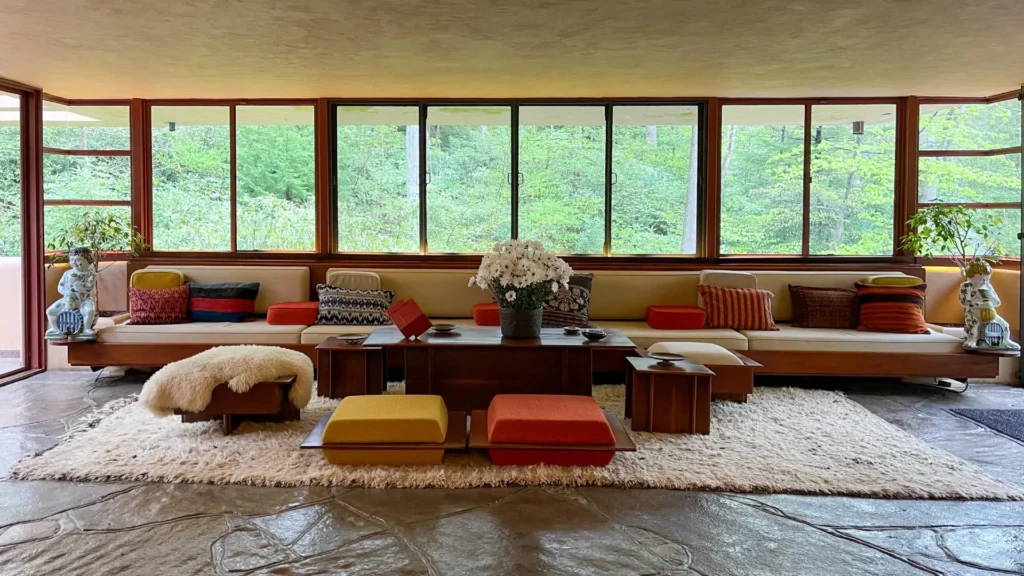
Large expanses of corner windows open outward without visible structural interruptions, dissolving the boundary between indoor and outdoor space. Terraces extend living areas into the forest, while narrow staircases descend directly to the stream below.
For modern residential design, this approach suggests that architecture should engage multiple senses—not only sight but also sound, texture, and atmosphere. Homes that connect occupants to natural elements often foster a deeper sense of well-being and tranquility.
Material Authenticity and Timeless Craft
Another defining lesson of Fallingwater lies in its material palette. Wright selected materials that reflected the character of the surrounding environment, reinforcing the home’s organic identity.
The residence features locally quarried sandstone, warm-toned concrete terraces, and steel-framed windows finished in Cherokee red—a color Wright frequently used to complement natural landscapes. Together, these materials create a cohesive visual language that feels both modern and timeless.
Equally significant is Wright’s attention to craftsmanship. Built-in furniture, integrated shelving, and custom-designed fixtures ensure that every element of the interior contributes to the architectural narrative.
Today’s luxury homes increasingly adopt similar strategies, emphasizing natural materials, artisanal construction, and bespoke detailing that enhance authenticity and longevity.
Lessons for Contemporary Residential Design
Nearly ninety years after its completion, Fallingwater continues to influence residential design across the globe. Architects and developers studying Frank Lloyd Wright often draw inspiration from the project’s holistic approach to site integration and spatial experience.
Several key lessons from Fallingwater remain particularly relevant for contemporary homes:
- Design with the landscape, not against it. Understanding topography, climate, and vegetation leads to architecture that feels rooted and authentic.
- Prioritize sensory connection. Incorporating water, natural light, and views enhances emotional engagement with a home.
- Use materials that reflect local context. Natural materials foster durability and visual harmony.
- Create fluid indoor-outdoor transitions. Terraces, glazing, and open-plan layouts dissolve spatial boundaries.
- Embrace architectural restraint. Simplicity often allows natural surroundings to become the primary design feature.
These principles resonate strongly with today’s emphasis on sustainability, biophilic design, and environmentally responsible development.
The Cultural Legacy of Fallingwater
Beyond its architectural innovation, Fallingwater has become a cultural landmark recognized worldwide. The house was designated a UNESCO World Heritage Site in 2019 as part of a collection of significant works by Frank Lloyd Wright.
Its influence extends beyond architecture into fields such as interior design, landscape planning, and even wellness-oriented residential development. The home demonstrates that true luxury does not stem from scale alone but from the quality of experience it provides.
Architectural scholars frequently cite Fallingwater as one of the purest manifestations of organic architecture, illustrating Wright’s belief that buildings should grow naturally from their surroundings. For an authoritative overview of the project and its preservation, the official Fallingwater Conservancy provides extensive documentation and research resources.
Why Fallingwater Still Matters Today
In an era defined by rapid urbanization and technological advancement, Fallingwater offers a compelling reminder of architecture’s deeper purpose. The residence illustrates how thoughtful design can cultivate harmony between human life and the natural world.
As architects, designers, and property developers increasingly explore sustainable housing models, Wright’s philosophy of organic architecture becomes more relevant than ever. Integrating homes within their natural environments is no longer merely an aesthetic choice—it is a responsible design strategy.
The enduring power of Fallingwater lies in its ability to inspire. Nearly a century after its construction, the house continues to challenge conventional thinking about residential architecture, encouraging designers to imagine spaces that feel alive, connected, and deeply rooted in place.
Designing Homes That Belong to Their Landscape
For contemporary architects and discerning homeowners, the lessons of Fallingwater extend far beyond its iconic terraces and dramatic waterfall setting. The residence represents a profound design philosophy—one that views architecture as part of a living ecosystem.
By embracing the principles championed by Frank Lloyd Wright, today’s residential projects can achieve a similar harmony between built form and natural environment. When architecture responds sensitively to landscape, materials, and human experience, homes become more than structures—they become enduring expressions of place.
Ultimately, the legacy of Fallingwater reminds us that the most remarkable residences are not those that dominate nature, but those that exist in quiet, elegant dialogue with it.