

In the world of refined hospitality—whether in a private residence in Mayfair, a waterfront villa in the Hamptons, or a pied-à-terre overlooking the Mediterranean—the guest room has evolved far beyond its utilitarian origins. Today, guest room design reflects the same level of intention, architectural coherence, and cultural awareness as the primary suite. For architects, interior designers, and discerning homeowners alike, the question is no longer how to fit a bed into a spare room, but how to create an immersive, comfortable retreat through thoughtful furniture for guest bedrooms.
This editorial explores sophisticated guest bedroom layout ideas and the essential pieces that elevate a secondary bedroom into a space of quiet luxury. Beyond the bed lies an entire ecosystem of furniture that shapes experience, privacy, and emotional resonance.
The Guest Room as a Designed Experience
Contemporary guest room design sits at the intersection of hospitality and domesticity. According to research and best practices discussed by the ArchDaily editorial platform, spatial comfort and functional clarity are key drivers of perceived luxury in residential architecture. In a guest suite, this principle translates into intuitive circulation, layered lighting, and a curated selection of furniture for guest bedrooms that anticipates unspoken needs.
The most successful guest bedroom layout ideas balance three core dimensions:
- Privacy – visual and acoustic separation from active zones of the home.
- Autonomy – dedicated surfaces and storage that allow guests to settle in.
- Atmosphere – materials, textures, and forms that communicate warmth and sophistication.
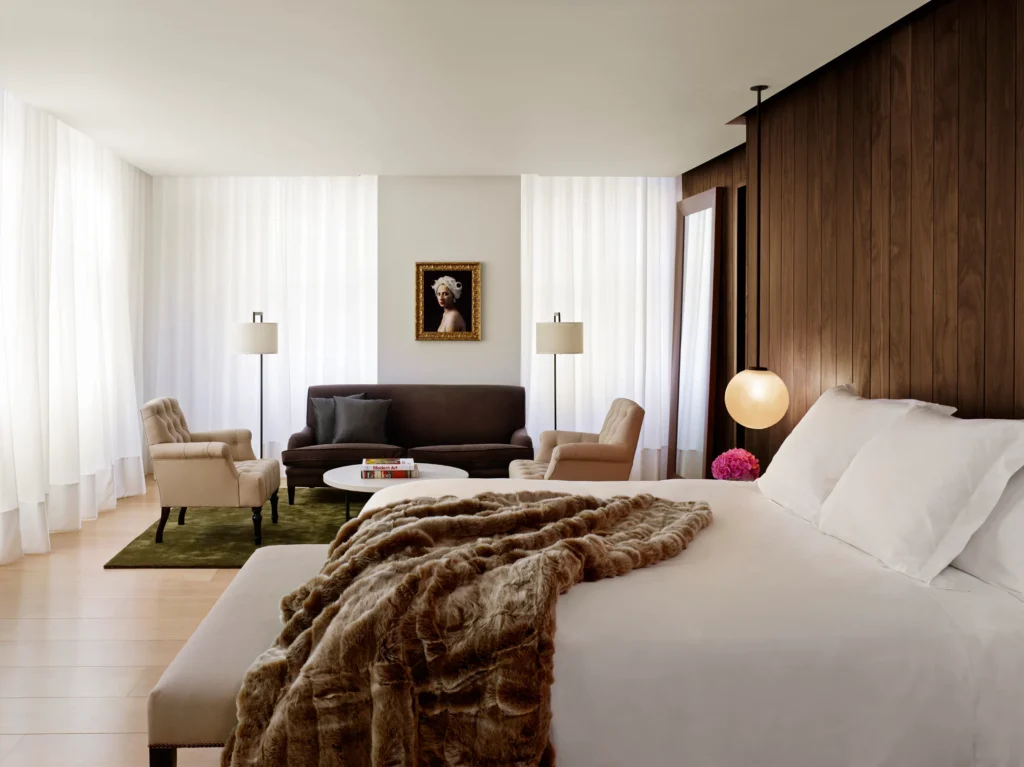
1. The Armchair: A Private Corner Within the Room
No element signals hospitality more clearly than a well-proportioned armchair. In advanced guest room design, the armchair becomes a spatial anchor—a secondary destination beyond the bed.
For international residences where guests may adjust to different time zones, a lounge chair provides a place to read, work, or unwind without retreating to bed prematurely. When integrated thoughtfully into guest bedroom layout ideas, it helps delineate zones: rest, reflection, and repose.
Design Considerations for Armchairs
- Position near natural light for daytime reading.
- Pair with a side table and soft task lighting.
- Select upholstery that complements the broader guest room design palette—bouclé, fine wool, or supple leather.
- Ensure generous seat depth for universal comfort.
Architecturally, placing an armchair diagonally in a corner can soften rectilinear layouts and introduce movement into otherwise compact plans.
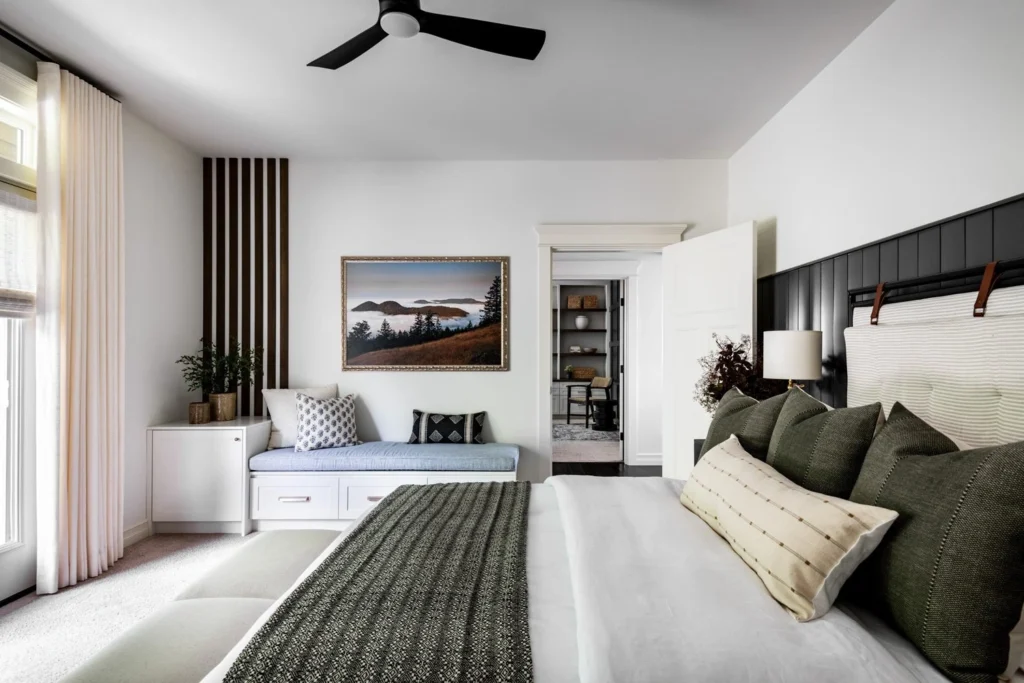
2. The Writing Desk: Function Meets Elegance
In an era of hybrid work and global mobility, a writing desk has re-emerged as essential furniture for guest bedrooms. For the traveling executive or culturally engaged guest, a discreet workspace communicates thoughtfulness.
Within contemporary guest bedroom layout ideas, the desk should not dominate but integrate seamlessly—often positioned opposite the bed or beneath a window. Slim silhouettes in solid wood or lacquered finishes maintain visual lightness.
Key Attributes of a Guest Room Desk
- Compact proportions (120–140 cm width) to preserve circulation.
- Integrated cable management for a clean aesthetic.
- Comfortable yet sculptural desk chair that doubles as accent seating.
- Proximity to natural light balanced with adjustable task lighting.
Such considerations elevate guest room design from decorative to genuinely functional, aligning with the expectations of a globally minded audience.
3. The Storage Question: Beyond the Wardrobe
One of the most overlooked aspects of furniture for guest bedrooms is storage. While a built-in wardrobe is standard, supplementary pieces make a significant difference in user comfort.
Freestanding Dressers and Consoles
A low dresser or refined console introduces both storage and display. It provides space for a tray, a vase of fresh flowers, or a curated selection of books that reflect the cultural context of the home. In sophisticated guest bedroom layout ideas, these surfaces act as silent hosts—anticipating needs without excess.
Luggage Racks and Benches
A luggage bench at the foot of the bed is a hallmark of elevated guest room design. It prevents clutter, protects fine textiles, and echoes the language of boutique hospitality. Upholstered benches in tactile fabrics soften the room while adding functional clarity.
- Position at least 45 cm from the bed for easy circulation.
- Choose stain-resistant fabrics for longevity.
- Align materials with the broader furniture for guest bedrooms selection to ensure cohesion.
4. Nightstands as Architectural Statements
In high-end guest room design, nightstands are not afterthoughts. They frame the bed compositionally and offer practical surfaces for lighting, personal objects, and technology.
For symmetrical layouts, matching nightstands reinforce balance. In more contemporary guest bedroom layout ideas, asymmetry—pairing a side table on one side with a compact chest on the other—can introduce subtle dynamism.
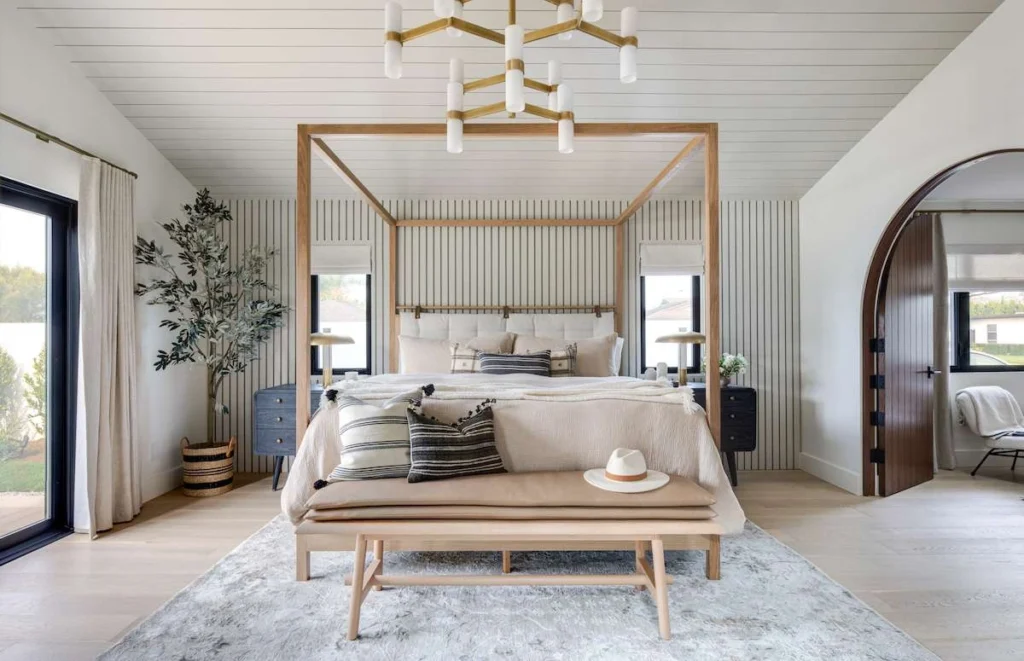
Nightstand Essentials
- Minimum width of 45–50 cm for functional surface area.
- Integrated drawer storage for privacy.
- Proportional height aligned with mattress level.
- Material continuity with other furniture for guest bedrooms.
5. Accent Tables and Layered Surfaces
Luxury is often measured in layers. A thoughtfully placed accent table near an armchair or beside a window seat enhances the spatial narrative of guest room design.
These smaller pieces contribute to refined guest bedroom layout ideas by creating micro-zones. A guest can place a coffee cup, a notebook, or a personal item without feeling transient in the space.
6. The Wardrobe Interior: Invisible Design Excellence
While often concealed, wardrobe interiors are critical to holistic guest room design. Adjustable shelves, integrated lighting, and velvet-lined drawers elevate the experience. For designers specifying furniture for guest bedrooms, the interior architecture of storage is as significant as its exterior form.
Thoughtful organization communicates respect for the guest’s autonomy—an essential principle in sophisticated guest bedroom layout ideas.
7. Mirrors: Expanding Light and Perception
Mirrors serve both functional and architectural roles. In compact urban apartments or heritage properties with smaller secondary rooms, a strategically placed mirror expands perceived space.
Full-length mirrors, ideally positioned near wardrobes, are indispensable furniture for guest bedrooms. Meanwhile, decorative wall mirrors above consoles reinforce symmetry and enhance layered lighting in guest room design.
8. The Reading Nook: A Moment of Quiet Luxury
For residences with generous square footage, a defined reading nook transforms standard guest bedroom layout ideas into experiential design. Combining an armchair, ottoman, and floor lamp creates a self-contained retreat within the room.
This layered approach to furniture for guest bedrooms reflects the ethos of cultured hospitality—offering guests choice in how they inhabit the space.
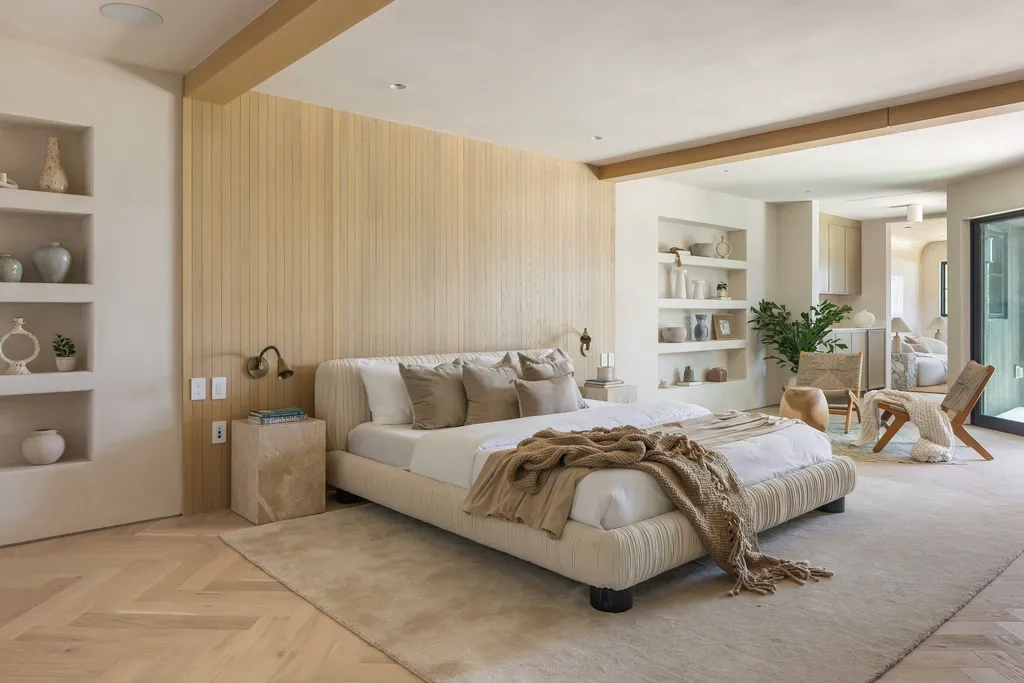
9. Lighting Furniture as Spatial Sculpture
While often categorized separately, lighting fixtures function as sculptural furniture elements. Table lamps, floor lamps, and even portable lighting enhance guest room design by introducing scale and intimacy.
For optimal results in guest bedroom layout ideas, layer lighting across three levels:
- Ambient (ceiling or cove lighting).
- Task (bedside and desk lamps).
- Accent (floor lamps or wall sconces).
Each layer reinforces the architectural narrative while complementing the primary furniture for guest bedrooms.
10. Cultural Context and Material Intelligence
International professionals understand that successful guest room design responds to climate, geography, and culture. In Mediterranean settings, lighter woods and linen upholstery enhance breathability. In alpine residences, richer timbers and textured textiles provide warmth.
The most compelling guest bedroom layout ideas are those that integrate local craftsmanship with contemporary forms. Material intelligence—selecting finishes that age gracefully—ensures that furniture for guest bedrooms retains its dignity over time.
Designing for Memory and Meaning
Ultimately, exceptional guest room design is not about excess but intention. By expanding the conversation beyond the bed and embracing refined furniture for guest bedrooms, designers and homeowners craft spaces that resonate emotionally.
The most sophisticated guest bedroom layout ideas prioritize comfort, autonomy, and aesthetic coherence. Through armchairs that invite reflection, desks that accommodate modern life, and storage solutions that anticipate needs, the guest room becomes a sanctuary—quietly luxurious, architecturally considered, and culturally attuned.
For Nolita Harbour and its global audience, the guest room is not secondary. It is a statement of generosity, design literacy, and enduring taste—where every piece of furniture participates in a narrative of hospitality reimagined.