Curved furniture has emerged as one of the most influential design movements in contemporary interiors. Defined by soft lines, fluid silhouettes, and organic geometries, curved furniture introduces a sense of movement and comfort that contrasts sharply with the rigid forms of past decades. For interior designers, architects, and luxury furniture brands, this shift reflects a broader evolution toward more human-centered and emotionally engaging spaces.
From sculptural sofas to rounded tables and enveloping armchairs, curved furniture reshapes how people experience interiors. It softens architectural boundaries, enhances spatial flow, and creates environments that feel both refined and inviting.
From Modernism to Organic Design
The rise of curved furniture marks a departure from the strict linearity associated with modernist and minimalist design. For years, interiors favored sharp edges, rectilinear layouts, and geometric precision. While these elements still hold value, contemporary design increasingly embraces softness and fluidity.
This transition draws inspiration from earlier design pioneers such as Vladimir Kagan, whose iconic serpentine sofas introduced curvature as a central design language. Today’s designers reinterpret these ideas through advanced materials and manufacturing techniques, expanding the possibilities of curved forms.
Curved furniture aligns with a growing preference for interiors that feel relaxed and immersive rather than formal or rigid. This shift resonates strongly in both residential and hospitality design.
Sculptural Presence and Spatial Impact
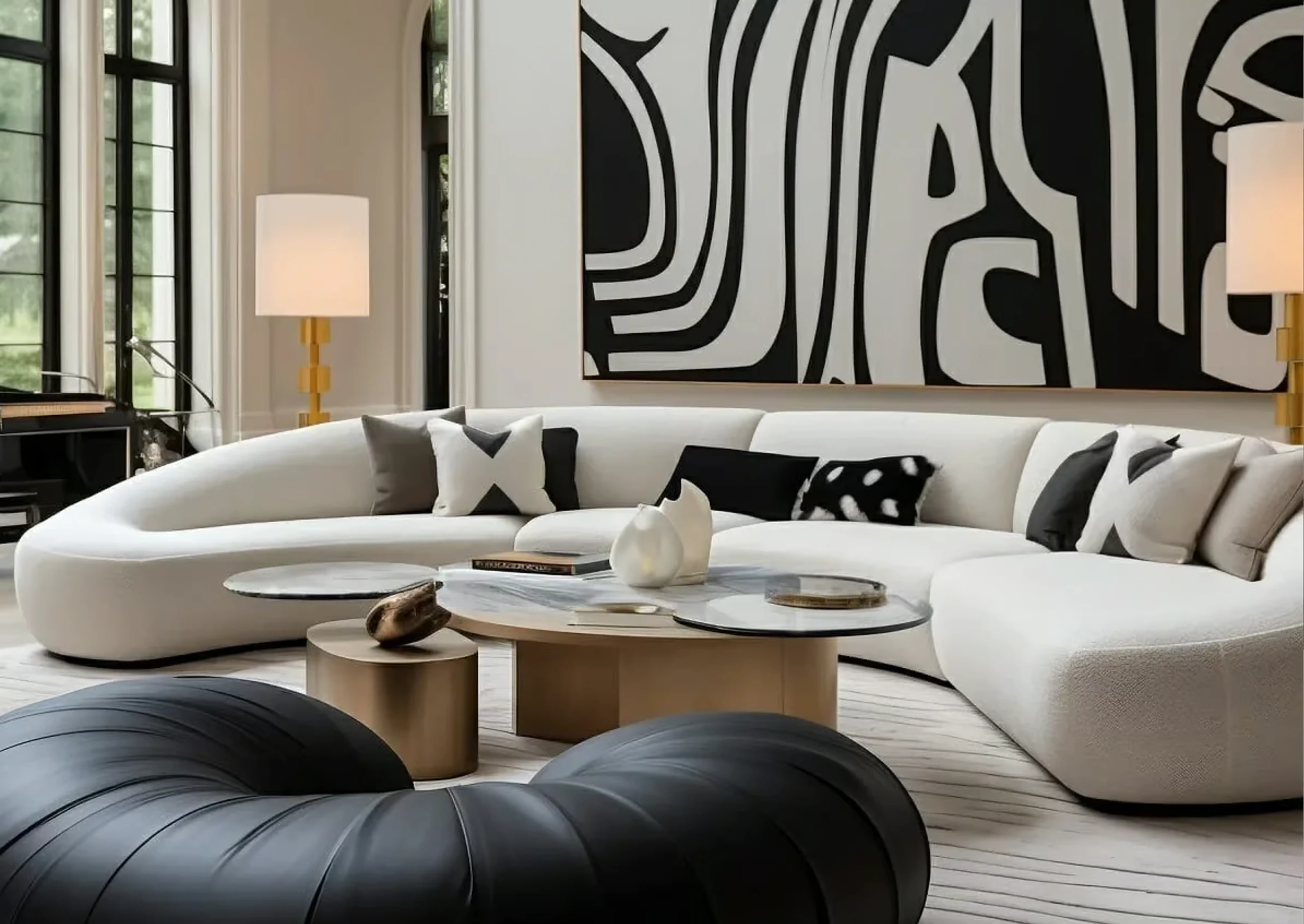
Curved furniture functions as more than a functional element—it acts as sculpture within a space. Designers use sweeping lines and rounded volumes to create focal points that anchor interiors.
Unlike linear furniture, which often blends into architectural grids, curved pieces stand out. A curved sofa, for example, can define a seating area without relying on walls or partitions. This quality proves especially valuable in open-plan layouts, where furniture must organize space while maintaining visual continuity.
Designers such as Patricia Urquiola and Pierre Yovanovitch frequently incorporate sculptural curves into their projects. Their work demonstrates how curved furniture can balance bold expression with architectural harmony.
Enhancing Flow and Circulation
One of the key advantages of curved furniture lies in its ability to improve spatial flow. Straight edges can create visual barriers, while curved forms guide movement more naturally.
In high-end residential interiors, curved seating arrangements encourage conversation and interaction. In hospitality environments, they facilitate circulation by eliminating sharp corners and creating intuitive pathways.
Architects and interior designers increasingly integrate curved furniture into layouts that prioritize fluidity. This approach aligns with contemporary lifestyles, where spaces must accommodate multiple functions without feeling fragmented.
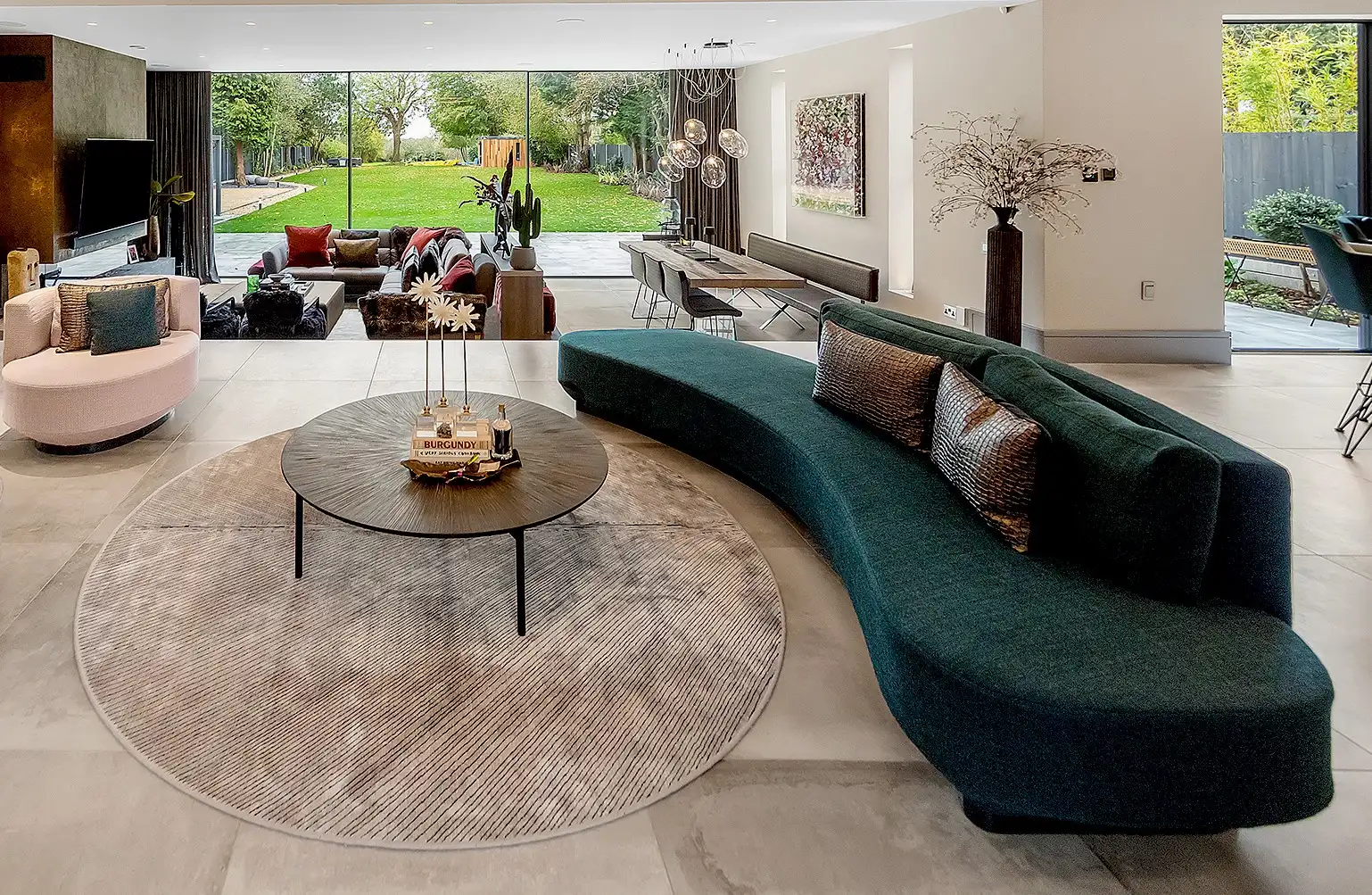
Materials and Craftsmanship Driving the Trend
Advancements in materials and fabrication have played a crucial role in the rise of curved furniture. Designers now have access to technologies that allow for precise shaping and structural integrity, even in complex forms.
Upholstered pieces often feature molded foam and flexible frameworks, enabling smooth, continuous curves. Wood can be bent or laminated to achieve organic shapes, while metals provide structural support for more ambitious designs.
Luxury furniture brands emphasize craftsmanship in these processes. Hand-finished upholstery, seamless joints, and refined detailing ensure that curved furniture maintains a high level of quality and durability.
This focus on craftsmanship elevates curved furniture beyond trend-driven design, positioning it as a long-term investment for high-end interiors.
Comfort and Ergonomics
Curved furniture naturally enhances comfort. Its enveloping shapes support the body more intuitively than rigid forms, creating a sense of ease and relaxation.
Rounded sofas and chairs often feature deeper նստing areas and softer transitions between surfaces. These qualities make them particularly appealing in residential settings, where comfort remains a priority.
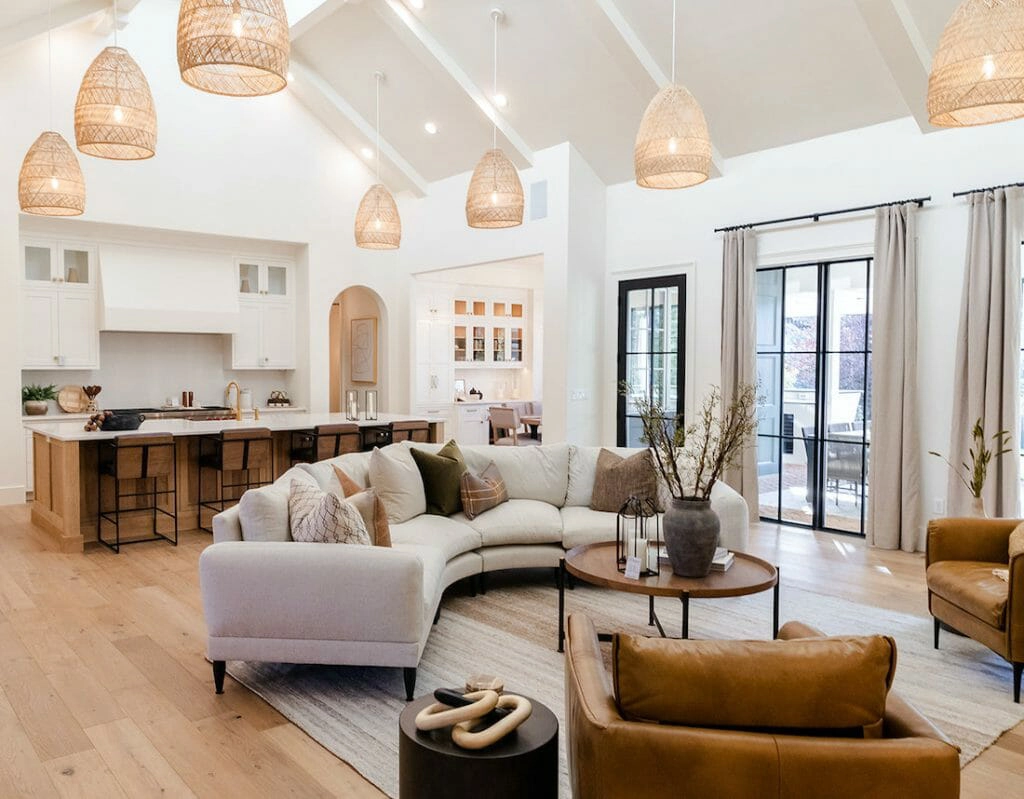
Designers also use curvature to create more inclusive seating arrangements. Circular or semi-circular configurations allow users to face each other more easily, fostering interaction and engagement.
For luxury design studios, this combination of comfort and visual appeal makes curved furniture a versatile solution across different project types.
Neutral Palettes and Bold Statements
Curved furniture adapts well to a range of color strategies. Many designers pair it with neutral palettes to emphasize form and texture. Soft tones such as cream, taupe, and gray highlight the subtle contours of curved pieces without overwhelming the space.
At the same time, curved furniture can serve as a bold statement when combined with rich colors or distinctive materials. Velvet upholstery, lacquered finishes, and textured fabrics enhance the sculptural quality of each piece.
Designers like Kelly Wearstler often use curved furniture as a focal point, integrating it into layered interiors that balance boldness with sophistication.
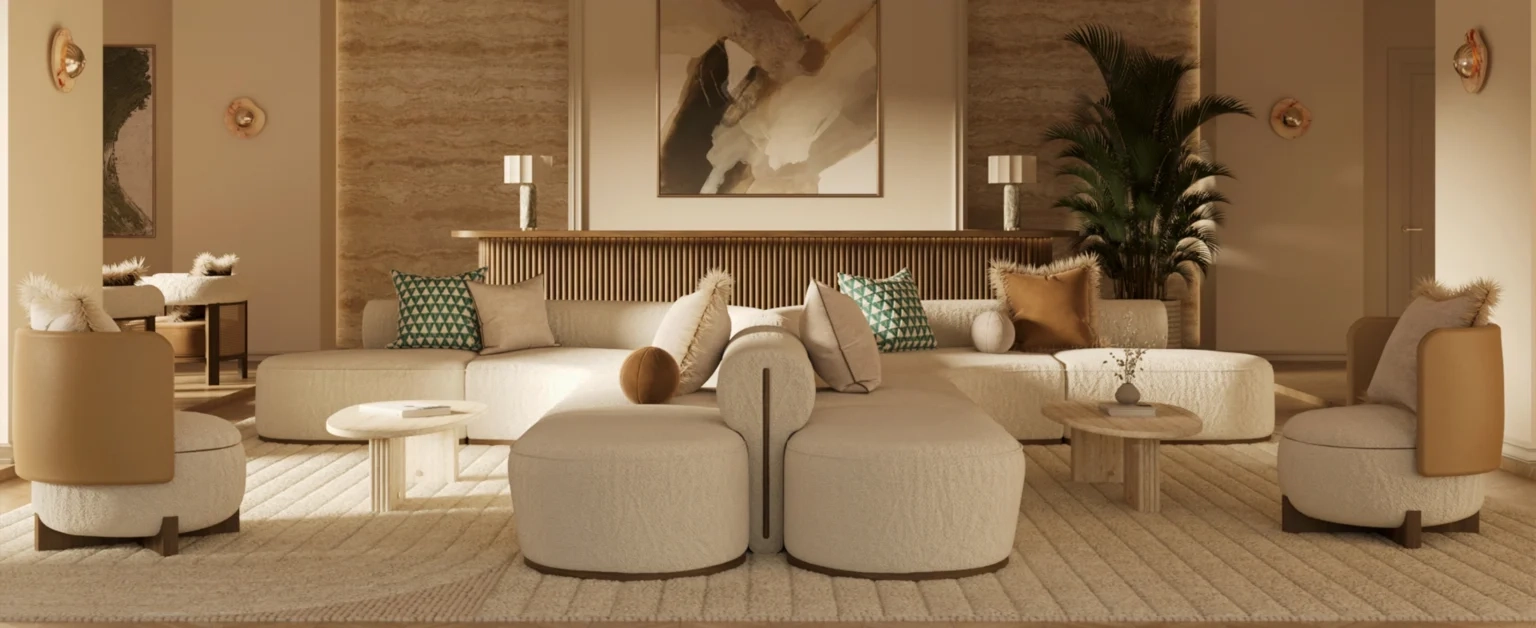
Integration with Architecture
Curved furniture complements contemporary architectural trends that favor organic forms and fluid spaces. As architects explore curved walls, arched openings, and soft transitions, furniture follows suit.
This alignment creates a cohesive design language, where furniture and architecture reinforce each other. Curved pieces can echo architectural elements, enhancing the overall harmony of a space.
In projects where architecture remains predominantly linear, curved furniture introduces contrast. This interplay between straight and curved forms adds visual interest and depth.
Applications Across Interior Typologies
Curved furniture has found applications across a wide range of interior typologies:
- Residential Interiors: Living rooms, bedrooms, and lounges benefit from the comfort and softness of curved seating.
- Hospitality Design: Hotels, restaurants, and lounges use curved furniture to create inviting, dynamic environments.
- Retail Spaces: Curved display elements guide customer movement and enhance visual merchandising.
- Workspaces: Collaborative areas incorporate curved seating to encourage interaction and flexibility.
This versatility makes curved furniture a valuable asset for designers working across different sectors.
The Influence of Contemporary Design Culture
The popularity of curved furniture also reflects broader cultural shifts. Social media and digital platforms have amplified the appeal of visually striking interiors, where sculptural forms photograph well and capture attention.
At the same time, there is a growing emphasis on well-being and comfort. Curved furniture responds to this demand by creating environments that feel more approachable and human-centered.
Design studios and furniture brands continue to explore this intersection of aesthetics and experience, pushing the boundaries of what curved furniture can achieve.
Future Directions in Curved Furniture
The future of curved furniture lies in continued innovation. Designers are experimenting with sustainable materials, modular systems, and hybrid forms that combine seating, storage, and lighting.
Digital fabrication techniques, including CNC machining and 3D modeling, enable greater precision and customization. These advancements allow designers to create bespoke pieces tailored to specific projects.
As sustainability becomes increasingly important, brands are also exploring eco-friendly materials and production methods. This evolution ensures that this bent furniture remains relevant in a rapidly changing design landscape.
Arched Furniture for Stylish Interiors
Curved furniture has transformed contemporary interiors by introducing softness, movement, and sculptural presence. Its ability to enhance comfort, improve spatial flow, and create visual impact makes it an essential element in modern design.
For interior designers, architects, and luxury furniture brands, this type of furniture offers both creative freedom and practical benefits. It bridges the gap between form and function, aligning with the evolving demands of contemporary living.
As design continues to move toward more expressive and human-centered environments, curved furniture stands at the forefront—reshaping interiors with elegance, fluidity, and enduring appeal.