

The Geometry of Gathering
In the language of interior design, few elements speak as eloquently as the dining table. More than a functional surface, it is a social anchor—where architecture, lifestyle, and ritual converge. Choosing the right dining table shape is therefore not a purely aesthetic decision; it is a spatial, cultural, and experiential one. Whether rectangular, oval, or round, the geometry of a table shapes how we gather, converse, and inhabit the dining room.
For architects, interior designers, and discerning homeowners alike, understanding how form influences flow is essential when curating dining room furniture that feels both timeless and intuitive. This article explores the nuanced advantages of the rectangular dining table, the oval dining table, and the round dining table—offering guidance grounded in design intelligence rather than trend-driven impulse.
The Dining Table as a Spatial and Social Instrument
Historically, dining tables have reflected social structures and architectural constraints. Long refectory tables once reinforced hierarchy, while circular tables symbolized equality and exchange. Today, the choice of table shape must respond to contemporary living patterns, open-plan layouts, and the desire for flexibility—particularly when accommodating a large dining table within multifunctional spaces.
When selecting dining room furniture at a premium level, professionals consider three interrelated factors:
- Spatial proportion: How the table interacts with the room’s dimensions and circulation paths.
- Seating dynamics: How guests are positioned in relation to one another.
- Visual rhythm: How the table’s geometry complements architectural lines and materials.
Rectangular Dining Tables: Architectural Clarity and Classic Proportion
Why the Rectangular Dining Table Endures
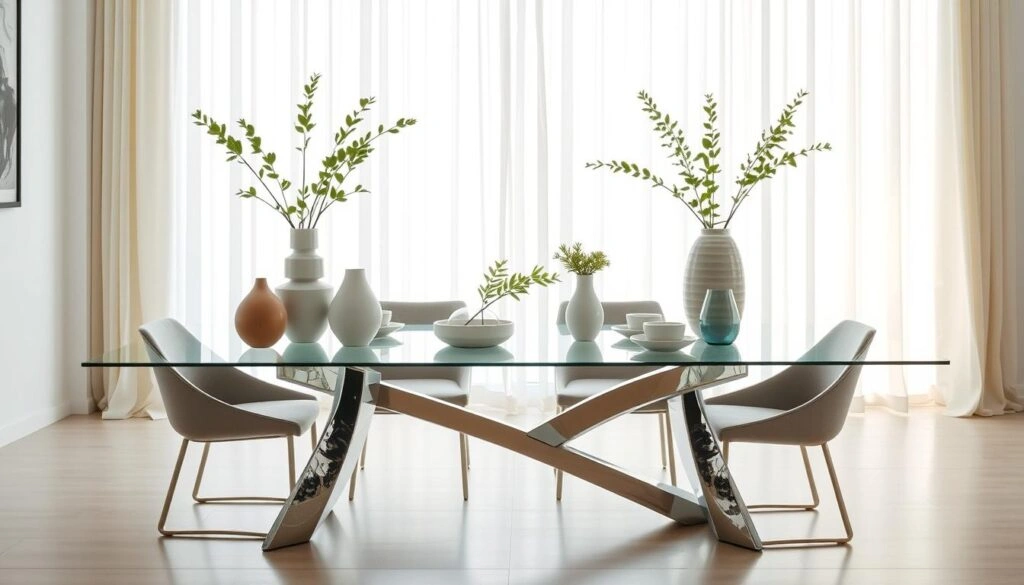
The rectangular dining table remains the most prevalent choice in both residential and hospitality settings. Its popularity is rooted in architectural logic: most dining rooms are rectangular, and this shape aligns naturally with linear walls, elongated rugs, and ceiling features.
For large dining table requirements—particularly in villas, penthouses, or formal dining rooms—the rectangular format offers unmatched scalability. It allows for generous seating without compromising symmetry, making it ideal for entertaining and professional hosting.
Design Advantages
- Accommodates a higher number of guests comfortably.
- Pairs seamlessly with benches or mixed seating styles.
- Creates a strong visual axis within the dining room.
Considerations for Spatial Balance
While a rectangular dining table offers structure, it demands adequate clearance. Designers typically recommend at least 90 cm (35 inches) of space around the table to ensure fluid movement. In compact rooms, an oversized rectangular table may dominate the space, disrupting proportion rather than enhancing it.
Oval Dining Tables: Fluidity Meets Formality
The Soft Geometry of the Oval Dining Table
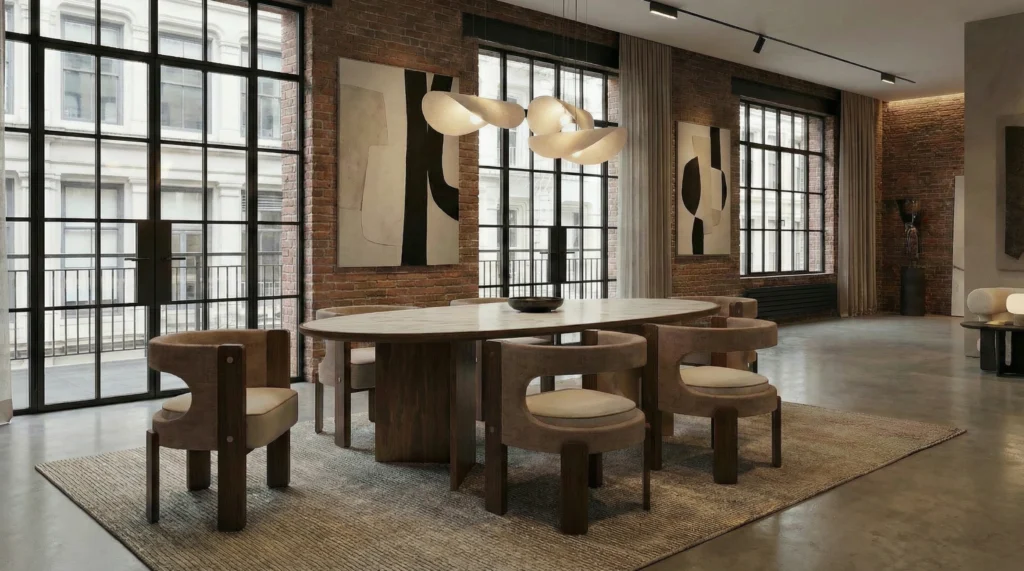
An oval dining table introduces a sense of movement and softness without sacrificing the capacity associated with rectangular forms. Its elongated silhouette mirrors the practicality of a long table, while rounded edges ease visual weight—making it a compelling choice for transitional interiors.
For clients seeking dining room furniture that feels refined yet approachable, the oval dining table strikes a rare balance. It is particularly effective in rooms where circulation is key, as the absence of sharp corners improves flow.
Why Designers Choose Oval
- Enhances circulation in narrow or high-traffic spaces.
- Offers a more intimate seating experience than rectangular tables.
- Softens minimalist or highly architectural interiors.
Material and Base Considerations
Pedestal bases are often favored for oval dining tables, allowing greater flexibility in seating placement. In luxury interiors, materials such as solid wood, natural stone, or veneered finishes elevate the form, reinforcing its sculptural quality.
Round Dining Tables: Intimacy, Equality, and Contemporary Living
The Social Power of the Circle
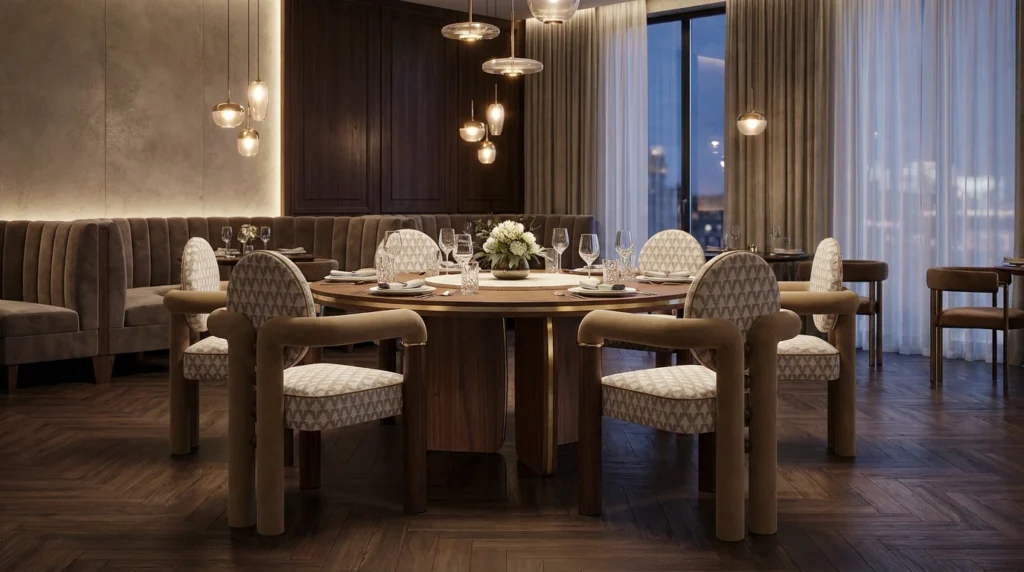
The round dining table is defined by its inherent sense of equality. With no head of the table, conversation flows organically, making it ideal for intimate gatherings and modern lifestyles that value connection over formality.
In urban residences or open-plan apartments, a round table can serve as a spatial counterpoint to rectilinear architecture. It introduces contrast while maintaining harmony—particularly when paired with thoughtfully selected dining room furniture.
Best Applications
- Square or compact dining rooms.
- Casual yet design-forward interiors.
- Spaces prioritizing conversation and inclusivity.
Limitations to Consider
While visually elegant, round tables have practical constraints. Larger diameters can make reaching shared dishes less convenient, and accommodating a very large dining table in a round format often requires substantial floor space. For this reason, round tables excel in smaller-scale settings rather than grand entertaining scenarios.
Choosing the Right Shape: A Comparative Perspective
Key Decision Factors
Selecting between a rectangular dining table, an oval dining table, or a round option should be guided by a holistic understanding of space, lifestyle, and design intent.
- Room Shape: Rectangular rooms favor elongated tables; square rooms welcome round forms.
- Seating Capacity: Large dining table needs are best met by rectangular or oval designs.
- Movement Flow: Oval and round tables improve circulation in constrained layouts.
- Design Language: Match geometry with architectural context—linear, fluid, or balanced.
The Dining Table Within a Broader Design Narrative
Beyond geometry, the dining table must be understood as part of a larger interior ecosystem. Lighting, flooring, wall finishes, and even acoustics influence how the table is perceived and experienced. Proportion and circulation are among the most critical factors in creating dining spaces that feel both luxurious and livable.
For high-net-worth individuals and professionals shaping premium environments, the dining table becomes a quiet statement of values—hospitality, craftsmanship, and intentional living.
Form as an Expression of Lifestyle
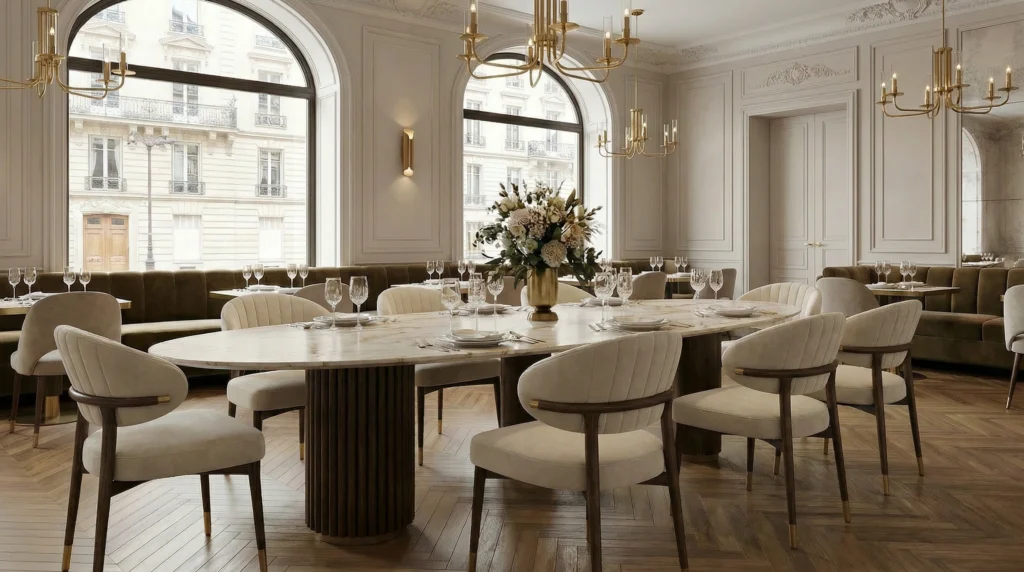
Choosing the right dining table shape is ultimately an exercise in self-awareness and spatial intelligence. The rectangular dining table speaks to tradition and structure, the oval dining table to elegance and adaptability, and the round table to intimacy and modernity.
When thoughtfully selected, dining room furniture transcends function, becoming a framework for connection and cultural expression. In this sense, the dining table is not merely placed within a room—it defines how the room, and the moments within it, are lived.