Axel Vervoordt
Few figures in contemporary design have influenced the evolution of minimalist luxury interiors as profoundly as Axel Vervoordt. Known for his deeply philosophical approach to space, materiality, and atmosphere, the Belgian designer has cultivated an aesthetic language that transcends trends. His interiors are quiet yet powerful, restrained yet profoundly expressive—spaces where architecture, art, and nature exist in harmonious dialogue.
At the heart of Axel Vervoordt’s work lies a philosophy of calm. Rather than relying on spectacle or ornament, his interiors explore the emotional resonance of natural materials, subtle textures, and balanced compositions. Through muted palettes and tactile surfaces, he has refined the concept of neutral interiors into an art form—creating environments that feel timeless, contemplative, and deeply connected to human experience.
This philosophy has shaped residences, galleries, and cultural spaces around the world. From historic European estates to contemporary penthouses, Axel Vervoordt consistently demonstrates that simplicity—when guided by mastery—can produce some of the most powerful forms of spatial expression.
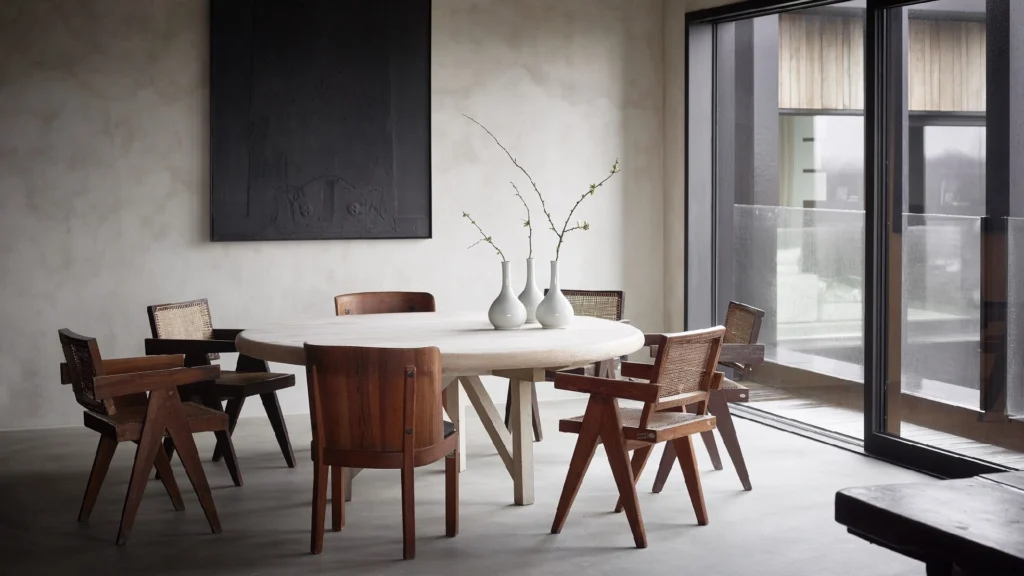
The Philosophy Behind Axel Vervoordt’s Calm Interiors
To understand the enduring influence of Axel Vervoordt, one must look beyond aesthetics to the philosophy guiding his work. His approach is rooted in authenticity, balance, and a deep respect for the passage of time. Vervoordt often speaks about the concept of “wabi”—inspired by Japanese wabi-sabi philosophy—which embraces imperfection, patina, and natural aging.
In the world of minimalist luxury interiors, this perspective has introduced a rare sense of soul. Rather than designing spaces that feel new or pristine, Axel Vervoordt seeks environments that appear lived-in, grounded, and timeless.
His interiors often prioritize:
- Natural materials with visible texture and depth
- Subtle tonal palettes that emphasize light and shadow
- Historic architectural elements preserved or reinterpreted
- Art and objects chosen for emotional resonance rather than decoration
This layered sensibility allows neutral interiors to become richly atmospheric spaces rather than minimalist voids. The result is a quiet luxury that feels both ancient and contemporary.
Material Balance: The Signature of Minimalist Luxury Interiors
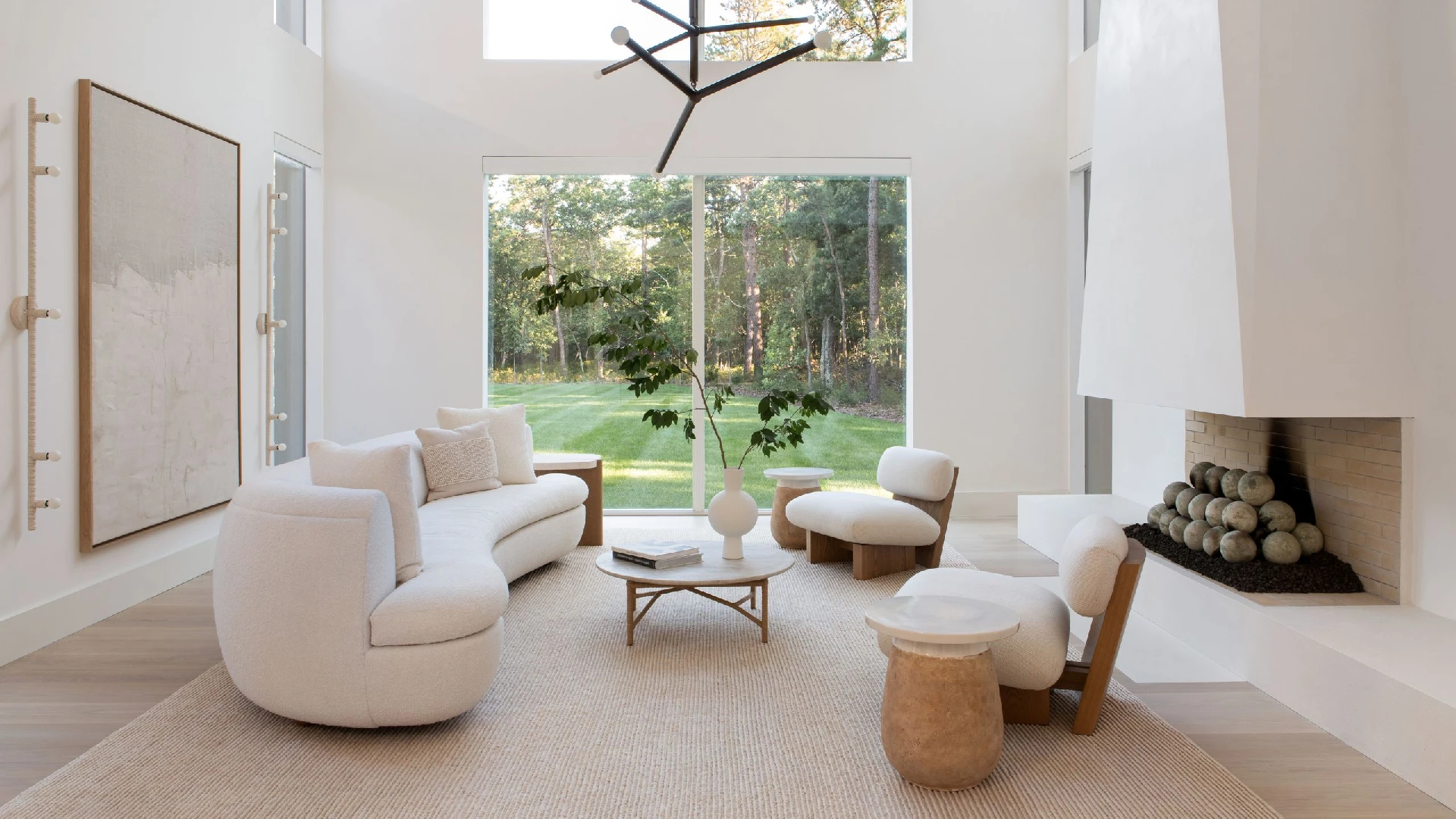
Materiality is perhaps the most defining aspect of Axel Vervoordt’s interiors. His projects rely on carefully balanced combinations of stone, wood, linen, plaster, and metal—each selected for its tactile and visual depth.
In contrast to traditional luxury interiors that emphasize opulence, minimalist luxury interiors shaped by Vervoordt celebrate restraint. Materials are rarely polished to perfection; instead, they retain a raw honesty that enhances their authenticity.
Natural Stone and Architectural Gravitas
Stone surfaces frequently anchor the spaces created by Axel Vervoordt. Limestone floors, carved stone basins, and textured wall finishes introduce an architectural weight that grounds the interior.
These elements evoke a sense of permanence. In neutral interiors, stone provides both visual calm and tactile richness, reinforcing the balance between minimalism and warmth.
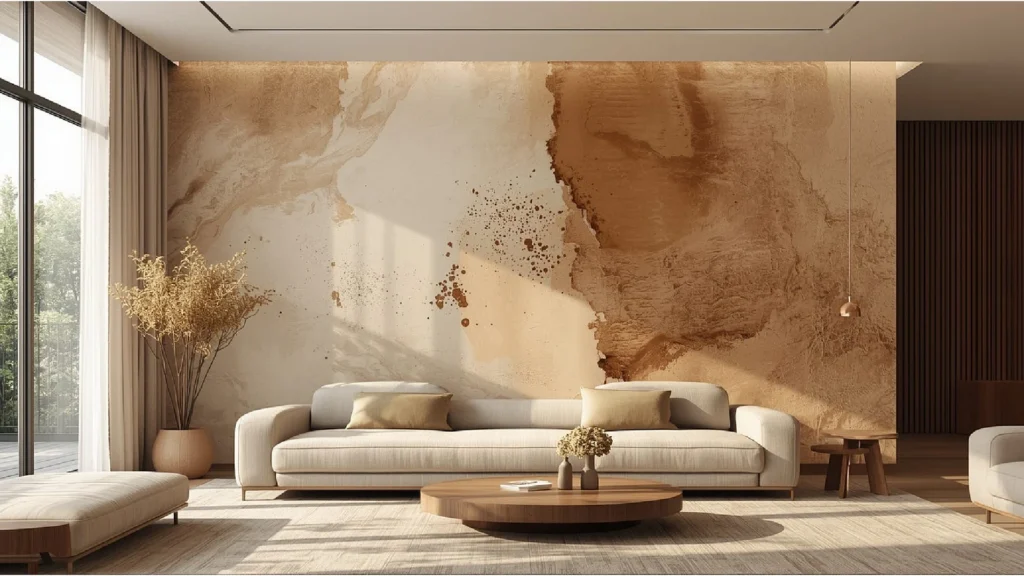
Wood and Organic Warmth
Wood plays an equally important role in establishing harmony within minimalist luxury interiors. Vervoordt often chooses reclaimed oak, aged timber beams, or softly finished cabinetry that reveals the material’s natural grain.
Through subtle variations in tone and texture, wood softens the architectural framework of a space. The material introduces warmth while preserving the restrained palette characteristic of neutral interiors.
Textiles and Softness
Textiles provide a counterpoint to the solidity of stone and wood. Linen, wool, and raw cotton appear throughout Axel Vervoordt’s interiors, often in understated shades of ivory, taupe, sand, and grey.
Rather than elaborate patterns, the emphasis lies on texture and drape. Curtains, upholstery, and rugs become quiet contributors to the overall atmosphere—supporting the serene elegance associated with minimalist luxury interiors.
The Power of Neutral Interiors
Color in the work of Axel Vervoordt is rarely dominant. Instead, his projects rely on nuanced gradations of natural hues—limestone beige, clay, parchment, ash, and warm grey.
These neutral interiors are far from monotonous. Through careful layering of materials and surfaces, Vervoordt creates environments where subtle tonal differences produce visual depth.
The approach offers several advantages for contemporary residential design:
- Neutral palettes enhance natural light and spatial clarity
- Timeless colors resist changing trends
- Materials become the primary design feature
- Art and sculptural objects gain greater presence
For architects and designers seeking to achieve refined calm, neutral interiors provide a powerful foundation for spatial composition.
Art, Antiques, and the Dialogue of Time
Another defining element of Axel Vervoordt’s philosophy is the integration of art and antiques within contemporary environments. His interiors rarely separate design from culture; instead, they weave historical and artistic narratives into the spatial experience.
Paintings, sculptures, and rare objects are positioned with curatorial precision, often appearing almost solitary within a room. This restraint enhances their emotional impact and reinforces the contemplative atmosphere of minimalist luxury interiors.
Vervoordt’s approach reflects his broader engagement with the art world through the Axel Vervoordt Company, which operates internationally across design, art, and cultural projects.
In these spaces, art does not merely decorate—it defines the rhythm of the interior.
Light as a Design Material
For Axel Vervoordt, light is not simply functional; it is a material in its own right. His interiors are designed to capture, soften, and diffuse natural illumination throughout the day.
Large windows, pale surfaces, and reflective textures allow light to travel gently across walls and floors. The result is an atmosphere that feels alive yet tranquil.
Within neutral interiors, this interplay between light and surface becomes particularly powerful. Shadows reveal the texture of plaster walls, stone floors subtly shift in tone, and linen fabrics glow softly in daylight.
This sensitivity to light contributes significantly to the serenity associated with minimalist luxury interiors.
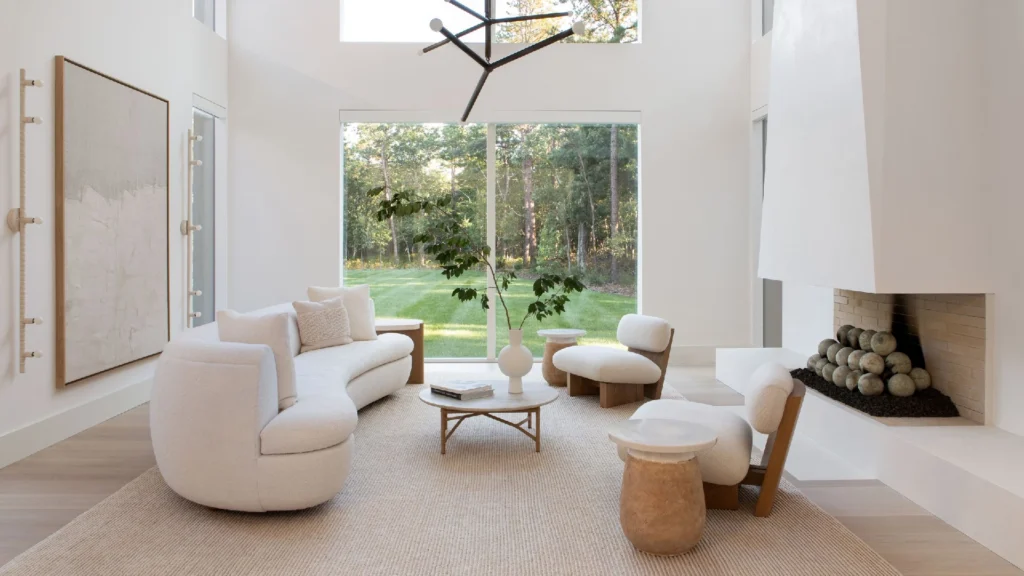
Architectural Restraint and Spatial Harmony
Architecture plays a fundamental role in shaping the calm environments associated with Axel Vervoordt. His projects often begin with a process of reduction—removing unnecessary details to reveal the essential structure of a space.
Walls may be finished with textured lime plaster, ceilings simplified, and openings enlarged to improve spatial flow. The objective is not minimalism for its own sake but rather a careful editing that allows materials and proportions to speak clearly.
This architectural discipline reinforces the elegance of minimalist luxury interiors. Without visual clutter, the viewer becomes more aware of scale, light, and material presence.
The Influence of Axel Vervoordt on Global Design
Over several decades, Axel Vervoordt has shaped the direction of contemporary interior design. His work has influenced architects, collectors, and developers seeking spaces that combine cultural depth with understated luxury.
Today, the principles behind his interiors resonate strongly in global design movements:
- The rise of warm minimalism in residential architecture
- The popularity of textured plaster and natural finishes
- The integration of antique elements within modern spaces
- The growing demand for serene, emotionally grounded environments
These ideas reflect a broader cultural shift toward authenticity and mindfulness in design—values that have long defined the philosophy of Axel Vervoordt.
Lessons for Contemporary Interior Design
The work of Axel Vervoordt offers valuable insights for designers creating refined residential spaces today. His approach demonstrates that true luxury lies not in excess but in balance.
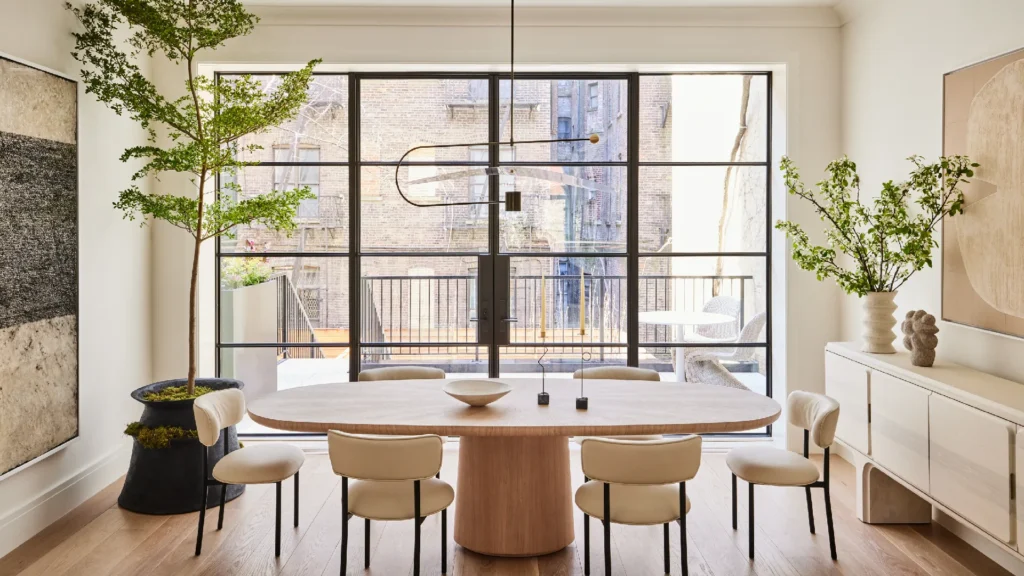
Key Design Principles
- Prioritize material authenticity. Natural surfaces create depth and emotional resonance.
- Embrace neutral palettes. Carefully composed neutral interiors allow materials and light to define the atmosphere.
- Reduce visual noise. Simplicity enhances architectural clarity.
- Integrate art thoughtfully. Cultural objects should enrich the spatial narrative.
- Design for atmosphere. The emotional experience of a space is as important as its visual composition.
These principles illustrate why minimalist luxury interiors continue to evolve beyond aesthetics into a more profound exploration of lifestyle and culture.
The Enduring Elegance of Calm Interiors
In an era often defined by visual saturation and rapid trends, the work of Axel Vervoordt offers a compelling alternative. His interiors demonstrate that quietness can be powerful, that restraint can reveal richness, and that material balance can shape deeply meaningful spaces.
Through his mastery of texture, proportion, and atmosphere, Axel Vervoordt has elevated the concept of minimalist luxury interiors into a sophisticated design philosophy. His serene neutral interiors remind us that true luxury is not merely about appearance—it is about harmony, authenticity, and timeless beauty.
For architects, designers, and collectors around the world, this vision continues to inspire a more thoughtful approach to interior design—one where calm becomes the ultimate expression of refinement.