

In the rarefied world of Aspen luxury homes, architecture and environment exist in quiet dialogue. Perched between snow-laden peaks and crystalline skies, Aspen’s seasonal residences are more than holiday retreats; they are sophisticated sanctuaries shaped by climate, culture, and a discerning global clientele. For architects, interior designers, and high-net-worth homeowners, the challenge lies not only in crafting compelling mountain home interior design, but in mastering the art of seasonal residence furnishing that adapts seamlessly from winter’s alpine drama to summer’s luminous calm.
Aspen has long transcended its origins as a mining town to become an international enclave of art, design, and cultural exchange. According to Forbes Real Estate Council, demand for high-altitude second homes continues to rise among global investors seeking lifestyle-driven assets. In this context, furnishing a mountain residence is no longer an exercise in rustic nostalgia—it is a strategic, architectural endeavor requiring foresight, craftsmanship, and a deep understanding of alpine living.
The New Language of Aspen Luxury Homes
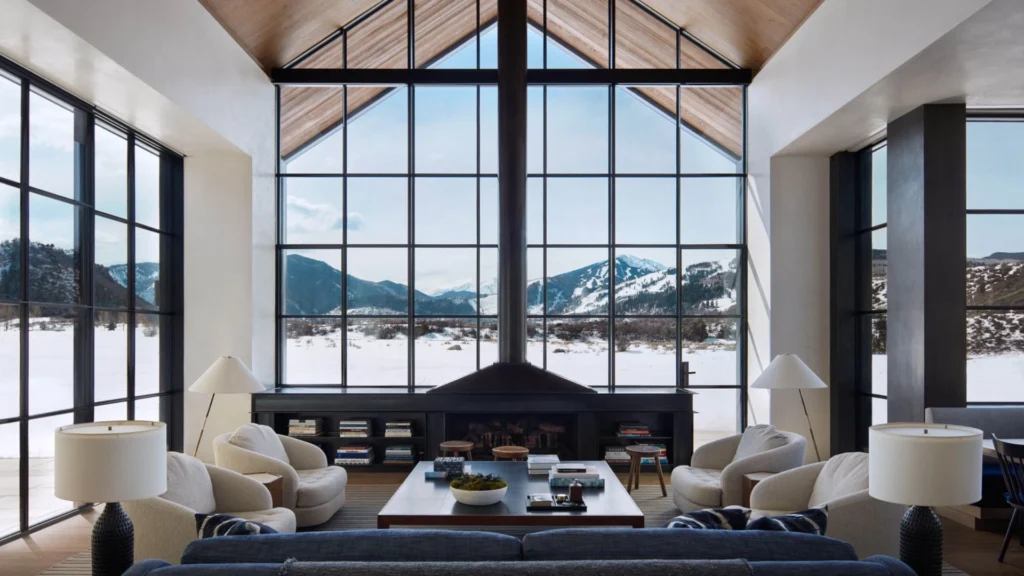
Today’s Aspen luxury homes reflect a refined balance between rugged topography and contemporary elegance. Timber beams coexist with glass curtain walls; hand-hewn stone meets sculptural lighting. Within this architectural framework, mountain home interior design must achieve two parallel objectives:
- Embrace the authenticity of the Rocky Mountain landscape.
- Deliver cosmopolitan comfort for an internationally mobile owner.
Seasonal residence furnishing in Aspen demands durability without sacrificing aesthetic nuance. Upholstery must withstand fluctuating humidity levels. Wood finishes must accommodate temperature shifts. Textiles must layer warmth in winter while remaining breathable in summer. The best interiors anticipate these transitions rather than react to them.
Architecture as Foundation for Seasonal Residence Furnishing
In Aspen’s high-altitude environment, architecture dictates furnishing decisions. Expansive glazing invites snow-bright light in winter and golden alpine sunsets in summer. Consequently, mountain home interior design prioritizes:
- Low-profile silhouettes that preserve sightlines.
- Natural materials that echo the surrounding terrain.
- Modular layouts that accommodate seasonal gatherings.
For design professionals, understanding this architectural choreography is essential when furnishing Aspen luxury homes. Pieces must feel anchored yet flexible—robust enough for ski-season conviviality, refined enough for summer cultural soirées.
Material Intelligence: Designing for Climate and Comfort
One of the most critical dimensions of seasonal residence furnishing in mountain environments is material selection. Aspen’s winters are rigorous, and its summers are dry and sunlit. Interior elements must respond intelligently to both.
Wood, Stone, and Texture
Solid oak, walnut, and reclaimed timber remain foundational in mountain home interior design, but contemporary Aspen residences reinterpret these materials with restraint. Rather than overwhelming spaces with rustic motifs, designers integrate wood in architectural millwork, sculptural tables, and textured paneling.
Stone—limestone, quartzite, travertine—anchors fireplaces and entry halls, reinforcing the elemental narrative of Aspen luxury homes. Furnishings should complement rather than compete with these structural materials, often through muted palettes and tactile fabrics.
Textiles for All Seasons
Textiles play a transformative role in seasonal residence furnishing. During winter, layered wool throws, shearling accents, and cashmere blends introduce warmth and acoustic softness. In summer, lighter linens and cotton blends refresh the interior atmosphere without dismantling the overall design scheme.
The key is continuity. Mountain home interior design benefits from a core palette—taupe, charcoal, alpine white—enhanced by seasonal accents. This approach allows Aspen luxury homes to evolve visually throughout the year while maintaining a cohesive identity.
Spatial Planning for Seasonal Living
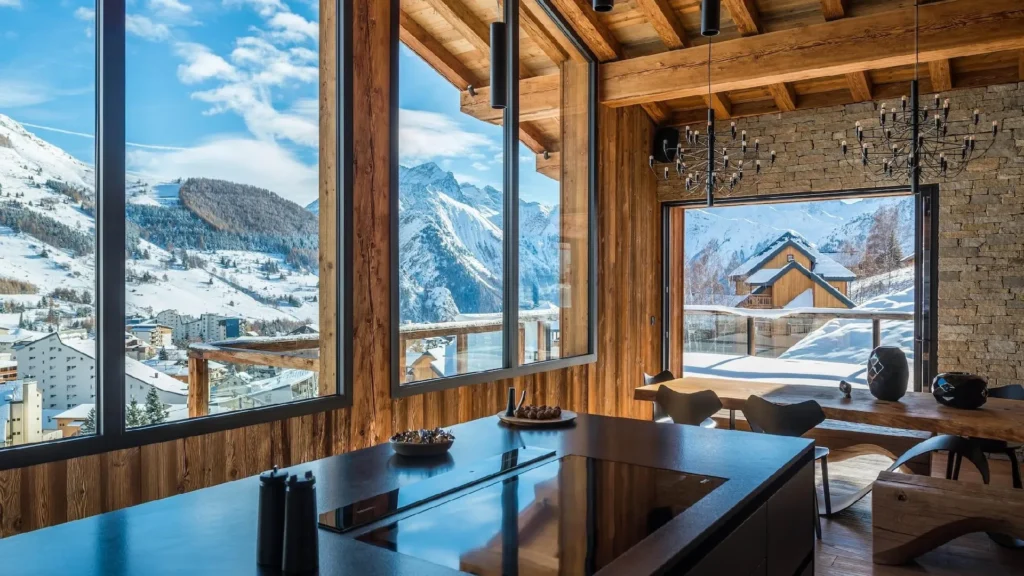
Seasonal occupancy patterns significantly influence furnishing strategies. Aspen properties often function as second or third residences, welcoming rotating groups of family and guests. Seasonal residence furnishing must therefore prioritize adaptability.
Entertaining in Winter
Winter transforms Aspen into a global stage of skiing, art fairs, and philanthropy. Interiors must accommodate après-ski gatherings with ease. Key considerations include:
- Generous sectional seating oriented toward fireplaces.
- Integrated storage for ski gear and outerwear.
- Durable finishes resistant to snow and moisture.
In Aspen luxury homes, mudrooms and transitional spaces are no longer purely functional; they are design statements that seamlessly extend the principles of mountain home interior design.
Summer Lightness and Flow
By contrast, summer living emphasizes openness and connection to terraces and landscapes. Furniture layouts often shift subtly—chairs pivot toward panoramic windows, and indoor-outdoor continuity becomes paramount.
Thoughtful seasonal residence furnishing ensures that materials and proportions remain consistent across seasons. Rather than replacing furniture, designers layer accessories and recalibrate spatial emphasis.
The Psychology of Mountain Retreats
Beyond aesthetics, mountain home interior design in Aspen responds to psychological needs. High-net-worth homeowners seek respite from urban intensity. Interiors must evoke serenity without isolation.
In Aspen luxury homes, this translates into:
- Balanced proportions and uncluttered compositions.
- Natural light maximization to counteract long winter nights.
- Acoustic comfort through layered materials.
Seasonal residence furnishing becomes a form of environmental calibration—modulating warmth, brightness, and tactility to support well-being throughout the year.
Art, Collectibles, and Cultural Context
Aspen’s cultural landscape—home to world-class festivals, galleries, and institutions—deeply influences interior narratives. Many owners of Aspen luxury homes are avid collectors. Furnishings must therefore create a curatorial backdrop rather than visual competition.
Successful mountain home interior design integrates:
- Custom plinths and discreet lighting for sculpture.
- Neutral upholstery to foreground art.
- Architectural shelving for rotating collections.
In this context, seasonal residence furnishing supports not only climate adaptation but also evolving displays, enabling homeowners to refresh interiors in harmony with the seasons.
Sustainability and Longevity in Aspen Luxury Homes
Environmental stewardship has become integral to mountain architecture. At high altitude, ecosystems are fragile. Responsible seasonal residence furnishing prioritizes longevity, local sourcing, and reduced environmental impact.
In mountain home interior design, this manifests through:
- Certified sustainable woods and responsibly sourced stone.
- High-performance fabrics with low environmental footprint.
- Furniture crafted for multi-generational durability.
Such decisions align with the ethos of many owners of Aspen luxury homes, who increasingly view sustainability as an extension of luxury rather than a compromise.
Designing for Investment Value
Aspen properties represent significant financial assets. Thoughtful seasonal residence furnishing can enhance both experiential and market value. Prospective buyers of Aspen luxury homes respond to interiors that feel timeless rather than trend-driven.
Key investment-oriented strategies include:
- Neutral architectural foundations adaptable to evolving tastes.
- High-caliber craftsmanship that withstands seasonal wear.
- Flexible layouts supporting diverse occupancy scenarios.
Mountain home interior design that prioritizes longevity ensures properties remain competitive within Aspen’s elite real estate landscape.
The Future of Mountain Home Interior Design
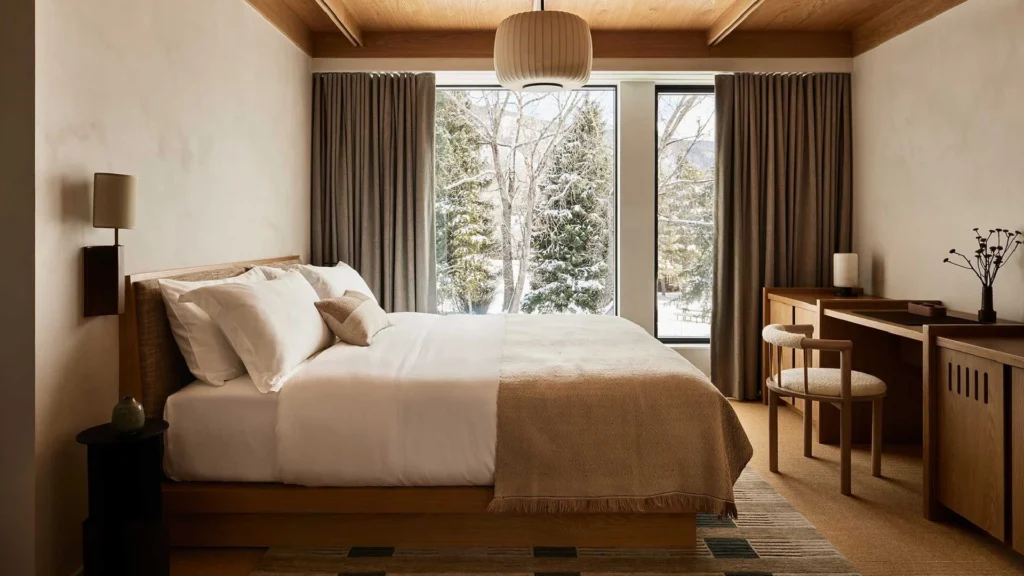
As global mobility increases and lifestyle priorities shift, Aspen continues to redefine seasonal living. Hybrid work models allow extended stays, transforming what was once a vacation home into a semi-primary residence. Consequently, seasonal residence furnishing must integrate workspaces, wellness zones, and technological infrastructure without disrupting the aesthetic integrity of Aspen luxury homes.
Designers are responding with:
- Integrated home offices concealed within millwork.
- Wellness rooms with spa-inspired materials.
- Smart climate systems harmonized with interior finishes.
In this evolving landscape, mountain home interior design becomes increasingly nuanced—blending permanence with adaptability, heritage with innovation.
Crafting Enduring Alpine Elegance
Furnishing Aspen residences for seasonal mountain living is both an art and a discipline. It demands sensitivity to climate, respect for architecture, and an understanding of global lifestyles. Within the realm of Aspen luxury homes, excellence lies in balance: robust yet refined, intimate yet expansive.
Through intelligent seasonal residence furnishing, interiors can evolve gracefully from snowbound winter retreats to sunlit summer sanctuaries. Ultimately, exceptional mountain home interior design does more than decorate a residence—it articulates a philosophy of living attuned to altitude, season, and sophistication.
For architects, designers, and discerning homeowners alike, Aspen remains a laboratory of alpine luxury—where environment and design converge to create residences that endure, inspire, and elevate the experience of mountain living.